






Updated 4 months ago
Why Do Garden Product Sourcing Problems Keep Happening When Buying from China? — A Practical Risk-Reduction Guide for New Buyers
ScarecrowGarden
💡About Scarecrow Garden Supplier Co., Ltd.
Scarecrow Garden Supplier Co., Ltd. is a China-based sourcing and wholesale partner specializing in garden tools, landscaping equipment, and outdoor supplies for international wholesalers, distributors, contractors, and brands.
With hands-on experience rooted in real garden use scenarios, we focus on durable materials, functional design, and stable large-volume supply. Our product range covers pruning tools, watering systems, hand tools, outdoor hardware, and customized garden solutions to support both retail and professional landscaping markets.
Beyond products, we help our partners navigate supplier selection, quality control, compliance requirements, and long-term sourcing strategies in China. Through our blog, we share practical insights on product selection, material comparisons, industry trends, and cost-effective purchasing—helping global buyers build stronger, more competitive supply chains.
Why Garden Product Sourcing Problems Happen in China & How to Avoid Them | Scarecrow Garden Supplier
After many buyers run into problems when sourcing garden products from China, their first reaction is: This supplier is not good, let’s change to another one.
Sometimes this judgment is correct. There are indeed dishonest suppliers — they make beautiful samples but cut corners in bulk production; they promise everything during quotation, then raise the price after receiving the deposit; they exaggerate product specifications, and a pump that costs RMB 60,000 may be quoted at RMB 120,000.
But more often, the problem is not with the “person,” but with the “process.” You may change to another supplier, but if your sourcing process does not change — no sealed sample, no written specification confirmation, no pre-shipment inspection, no unified warehouse checking — the next supplier may make the same mistakes.
An unreliable supplier is a risk. But an unmanaged sourcing process is also a risk.
Let’s look at what is missing.
The Problem Is Not Always the Supplier — It Is Often the Sourcing Process
A new buyer sourcing from China usually goes through these steps: find suppliers → request quotations → ask for samples → confirm the order → make payment → wait for production → receive the goods.
This looks clear, but something may be missing at every step:
- During quotation, only a product photo is sent, without clear requirements for material, thickness, size tolerance, or coating.
- The sample is approved, but no sealed sample is kept and no photos are taken to record details.
- The order is placed, but specifications are not written into the contract or PI, and everything relies only on chat records.
- During production, the factory is not required to provide progress updates.
- Before shipment, no inspection is arranged.
- For mixed orders, where multiple products in one container come from different factories, no one checks everything together in the warehouse.
These missing steps are not the problem of one specific factory. If you change to another factory but still do not keep sealed samples, do not confirm specifications, and do not inspect before shipment, the result may be the same.
Many buyers spend a lot of time screening suppliers, but very little time building their own sourcing process. Suppliers can be changed, but problems caused by a missing process cannot be solved simply by changing people.
Common Risks New Buyers May Face
The risks listed below do not happen with every supplier, and they are not unique to Chinese suppliers. Every country and every industry has dishonest businesspeople. But these risks appear more frequently among new buyers sourcing from China for one simple reason — information asymmetry. You are not beside the factory. You cannot see the production line, the incoming materials, or the quality inspection process. Distance and language make verification more difficult.
Here are the core risks new buyers most often encounter:
| Risk | What It Looks Like | How Buyers Can Reduce It |
|---|---|---|
| Sample and bulk goods do not match | The sample quality is good, but bulk goods show differences in material, color, size, or workmanship | Keep sealed samples, take photos to record details, confirm specifications in writing, and arrange pre-shipment inspection |
| Material substitution | The factory changes materials without notice, such as using ordinary PVC instead of compliant material, or replacing 304 stainless steel screws with 201 stainless steel screws | Clearly write material requirements into the contract, ask the factory to confirm raw material batches, and check before shipment |
| Fake certificates | The supplier provides fake certificates or certificates that do not apply to the target market; some factories even forge certificate images | Check the certificate number and scope, and confirm whether it covers your target market and product category |
| Mixed order errors | Products from multiple factories are combined for shipment, resulting in missing accessories, color differences, or damaged packaging | Use warehouse receiving inspection and check each item before repacking and shipment |
| Unclear after-sales responsibility | After problems occur, the factory and agent blame each other, and the buyer cannot find the responsible party | Agree on after-sales responsibility and defect handling methods before placing the order, and write them into the contract |
If you are using Alibaba as your first supplier-search channel, you can also use our guide on Alibaba supplier risks that garden product buyers must check before placing an order before comparing prices or samples.
There are also other risks worth paying attention to: private-account payment, where the supplier asks you to pay to a personal account instead of a company account; price increases after quotation, where the supplier raises the price after receiving the deposit due to reasons such as raw material increases; patent infringement, where products violate intellectual property rights in the target market and may be destroyed or recalled; and delivery delays, where busy-season production pressure or unreasonable scheduling causes delays.
The ways to deal with these problems are the same as the five core risks above — written confirmation, sealed samples, pre-shipment inspection, and warehouse checking.
You may have already noticed that no matter which risk we talk about, the “how buyers can reduce it” column keeps repeating the same actions. This is not a coincidence. Behind these risks is the same problem: no one is helping you verify.
You are not on-site. You cannot see the production process. Specifications are not written clearly. Samples are not sealed. No one checks before shipment — so problems remain hidden until the goods arrive in your hands. If you change to another supplier but still do not do these verification steps, the result may be the same.
This is the core point of this article: risks are not isolated or scattered. They share the same root cause — a missing process.
Why Garden Products Are Especially Prone to Problems
If you are sourcing standardized electronic products — such as USB cables — the specifications are relatively fixed, and differences between factories may not be that large. The chance of running into serious problems may be lower.
But garden products are different.
Garden products cover many categories, many materials, and many small details. They may look simple, but inside, there are many points where things can go wrong. These details share one common feature: they are rarely discussed during quotation, difficult to notice during the sample stage, and only become concentrated problems during bulk production.
Remember this pattern. You will see it repeatedly in the product categories below.
Metal Planter Boxes — Thickness, Coating, and Screws Are Three Hidden Traps
For a metal planter box, buyers may only care about size and color. But what truly determines quality is the steel thickness, coating process, and screw material.
Steel thickness can range from 0.2mm to 0.6mm, and it is almost impossible to tell the difference by eye. A 0.6mm sheet feels quite solid, and with a colored coating, the texture looks good. But 0.2mm is too soft and deforms easily when pressed. Quotations often only say “metal planter” or “galvanized steel,” while the thickness field is often left blank. Coating is also a major trap. The same powder coating can perform very differently. If the coating thickness is not enough, the planter may rust after one year outdoors. If the coating thickness is sufficient, it may last three to five years. But quotations often only say “powder coating,” without stating the thickness. If the buyer does not ask, the factory usually will not say it first.
There is another detail that is even easier to ignore: screws. The screws, nuts, and washers of metal planter boxes are usually purchased by the factory from other suppliers, not produced by the factory itself. The quotation may say “stainless steel screws,” but 304 stainless steel and 201 stainless steel look almost the same on the surface, while the price difference is significant. 304 has much better rust resistance than 201 in outdoor environments, but if you are selling to coastal areas with high salt mist, even 304 may require additional protection.
Rust is not only an appearance issue. The soil and plants inside the planter may come into contact with rusted metal, and whether the metal content is safe is something your end customers may care about. If the factory replaces 304 with 201 to save costs, the buyer may not notice when receiving the goods — until the screws begin to rust six months later.
This is also why buyers should not stop checking after sample approval; our article on why perfect samples can still lead to failed bulk orders explains what may change before shipment.
Butterfly Lights and Heating Mats — “Invisible Costs” Are the Easiest to Replace
A butterfly light may look the same in photos, but the difference in motor quality can be far beyond what you expect. Some buyers received butterfly light samples using high-quality motors, with almost no noise when the wings vibrated. But in bulk production, all motors were changed to cheaper ones, and after three hours of continuous operation, they started making creaking noises.
The price difference between built-in motors and external motors can be doubled, and the durability is completely different. But these details may only be written as “animated butterfly light” in the quotation, without specifying the motor type.
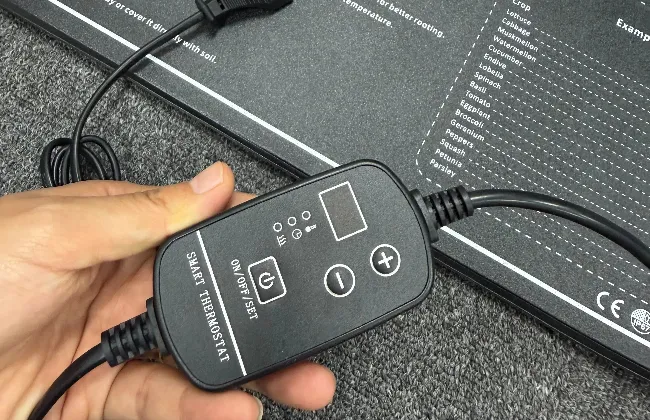
For heating mats, the cable may be changed from thick to thin. The power remains the same, but the safety risk increases. If no one opens the product, checks it, and performs a power-on test before shipment, the buyer may never notice these changes.
Other Categories — The Pattern Is the Same
Seedling trays are too thin and crack during handling, failing to survive the retail stage. Color consistency is a big problem for plastic plant labels — color differences in the same batch look very bad in retail displays. The thickness and UV resistance of greenhouse film directly determine its service life. Cheap film may become brittle and crack after one season, while better film can last two to three years.
The cover of a mini greenhouse is even more obvious. Cheap covers may turn yellow in less than one quarter, and light transmission drops sharply. They may also have too many wrinkles, and after being unfolded, they cannot lie flat, affecting both appearance and light transmission. When the package is opened, there may also be a strong unpleasant smell, making your customers worry about whether it is safe to place the product at home or in the garden. But these differences are almost invisible during the sample stage — the film is flat and transparent.
Garden products also often have missing parts — metal planter boxes may miss screws, greenhouses may miss connectors, and tool kits may miss instruction manuals. This is because these accessories are often produced by different factories and finally combined and packed in one warehouse. If no one checks item by item against the packing list, missing a few screws is very common.
Each of these details may seem small on its own. But together, they create the invisible gap between the sample and bulk goods.
Before choosing the lowest quotation, it is also worth understanding why the cheapest garden product supplier may cost you more.
Why “Changing to Another Supplier” Cannot Solve the Problem
When buyers run into problems, the most natural reaction is to change people. If this factory cuts corners in bulk production, change to another factory. If this agent is not transparent, change to another one. If this quotation is too high, find a cheaper one.
But the problem is: if your sourcing method does not change, changing suppliers is very likely to lead to the same problems.
Think about it.
Without clear specifications, any factory will produce according to its own understanding. You ask for a metal planter box and tell the factory the size and color, but you do not specify the steel thickness, coating process, or screw material. What will the factory do? It will produce according to the method it is most familiar with and finds most economical. If you change to another factory, it will also produce according to its own method. The result may be different, but the fact that “it is not what you actually wanted” remains the same.
Without sample records, there is no standard for comparing bulk goods. You receive the sample, think it looks good, and place the order. But you do not keep a sealed sample, take photos of the details, or write down the material and process parameters. When the bulk goods arrive, you feel that they are “not quite the same as the sample,” but you cannot clearly say what is different —because you have no record for comparison. If you change suppliers but still do not keep sealed samples or records, the result is the same.
Without inspection, problems can only be found after receiving the goods. It may take 30 to 45 days for goods to be shipped from China to your warehouse by sea. By the time you find problems in the bulk goods, the products are already in your warehouse. Returning them is unrealistic, rework is extremely expensive, and selling them at a discount becomes the only way to reduce losses. If you change suppliers but still do not inspect before shipment, the risk does not change at all.
Without warehouse checking, mixed orders are more likely to go wrong. Here is a real scenario: one container includes 15 garden products — metal planter boxes, seedling trays, butterfly lights, garden gloves, and watering cans — from seven different factories, with different delivery times, different standards, and different packaging methods. If no one checks these goods one by one in the warehouse before they are consolidated into the container, what will happen? Three items may be missing accessories, two may have color differences, and one may have crushed cartons — and all of these will only be discovered after the goods arrive in your hands.
Changing suppliers cannot solve these problems, because these problems are not about “people.” They are about “process.” Whatever is missing in your sourcing process will still be missing, no matter who executes it.
Suppliers can be changed. But problems caused by a missing process cannot be solved by changing people.
Not All Chinese Suppliers Are Like This
This article has talked about many risks and traps. At this point, one thing needs to be made clear: these problems do not mean that all Chinese suppliers are unreliable.
You may not know how dense China’s garden product supply chain is. For the same metal planter box, there may be 20 factories making it in one industrial cluster — so many choices that you may feel overwhelmed, but with differences so large that they can become a headache. For the same planter box, steel thickness, coating process, and screw material can be completely different.
Among these factories, there are many companies that work seriously. They have long-term cooperation with overseas customers, care about quality, follow contracts, and rely on reputation and repeat orders rather than one-time deals.
The factory that cut corners does not mean the factory next door will also cut corners. The salesperson who exaggerated specifications does not mean the whole industry exaggerates specifications. Every country and every industry has dishonest businesspeople. This is not a problem unique to China.
But there is one phenomenon worth mentioning.
If a buyer is cheated by one dishonest supplier, he may often say: “You Chinese suppliers are all like this.”
This is unfair to Chinese suppliers who work seriously. One person’s dishonesty makes all Chinese suppliers take the blame. But from the buyer’s perspective, this reaction is understandable. He may have only dealt with one or two Chinese companies, and his only experience was being cheated. Why should he believe others are different?
To separate normal sourcing problems from dishonest behavior, you can check the warning signs in how buyers can identify dishonest supplier practices in advance.
This is the result of information asymmetry. The buyer is not on-site and cannot see which factories are working seriously and which are cutting corners. He can only make judgments based on his own experience. One bad experience is enough to make him doubt the whole supply chain.
Therefore, the goal is not to assume every supplier is dishonest, nor to assume every supplier is reliable. The goal is to build a sourcing process that does not rely entirely on trust.
A good process does not require you to trust the other party. It requires you to verify the other party. You do not need to judge whether this person is good or bad. You only need to confirm: Are the specifications written clearly? Is the sample sealed and kept? Has the pre-shipment inspection been done? Have the accessories been checked? Has the packaging been confirmed?
A process cannot eliminate all risks, but it can make risks identifiable and controllable. Compared with “Do I trust this supplier?”, “Have I confirmed these details?” is a more reliable basis for judgment.
How a Garden Product Team Rooted in China Can Help You Reduce Risk
If you are not beside the factory, do not speak Chinese, and do not understand the detailed differences between garden products, what you need is not more supplier contacts. You need someone to help you implement these process steps.
A reliable sourcing partner should help you with the following:
Product direction planning. You know what you want to sell, but you may not be sure which quality level is suitable for sourcing from China. For example, for metal planter boxes, there are 0.2mm, 0.4mm, and 0.6mm thickness options. Which one is suitable for your target market? Having someone help you sort out the direction based on your market positioning and retail scenario is much more efficient than asking factories one by one.
Supplier comparison. The work is not finished after finding one factory. A sourcing partner should help you compare quotations, materials, processes, and delivery times from similar factories. For the same planter box, one factory may quote 0.4mm steel with 304 screws, while another may quote 0.6mm steel with 201 screws. The prices may be similar, but you may not know which is more worthwhile. Someone needs to help you break down the differences so you can make a choice instead of guessing.
Sample preparation and checking. You receive the sample and think it looks good, but it is hard to tell the difference between 0.4mm and 0.6mm steel by eye. Someone can help you measure it with calipers, take photos, and create written specifications. These records become the standard for bulk production and the comparison basis if problems occur.
Packaging confirmation. Garden product packaging is not just “putting it into a box.” Is the carton thick enough? Is there inner protection? How many layers can be stacked? How should retail display packaging be designed? These details affect your customer’s first impression when opening the box. Someone needs to help you confirm these details instead of only writing “standard packaging.”
Warehouse receiving and inspection. Products from multiple factories are sent to the same warehouse. Quantities are checked item by item, appearance is inspected, and accessories are confirmed to be complete. It is much cheaper to find and handle problems in China than after the goods arrive at your warehouse.
Mixed order handling. One container may include planter boxes, gloves, butterfly lights, and seedling trays from different factories, with different delivery times and different packaging methods. Someone helps you organize these products, repack them, label them, and prepare them for shipment. What you receive is an organized container, not a pile of loose goods that you need to sort yourself.
Pre-shipment inspection. Before the bulk goods are shipped, key details are checked again. This does not mean inspecting every single unit one by one. It means confirming whether the bulk goods match the approved sample, whether the packaging is in place, and whether the accessories are complete.
If you work through an intermediary, it is also important to understand your China sourcing agent’s conflict of interest before deciding how much responsibility to delegate.
Each of these tasks is not complicated on its own. But if you are not on-site, each one is difficult to do. The value of a team rooted in China is not “helping you find suppliers.” It is helping you complete these verification steps before the products are shipped.
You may be thinking: Would it be cheaper if I talk to the factory directly? Not necessarily. With more than 200 factories, we are not occasional customers placing one order. We are large customers placing continuous orders. The prices factories give us are more favorable than what you may get when placing small orders by yourself — not because we are better at bargaining, but because our order volume gives factories a reason to offer better terms. At the same time, because we focus on the garden category, we have deeper experience in product details, seasonal stocking, and mixed order handling.
This does not mean we will never have problems. No sourcing process can guarantee zero risk. But having a dedicated team help you control the process is much more manageable than exploring everything remotely on your own.
More Details → Why Garden Buyers Choose Scarecrow Garden Supplier Instead of Managing Multiple Factories in China?
A Safer Way to Start Sourcing Garden Products from China
If this is your first time sourcing garden products from China, or if you have run into problems before and want to start again, here is a practical checklist. It is not complicated, but every item comes from the experience behind the cases above.
New Buyer Pre-Order Checklist
☐ Clear product list — write down which products you want to source, the target price level, and the intended use of each product.
☐ Written specification confirmation — size, material, thickness, color, coating, and accessories should be written as clearly as possible and included in the PI or contract.
☐ Sample approval and sealed sample retention — after receiving the sample, take photos to record all details, keep a sealed sample, and use it as the standard for bulk goods comparison.
☐ Packaging specification confirmation — confirm carton thickness, inner protection, stacking layers, and retail display requirements. Do not only say “standard packaging.”
☐ Payment account verification — only pay to a company account, check that the receiving company name matches the supplier name, and refuse private-account payment.
☐ Certificate verification — if your target market has certification requirements, check the certificate number and scope, and confirm that it covers your product and market.
☐ Delivery time confirmation and tracking — confirm the production schedule, place orders early to avoid busy-season pressure, and request production progress updates.
☐ Pre-shipment inspection arrangement — before bulk goods are shipped, have someone check key details and confirm they match the sample.
☐ Mixed order warehouse checking — before products from multiple factories are consolidated for shipment, check quantities, accessories, and packaging items by item in the warehouse.
☐ After-sales responsibility agreement — agree on defect handling methods and responsibility before placing the order, and write them into the contract.
☐ Intellectual property risk confirmation — if selling in sensitive markets such as Europe and North America, confirm whether the product may have patent or design infringement risks.
☐ Keep all communication records — emails, chat records, specification confirmations, and modification records are your evidence if problems occur.
This checklist cannot guarantee that you will never have problems. But it can help you block the most common risks before shipment. Looking back, most problems new buyers encounter are caused by missing one item on this checklist.
Frequently Asked Questions
❔Is it safe to source garden products from China?
Yes, it is safe, but only if you have a verification process. China has many professional and reliable garden product suppliers. Problems often happen because buyers do not confirm specifications, do not keep sealed samples, and do not arrange pre-shipment inspections. The risk is not “sourcing from China” itself, but the lack of verification steps in the sourcing process.
❔Why do some buyers run into problems when sourcing from China?
The most common reason is not that suppliers are deliberately cheating. It is information asymmetry — buyers are not on-site, cannot see the production process, specifications are not confirmed in writing, samples are not sealed, and goods are not inspected before shipment. These missing process steps allow problems to remain hidden until the goods arrive, making them much more expensive to handle.
❔How can I reduce the risk of sourcing garden products from China?
The core is three things: write specifications clearly, keep sealed samples, and arrange pre-shipment inspection. Together with packaging confirmation, accessory checking, and mixed order warehouse inspection, most common risks can be identified and handled before shipment.
❔Should I choose the Chinese supplier with the lowest quotation?
It is not recommended. The lowest quotation often means costs have been reduced somewhere — thinner materials, cheaper coating, weaker packaging, or fewer accessories. The real sourcing cost is not just the unit price. It is the unit price plus quality risk, delay risk, after-sales cost, and inventory loss. Giving the factory a reasonable profit is also a way to buy yourself some protection.
❔Do I need a sourcing partner?
If you already have stable supplier relationships in China, speak Chinese, understand product details, and can inspect goods in person, you may not need one. But if you are not on-site, are not familiar with the detailed differences between garden products, are sourcing for the first time, or are buying multiple categories, a professional team rooted in China can help you complete the verification steps before shipment, which is much less risky than exploring everything remotely by yourself.
Preparing to Source Garden Products from China?
If you are planning to source garden products from China but are not sure how to compare suppliers, confirm samples, check packaging, or manage mixed orders, you can send us your product list, reference photos, target market, and packaging requirements. Scarecrow Garden Supplier can help you sort out suitable product options and prepare a practical sourcing plan.
Simplify Your Garden Product Sourcing from China
We help you combine multiple product categories into one sourcing flow with supplier matching, sample verification, and consolidated shipping.
Written by
ScarecrowGarden
💡About Scarecrow Garden Supplier Co., Ltd.
Scarecrow Garden Supplier Co., Ltd. is a China-based sourcing and wholesale partner specializing in garden tools, landscaping equipment, and outdoor supplies for international wholesalers, distributors, contractors, and brands.
With hands-on experience rooted in real garden use scenarios, we focus on durable materials, functional design, and stable large-volume supply. Our product range covers pruning tools, watering systems, hand tools, outdoor hardware, and customized garden solutions to support both retail and professional landscaping markets.
Beyond products, we help our partners navigate supplier selection, quality control, compliance requirements, and long-term sourcing strategies in China. Through our blog, we share practical insights on product selection, material comparisons, industry trends, and cost-effective purchasing—helping global buyers build stronger, more competitive supply chains.