






Updated 7 months ago
Why Garden Buyers Choose Scarecrow Garden Supplier Instead of Managing Multiple Factories in China
ScarecrowGarden
💡About Scarecrow Garden Supplier Co., Ltd.
Scarecrow Garden Supplier Co., Ltd. is a China-based sourcing and wholesale partner specializing in garden tools, landscaping equipment, and outdoor supplies for international wholesalers, distributors, contractors, and brands.
With hands-on experience rooted in real garden use scenarios, we focus on durable materials, functional design, and stable large-volume supply. Our product range covers pruning tools, watering systems, hand tools, outdoor hardware, and customized garden solutions to support both retail and professional landscaping markets.
Beyond products, we help our partners navigate supplier selection, quality control, compliance requirements, and long-term sourcing strategies in China. Through our blog, we share practical insights on product selection, material comparisons, industry trends, and cost-effective purchasing—helping global buyers build stronger, more competitive supply chains.
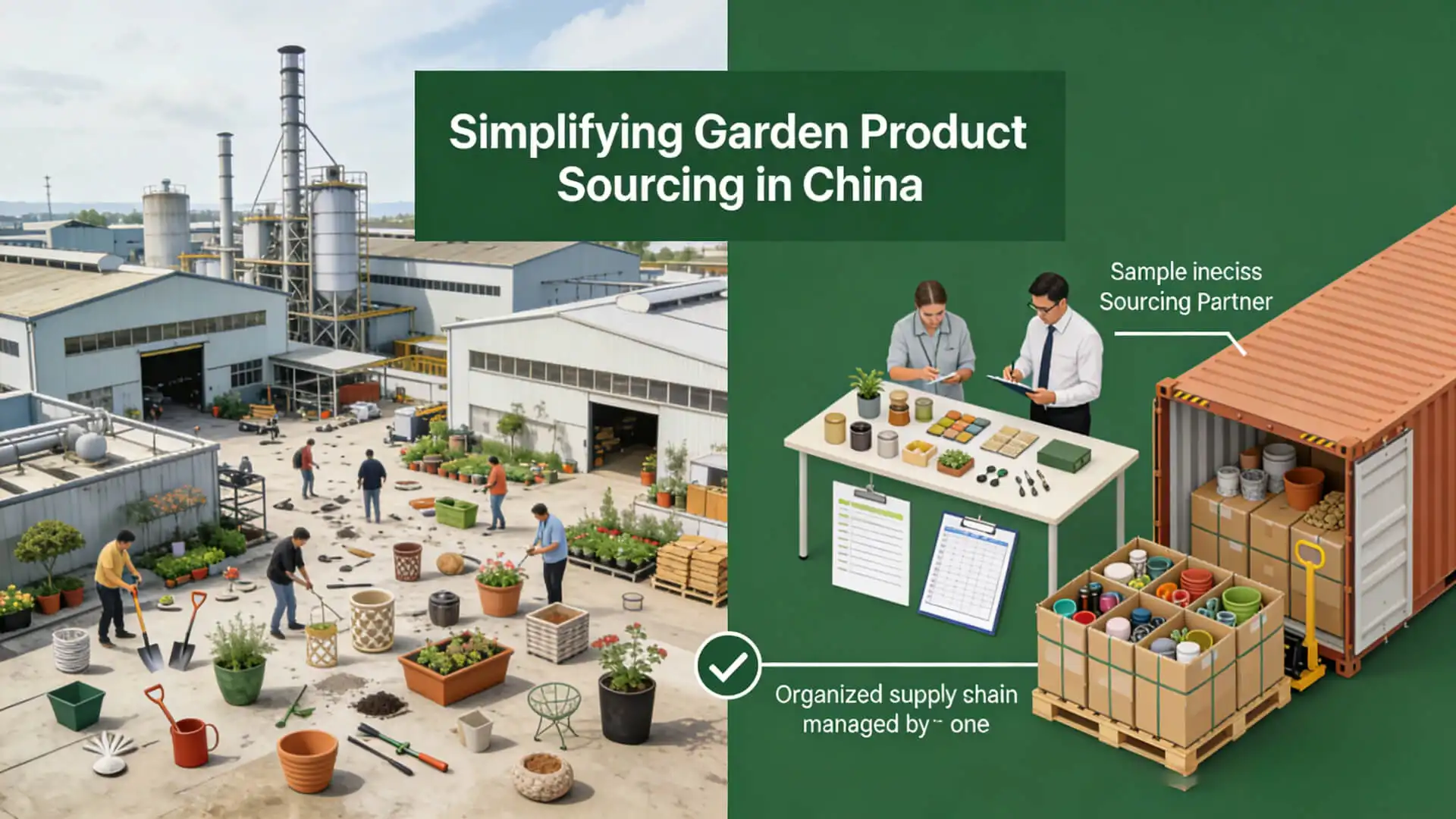
Why Garden Buyers Choose Scarecrow Garden Supplier Instead of Managing Multiple Factories in China
At first glance, sourcing garden products from China sounds straightforward.
- Find some suppliers.
- Ask for quotations.
- Order samples.
- Compare prices.
- Place the order.
But once buyers actually start sourcing across multiple garden categories, they quickly find out that it is much more complicated than it looks.
This is especially true for garden distributors, importers, wholesalers, retailers, and sourcing teams handling a broad product range.
Because garden products are not just “many products.”
They are a category with:
- many subcategories
- many SKUs
- many specifications
- many materials
- many production regions
- many factories that are only truly good at one or two things
That is exactly why many buyers choose Scarecrow Garden Supplier.
Not because finding a factory is difficult.
But managing the full sourcing process well is difficult.
Garden sourcing in China is more fragmented than many buyers expect
A lot of overseas buyers assume that if they are sourcing garden products from China, one or two factories should be enough.
In reality, that is rarely the case.
Garden products are spread across different industrial clusters in China, and each category has its own supply base.
For example:
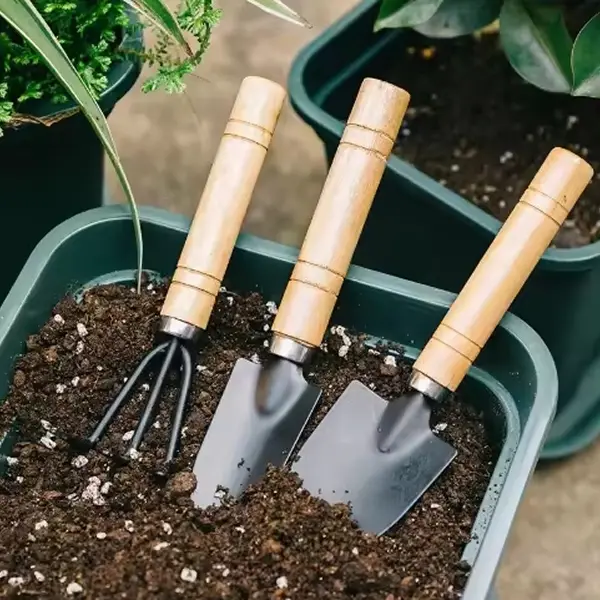
- pruning tools and garden shears are associated with specific hardware manufacturing regions
- hand tools have their own production clusters
- watering products, propagation supplies, grow bags, and seedling accessories come from different supply chains
- gloves, kneeling pads, plant labels, pots, and raised beds may all come from different cities
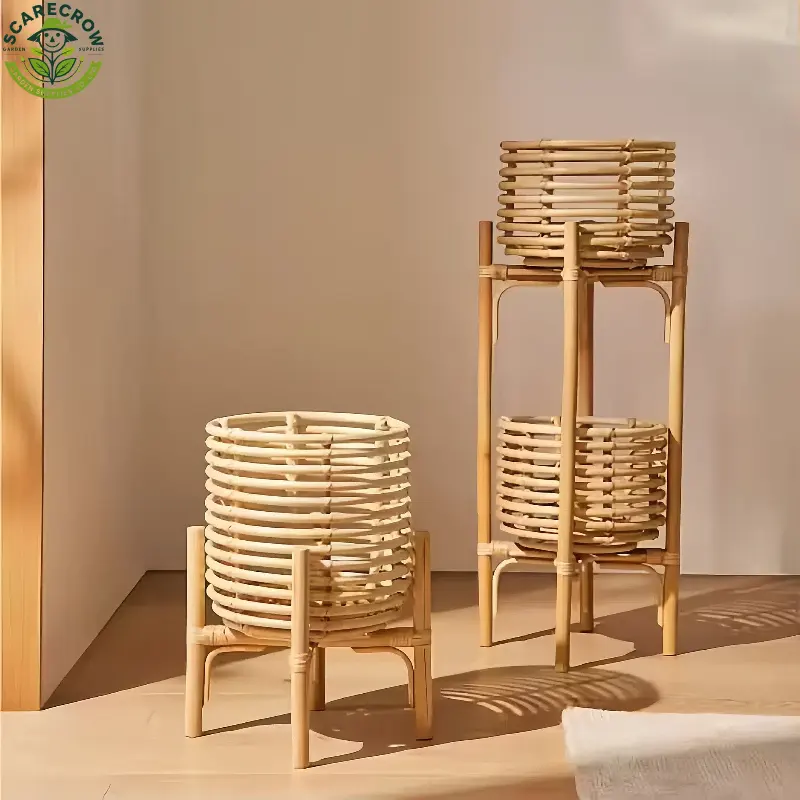
- outdoor woven and rattan-related products belong to another specialized manufacturing network
So even if a buyer only wants to build a small sample selection, the supply chain behind it may already be very scattered.
We recently handled one sample request from a customer who needed 10 sample items.
To prepare those 10 products, we ended up sourcing from 9 different factories.
And those 9 factories were not the first 9 we found.
Before selecting them, we had already screened and communicated with more than 30 factories.
Why did it take that many?
Because each factory usually only has a real advantage in one or two product lines.
Some factories say they can make many things.
And technically, yes, sometimes they can.
But “can make” and “are good at making” are two completely different things.
That difference affects everything:
- sample quality
- consistency
- lead time
- workmanship
- defect rate
- communication efficiency
- mass production reliability
And that difference becomes very expensive if the buyer chooses the wrong supplier.
The real cost of sourcing is not only the product price
Many buyers initially think that sourcing directly from factories will save money.
Sometimes it does.
But in multi-category garden sourcing, that calculation is often incomplete.
Because the real sourcing cost includes much more than the product price.
It also includes:
- the cost of identifying the right factories
- the time spent comparing too many suppliers
- the effort needed to filter out unsuitable factories
- the cost of sample development and repeated revisions
- international sample shipping time
- delays caused by bad samples
- the cost of switching suppliers halfway
- the cost of quality control before and during production
- internal management time on the buyer’s side
This is where many sourcing plans start to become inefficient.
A buyer may contact 20 or 30 factories, only to finally find a smaller group worth working with.
Some factories respond slowly.
Some send incomplete quotations.
Some quote aggressively low prices but cannot maintain stable quality.
Some can make a sample that looks acceptable, but cannot deliver the same standard in bulk.
Some are not honest about what they are truly good at.
And if the sample turns out wrong, the buyer has to start over.
The sample is made in China.
It is shipped overseas.
The buyer waits for it to arrive.
The result is not acceptable.
Then a new supplier search begins.
That lost time may mean delayed product launches, slower category expansion, missed seasonal demand, or increased pressure on the buyer’s own team.
For garden business, timing matters.
A slow sourcing cycle is not just inconvenient.
It can directly affect sales.
One of the biggest sourcing mistakes: asking the wrong factory to make the wrong product
In garden sourcing, one of the most common mistakes is choosing a factory that says yes to everything.
This happens often.
A factory may say:
- yes, they can produce that item
- yes, they can also handle another category
- yes, they can do one more style or size
- yes, they can make a matching accessory too
On paper, that sounds efficient.
But in practice, once a factory is producing items outside its real strengths, things often start going wrong.
Not always in obvious ways at the beginning.
Sometimes the sample can still be made.
But later problems appear in:
- unstable delivery time
- poor finishing details
- higher defect rates
- inconsistent raw materials
- packaging problems
- poor repeatability in mass production
- difficulty controlling quality from batch to batch
This is why at Scarecrow Garden Supplier, we do not simply ask, “Can this factory make it?”
We ask, “Is this factory truly the right factory for this product?”
That standard matters.
Because forcing a non-specialized factory to handle products outside its strengths may look simpler in the beginning, but it usually creates bigger problems later.
Why buyers choose Scarecrow Garden Supplier: we reduce complexity behind the order
Our role is not simply to collect quotations from factories.
Our role is to help buyers reduce the complexity behind multi-category sourcing in China.
That includes:
- screening factories more carefully
- identifying which suppliers are actually strong in which products
- coordinating samples across multiple categories
- filtering out factories that are not suitable
- managing communication more efficiently
- reducing trial-and-error
- helping buyers move faster without lowering standards
In the sample project mentioned above, the customer only saw a request for 10 products.
But behind that request, we handled a much larger amount of sourcing work.
That is often the hidden difference between sourcing alone and working with a partner who understands how this category operates in China.
Garden buyers also need mixed container solutions, not only product sourcing
Another very practical issue in garden sourcing is inventory pressure.
Because garden products include many categories and many SKUs, it is usually not realistic for buyers to order one full container for every single product category.
If a buyer fills one container with only one category, inventory risk can rise quickly.
That means:
- too much capital tied up in stock
- slower inventory turnover
- higher warehouse pressure
- more pressure to sell through quickly
- increased risk if some SKUs move slower than expected
This is especially challenging when buyers are testing new products, building seasonal assortments, or expanding into more categories step by step.
That is why mixed container loading is so important.
At Scarecrow Garden Supplier, we support buyers who want to combine multiple garden products into one shipment.
This gives buyers more flexibility to build a practical product mix instead of overcommitting to one category too early.
We previously worked on an order where a customer purchased 15 different products at one time.
Among those items:
- some products had 3 specifications
- some had only 1 specification
- and the order still needed to be sourced from 12 different factories
Why so many?
Because we did not want to place products with factories that were not truly good at making them.
Yes, many factories said they could produce more categories.
But from experience, once the product is outside the factory’s real strength, the project often becomes much harder to control.
Lead times become unstable.
Defect rates may increase.
Coordination becomes messy.
And the final result often costs more in hidden ways.
So instead of simplifying the sourcing structure on paper, we focus on making it more reliable in reality.
Then we help buyers consolidate it.
That is the key point.
Not careless consolidation.
But controlled consolidation.
This is one reason many buyers work with us for mixed container orders.
Because what they need is not only a supplier list.
They need someone who can help coordinate multiple suitable factories and still turn that into one practical shipment plan.
Mixed container loading helps reduce inventory risk and improve flexibility
For many garden buyers, mixed container sourcing is not just a logistics arrangement.
It is a business strategy.
It helps buyers:
- test more products with lower inventory risk
- build a broader assortment without overstocking one category
- buy according to market demand instead of factory convenience
- improve container utilization
- reduce pressure on cash flow
- create better balance across product lines
- launch or replenish multiple SKUs in one cycle
This is particularly useful for:
- garden distributors
- importers serving multiple customer segments
- retailers expanding their assortment
- wholesalers building seasonal product combinations
- buyers who want to reduce dependence on a narrow product mix
In short, mixed loading gives buyers more room to source intelligently.
And in a category as broad as garden products, that flexibility matters a lot.
Sample approval is only the beginning — bulk quality control is where risk really appears
Many buyers focus heavily on the sample stage.
That makes sense.
But in real sourcing, the bigger risk often comes later.
Because a good sample does not automatically mean a good bulk order.
Once production begins, buyers still need to watch for:
- material substitution
- inconsistent workmanship
- lower finishing standards
- packaging changes
- missing details
- shortcuts taken during production
- the classic problem of “sample A, bulk B”
This is one of the reasons why sourcing from multiple factories without reliable follow-up becomes so risky.
Even if the buyer managed to find the right suppliers and approve the samples, the production stage still requires control.
And controlling that from overseas is not easy.
Factories are often located in different cities.
Many are not close to airports or high-speed rail stations.
Some are in industrial zones far from convenient transport.
If one order involves several categories, the factories may be spread across multiple regions.
That means the cost of checking production properly can become very high.
It may involve:
- repeated domestic travel in China
- transport between cities and factory locations
- accommodation
- inspection costs
- staff time
- coordination cost on the buyer’s side
This is one more reason buyers choose to work with a China-side sourcing partner who can manage these things more efficiently.
Why Scarecrow Garden Supplier keeps two identical samples for every confirmed item
At Scarecrow Garden Supplier, we have a strict internal rule:
For every confirmed sample product, we keep two identical samples.
- one sample is sent to the customer
- one sample is retained by us
This adds cost.
It means extra sample purchasing cost, more management work, and storage space. It also means we are taking on more responsibility.
But after years in business, we believe this is one of the safest and most practical ways to reduce risk.
The retained sample is important for two reasons.
1. We test and understand the product ourselves
We do not want to only rely on pictures or supplier descriptions.
Keeping the sample allows us to review the product more carefully, understand details, and become more familiar with its actual quality and structure.
That is part of our Tested in Our Own Garden mindset.
We prefer to look at products more practically, not only commercially.
2. We use it as a reference during bulk production
This is the more critical reason.
The retained sample gives us a physical comparison standard when production begins and when goods are checked.
It helps us reduce the risk that the customer approves one standard, but receives another in bulk.
In simple terms:
We do not want customers to approve A and later receive B.
This kind of problem damages trust quickly.
And we believe long-term business depends on consistency, not shortcuts.
Buyers are not only looking for lower prices — they are looking for lower risk
In many sourcing projects, the cheapest supplier is not the safest supplier.
And the “simplest” sourcing structure is not always the most reliable one either.
What serious buyers often need is not just a lower quotation.
They need:
- fewer sourcing mistakes
- fewer supplier mismatches
- lower hidden cost
- faster sample coordination
- more stable production follow-up
- better control between approved sample and bulk goods
- more practical shipping and consolidation solutions
- lower inventory pressure through mixed container loading
That is what we aim to help with.
Scarecrow Garden Supplier is not only helping buyers save communication time.
We are helping buyers control sourcing risk across a complicated garden supply chain.
And in the long run, that is often more valuable than a small price difference on paper.
Why garden buyers choose Scarecrow Garden Supplier
Garden buyers choose us because the real challenge is not simply finding factories.
The real challenge is managing all the moving parts behind the order.
That includes:
- different product categories
- different factory strengths
- different production cities
- different sample standards
- different lead times
- quality consistency risks
- mixed container coordination
- inventory pressure
- the need to move efficiently without losing control
We understand that many factories can make products.
But not every factory should make every product.
We understand that a good sample is important.
But bulk consistency is even more important.
We understand that buyers want to grow their category mix without creating unnecessary stock pressure.
And we understand that trust is built through process, discipline, and honesty.
That is why we put so much emphasis on:
- careful supplier screening
- category-based sourcing logic
- realistic factory selection
- retained sample comparison
- mixed container support
- practical risk control
Because good sourcing is not only about buying products.
It is about buying them in a way that is more efficient, more stable, and safer for long-term business.
Work with a sourcing partner that understands real garden sourcing in China
If you are sourcing multiple garden product categories from China, and you need a partner who understands the complexity behind the supply chain, Scarecrow Garden Supplier is ready to support you.
We help buyers manage:
- multi-category garden sourcing
- supplier screening
- sample coordination
- mixed container loading
- inventory risk reduction
- production follow-up
- sample-to-bulk consistency control
We believe good business should be built on real work, clear standards, and long-term trust.
Because in the end, sourcing is not only about getting products made.
It is about getting them made right, shipped practically, and delivered with less risk.
Sourcing garden products from China does not need to become a factory management project.
If you are trying to build or expand a garden product range, we can help you source across multiple categories, coordinate suitable factories, and organize mixed container shipments more efficiently.
At Scarecrow Garden Supplier, we focus not only on cost, but also on consistency, practicality, and risk control.
That is why we keep duplicate samples, test products in-house, and use retained samples to compare against mass production.
Because long-term business is built on trust, and trust needs process behind it.
Send us your product list, and we will help you review the most practical sourcing approach.
Written by
ScarecrowGarden
💡About Scarecrow Garden Supplier Co., Ltd.
Scarecrow Garden Supplier Co., Ltd. is a China-based sourcing and wholesale partner specializing in garden tools, landscaping equipment, and outdoor supplies for international wholesalers, distributors, contractors, and brands.
With hands-on experience rooted in real garden use scenarios, we focus on durable materials, functional design, and stable large-volume supply. Our product range covers pruning tools, watering systems, hand tools, outdoor hardware, and customized garden solutions to support both retail and professional landscaping markets.
Beyond products, we help our partners navigate supplier selection, quality control, compliance requirements, and long-term sourcing strategies in China. Through our blog, we share practical insights on product selection, material comparisons, industry trends, and cost-effective purchasing—helping global buyers build stronger, more competitive supply chains.