

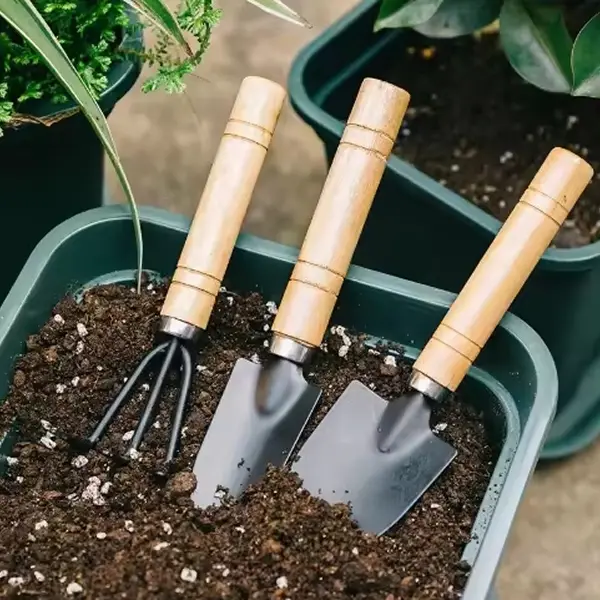







High-quality stainless steel hand shovel for wholesale importers
In the European and American garden tool markets, Hand Shovel and Garden Trowel are among the largest and fastest-circulating categories. However, it is this kind of seemingly simple product that hides the most quality hazards. For importers and distributors, a batch of shovels with quality problems not only brings return losses, but also may lead to consumer complaints and damage to brand reputation.
According to the data, the return rate of the North American garden tool market in 2023 will be about 8%-12%, of which product quality defects (such as breakage and rust) account for more than 40% of the return reasons for hand tools.
Product Features: What Determines the Quality of a Shovel
When we talk about the quality of a Hand Shovel, we are actually talking about four interconnected dimensions. The shortcomings of any dimension may become the fuse of future after-sales problems.
The first is material and durability. This is the foundation of the whole shovel. European and American consumers have little tolerance for "rust" and "breakage", so the choice of material is crucial. Among the many options, 430 stainless steel stands out as an ideal choice for the mass market due to its excellent rust resistance and moderate cost. If your target customer is a professional landscape company, a higher hardness of 420 stainless steel or 3CR13 stainless steel is more suitable—they can withstand more frequent and higher-strength use. In contrast, carbon steel products have higher hardness, but once the anti-rust coating on the surface is broken, rust is inevitable, making them more suitable for entry-level positioning. It should be noted that the choice of materials should not only look at the surface, but the steel grade clearly agreed in the contract is the real quality assurance.
The second is size, design and usability. An excellent shovel whose design must serve the actual use scenario. Pointed shovels are suitable for digging and transplanting, while wide-bladed shovels are better for scooping soil and mixing media. If you want to create a truly high-end product, you can add a depth scale to the edge – a small detail that is an attractive professional feature for gardening enthusiasts. What really determines the service life of a shovel is how the handle is connected to the metal part. The full-shank through-type structure allows the metal to extend from the tip of the blade to the end of the handle, allowing it to withstand maximum prying force. The low-end ferrule structure is precisely the high-incidence area of accidents.
The third is manufacturing quality and surface treatment. These details directly determine the texture of the product.
Finally, safety and ergonomics. A non-slip TPR handle prevents slipping injuries; The hanging hole at the end of the handle may seem simple, but it allows users to easily store tools and reduce the risk of them being left in the garden. These details reflect respect for users and protection of their own brand.
For a detailed look at the most effective hand shovel designs for professional use, check out [Top Hand Shovel Designs for Landscaping Companies and Garden Centers]
Procurement Strategy
Once we have a clear understanding of product standards, another dimension of procurement decisions emerges – supply chain considerations.
The minimum order quantity is the first practical issue to face. MOQs vary widely from supplier to supplier, with standard styles typically while when it comes to color or logo customization, it often need more. For distributors who are new to the market, it is wise to look for a supplier that can provide mixed batch services, testing three to five different styles, and using market feedback to guide subsequent bulk purchases, it is far safer than pressing a single style at one time.
Private labeling and packaging options are the only way to establish brand differentiation. If you're planning to build your brand, laser marking is the most recommended option. Of course, no matter how aesthetically pleasing the packaging design, multilingual instructions and the necessary compliance labels are indispensable.
Transportation and logistics are another risk point that is easily underestimated. Although the hand shovel is small, the friction between the metals is enough to cause scratches on the coating during transoceanic transportation, and the humid sea breeze can also cause rust. These details, often reflected in the seemingly inconspicuous cost of a few cents on the quote, determine your first impression at the moment of unpacking after the shipment arrives.
Common Quality Issues: Identify Pitfalls and Avoid Risks
Over the years, we have seen three common quality issues. Importers often face these problems.
Material Weaknesses
These issues come from poor materials. Some suppliers use low‑quality recycled steel. Others use incorrect heat treatment. Hardness ends up too high or too low.
How to avoid:
Put material requirements in the purchase contract. Ask for a hardness test report. For stainless steel, agree on the steel grade in writing. These documents help with quality traceability later.
Manufacturing Defects
You may see rubber handles coming loose. You may see scratches on the metal surface. The blade edge may be uneven. Logos may look blurry.
These defects happen for several reasons. The vulcanization process may be poor. Post‑processing steps may be missing. Molds may be worn out and not replaced.
Packaging or Shipping Damage
This damage appears after arrival. The shovel coating may be scratched. The handle may have dents. Packaging may be broken, exposing the product. Shovels may rub together and leave black marks.

Advice to Importers
Once you have a grasp of product standards and common pitfalls, you need a practical approach to evaluating and screening truly reliable partners.
Start with the sample and do the destructive test. The mistake of many importers is to decide to place an order just by looking at the appearance of the sample. And the real test lies in use. A truly high-quality Hand Shovel should withstand these tests unscathed. Only samples that have undergone this kind of testing are worth investing in bulk orders.
Secondly, small batch trial orders are gradually enlarged. Even if the supplier has been strictly screened, it is not advisable to invest too much at one time when cooperating for the first time. Although this approach will slightly lengthen the procurement cycle, it can effectively control risks.
Third, establish detailed specifications. Before the order is confirmed, sign a detailed product specification with the supplier, clarifying the steel grade, dimensional tolerance, handle material, packaging standard, anti-rust treatment method, inspection standard, etc. one by one.
Finally, pay attention to the qualifications and capabilities of suppliers. If your product is planned to enter a large chain channel, then the supplier's BSCI or SMETA social responsibility audit report is a must-have.
Conclusion
Although Hand Shovel and Garden Trowel are small categories, they carry the core trust of garden tool brands. If you are looking for the right trading partner, you can choose Scarecrow Garden Supplier Co., Ltd. We control quality from the details, and you will reap your success in this vast market.

Written by
ScarecrowGarden
💡About Scarecrow Garden Supplier Co., Ltd.
Scarecrow Garden Supplier Co., Ltd. is a China-based sourcing and wholesale partner specializing in garden tools, landscaping equipment, and outdoor supplies for international wholesalers, distributors, contractors, and brands.
With hands-on experience rooted in real garden use scenarios, we focus on durable materials, functional design, and stable large-volume supply. Our product range covers pruning tools, watering systems, hand tools, outdoor hardware, and customized garden solutions to support both retail and professional landscaping markets.
Beyond products, we help our partners navigate supplier selection, quality control, compliance requirements, and long-term sourcing strategies in China. Through our blog, we share practical insights on product selection, material comparisons, industry trends, and cost-effective purchasing—helping global buyers build stronger, more competitive supply chains.