






Updated 4 months ago
Animated Butterfly Light Inspection Checklist: How Wholesalers Can Reduce Return Risk from Sample Confirmation to Bulk Shipment
ScarecrowGarden
💡About Scarecrow Garden Supplier Co., Ltd.
Scarecrow Garden Supplier Co., Ltd. is a China-based sourcing and wholesale partner specializing in garden tools, landscaping equipment, and outdoor supplies for international wholesalers, distributors, contractors, and brands.
With hands-on experience rooted in real garden use scenarios, we focus on durable materials, functional design, and stable large-volume supply. Our product range covers pruning tools, watering systems, hand tools, outdoor hardware, and customized garden solutions to support both retail and professional landscaping markets.
Beyond products, we help our partners navigate supplier selection, quality control, compliance requirements, and long-term sourcing strategies in China. Through our blog, we share practical insights on product selection, material comparisons, industry trends, and cost-effective purchasing—helping global buyers build stronger, more competitive supply chains.
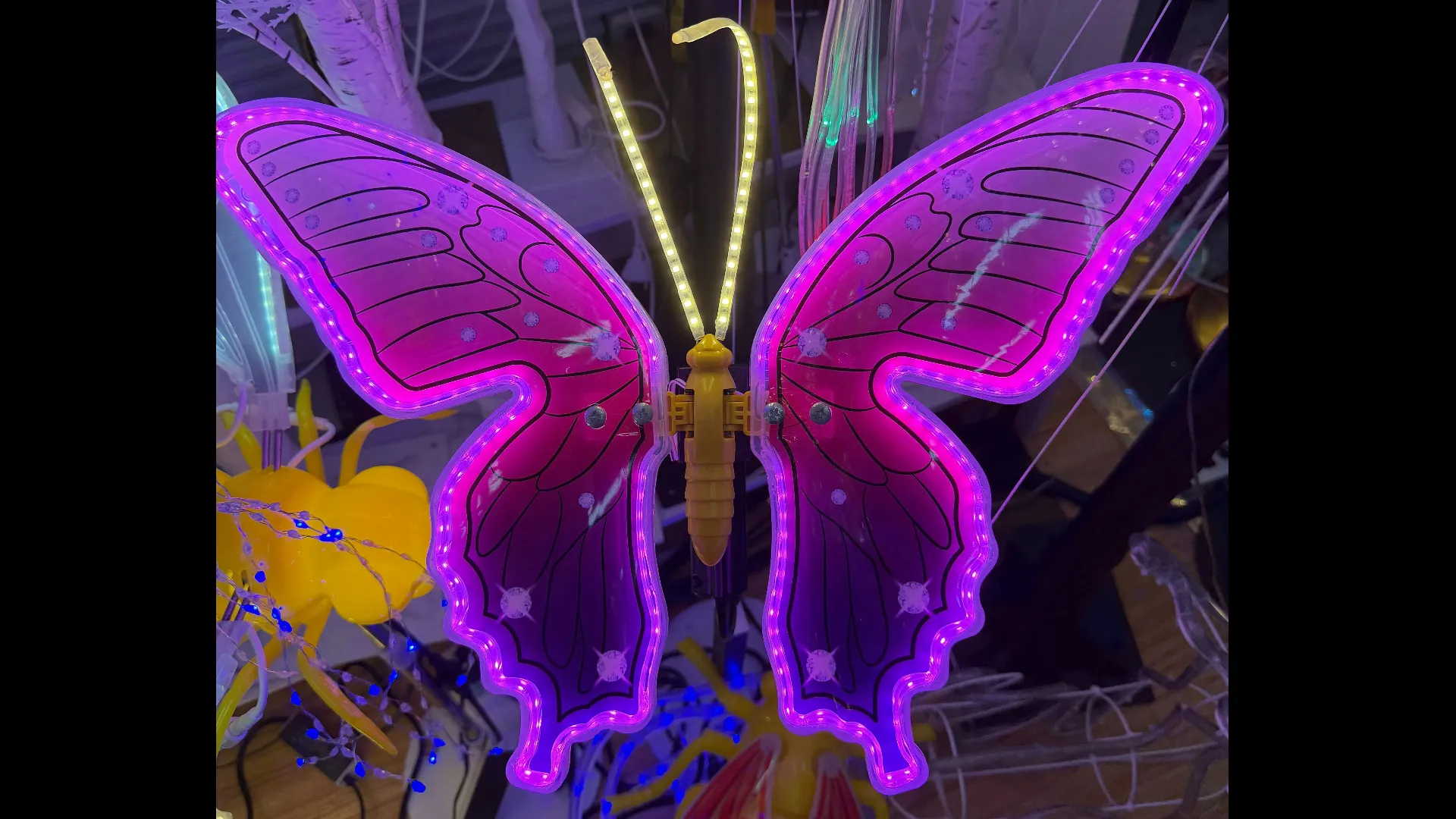
Animated Butterfly Lights Inspection Guide for Wholesalers | Scarecrow Garden Supplier
You placed the order, made the payment, waited four weeks, and the container finally arrived.
When you opened the cartons, you found three cracked wings, two motors that did not flap, half of the transformers missing, and the packaging was crushed out of shape. You sent photos to the factory, and the factory replied, “Transportation damage is not covered by our warranty.”
This is a real experience for many wholesalers. Animated butterfly lights are not ordinary decorative lights — they have motors, wing-flapping structures, waterproof sealing, and accessory systems. If any one part goes wrong, it becomes a return once it reaches the end consumer. And the cost of that return is ultimately borne by you.
Inspection is not an extra step. It is a necessary process for reducing return risk.
If you are still building the full sourcing process, start with the Complete Buying Guide for Animated Butterfly Lights before using this inspection checklist.
The previous articles explained how to choose the motor, material, and accessories. If you have not read our Animated Butterfly Light Buying Guide yet, we recommend starting there to understand the full product selection logic. This article focuses on the final step: when the goods arrive, how do you confirm that they are acceptable?
Why Animated Butterfly Lights Cannot Be Inspected Like Ordinary Garden Lights
Inspection for ordinary garden lights is simple: check whether the appearance has any defects and whether the light turns on. Because ordinary garden lights only have two functions — lighting and waterproofing. If the light works and water does not enter, there is usually no major problem.
Animated butterfly lights add two more dimensions: mechanical movement and an accessory system.
Mechanical movement: The wings need to flap, the motor needs to run, and the program needs to control the rhythm. These movements happen every day, again and again. Whether the motor sound is normal, whether the wing-flapping angle is accurate, and whether the left and right wings are synchronized — these are things ordinary garden lights do not need to check, but animated butterfly lights must.
Accessory system: Transformers, wires, stakes, bases, tree-mounting accessories, solar modules, motion sensors — each butterfly light may include 5–10 accessories. Missing accessories, incorrect specifications, or missing certifications can all prevent customers from using the product normally.
A good sample does not mean the bulk order will be good. Samples are carefully prepared by the factory, while bulk goods are produced on a production line. The gap between the two is exactly what inspection is meant to identify.
What to Confirm at the Sample Stage
The sample stage is your opportunity to establish standards with the factory. The more detailed the sample confirmation is, the lower the chance of problems in bulk production.
Appearance and Material
- Whether the wing color and transparency match the photos or the description
- Whether there are scratches, bubbles, or color differences on the wing surface
- Whether the body joints are flat and whether there is glue overflow
- Whether the acrylic version has tiny cracks, especially when viewed against the light
- Whether the printed pattern on the ABS printed version is clear, with no color deviation or blurring
Function and Movement
- What the wing-flapping angle is, using a mobile phone slow-motion video and checking frame by frame
- Whether the motor sound is normal — a good motor is almost silent, while a poor one makes a buzzing noise. For the judging standard, see our motor-focused article
- Whether the left and right wings are synchronized
- Whether the wing-flapping rhythm is natural, including fast flapping, slow flapping, and intermittent pauses
- Whether the light color is correct, such as warm white, cool white, ice blue, or pink
- Whether the breathing mode and steady-on mode switch normally
If abnormal noise or weak movement appears during sample testing, review how to choose a motor for dynamic butterfly lights before confirming the bulk order.
Accessories and Packaging
- Whether the transformer is included and whether the certification marks are correct
- Whether the wire length matches the order
- Whether the installation accessories are complete, such as stakes, bases, and tree-mounting accessories
- Packaging method and protective measures
- Quantity per carton
Key Action: Take a Video for Record
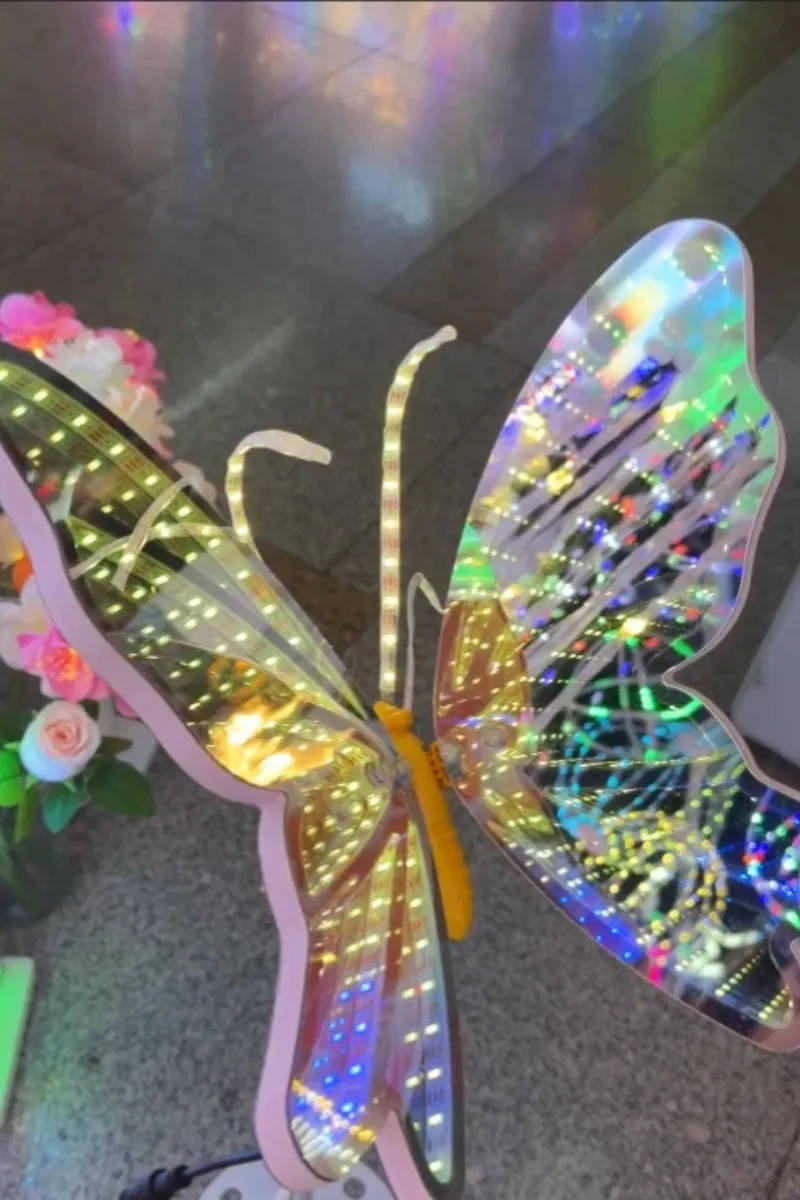
After sample confirmation, shoot a complete video: close-up of the appearance + powered wing-flapping + lighting modes + accessory display. This video becomes the comparison standard for bulk inspection. When there is a difference between bulk goods and the sample, this video is your evidence.
What to Confirm Before Production
Before bulk production, make sure the following information has been confirmed with the factory in writing:
☐ Final configuration sheet, including material, motor, color, and accessories
☐ Sample photos and video, used as the comparison standard for bulk goods
☐ Packaging documents, including carton marks, labels, and packing list format
☐ Accessory list, including which accessories are included with each light and in what quantity
☐ Color standard, such as color code or physical color sample
☐ Plug specification, such as a US plug, EU plug, or AU plug
☐ Whether logo or packaging customization is required
☐ Whether pre-production first-piece confirmation is allowed
“Whether pre-production first-piece confirmation is allowed” is very important. First-piece confirmation means that after the factory completes the first bulk product, it is sent to you for confirmation before mass production begins. This helps identify differences between bulk goods and the approved sample before full production starts. Not every factory is willing to do first-piece confirmation, but it is worth asking.
Bulk Inspection Step One: Open-Carton Inspection
Do not rush to unpack the product. Check the packaging first.
Outer Carton
- Whether the carton has obvious compression, deformation, or water stains
- Whether the carton mark is correct, including product name, quantity, and specification
- Whether there are “fragile” or “this side up” marks
Inner Box
- Whether the inner box is crushed or deformed
- Whether there is cushioning material between products
- Whether the wings are in direct contact with hard objects
Product Appearance
- Whether the wings have cracks, scratches, or deformation
- For acrylic versions, pay special attention to whether the edges and corners have impact cracks
- For ABS printed versions, check whether the pattern has color deviation, blurring, or peeling
- Whether the body has scratches, stains, or dirt
Packaging Quantity
Confirm that the quantity matches the order:
- Small animated version: 20 pieces/carton
- Medium animated version: 15 pieces/carton
- Small static version: 40 pieces/carton
- Large version: 1 piece/carton
If the quantity does not match, take photos as evidence first, then contact the factory.
Bulk Inspection Step Two: Power-On Test One by One
This is the most important step, and also the most time-consuming. Every butterfly light needs to be powered on and tested.
Test Items
- Whether the light turns on: after power is connected, whether all LED strips light up and whether any section does not light up
- Whether the wings flap: whether the wings move normally
- Left-right synchronization: whether the wing amplitude and rhythm on both sides are consistent
- Wing-flapping angle: whether it is consistent with the sample, compared against the sample video
- Motor sound: whether it is normal. For judging standards, see the motor-focused article — simply put, a good motor is almost silent, while a poor one makes a buzzing noise
- Lighting modes: whether the breathing mode and steady-on mode switch normally
- Continuous operation: run for 30 minutes and observe whether the wing-flapping remains stable
- Sound effect: for large ABS printed versions with built-in sound effects, confirm whether the sound effect works normally, if applicable
Test Method
For goods packed 20 pieces/carton, testing one full carton usually takes about 1–2 hours. If the order quantity is large, such as several hundred pieces or more, sampling can be used — but for first-time cooperation, full inspection is recommended.
Recommended sampling ratio:
- First cooperation order: inspect more than 50% of each carton
- Repeat order from an old supplier: inspect 20–30% of each carton
- High-value models, such as acrylic and large ABS versions: increase the sampling ratio
- Low-price volume models, such as small PP versions: the ratio can be reduced appropriately, but not lower than 10%
If the defect rate found during sampling exceeds 10%, full inspection of the entire batch is recommended.
Bulk Inspection Step Three: Check Waterproofing and Sealing
IP65 means dustproof and protected against water spray — garden rain is fine, but the product cannot be soaked in water. This is the standard waterproof level for animated butterfly lights.
Key Inspection Positions
- Body joints: whether the sealing glue is even and flat, and whether there are obvious gaps or glue overflow
- Wire outlet: whether there is a sealing ring or sealing glue where the wire exits the body. This is a high-risk point for water ingress
- Motor position: whether the connection area of the external motor has waterproof treatment
- Battery compartment, for solar versions: whether the compartment cover is tight and whether there is a waterproof rubber strip
Simple Waterproof Test
If you have concerns about waterproofing, you can perform a simple test: use a shower head to simulate moderate rain, spray from different angles for 3–5 minutes, then open the product to check whether there are any water marks inside.
Note: This is not a formal IP65 test, but it can help screen out clearly unqualified products. Formal IP65 testing must be done under laboratory conditions, and factories usually do not provide it for regular orders. The purpose of this simple test is to identify products that are obviously not qualified — if water enters after three minutes of shower spray, the IP65 claim is questionable.
Bulk Inspection Step Four: Check Accessories
Check each item according to the order.
Accessory Checklist
☐ Transformer — quantity, certification marks, plug specification
☐ Wire — whether the length matches the order
☐ Stake + base — quantity and completeness
☐ Tree-mounting accessories — quantity of screws and straps
☐ Solar module — quantity, if applicable
☐ Motion sensor module — quantity, if applicable
☐ Instruction manual — whether the language version is correct
☐ Other customized accessories, if applicable
The accessory checklist should match the agreed wires, transformers, motion sensors, RGB, and installation accessories instead of only checking the butterfly body.
Missing accessories are a common problem, especially transformers. Some suppliers’ quotations do not include transformers, but you may assume they are included when placing the order. When the goods arrive and there are no transformers, your customers cannot use the product — this is even more troublesome than a problem with the product itself.
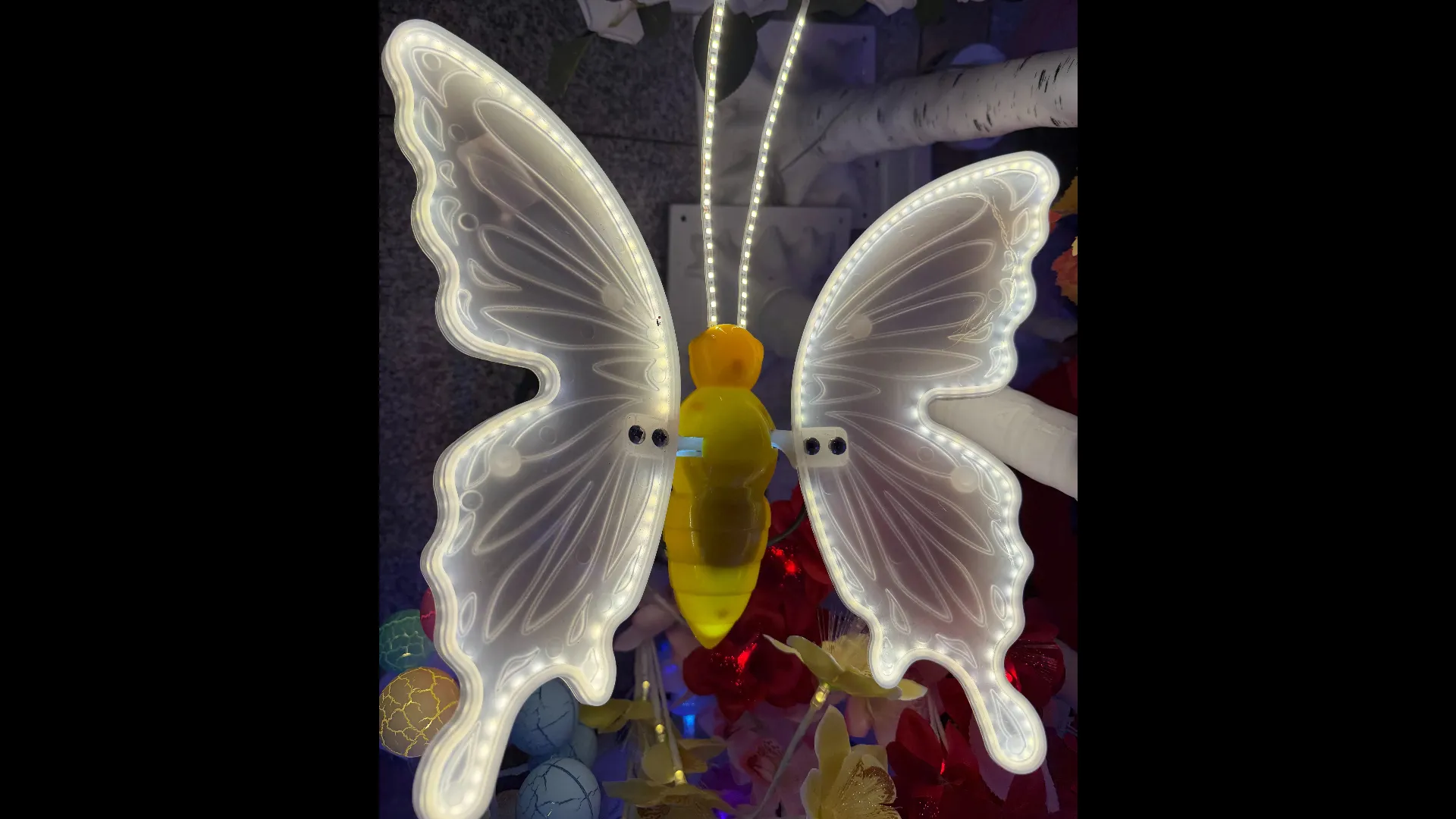
Bulk Inspection Step Five: Packaging and Carton Loading Check
Individual Packaging
- Whether the product is fixed inside the packaging and will not shake
- Whether the wings can be easily compressed
- Whether the animated structure, meaning the wing-flapping mechanism, is protected
- Whether cushioning materials are properly used
Outer Carton
- Whether the carton mark is correct
- Whether the carton quantity matches the carton label
- Whether heavy goods are placed on top of light goods, which should not happen
- Whether different accessories are easy to distinguish when mixed loading is used
Mixed Loading Notes
If different series and different sizes of butterfly lights are mixed in the same container:
- Heavy goods should be placed at the bottom, and light goods at the top
- Large cartons should be used beside small cartons to fill gaps
- Cartons of different models should be marked with different color labels to avoid confusion during shipment
Common Problems and Possible Causes
| Problem | Possible Cause | How to Avoid Before Purchasing |
|---|---|---|
| Wings do not move | Motor failure/stuck mechanism/wiring problem | Confirm the motor solution, such as an external motor + stall protection, and request a continuous testing video of the sample |
| Light turns on but wings do not flap | Insufficient motor power supply/transmission structure problem | Conduct continuous operation testing at the sample stage |
| Loud noise | Poor motor quality or assembly problem | Compare multiple samples and keep audio recordings as records |
| Cracked wings | Brittle material, such as acrylic / poor packaging | Require separate packaging for acrylic versions and confirm drop testing |
| Missing accessories | Poor carton-packing management | Ask for a packing list before shipment and check each item during inspection |
| Water ingress failure | Insufficient sealing / false IP65 claim | Conduct a simple water spray test during inspection |
| Runtime far lower than claimed | Supplier’s claimed runtime is based on “lighting only without wing-flapping” | Before purchasing, require runtime data for “wing-flapping + lighting at the same time” |
| Color is inconsistent with the sample | Color difference in bulk production | Keep a color sample or color code during sample confirmation and write it into the contract |
| Wing-flapping angle inconsistent with the sample | Motor or program batch difference | Keep the sample video on file and write it into the contract as the acceptance standard |
Recommended Sampling Ratio and Test Method
| Order Type | Recommended Sampling Ratio | Key Inspection Points |
| First cooperation order | More than 50% of each carton | All items |
| Repeat order from an old supplier | 20–30% of each carton | Motor + wing-flapping + accessories |
| High-value models, such as acrylic/large ABS versions | More than 50% of each carton | Damage + packaging + sealing |
| Low-price volume models, such as small PP versions | Not lower than 10% | Wing-flapping + lighting |
| Customized models, such as OEM / brand-exclusive versions | More than 50% of each carton | Color + logo + packaging |
Final Thoughts
The inspection focus for animated butterfly lights is not whether they “look like the sample.” It is whether they can stably light up, stably flap their wings, include complete accessories, and remain safe in packaging under real usage conditions.
Inspection takes time — for goods packed 20 pieces/carton, testing each piece in one carton takes about 1–2 hours. But it is far cheaper than handling returns. When a $30 butterfly light is returned, you lose more than $30 — you also lose freight cost, customer service time, customer trust, and platform rating.
If you do not have your own inspection team, or if your supplier does not allow inspection before bulk shipment, then the problem lies in the process — not with you.
After the bulk goods leave the factory, they first arrive at our warehouse. Scarecrow Garden Supplier powers on each unit one by one to test wing-flapping, checks waterproof sealing, and verifies the accessory list. Only after everything is confirmed do we repack and ship the goods. This is how we conduct inspection — not through a sampling report, but by testing each unit one by one.
If you need inspection support, or if you want to understand how our warehouse inspection process is carried out, contact us to discuss it.
Talk to Queenie about warehouse inspection and quality control for your butterfly light order.
[Prices in this article are based on current market conditions. Please refer to real-time quotations for specific pricing.]
Written by
ScarecrowGarden
💡About Scarecrow Garden Supplier Co., Ltd.
Scarecrow Garden Supplier Co., Ltd. is a China-based sourcing and wholesale partner specializing in garden tools, landscaping equipment, and outdoor supplies for international wholesalers, distributors, contractors, and brands.
With hands-on experience rooted in real garden use scenarios, we focus on durable materials, functional design, and stable large-volume supply. Our product range covers pruning tools, watering systems, hand tools, outdoor hardware, and customized garden solutions to support both retail and professional landscaping markets.
Beyond products, we help our partners navigate supplier selection, quality control, compliance requirements, and long-term sourcing strategies in China. Through our blog, we share practical insights on product selection, material comparisons, industry trends, and cost-effective purchasing—helping global buyers build stronger, more competitive supply chains.