









Updated 4 months ago
How to Choose a Motor for Dynamic Butterfly Lights? Why External Motors Are More Suitable for Wholesale Purchasing Than Built-in Motors

ScarecrowGarden
💡About Scarecrow Garden Supplier Co., Ltd.
Scarecrow Garden Supplier Co., Ltd. is a China-based sourcing and wholesale partner specializing in garden tools, landscaping equipment, and outdoor supplies for international wholesalers, distributors, contractors, and brands.
With hands-on experience rooted in real garden use scenarios, we focus on durable materials, functional design, and stable large-volume supply. Our product range covers pruning tools, watering systems, hand tools, outdoor hardware, and customized garden solutions to support both retail and professional landscaping markets.
Beyond products, we help our partners navigate supplier selection, quality control, compliance requirements, and long-term sourcing strategies in China. Through our blog, we share practical insights on product selection, material comparisons, industry trends, and cost-effective purchasing—helping global buyers build stronger, more competitive supply chains.
Wholesale Dynamic Butterfly Lights: Built-in vs External Motor Guide | Scarecrow Garden Supplier
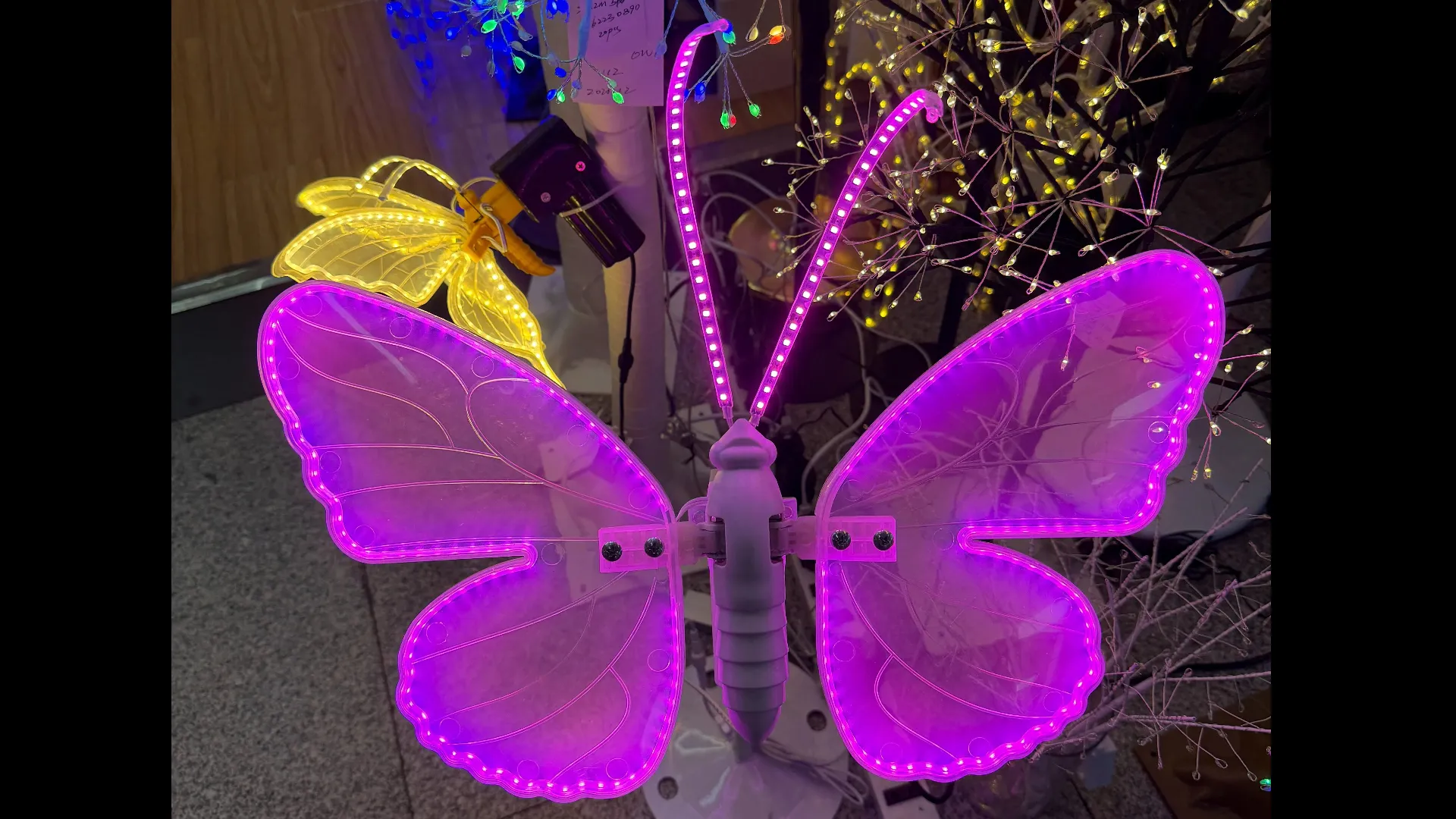
Two butterfly lights look almost exactly the same — the same wings, the same lighting, and the same size. One sells for $25, while the other sells for $45. You ask the supplier what the difference is, and they say, “The motor is different.”
Motor? Isn’t a butterfly light just a decorative light? How important can the motor be?
Very important. The biggest difference between a dynamic butterfly light and an ordinary garden light is that it does not just light up — it also moves. The wings need to flap, the motor needs to rotate, and the program needs to run. These mechanical movements happen every day, day after day, under wind, rain, and outdoor exposure. The motor is the core of this movement. If the motor is chosen correctly, the butterfly light can quietly flap in the garden for two or three years. If the motor is chosen incorrectly, the wings may stop moving after three months, the customer asks for a return, and you bear the loss.
If you have not yet read our Complete Buying Guide for Dynamic Butterfly Lights, we recommend reading that article first to understand the overall product selection logic for butterfly lights. This article focuses on only one thing: the motor.
Why Dynamic Butterfly Lights Place Higher Demands on Structure Than Ordinary Garden Lights
First, understand one basic fact: an ordinary solar garden light only needs to do one thing — light up. The LED beads turn on when powered, and the task is complete. The structure is simple, there are fewer failure points, and even if the LED beads fail, replacing one light is not a major loss.
A dynamic butterfly light needs to do three things at the same time: light up, flap its wings, and operate outdoors for a long time.
Lighting depends on LED strips, which is the same as ordinary garden lights. Wing flapping depends on the motor, transmission structure, and control program — things ordinary garden lights do not have. Long-term outdoor operation means waterproofing, dust resistance, high-temperature resistance, and cold resistance. These environmental factors accelerate motor aging and failure.
So when you judge the quality of a butterfly light only by whether it lights up, you are only looking at one-third of the product. A light that turns on does not mean the wings can keep moving. Wings that move do not mean the motor can withstand long-term use.
What Is the Difference Between a Built-in Motor and an External Motor?
This is the first question you need to confirm when purchasing butterfly lights. These two solutions are not “two versions of the same technology.” They are two completely different design approaches, with different costs, lifespans, and after-sales risks.
Built-in Motor: The Motor Is Hidden Inside the Butterfly Body
The motor is installed directly inside the butterfly body and drives the wings through an internal transmission shaft. The motor cannot be seen from the outside, so the overall appearance is cleaner and more integrated.
Cost: About $10, with a lower price.
Heat dissipation: Poor. The motor is enclosed inside the ABS body, so the heat generated during operation cannot escape easily. When outdoor temperatures exceed 30°C in summer, the internal temperature of the housing may reach 50–60°C, accelerating the aging of the motor insulation layer.
Stall protection: Usually not included. When the wings are blocked, the motor continues to run and may burn out within a few minutes.
Maintenance: It is almost impossible to replace the motor separately. Once the motor burns out, the entire butterfly light is scrapped.
Suitable scenarios: Low-price promotions, short-term displays, or customers who clearly require the lowest price and accept the risk.
Noise: Loud. The built-in motor is enclosed inside the body, so the operating sound is trapped inside. Combined with poor heat dissipation, the motor temperature rises, and the sound becomes louder after running for some time. Cheap built-in motors produce an obvious buzzing sound during operation, which can be heard even from two meters away.
External Motor: The Motor Is Installed Outside the Butterfly Body
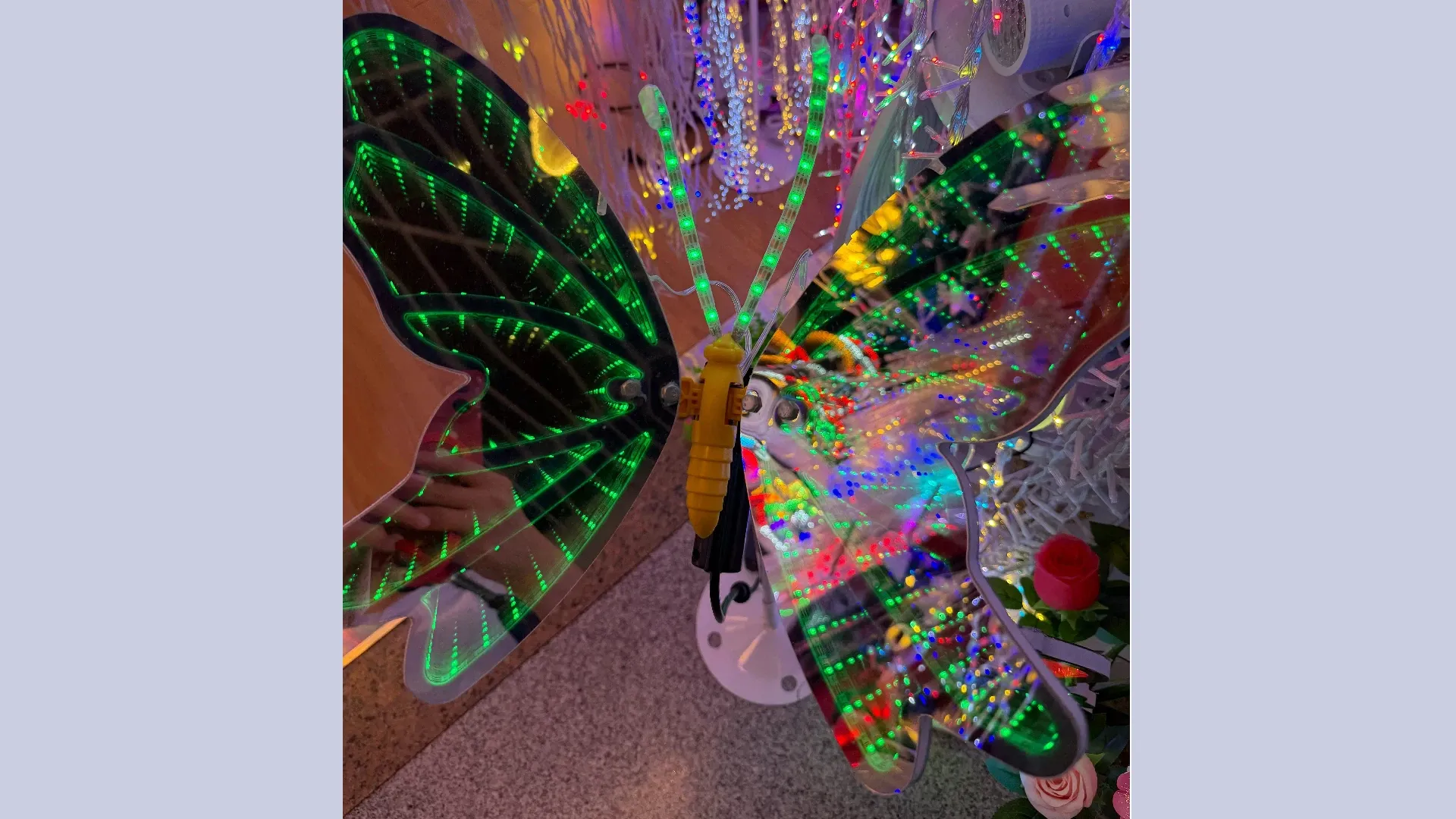
The motor is installed outside the body and connected to the wings through an external transmission rod. A small motor component can be seen from the outside, but heat dissipation and operating stability are greatly improved.
Cost: About $17, almost twice the cost of a built-in motor.
Heat dissipation: Good. The motor is exposed to air, runs at a lower temperature, and ages more slowly.
Stall protection: Commonly equipped. When the wings are blocked, the program automatically cuts off power to the motor to prevent burnout. Once the external force disappears, normal operation resumes.
Maintenance: The motor can be replaced separately, without scrapping the entire light.
Suitable scenarios: Wholesale sales, long-term outdoor use, and purchases that require a low return rate.
Noise: Low. External motors have better heat dissipation and lower operating temperatures, so the motor runs more smoothly. A good external motor is almost inaudible during operation, and only a slight buzzing sound can be detected when you get close. This is important for garden use — consumers want a quiet atmosphere in the garden, not a buzzing machine.
Built-in vs. External Motor Comparison
| Item | Built-in Motor | External Motor |
|---|---|---|
| Cost | About $10 | About $17 |
| Heat dissipation | Poor, high internal body temperature | Good, exposed to air |
| Stall protection | Usually not included | Commonly equipped |
| Maintenance | Once the motor burns out, the whole light is scrapped | The motor can be replaced separately |
| Noise | Loud, obvious buzzing sound, audible from two meters away | Low, only noticeable when close |
| Appearance | Motor is not visible, cleaner appearance | Motor component is visible |
| Suitable scenarios | Low-price promotions / short-term display | Wholesale/long-term outdoor use / low return requirements |
The conclusion is very direct: built-in motors are suitable for low-price trials, while external motors are more suitable for wholesale and long-term sales. The price difference is less than $10, but the difference in return rate may be several times higher.
Why Stall Protection Is Important
Stall protection is the most important functional difference between built-in motors and external motors. Many wholesalers hear this term for the first time and think that “wings getting stuck” is a rare situation. It is not.
Let’s restore a few real scenarios:
Scenario 1: In an autumn garden, a fallen leaf happens to get stuck between the wings and the body. The wings cannot move, but the motor keeps running. Without stall protection, the motor continues to force operation, the temperature rises, and it burns out within a few minutes.
Scenario 2: In a residential garden, a child sees the glowing butterfly and reaches out to grab it. The wings are pressed down, but the motor keeps running. Without stall protection, the result is the same.
Scenario 3: On a windy day, a nearby branch is blown over and presses against the wings. You cannot check every butterfly light in the garden every day to see whether it is stuck.
These are not extreme situations. They are normal-use scenarios. The meaning of stall protection is that when these things happen, the butterfly light will not be scrapped because of them. The motor detects abnormal resistance and stops automatically. Once the external force disappears, it resumes normal operation. For wholesalers, this means fewer returns, fewer complaints, and lower after-sales costs.
Wing Flapping Angle Is Not About Being Safer When Smaller — It Determines the Visual Effect
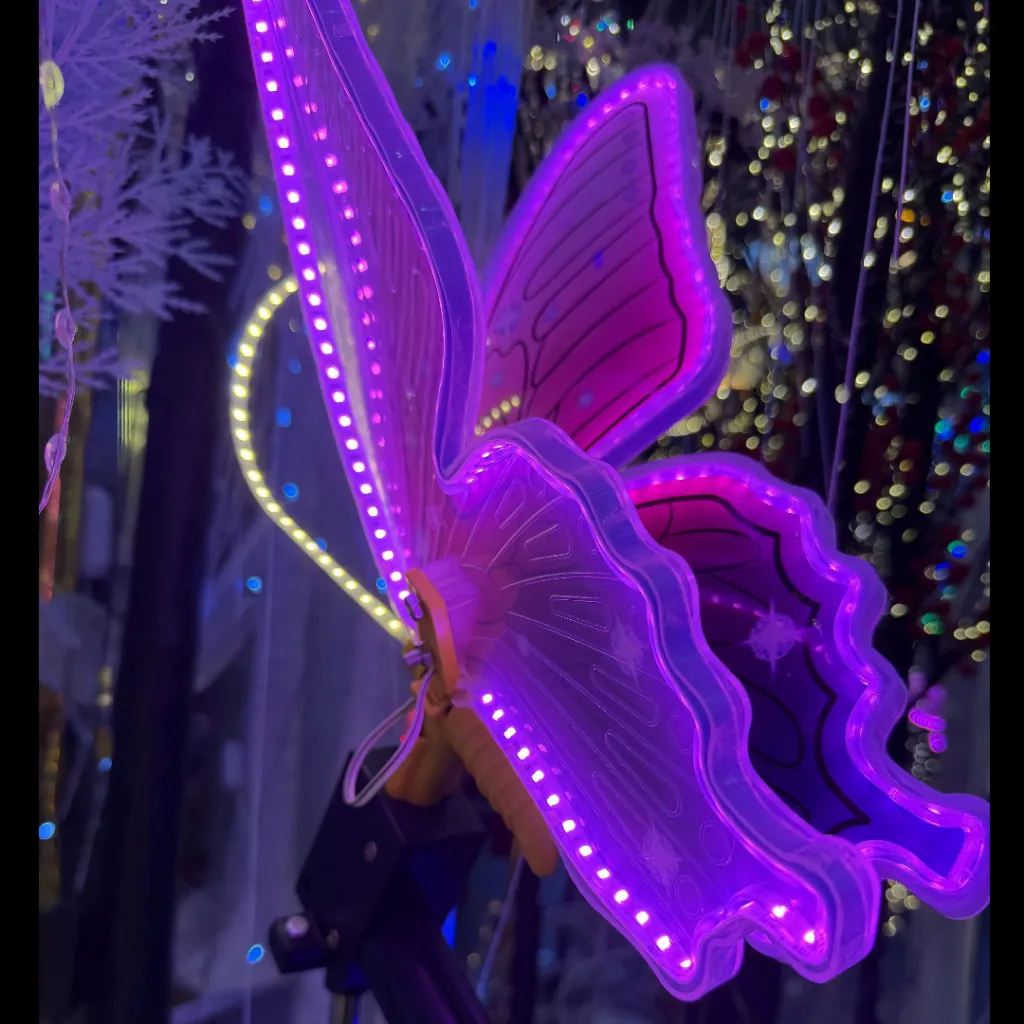
The wing flapping angle is another parameter that is easily overlooked. Low-cost products usually have a flapping angle of 40–60°. The wings only move slightly, which looks more like “shaking” than “flying.” An 80° flapping angle, combined with multi-stage program control — slow flapping, fast flapping, and intermittent pauses — can better reproduce a rhythm close to real butterfly wing movement.
The flapping angle directly affects four things:
Display appeal: A butterfly light with an 80° flapping angle has much stronger visual impact in a garden center or on an e-commerce product page. A 40–60° flapping angle looks like it is “trembling,” and consumers will not feel it is worth the price.
Video material effect: If your customers are e-commerce sellers, they need to shoot product videos. An 80° flapping angle gives the video a “living” feeling, while 40–60° may make the product look faulty.
Offline display effect: In garden centers and garden supply stores, an 80° flapping butterfly light can attract customers to stop and look. With a small flapping angle, customers may not even notice that it is moving.
Customer willingness to pay: A more realistic dynamic effect means higher pricing space. A butterfly light with an 80° flapping angle can be sold at a higher retail price, while a 40–60° version can only compete at a lower price.
But one point needs attention: a larger flapping angle depends more on motor stability. An 80° flapping angle means the motor needs to drive the wings through a larger movement each time, which requires higher motor torque and durability. Therefore, a large flapping angle must be paired with an external motor and stall protection. Otherwise, a larger flapping angle may actually accelerate motor damage.
Motor Noise: Not Just a User Experience Issue, but Also a Cost Difference
When you look at butterfly lights offline, you may notice one thing: some butterfly lights make an obvious buzzing sound during operation, which can be heard from two meters away, while others are almost silent and only produce a slight operating sound when you get close.
This is not accidental. Motor noise directly reflects motor quality and cost.
Cheap motors: The coil winding accuracy is low, the bearing clearance is large, and the dynamic balance is poor. During operation, vibration and noise are high. The cost can be pushed very low, but when consumers place the butterfly light in the garden, they get a buzzing machine beside them, which creates a poor experience. “Loud noise” is a high-frequency complaint in negative reviews.
Good-quality motors: The coil winding is precise, the bearing clearance is small, and the dynamic balance is calibrated. The motor runs smoothly and is almost silent. The cost is higher, but the consumer experience is better — the butterfly light quietly flaps its wings, like a real butterfly.
Noise differences can be identified at the sample stage. Power on two butterfly lights from different suppliers at the same time and listen from one meter away. If one buzzes loudly while the other is almost silent, you will know that the motor quality is one level apart. This difference may only be a few dollars in wholesale price, but it creates a completely different level of end-user experience.
So when you compare quotations from different suppliers, do not only ask, “Is the motor built-in or external?” You should also ask, “How loud is the motor during operation?” Or use a more direct method: ask the supplier to send samples and listen for yourself.
Six Motor Questions to Ask Suppliers Before Purchasing
Before placing an order, send these six questions to your supplier:
1. Is the motor built-in or external?
This is the most basic distinction and determines all subsequent judgments.
2. Does it have stall protection?
If the supplier answers clearly, it means the factory has control over this parameter. If they hesitate or say “they are all similar,” you should understand what that means.
3. What is the wing flapping angle?
80° is the dividing line. Below 60°, the flapping effect is not good enough. Above 80°, you need to pay attention to whether the motor can handle it.
4. Does the motor temperature remain stable after continuous operation?
A good motor will stabilize within a safe temperature range after running for 2–3 hours. If the temperature keeps rising, it means the heat dissipation design has a problem.
5. Can the motor be replaced or repaired separately?
Built-in motors usually cannot be replaced separately, while external motors can. This directly affects after-sales costs.
6. How loud is the motor during operation?
Or more directly: can you send samples so I can listen to them myself? A good motor is almost silent, while a poor motor buzzes loudly. Your customers will know the difference as soon as they use it.
These six questions do not require you to understand motor technology. You only need to know how to ask. The quality of the supplier’s answers is your basis for judging the factory.
How to Judge Whether the Motor Is Stable During Sample Testing
After receiving the samples, do not only check whether they light up and move. Do the following six tests.
Before that, here is one suggestion: take at least two samples — one with a built-in motor and one with an external motor. Power them on at the same time and place them on the same table for comparison. You do not need to understand motor technology. Your eyes and ears will tell you the difference. After the built-in motor version runs for half an hour, touch the body — its temperature will be noticeably higher than that of the external motor version. Gently press the wings with your finger — after release, the built-in version may flap more slowly or even stop, while the external version immediately returns to normal.
This is the value of dual-sample comparison. You do not need to ask the supplier “how big the difference is between built-in and external motors.” You can see it, touch it, and hear it yourself.
Step 1: Continuous power-on test.
Let the butterfly light run continuously for at least 4 hours. A good motor runs steadily, the sound does not get louder, and the wing flapping rhythm does not become slower. If the wing flapping clearly slows down or the sound becomes louder after 1 hour, there is a heat dissipation problem with the motor.
Step 2: Listen to the motor sound.
Move your ear close to the motor. A normal sound is a low and steady buzzing sound. If you hear sharp friction, intermittent clicking, or irregular abnormal noise, there is a problem with the motor or transmission structure.
Step 3: Check whether the left and right wings are synchronized.
The flapping amplitude and rhythm of both wings should be consistent. If one side is higher and the other is lower, there is an assembly deviation in the transmission rod.
Step 4: Observe whether the flapping rhythm is stable.
Program-controlled flapping should have a rhythm — fast flapping, slow flapping, and intermittent pauses. If the rhythm is chaotic or becomes faster or slower over time, there may be a problem with the control board.
Step 5: Check whether it can automatically recover after the wings are slightly blocked.
Gently press the wings with your finger for 2–3 seconds, then release. The wings should resume normal flapping. If the wings stop moving after release, or the flapping becomes noticeably slower, the motor has poor response capability to stalling.
Step 6: Test the consistency of multiple samples.
For samples from the same batch, the flapping angle, sound, and rhythm should be basically consistent. If the differences are obvious, the factory’s quality control is unstable.
When moving from sample approval to bulk shipment, buyers should also use an animated butterfly light inspection checklist to make sure motor movement, noise, and flapping stability are tested properly.
Which Motor Solution Should Wholesalers Choose?
Choose according to your target market and customer type:
Low-price promotion market: You can test the built-in motor version, but you must inform customers of the risks in advance — the motor has no stall protection and may burn out if it is blocked. It is suitable for short-term displays, one-time holiday use, and budget-sensitive customers.
Mid-range garden retail market: External motors are recommended. Your customers are residential garden users, and the butterfly light may be blown by the wind, touched by children, or blocked by fallen leaves. These scenarios all require stall protection. Spending a few more dollars on the motor saves returns and after-sales trouble later.
Gift and commercial scenarios: Prioritize external motors with stall protection. Commercial customers such as hotels, restaurants, and theme parks have higher requirements for stability. A butterfly light that stops moving is not just “broken” to them — it affects the image of the place. The gift scenario is even more obvious. If something given as a gift breaks, the customer will not come for repair; they will ask for a return.
Long-term repeat customers: Do not sacrifice motor stability just to save a few dollars. Your old customers trust you because the products you provide are reliable. One return caused by motor failure may cost you a long-term customer.
Final Thoughts
The appearance of a dynamic butterfly light determines whether customers are willing to stop and look. The motor determines whether they are willing to keep using it after buying it.
For wholesalers, the motor is not a hidden technical detail inside the body. It is the most important purchasing judgment standard for this product. Choose the right motor, and everything else is a configuration issue. Choose the wrong motor, and even the most beautiful wings are only decorating a light that may be returned.
If you are comparing dynamic butterfly light solutions from different suppliers, confirm the motor first — structure, flapping angle, and stall protection — before deciding whether to place an order. Not sure about the difference between built-in and external motors? Scarecrow can send you two samples at the same time so you can compare them yourself.
Talk to Queenie about butterfly light motor options, sample comparison, and wholesale configuration.
[Prices mentioned in this article are based on current market conditions. Please refer to the real-time inquiry for specific quotations.]
Simplify Your Garden Product Sourcing from China
We help you combine multiple product categories into one sourcing flow with supplier matching, sample verification, and consolidated shipping.
Written by
ScarecrowGarden
💡About Scarecrow Garden Supplier Co., Ltd.
Scarecrow Garden Supplier Co., Ltd. is a China-based sourcing and wholesale partner specializing in garden tools, landscaping equipment, and outdoor supplies for international wholesalers, distributors, contractors, and brands.
With hands-on experience rooted in real garden use scenarios, we focus on durable materials, functional design, and stable large-volume supply. Our product range covers pruning tools, watering systems, hand tools, outdoor hardware, and customized garden solutions to support both retail and professional landscaping markets.
Beyond products, we help our partners navigate supplier selection, quality control, compliance requirements, and long-term sourcing strategies in China. Through our blog, we share practical insights on product selection, material comparisons, industry trends, and cost-effective purchasing—helping global buyers build stronger, more competitive supply chains.