






Wholesale Frost Cover Fleece Sourcing: Material Specs & UV Standards | Scarecrow Garden Supplier
You receive two rolls of fleece, both labelled 30gsm. One feels soft and uniform. The other feels about the same. You check the weight, handle the fabric, hold it up to the light — everything checks out.
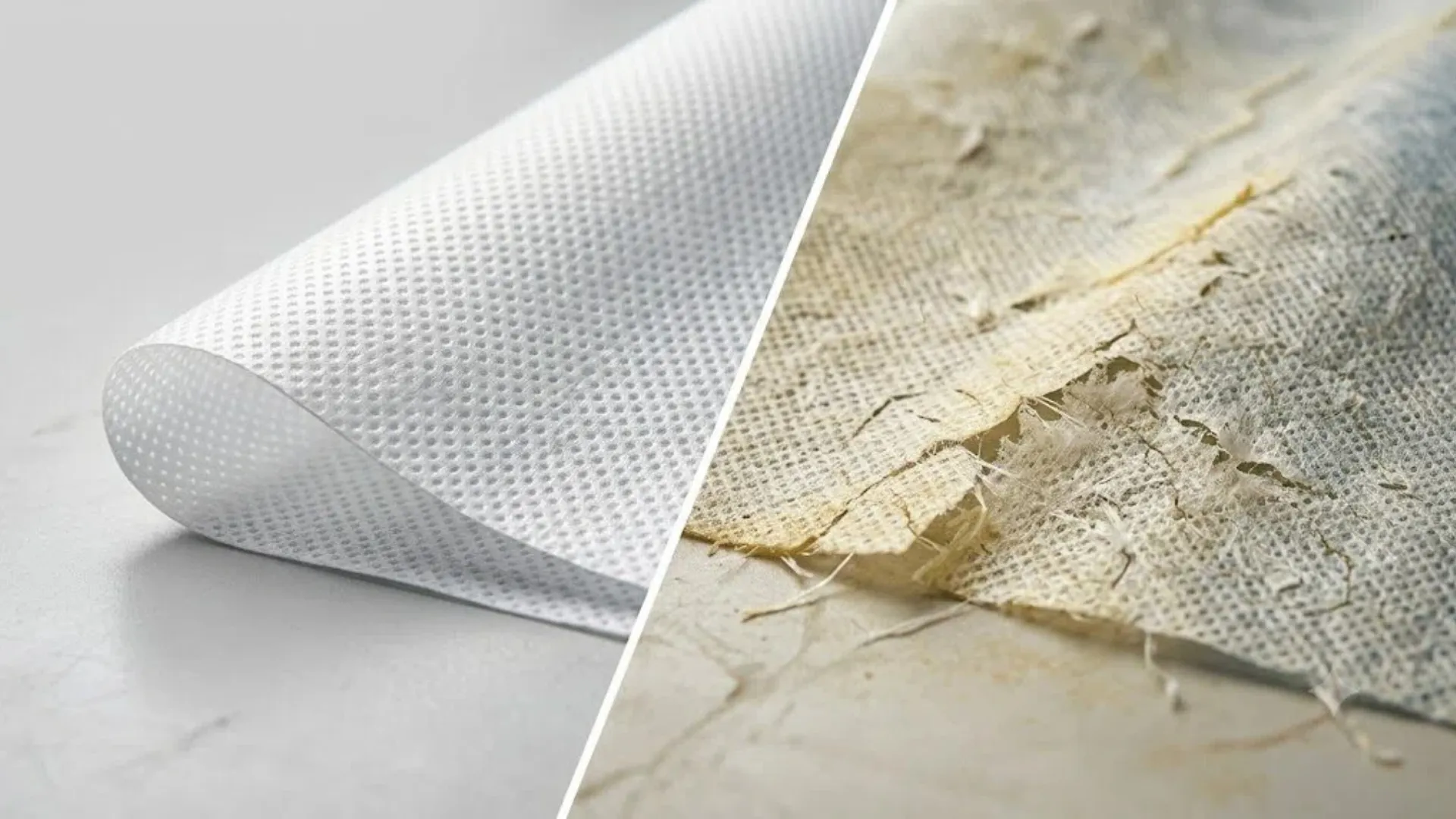
Leave both outside for one winter, and one roll still works in spring. The other turns brittle and tears after the first hard frost in February.
The difference is not where you can see it.
This article answers one question: when you cannot judge material quality by eye, what should you write on your spec sheet, test at inspection, and ask when a supplier claims “UV stabilised”?
This article is a deep dive into the Frost Cover sourcing cluster. If you have not decided which type of frost cover to source, start with the Wholesale Frost Cover Buyer’s Guide.
PP Spunbond Nonwoven: Why This Material Accounts for Two-Thirds of Global Production
Polypropylene (PP) spunbond nonwoven is the covering material for frost cover fleece — and the main character of this article. Frame materials for framed frost covers (polycarbonate glazing, galvanized steel, aluminium) are covered in the Cold Frame Materials article. PP accounts for roughly two-thirds of global spunbond production. Not because it is the “best” material, but because the raw material is inexpensive, it processes well, and it has the lowest density of any fibre (0.90 g/cm³ — it floats on water). It meets the core requirements for garden crop protection: lightweight, breathable, light-transmitting, and affordable.
But PP has a critical weakness: poor UV resistance.
The tertiary carbon atoms in PP’s molecular chain undergo photo-oxidation under UV exposure. The chain breaks, free radicals form, they combine with oxygen and trigger a chain reaction, and the molecular weight drops rapidly. The material turns brittle. This is not gradual ageing — it is an accelerating collapse. Like a rope: once one fibre snaps, stress concentration makes the adjacent fibres fail faster. Within weeks, tear strength can drop sharply.
This is why UV stabilisers are not an “upgrade option.” They are the variable that determines whether your fleece lasts one season or three. It is also why two rolls of identical-looking fleece can have a 3× difference in service life — the distinction lives in three variables your eyes cannot see.
Three “Invisible Variables”: You Cannot See Them, but They Determine Product Lifespan
Variable 1: UV Stabilisers — The Quality Factor Most Vulnerable to Corner-Cutting
UV stabilisers are the single most important “invisible” variable in frost cover sourcing. They account for roughly 5–10% of material cost (industry estimate), but there is no visual way to distinguish treated from untreated fabric.
UV stabilisation is not one thing — it is a combination of three mechanisms:
| Type | What it does | Representative products | Role in PP nonwoven |
| HALS (Hindered Amine Light Stabilisers) | Traps free radicals, interrupts the degradation chain | BASF Tinuvin 123, Chimassorb 944 | Primary choice — efficient, long-lasting |
| UVA (UV Absorbers) | Absorbs UV energy and converts it to heat | BASF Tinuvin 213 | Works synergistically with HALS — 1+1 > 2 |
| NOR HALS | Advanced HALS, resistant to acids and agrochemicals | BASF Tinuvin NOR 600 | Designed for harsh outdoor environments (roofing membranes, truck tarps, artificial turf); usually not necessary for standard fleece applications |
BASF’s Tinuvin range is the mainstream UV protection solution for PP nonwoven. HALS + UVA together deliver significantly better results than either one alone. HALS “puts out the fire” (traps free radicals), while UVA “reduces the fuel” (cuts the UV energy reaching the PP molecules).
The synergy is not just marketing language. Kurumada et al. (1987) demonstrated in Polymer Degradation and Stability that HALS and UVA produce a high-level synergistic effect in PP, with an optimal blend ratio of approximately 75:25 (HALS: UVA). The mechanism: UVA protects the polymer bulk from UV damage, while HALS migrates from the protected interior toward the photo-oxidising surface layer. The two work together in a way that neither can alone.
What does this mean in practice? A PP nonwoven automotive cover using BASF stabilisers was tested comparing single HALS versus HALS + UVA (based on a manufacturer’s test data): after 500 hours of QUV exposure, the single-HALS formulation retained roughly 35% tensile strength, while the synergistic HALS + UVA formulation retained 62%. Same material system, different UV protection strategy, nearly double the result. Automotive covers are not fleece, but the material system and UV protection mechanism are the same.
UV grade and expected lifespan:
| UV grade | Formulation | Expected outdoor lifespan | Cost increase (industry estimate) |
| No UV | None | 1 season — degrades rapidly | Baseline |
| Basic UV | HALS at base loading | 1–2 seasons | +5–10% |
| Enhanced UV | HALS + UVA synergistic | 2–3 seasons | +10–20% |
| Agricultural-grade UV | NOR HALS + UVA | 3–4 seasons | +20–30% |
Note: Formulation loadings and cost figures are industry estimates. Confirm with your supplier.
You will not see these numbers on a supplier’s quotation. So how do you confirm they actually added the stabiliser?
How buyers can verify UV stabilisation — this is the critical question, because visually there is zero difference:
| Method | Feasibility | Suitable scenario |
| QUV accelerated weathering test | ✅ Most authoritative | Pre-production sample verification |
| FTIR spectroscopy | ✅ Can detect HALS characteristic peaks | Requires lab; suitable for deep verification |
| Supplier declaration | ⚠️ Needs third-party report as back-up | Do not rely on a declaration alone |
| Outdoor exposure comparison | ⚠️ Requires 3–6 months | Too slow for sourcing decisions |
| Visual / hand-feel | ❌ Cannot distinguish at all | Do not waste time |
QUV testing is the gold standard for UV verification. We cover the specifics in the testing section below.
Need the full inspection checklist? Read Frost Cover Quality Control: Tests, Defects, and Inspection Checklist.
UV stabilisers solve the lifespan problem. But if you have not chosen the right raw material, adding more stabiliser is wasted effort.
Variable 2: Virgin PP vs Recycled PP — A Material Fork You Cannot See
100% virgin PP and recycled PP fleece are nearly impossible to distinguish in the finished product. But the performance gap is significant:
| Property | 100% virgin PP | Recycled PP | Impact on buyers |
| Fibre strength | High and consistent | Lower and highly variable | Recycled material returns come from batch inconsistency — not every roll is bad, but you never know which one is |
| Weight consistency | Nominal ±3–5% | Nominal ±10–15% | Recycled material has uneven density; GSM can vary 15% within a single roll |
| UV stabiliser compatibility | Good | Poor (impurities interfere) | Residual contaminants in recycled PP consume HALS, reducing their effectiveness |
| Batch-to-batch variation | Low | High | Your second order may not match your first |
| Cost difference | Baseline | –15 to 25% (industry estimate) | Short-term savings, long-term returns |
Here is the cascading effect that buyers often miss: recycled material does not just have lower strength — it actively undermines UV stabiliser performance. Residual contaminants in recycled PP (catalyst residues, colourants, other polymers) react with HALS and neutralise them. The UV protection fails sooner. In practice, recycled PP + enhanced UV may perform worse than virgin PP + basic UV.
Research from Eskisehir Technical University quantifies the trade-off. In this study, a 10% recycled PP blend with 90% virgin PP delivered the best results without compromising fabric quality. But at 20% recycled content, tensile strength drops by approximately 26.9%. Meanwhile, the Melt Flow Index (MFI) of recycled PP ranges from 38 to 104 — far above standard values — indicating significant molecular weight degradation. Different recycled feedstocks vary wildly: one batch (PP1) measures MFI 38, another (PP5) measures 104. You are not just buying “recycled PP” — you are buying an unknown variable.
Choose the right raw material, and you still need the process to deliver.
Detection method: At the sample stage, measure actual GSM and tensile strength. GSM testing is straightforward: cut a 10 cm × 10 cm specimen (100 cm²), weigh on a precision balance (0.01 g accuracy), and multiply the weight in grams by 100 to get GSM. Take samples from the beginning, middle, and end of the roll. If the average of all three falls within ±5% of the nominal value, it passes. If variation exceeds 10%, you are likely dealing with recycled or blended material.
Variable 3: Thermal Bonding — Whether the Fabric Will Delaminate
In the spunbond production line, thermal bonding (calendering) is the step that fuses fibres together. PP pellets → extrusion and melting → spinning → pneumatic drawing → web formation → thermal bonding → winding → slitting → packaging.
Calender temperature and pressure determine how well the fibres bond. Insufficient temperature or pressure means fibres are not securely fused — the fabric delaminates in use. Fibres shed, the fabric thins, and tear resistance collapses.
Research by Zhang and Qian (2011, Technical Textiles / 产业用纺织品) confirms that increasing calender pressure improves mechanical performance, while increasing line speed reduces fabric strength. When manufacturing heavier-weight nonwoven at higher line speeds, temperature and pressure must be adjusted to compensate. A supplier running their line too fast without adjusting calender settings is producing fabric with weak inter-fibre bonds — and you will not see it until the fleece starts shedding fibres in the field.
Detection method: The tape pull test. Press clear adhesive tape onto the fabric surface and peel it off quickly. If the tape picks up significant fibre, the thermal bonding is insufficient. This is a one-minute test you can do at inspection.
Another process variable — draw ratio: Affects fibre orientation and determines the strength difference between machine direction (MD) and cross direction (CD). Under-drawn fleece may meet MD strength targets but fail in CD — and wind-induced tearing almost always starts in the cross direction.
GSM Misrepresentation: The Biggest Trust Risk in Fleece Sourcing
Nominal 30gsm, actual 25gsm — this is not an isolated case. GSM overstatement is the most widespread quality problem in fleece sourcing.
Typical patterns of misrepresentation:
- Labelled 30gsm, actual 25–27gsm
- Labelled 50gsm, actual 42–45gsm
- Causes: uneven recycled material density, poor production control, deliberate under-specification
Why it is dangerous: A 25gsm fleece performs similarly to a 30gsm fleece under light frost. But below –5°C or during sustained freezing, the insulation gap translates directly into customer returns. More critically, GSM misrepresentation and recycled material often appear together — because recycled material’s uneven density already causes large GSM variation.
GSM and performance:
| GSM | Light transmission (reference values) | Breathability | Insulation effect | Typical use |
| 17gsm | 85–90% | Highest | Approx. 1°C | Spring insect barrier, light frost protection |
| 25gsm | 80–85% | High | Approx. 1–2°C | Entry-level frost protection |
| 30gsm | ≥70% | Medium-high | Approx. 2°C | Market’s best-selling specification |
| 50gsm | 50–70% | Medium | Approx. 3–4°C | Heavy frost protection, overwintering |
| 80gsm | <50% | Medium-low | Approx. 4–5°C | Extreme cold, long-term covering |
Note: Light transmission values are industry reference values and vary with production process and fibre fineness. Insulation effects are industry estimates; actual performance depends on air layer, covering method, wind speed, and other factors.
These numbers are what your customers experience. The question is whether the fleece you receive actually matches them.
Complete GSM testing procedure:
- Take 3–5 samples from different positions along the roll (beginning, middle, end)
- Cut precisely to 10 cm × 10 cm (100 cm²)
- Weigh on a precision balance (0.01 g accuracy)
- Calculate: weight (g) × 100 = GSM
- Pass criterion: average of all samples within ±5% of nominal value
If the supplier quotes 30gsm and your measured average is 28.5gsm — that is within ±5% tolerance (28.5–31.5). Acceptable. If you measure 25gsm — that is not tolerance variation. That is misrepresentation.
This is where it gets real. You place an order for 30gsm fleece across three factories. The goods arrive at our warehouse. Our quality inspectors pull a sample from each roll and measure GSM on the spot — and two of those rolls come in at 25gsm. Same label, different reality. Before you pay the balance, we send you the measured data with photos. You decide whether to accept, reject, or negotiate — but you make that call with real numbers, not a supplier’s word. For mixed orders, this matters even more: fleece from different factories may carry the same 30gsm label but differ by 3–4gsm in actual weight, with a hand-feel difference you can detect. What ships to you is not just the product — it is the verification record.
QUV Accelerated Weathering: The Gold Standard for UV Verification
When you need to confirm whether a supplier actually added UV stabiliser — and whether the loading is sufficient — QUV testing is the most authoritative method.
Test principle: UVA-340 lamps simulate the UV radiation in sunlight, accelerating material ageing. A common test cycle: 0.89 W/m² @ 340nm, 8 hours UV / 4 hours condensation (ASTM G154 Cycle 1). 500 hours of QUV exposure is roughly equivalent to 1–2 years of outdoor exposure (industry estimate; actual equivalence depends on geographic location and climate).
Test procedure:
- Cut samples — 5 strips each in machine direction and cross direction
- Measure initial tensile strength
- Place in the QUV chamber, run for 500 hours
- Remove and re-test tensile strength
- Calculate strength retention = (aged strength ÷ initial strength) × 100%
Interpretation:
| Strength retention | Assessment | Meaning |
| ≥50% | Pass | UV stabiliser is effective |
| 30–50% | Marginal | UV loading is insufficient; monitor |
| <30% | Fail | No UV, or UV has already degraded |
Note: Specific QUV test conditions and pass/fail criteria should be agreed with your supplier. The values above are industry reference standards.
When to run QUV tests: You do not need to test every production batch. Run one test at first sample approval to confirm the supplier’s UV formulation works. After that, test once every 6–12 months as a spot-check to monitor quality consistency.
Five Quick Inspection Tests — No Lab Required
Not every test needs specialised equipment. Here are five checks you can perform on the spot:
| Test | Tool | Method | Pass criterion | Time |
| GSM | Precision balance + cutting die | Sample and weigh, convert to GSM | Within ±5% of nominal | 10 minutes |
| Tape pull test | Clear adhesive tape | Press onto fabric, peel quickly | No significant fibre transfer to tape | 1 minute |
| Float test | Glass of water | Cut a small piece, place it in water | Floats = primarily virgin PP; sinks = may contain high recycled content | 1 minute |
| Tear feel | None | Tear a small notch in the cross direction | Resistant, progressive tearing = good; brittle, sudden failure = poor | 1 minute |
| Light transmission check | Light source | Hold fabric up to light, check uniformity | No obvious bright/dark stripes | 1 minute |
GSM testing is the most valuable of the five — it exposes both misrepresentation and recycled material in one step. If measured GSM varies more than 10% across samples, you already know the material has problems without running QUV.
How Material Problems Become Complaints — Failure Mode Reference Table
| Material issue | How it fails | Complaint you will hear | Verification method |
| Recycled/blended material | Inconsistent strength between batches | “This batch is different from the last one” → partial returns | Multi-batch tensile sampling |
| Underweight GSM | Low tear resistance, wind tearing | “It tore in the first wind” → returns | GSM measurement |
| No UV stabiliser | Degrades after 1 season outdoors | “Bought it last year, it crumbled when I touched it” → no repeat purchase | QUV test |
| Insufficient thermal bonding | Fabric delaminates, fibre shedding | “It got thinner the more I used it” → premature failure | Tape pull test |
| Edge fraying | Tears propagate from the edges | “It split after a week” → returns | Edge tensile test |
| Poor fastening | Wind lifts the cover, plants exposed | “The wind blew it off, and my plants froze” → negative reviews | Fastener check |
Notice the pattern: material problems rarely surface in the first month. Underweight fleece looks fine under light frost — it fails during sustained freezing or storm conditions. Fleece without UV stabiliser looks perfect in autumn; by the time it turns brittle in spring, the consumer does not return it — they simply never buy from you again. This is why material verification must happen at the sourcing stage, not through after-sales feedback.
REACH Compliance: A New Risk for UV Stabilisers
This is an area where the regulatory landscape has shifted since most sourcing guides were written.
In January 2024, ECHA added two common UV absorbers to the REACH SVHC Candidate List:
- UV-329 (2-(2H-benzotriazol-2-yl)-4-(1,1,3,3-tetramethylbutyl)phenol)
- UV-326 (2-tert-butyl-6-(5-chloro-2H-benzotriazol-2-yl)-4-methylphenol)
If your PP nonwoven product contains either substance above 0.1% by weight, you must notify the SCIP database for EU market access. This is not theoretical — these are widely used benzotriazole UV absorbers in PP formulations.
What this means for sourcing:
| Action | Why |
| Ask your supplier which specific UVA they use | UV-326 and UV-329 are common; UV-213 and others are not on the SVHC list |
| Request a REACH SVHC declaration | Covers all 253 substances on the current list (as of February 2026) |
| If the supplier uses UV-326 or UV-329, request SCIP notification details | Required for EU market access |
| Consider specifying non-SVHC UVA alternatives | BASF Tinuvin 213 is a hydroxyphenyl benzotriazole UVA not on the SVHC list |
Additionally, EU Regulation 2024/2462 restricts PFHxA (perfluorohexanoic acid), its salts, and related substances. PP itself does not contain PFAS, but certain water-repellent treatments might — verify with your supplier if your product has any surface treatment beyond UV stabilisation.
What to Write on Your Spec Sheet
Condensing everything above into a specification table — these are the parameters you should define when you send an enquiry:
Covering material:
| Parameter | Write this | Do not just write |
| Raw material | 100% virgin PP | “PP nonwoven” (could be recycled) |
| GSM | 30gsm (±5%, verified by measurement) | “30gsm” (could be overstated) |
| UV treatment | HALS + UVA synergistic, QUV 500h strength retention ≥50% | “UV stabilised” (no verification standard) |
| Light transmission | ≥70% (at 30gsm) | “High light transmission” (no numerical value) |
| Breathability | State water vapour transmission rate | “Breathable” (no numerical value) |
| Shrinkage | ≤5% | Not mentioned |
| UVA type | Specify non-SVHC UVA (e.g., Tinuvin 213) if the EU market | “UV stabilised” (may contain SVHC-listed UV-326/329) |
Claims You Cannot Make — Regulatory Red Lines
On product packaging and marketing materials, the following claims carry compliance risk:
| Claim | Allowed? | Reason |
| “Eco-friendly/biodegradable” | ❌ No | PP is not biodegradable. Any such claim requires certification |
| “Food-grade” | ❌ No | Unless compliant with EU 10/2011 and supported by test reports |
| “Frost-proof” | ❌ No | Cannot imply protection at any temperature |
| “UV stabilised” | ⚠️ Must state conditions | Must specify expected lifespan and test conditions |
| “Breathable” | ⚠️ Must state values | Must specify breathability data |
Material Grade Positioning: Good / Better / Best
| Grade | Raw material | UV treatment | Expected lifespan | Target channel |
| Good | Recycled PP or blend | None | 1 season | Promotional items, single-use |
| Better | 100% virgin PP | Basic UV (HALS) | 1–2 seasons | Garden centres, e-commerce |
| Best | 100% virgin PP + additives | Enhanced UV (HALS + UVA synergistic) | 2–3 seasons | Nurseries, distributors |
These three grades correspond to different sourcing strategies. Good-grade works for promotional items and low-risk scenarios — but you absorb the return risk. Better-grade is the market mainstream with the best value-for-money. Best-grade targets customers willing to pay a premium for durability.
If you sell on Amazon UK and your customers leave reviews after one season, Better-grade is your floor — anything less and you are betting against your own repeat rate. If you supply nurseries who buy by the pallet and expect three-season performance, Best-grade is not an upgrade — it is the specification that prevents returns.
The Cost-Risk Trade-Off in Material Selection
| Choice | Cost change | Risk change | Commercial impact |
| Recycled vs virgin material | Save 15–25% | Return rate ↑, batch inconsistency | Short-term savings, higher after-sales cost |
| No UV vs with UV | Save 5–10% | Lifespan drops from 2 seasons to 1 | Low repeat purchase rate → lower customer lifetime value |
| Basic UV vs enhanced UV | Spend 5–10% more | Lifespan rises from 2 to 3 seasons | Nursery customers pay a premium for durability |
| 30gsm vs 50gsm | Spend 20–30% more (industry estimate) | Tear-related returns ↓ | Two different positions for two different customer segments |
The core calculation: saving 5–10% on UV cost buys you half the lifespan and lower repeat purchase rates. For garden centre and e-commerce channels, “I bought it last year and it still works” is the strongest word-of-mouth driver — more effective than any marketing spend. For nurseries, durability directly determines the buying decision.
Tell us what you need the fleece to survive — Scarecrow Garden Supplier will match it with the right material grade and a spec sheet you can verify.
Talk to Queenie about your frost cover material specifications → Start the conversation
FAQ
Q1: Can I tell the difference between virgin and recycled PP fleece by touch?
No. The hand-feel is nearly identical in the finished product. The only reliable detection methods are GSM consistency testing (recycled material shows >10% variation within a roll) and tensile strength testing across multiple batches. The float test (virgin PP floats, heavily recycled material may sink) is a rough indicator, not a definitive test.
Q2: My supplier quotes “UV stabilised” with no further details. What should I ask?
Ask three things: (1) Which specific stabiliser system — HALS only, or HALS + UVA? (2) What is the QUV 500-hour strength retention result? (3) Which UVA type is used — and is it on the REACH SVHC list? If they cannot answer question 3, you may have a compliance issue for EU market access.
Q3: Is 10% recycled PP blend acceptable for frost cover?
Research from Eskisehir Technical University shows that, in their study, a 10% recycled PP / 90% virgin PP blend can maintain fabric quality. But at 20% recycled content, tensile strength drops approximately 27%, and the MFI variability of recycled feedstock introduces significant batch inconsistency. If you use recycled content, specify a maximum blend ratio and enforce it with tensile testing.
Q4: How often should I run QUV tests?
Once at initial sample approval to verify the supplier’s UV formulation. After that, once every 6–12 months as a spot-check. You do not need to test every production batch — but you do need a baseline and periodic monitoring to catch formulation changes.
Q5: What is the difference between HALS and UVA, and do I need both?
HALS traps free radicals (stops the degradation chain), while UVA absorbs UV energy before it reaches the polymer. They work synergistically: Kurumada et al. (1987) showed that a 75:25 HALS: UVA blend in PP delivers significantly better retention than either additive alone. For frost cover, HALS + UVA is the recommended minimum for multi-season performance.
Q6: Are UV-326 and UV-329 still commonly used in PP nonwoven?
Yes — they are effective and inexpensive UV absorbers. But both were added to the EU REACH SVHC Candidate List in January 2024. If your product enters the EU market and contains either above 0.1%, SCIP notification is required. Ask your supplier to specify which UVA they use, and consider requesting non-SVHC alternatives such as Tinuvin 213.
Turn Your Frost Cover Requirements into a Practical Sourcing Plan
If you are planning a frost cover range for the autumn and winter season, send us your product list, target market, estimated quantities, and packaging requirements. We can help you compare options, verify key specifications, consolidate products from multiple factories, and prepare a practical sourcing plan.
Tell us what you need, and we will help you review suitable sourcing options.
Start Your Enquiry
Written by
ScarecrowGarden
💡About Scarecrow Garden Supplier Co., Ltd.
Scarecrow Garden Supplier Co., Ltd. is a China-based sourcing and wholesale partner specializing in garden tools, landscaping equipment, and outdoor supplies for international wholesalers, distributors, contractors, and brands.
With hands-on experience rooted in real garden use scenarios, we focus on durable materials, functional design, and stable large-volume supply. Our product range covers pruning tools, watering systems, hand tools, outdoor hardware, and customized garden solutions to support both retail and professional landscaping markets.
Beyond products, we help our partners navigate supplier selection, quality control, compliance requirements, and long-term sourcing strategies in China. Through our blog, we share practical insights on product selection, material comparisons, industry trends, and cost-effective purchasing—helping global buyers build stronger, more competitive supply chains.