








Wood and metal raised garden beds compared for outdoor garden use
A customer walks into a garden center and sees two raised beds side by side. One is cedar — warm, natural, with visible grain. The other is corrugated steel — clean, modern, in a slate green finish. The customer touches the wood, admires the texture, and picks the cedar bed. It looks like a garden should look.
Eighteen months later, the cedar bed has darkened with moisture. The bottom boards are softening where they contact the soil. A customer lifts the bed and finds slugs underneath. The metal bed next to it looks the same as the day it was installed — maybe a little dirt on the panels, but structurally unchanged.
This is the gap between appearance and performance that wholesale buyers need to understand. Wood and metal raised beds serve different customers, generate different after-sales profiles, and require different sourcing strategies. Choosing between them based on looks alone is how buyers end up with review profiles they did not expect.
Appearance: Natural Warmth vs Modern Consistency
Wood wins on first impression. Cedar, redwood, and cypress have a natural warmth that no metal coating can fully replicate. For customers who want their raised bed to look like it belongs in a cottage garden — not a modern design catalog — wood is the emotional choice. The grain, the color variation, and the texture all signal “natural” in a way that resonates with traditional gardeners.
Metal wins on consistency and color control. A 0.6mm Al-Zn-Mg coated steel bed in olive green looks exactly the same in every batch. The color is controlled by the steel coil coating process, not by natural variation in wood grain. A customer who buys a cedar bed online may receive one that looks warmer or cooler than the product photo — because no two pieces of wood are identical. A customer who buys a metal bed in olive green gets olive green, every time. For brand builders who need their product to look identical across thousands of units — for website photography, social media content, and retail display — metal offers a consistency that wood cannot match.
The B2B implication: If your customers sell on visual appeal and natural aesthetics, wood has an advantage at the point of sale. If your customers sell on brand consistency, color range, and modern design, metal is the better choice. The question is not which looks better — it is which matches your customer’s brand.
If your customers are split between wood and metal preferences, request our latest model list and quotation sheet — it covers both wood and metal raised bed options with material specs, weight, shipping costs, and pricing so you can compare the total cost and after-sales risk profile for each material.
Maintenance: Ongoing Care vs Occasional Inspection
Wood requires active maintenance. Cedar and redwood resist rot naturally, but they still need periodic sealing or staining to maintain their appearance and extend their life. Without treatment, wood exposed to sun and rain will gray, crack, and eventually warp. Boards in direct soil contact will soften and decay — typically within 3-5 years for standard pine, and 7-10+ years for cedar with proper care. Replacing individual boards is possible but requires sourcing matching lumber, cutting to size, and reassembling the affected section.
Metal requires inspection, not treatment. A galvanized steel or Al-Zn-Mg coated steel bed does not need sealing, staining, or painting. The main maintenance task is checking the bolt holes and connection points for signs of rust — particularly on galvanized steel beds, where the zinc coating at cut edges can wear over time. Al-Zn-Mg coated steel addresses this with its cut-edge self-healing property, where magnesium in the coating forms a protective film at exposed edges. Beyond that, metal beds can be wiped clean and left alone.
The B2B implication: Wood beds generate a long tail of maintenance-related customer inquiries — “How do I treat the wood?” “When should I reseal?” “The bottom board is rotting. What do I do?” Metal beds generate fewer of these inquiries because there is less to maintain. If your customer service team is small or your channel does not support post-sale guidance well, metal is the lower-maintenance choice.
If your customers are split between wood and metal preferences, we can help prepare side-by-side sample comparisons showing the weight, finish, hardware, and maintenance requirements of each material — so your sales team can guide buyers with confidence.
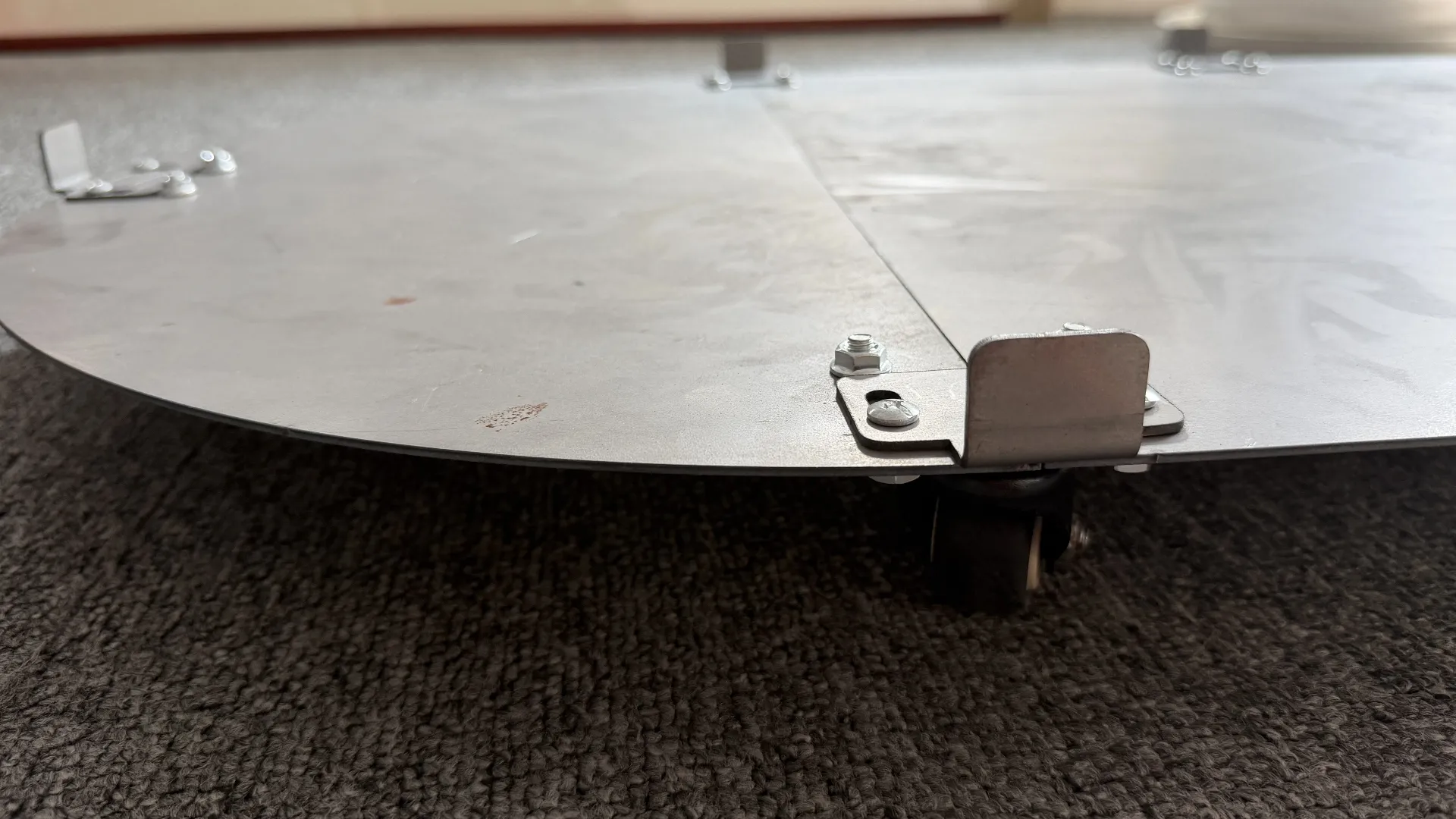
Pests and Moisture: The Hidden Cost of Wood
This is where the wood vs metal comparison becomes most consequential — and where B2B buyers who skip this topic end up with the most painful review profiles.
Wood and moisture are a pest-friendly combination. Wood absorbs water from soil contact. In a raised bed, the bottom boards and interior surfaces are in constant contact with damp soil. Over time, this creates the exact environment that slugs, snails, and other garden pests seek out: dark, damp, and sheltered. University extension programs — including Oregon State University and UC Integrated Pest Management — commonly recommend using boards and flat objects as slug trapping stations, which tells you something about how attractive damp wood is to these pests.
This does not mean every wooden raised bed will have a pest problem. But it does mean that wood creates conditions that can favor pest activity, particularly in humid climates or poorly drained gardens. The risk is environmental, not guaranteed — but it is real enough that B2B buyers should factor it into their material choice.
Metal does not create this environment. Metal surfaces are smooth and non-absorbent. They do not provide the damp, sheltered crevices that pests prefer. A metal raised bed will not eliminate garden pests — slugs and snails will still be present in the garden — but the bed itself is not contributing to the problem the way damp wood can.
Termite risk is region-specific but worth noting. In regions where termites are active (southern U.S., Australia, parts of the Mediterranean), untreated wood in ground contact is a known termite attractant. Pressure-treated wood resists termites but introduces the chemical leaching concern mentioned earlier. Metal is not susceptible to termite damage.
Risk reminder: Pest and moisture issues typically surface 12-24 months after installation — which means they show up in reviews long after the return window has closed. A wooden bed that looks perfect in spring may generate “slugs under the bed” or “boards softening” reviews the following year. These reviews are permanent, and they shape future customers’ purchase decisions.
If you are evaluating pest and moisture risk for your market, request our material comparison video — we show how wood and metal raised beds differ in moisture absorption, surface condition, and structural behavior after outdoor exposure, so you can assess which material carries lower after-sales risk for your climate.
If you want to look deeper into the practical risks behind wooden beds, read our detailed article on why wooden raised garden beds may attract pests, moisture, and maintenance problems.
Shipping and Standardization: Why Metal Wins the Export Game
Wood is heavier and less predictable. A cedar raised bed kit weighing 40-60 lbs costs more to ship per unit than a metal bed at 20-30 lbs. Wood dimensions also vary — natural lumber has knots, grain differences, and moisture content variations that affect how pieces fit together. A batch of wooden beds may have slight size differences between units, which is acceptable in a rustic product but problematic for a brand promising precision.
Metal is lighter and perfectly standardized. Every panel in a metal bed production run is cut from the same steel coil, with the same thickness, the same coating, and the same hole pattern. This consistency makes quality control straightforward — you inspect one panel from the batch and you have a good picture of the whole run. Metal beds also flat-pack more efficiently: panels stack neatly, hardware goes in a bag, and the whole kit fits in a compact carton.
For buyers planning a higher-end metal product line, it is worth understanding why premium metal raised garden bed brands use 0.6mm Aluzinc or Zn-Al-Mg steel.
The B2B implication: If you are importing raised beds from China, metal is the more export-friendly material. Lower shipping weight, smaller carton volume, more predictable quality, and easier warehouse inspection. Wood beds can be imported successfully — but the logistics, quality variation, and weight penalties make them better suited to local sourcing or regional supply chains.
| Factor | Wood | Metal |
| Shipping weight (typical 4x8 bed) | 40-60 lbs | 20-30 lbs |
| Carton volume | Larger (thicker panels) | Compact (flat-pack) |
| Unit-to-unit consistency | Natural variation | Identical (steel coil) |
| Quality inspection method | Visual (check knots, grain, moisture) | Caliper + visual (check thickness, coating, holes) |
| Moisture sensitivity in transit | Can warp if stored damp | Not affected |
| Best sourcing model | Local or regional | Global (flat-pack import) |
Retail Display: Rustic Charm vs Modular Systems
Wood excels in natural-style retail settings. A cedar raised bed on a garden center floor, surrounded by plants and gardening tools, looks like it belongs. The natural material creates an emotional connection with customers who see themselves as “real gardeners.” For independent garden centers and specialty retailers, wood products support a curated, authentic merchandising story.
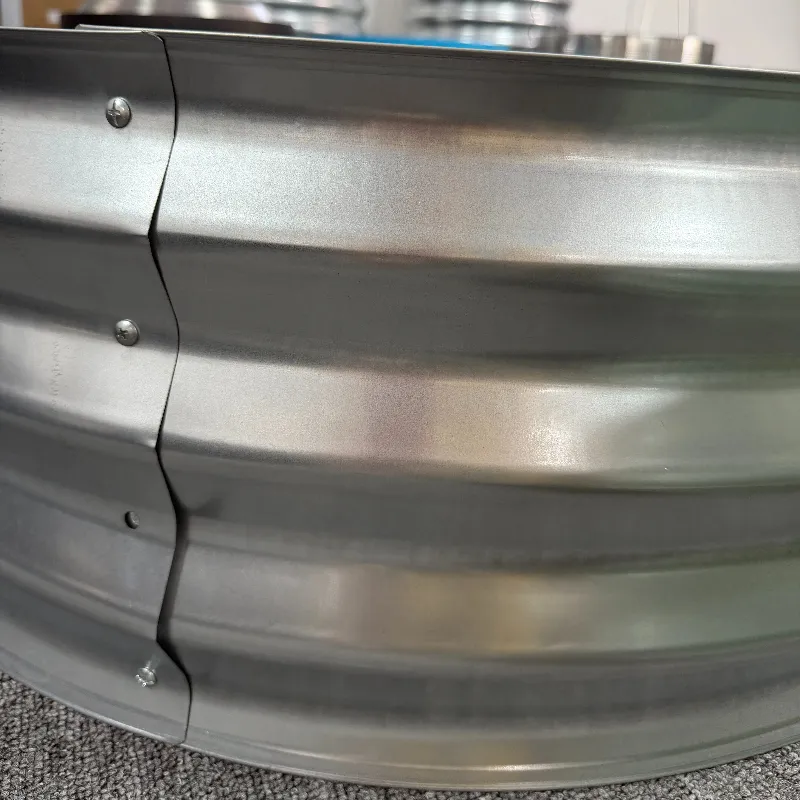
Metal excels in modular, color-driven display. A row of metal raised beds in different colors — olive green, slate, cream, terracotta — creates a visual system that wood cannot replicate. A garden center that stocks 3 metal bed colors in a modular 9-in-1 kit can display 9+ configurations on the floor from just 3 SKUs — this is a merchandising efficiency that wood cannot match. Metal beds also photograph consistently for social media and e-commerce. And the color options allow seasonal refreshes — a spring display in sage green, a fall display in slate gray.
The B2B implication: If your retail customers value natural aesthetics and hands-on merchandising, wood fits. If your customers want color-coordinated displays, modular flexibility, and social media-ready visuals, metal is the stronger choice. Many successful garden retailers carry both — wood for the traditional customer, metal for the modern one.
Wood vs Metal Quick Reference Checklist
| Question | If Yes, Consider Wood | If Yes, Consider Metal |
| Is your customer a traditional gardener who values natural materials? | ✅ | |
| Does your channel require flat-pack import from China? | ✅ | |
| Is color consistency across thousands of units important? | ✅ | |
| Does your customer want low maintenance and minimal after-sales support? | ✅ | |
| Is your target market in a termite-active region? | ✅ | |
| Does your customer want modular configurations (one SKU, multiple shapes)? | ✅ | |
| Is natural aesthetic the primary selling point? | ✅ | |
| Is your customer service team equipped to handle maintenance inquiries? | ✅ | |
| Does your customer sell primarily through e-commerce? | ✅ |
Next Step: Choose Based on Performance, Not Just Appearance
Wood and metal raised beds are not competing products — they are different products for different customers. Wood serves the gardener who values natural beauty and is willing to maintain it. Metal serves the gardener who wants low maintenance, consistent quality, and modern design. Both are valid choices. The mistake is not choosing wood or metal. The mistake is choosing based on a product photo and being surprised by what happens after two years in a garden.
If you are not only comparing wood and metal, the next step is to decide which material fits your market across wood, metal, plastic, fabric, and other raised bed options.
If you are sourcing raised beds and need help comparing wood and metal options from a maintenance, shipping, and after-sales risk perspective — not only by appearance — request a sample set. We can send both wood and metal panels so you can compare weight, finish, and material quality in person before deciding on your product line.
You focus on selling. Scarecrow Garden Supplier can help you source, verify, organize, and ship.
Send Your Requirement, We Help You Check the Right Option
Suitable for garden centers, wholesalers, importers, and e-commerce sellers who want to compare products before bulk purchasing.

Written by
ScarecrowGarden
💡About Scarecrow Garden Supplier Co., Ltd.
Scarecrow Garden Supplier Co., Ltd. is a China-based sourcing and wholesale partner specializing in garden tools, landscaping equipment, and outdoor supplies for international wholesalers, distributors, contractors, and brands.
With hands-on experience rooted in real garden use scenarios, we focus on durable materials, functional design, and stable large-volume supply. Our product range covers pruning tools, watering systems, hand tools, outdoor hardware, and customized garden solutions to support both retail and professional landscaping markets.
Beyond products, we help our partners navigate supplier selection, quality control, compliance requirements, and long-term sourcing strategies in China. Through our blog, we share practical insights on product selection, material comparisons, industry trends, and cost-effective purchasing—helping global buyers build stronger, more competitive supply chains.