







Walk the aisles of a garden center in North America or Europe, and you will notice something about the premium metal raised bed brands. They do not just sell panels and bolts. They sell a material story.
Premium brands commonly use material specification, coating type, edge treatment, modular configuration and accessory systems to explain product value. When exact lifespan or corrosion-performance numbers are mentioned, verify them on the brand’s current official product page before publishing.
These are not random marketing choices. Each of these brands has made a deliberate decision to build their positioning around material specifications — because in a market where product photos all look the same, material is how you justify a $200 price tag over a $50 one.
This article is not about copying what these brands say. It is about understanding why they say it — so you can make informed decisions about your own product line.
Our current wholesale range focuses on 0.6mm Zn-Al-Mg metal raised garden beds with 304 stainless steel hardware. Review available heights, modular configurations, colors, MOQ and OEM options on our wholesale product page.
How Premium Brands Talk About Material
Premium brands do not mention steel thickness or coating chemistry as an afterthought. They make it the foundation of their product narrative. Here is what we observed across Vego Garden, Sproutbox Garden, Vegega, and Birdies:
They name the material specifically. Not “galvanized steel” or “metal.” They say “0.6mm magnesium-aluzinc,” “Zn-Al-Mg coated steel,” or “Aluzinc steel.” The specificity itself signals expertise — it tells the customer that the brand knows exactly what they are using and is not afraid to talk about it.
They connect material to outcomes. Vego Garden links Aluzinc to a 20-year service life. Some premium brands use Zn-Al-Mg corrosion resistance as a core material story. Treat brand performance figures as brand-specific claims and verify the current test basis before quoting exact multipliers. Sproutbox links thermal reflectivity to root protection in summer heat. The material is never just a spec — it is always tied to a customer benefit.
They address safety concerns proactively. Vegega states that their surface treatment contains no trivalent or hexavalent chromium and complies with RoHS. This is not a random certification mention — it is a targeted response to consumer concerns about heavy metals in gardening products. By addressing the concern before the customer asks, the brand builds trust.
They treat thickness as a quality signal. Vego Garden, according to brand product pages, is one of the few brands that mentions 0.6mm in product details. Most competitors do not disclose thickness at all. By being transparent, Vego positions 0.6mm as the standard for premium — and implicitly positions brands that do not disclose thickness as something less.
Why 0.6mm Is the Sweet Spot
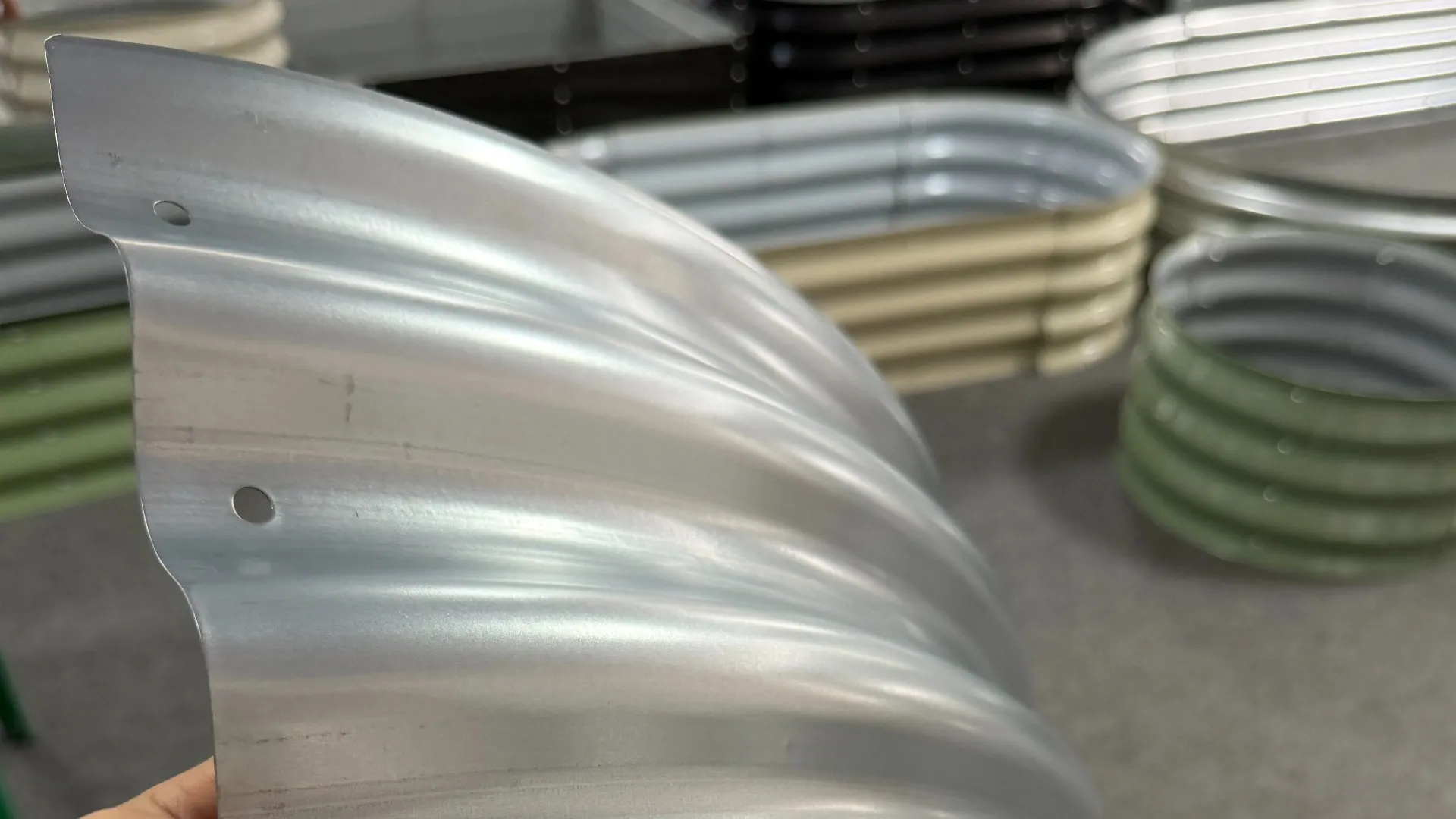
Premium brands could use thicker steel. Some manufacturers offer 0.8mm or 1.0mm. Raised Garden Beds Canada, according to brand information, uses 0.8-1.0mm RGB steel alloy for extreme cold climate positioning. So why do most premium brands settle on 0.6mm?
0.6mm (approximately 24 gauge) hits a balance point that thicker steel does not.
It is thick enough to feel rigid and substantial when a customer picks up the panel. It resists bowing under soil pressure in standard-height configurations (up to about 17 inches). It survives international shipping without bending. It gives the product a quality feel that justifies a premium price.
But it is not so thick that the product becomes prohibitively heavy or expensive to ship. 0.8mm and 1.0mm steel are stronger — but they are also significantly heavier, which increases freight costs and makes the product harder for a single person to handle during assembly. For export-oriented wholesale programs, where shipping cost per unit is a critical factor, 0.6mm represents the point where material performance and logistics cost intersect.
This is not a secret formula. It is a practical engineering decision that multiple brands have arrived at independently. When you see 0.6mm across Vego, Sproutbox, and Vegega, it is not because they are copying each other. It is because 0.6mm works.
Why Color Matters More Than You Think
Look at the product pages of premium raised bed brands and you will see something consistent: they offer multiple colors, and those colors are carefully chosen. Sage green, cream, slate gray, terracotta — these are not random selections.
Color is a retail decision, not just a manufacturing one. Light, warm colors photograph better in garden settings. They look better in social media posts, which drives organic marketing. They look better on a garden center shelf, which drives in-person sales. Dark colors can look heavy and industrial — fine for some markets, but not the aesthetic that premium garden brands are building.
Color consistency is a supply chain challenge. The color coating on Al-Zn-Mg steel is applied at the steel mill — it is baked into the coil, not painted on afterward. This means the color comes from the steel supplier, not the bed manufacturer. If you order the same color across multiple production batches, color matching becomes a question of steel coil consistency. This is where batch-to-batch color variation can occur — and where a supplier with warehouse capabilities can sort and organize mixed-color orders before shipment.
Color range signals brand maturity. A brand offering one or two colors is a commodity supplier. A brand offering six to eight colors is telling the market: we have invested in material sourcing, we have relationships with steel mills, and we can serve customers with different aesthetic preferences. Vego Garden offers eight or more colors (based on brand product listings). This is not an accident — it is a strategic investment in brand positioning.
Why Modular Design Is a Strategic Choice
Premium brands do not sell a single shape. They sell a system.
Vego Garden’s 9-in-1 configuration lets one set of panels become nine different bed shapes. Birdies offers 5-in-1 and 6-in-1 configurations. Sproutbox Garden also offers modular multi-size kits. This is not a proprietary technology — multiple brands use similar approaches — but the execution quality varies significantly.
For wholesale buyers, modular design is where product strategy meets inventory strategy. One SKU on your shelf can serve a customer with a tiny balcony, a customer with a long garden wall, and a customer who wants a U-shaped bed for ergonomic access. This reduces your inventory complexity, simplifies your packaging, and creates a richer product story.
But modular design only works if the execution is right. Clear instructions that show which panels and hardware correspond to each configuration. Accurate panel dimensions that actually fit together in all advertised configurations. Hardware bags are organized so the customer can find the right bolts for the configuration they chose. These are the details that separate a modular kit that earns five-star reviews from one that generates assembly complaints.
Homes & Gardens featured Vego Garden’s modular design specifically for its space-saving flexibility — noting that one kit can adapt to awkward yard shapes. This kind of media coverage is not driven by the steel thickness. It is driven by the design thinking that makes the product useful in real gardens.
The Safety Story: More Than an Afterthought
Premium brands invest disproportionately in safety features — and they talk about them constantly. Birdies is credited with introducing the safety edge trim along the top of corrugated panels. Vegega emphasizes rounded corners and reduced bolt count (fewer bolts means fewer sharp points and fewer corrosion initiation sites). Sproutbox highlights “No Sharp Corners” as a child-safe design feature.
Safety features are inexpensive components with outsized marketing value. A safety edge trim costs cents per unit. A set of rounded cap nuts is a small fraction of the total hardware cost. But these features show up in every product photo, every unboxing video, and every review where a parent mentions their children playing near the garden.
For B2B buyers, the lesson is clear: if you are sourcing a premium product, safety features are not optional upgrades. They are expected baseline features. A premium bed without safety edge trim is a product that will lose a side-by-side comparison at a garden center — and will generate reviews mentioning sharp edges.
What Premium Brands Actually Do Differently
The real lesson from studying premium brands is not about any single feature. It is about the system.
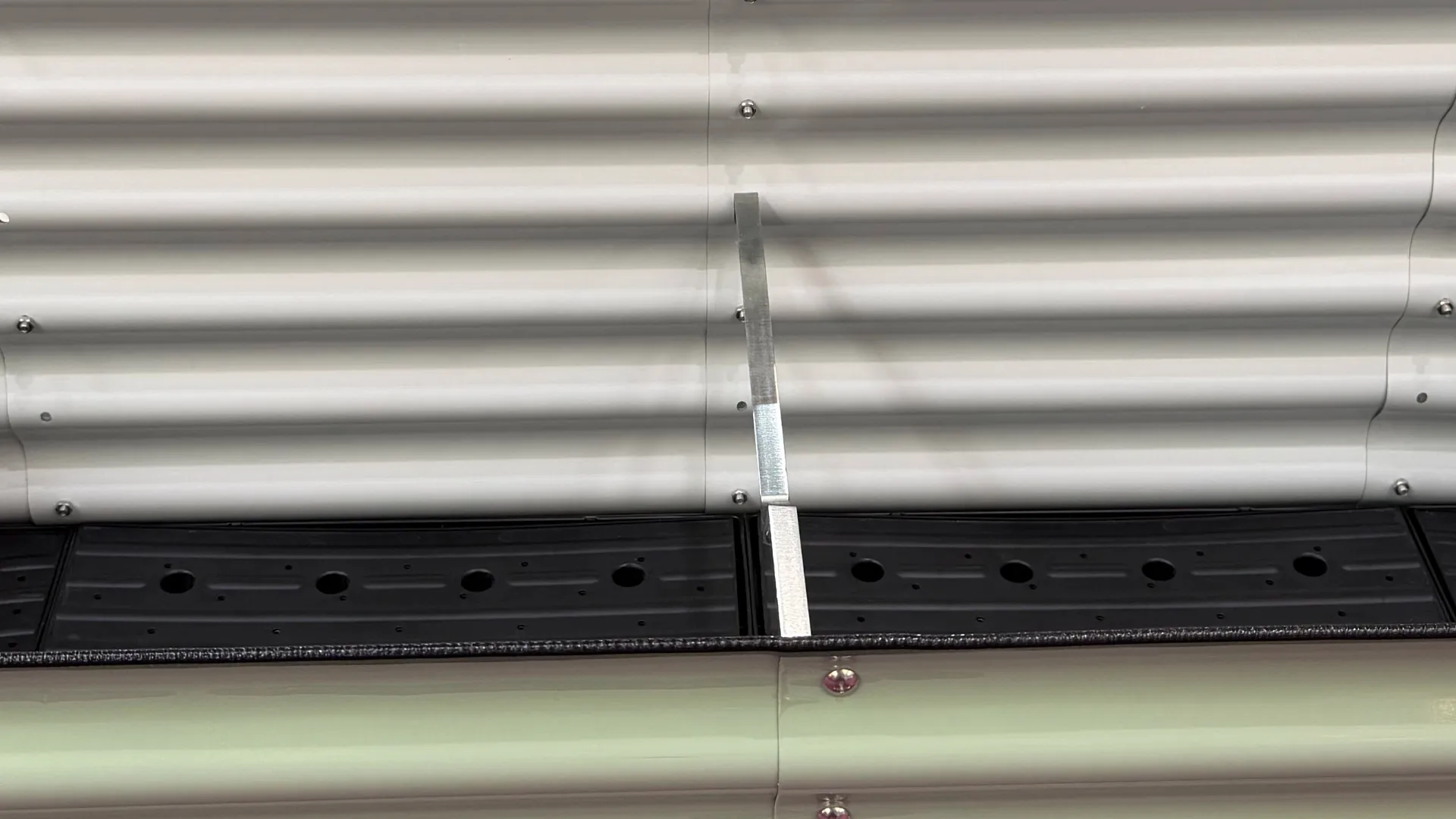
A premium brand does not just use 0.6mm Al-Zn-Mg steel. They use 0.6mm Al-Zn-Mg steel AND offer six colors AND include safety edge trim AND provide clear modular instructions AND use 304 stainless hardware AND back it with material education content AND respond to customer reviews.
Each element reinforces the others. The material justifies the price. The color range signals brand maturity. The safety features address consumer concerns. The modular design reduces inventory complexity. The content education builds trust. Remove any one element, and the system weakens. A premium bed with sharp bolt ends undermines the safety story. A premium bed with unclear instructions undermines the modular story. The result is a product that a customer feels confident paying $200-$370 for — not because of any single feature, but because the entire system communicates quality.
If you are building your own price range, you should also check which competitors you should reference before pricing metal raised garden beds instead of comparing only factory quotations.
This is what wholesale buyers should take away: you cannot build a premium product line by upgrading one element. You need to think about the system.
Want to see how premium Al-Zn-Mg steel compares to standard galvanized steel in person? Request our material comparison video — we show the coating, color, edge treatment, and hardware differences between budget, mid-range, and premium specifications side by side.
What Not to Do
Do not say “same as Vego Garden” or “same as Sproutbox.” This is both legally risky and commercially weak. Legally, Vego Garden filed a 337 investigation with the U.S. ITC in 2022 against seven companies for trade secret misappropriation and unfair competition — a case that resulted in limited exclusion orders against some respondents in 2023. This is a reminder that this market has intellectual property stakes with real legal consequences. Commercially, saying “same as” positions you as a copy, not a brand.
For buyers who are still comparing natural appearance with long-term performance, our article on wood vs metal raised garden beds is not just about looks explains why material choice should go beyond appearance.
Instead, say “similar material direction” or “comparable premium category.” You are telling the customer that your product uses the same class of materials, without claiming to be identical to a specific brand.
Do not copy product images, installation diagrams, or configuration charts. Study how premium brands structure their content — but create your own. The way a brand presents its product is part of its intellectual property.
Do not cherry-pick one premium feature and ignore the rest. Using 0.6mm Al-Zn-Mg steel but shipping with low-grade hardware, no safety trim, and unclear instructions is not a premium product. It is a mid-range product with one upgraded component — and customers will notice the gap.
Building Your Own Premium Product Line
If you want to build a premium metal raised bed line, here is what the premium brand playbook suggests:
| Element | What Premium Brands Do | What You Should Consider |
| Material | 0.6mm Al-Zn-Mg coated steel | Match this spec if targeting premium retail |
| Thickness transparency | Disclose 0.6mm in product details | Be transparent; thick silence is a red flag |
| Color range | 6-8 curated colors | Start with 3-4 proven sellers (sage, cream, gray, terracotta) |
| Safety features | Edge trim, rounded caps, and rounded corners | Non-negotiable for premium positioning |
| Modular design | Multi-configuration kits with clear instructions | Invest in instruction quality; it affects reviews |
| Hardware | 304 stainless steel with spare parts | Request 304 stainless certification from supplier; include ~5% spare parts allowance |
| Content education | Material guides, installation videos, and configuration charts | Build content that helps customers choose |
| Brand story | Material + safety + longevity + design | Tell a system story, not a feature list |
Next Step: Review Your Garden Product Sourcing Plan
Premium brands are not premium because they use better steel. They are premium because they built a system where every element — material, color, safety, modularity, hardware, content, and brand story — reinforces the same message: this product is worth $200-$370.
You do not need to copy them. But you do need to understand the system if you want to build a product line that commands premium prices in your market.
If you want to build a premium metal raised bed line, request a sample set — we can send 0.6mm Al-Zn-Mg color-coated steel panels alongside 0.4mm and 0.6mm galvanized samples so you can compare the material, finish, and hardware quality in person before deciding on your product specification.
You focus on selling. Scarecrow Garden Supplier can help you source, verify, organize, and ship.
Need Help Before Bulk Ordering?
Get the Key Sourcing Details Before You Decide
Ask us for available models, quotation sheet, material comparison video, or sample support for your garden product sourcing plan.
Send Your Requirement, We Help You Check the Right Option
Suitable for garden centers, wholesalers, importers, and e-commerce sellers who want to compare products before bulk purchasing.
Written by
ScarecrowGarden
💡About Scarecrow Garden Supplier Co., Ltd.
Scarecrow Garden Supplier Co., Ltd. is a China-based sourcing and wholesale partner specializing in garden tools, landscaping equipment, and outdoor supplies for international wholesalers, distributors, contractors, and brands.
With hands-on experience rooted in real garden use scenarios, we focus on durable materials, functional design, and stable large-volume supply. Our product range covers pruning tools, watering systems, hand tools, outdoor hardware, and customized garden solutions to support both retail and professional landscaping markets.
Beyond products, we help our partners navigate supplier selection, quality control, compliance requirements, and long-term sourcing strategies in China. Through our blog, we share practical insights on product selection, material comparisons, industry trends, and cost-effective purchasing—helping global buyers build stronger, more competitive supply chains.