






Updated 4 months ago
How to Choose Metal Raised Garden Beds for Wholesale: Materials, Thickness, Shapes, Packaging, and Market Positioning
ScarecrowGarden
💡About Scarecrow Garden Supplier Co., Ltd.
Scarecrow Garden Supplier Co., Ltd. is a China-based sourcing and wholesale partner specializing in garden tools, landscaping equipment, and outdoor supplies for international wholesalers, distributors, contractors, and brands.
With hands-on experience rooted in real garden use scenarios, we focus on durable materials, functional design, and stable large-volume supply. Our product range covers pruning tools, watering systems, hand tools, outdoor hardware, and customized garden solutions to support both retail and professional landscaping markets.
Beyond products, we help our partners navigate supplier selection, quality control, compliance requirements, and long-term sourcing strategies in China. Through our blog, we share practical insights on product selection, material comparisons, industry trends, and cost-effective purchasing—helping global buyers build stronger, more competitive supply chains.
Wholesale Metal Raised Garden Beds: B2B Sourcing Guide for Importers | Scarecrow Garden Supplier
You search “metal raised garden bed” online and see hundreds of listings that look almost identical. Corrugated panels. Rounded corners. A nice photo in a sunny backyard. The prices range from $34 to $370. Same product, right?
Not even close.
What you cannot see in those photos is the steel thickness. The base metal. The coating type. The accessory quality. The packaging strength. Two raised beds that look the same in a picture can deliver completely different customer experiences — and generate completely different review profiles — once they are assembled, filled with wet soil, and left outside for two seasons.
This guide is written for wholesale buyers, importers, garden center purchasers, and e-commerce sellers who are sourcing metal raised garden beds from China. The goal is simple: help you understand what actually differentiates these products so you can match the right specification to the right market — before you spend money on samples or bulk orders.
Metal Raised Garden Bed Types: What Are You Actually Buying?
Before diving into materials and thickness, it helps to understand the basic configurations. Not all “metal raised beds” serve the same purpose.
Open-bottom raised beds are the most common type. They sit directly on the ground, allowing roots to reach native soil and excess water to drain freely. These are the standard choices for outdoor vegetable gardens and backyard landscaping.
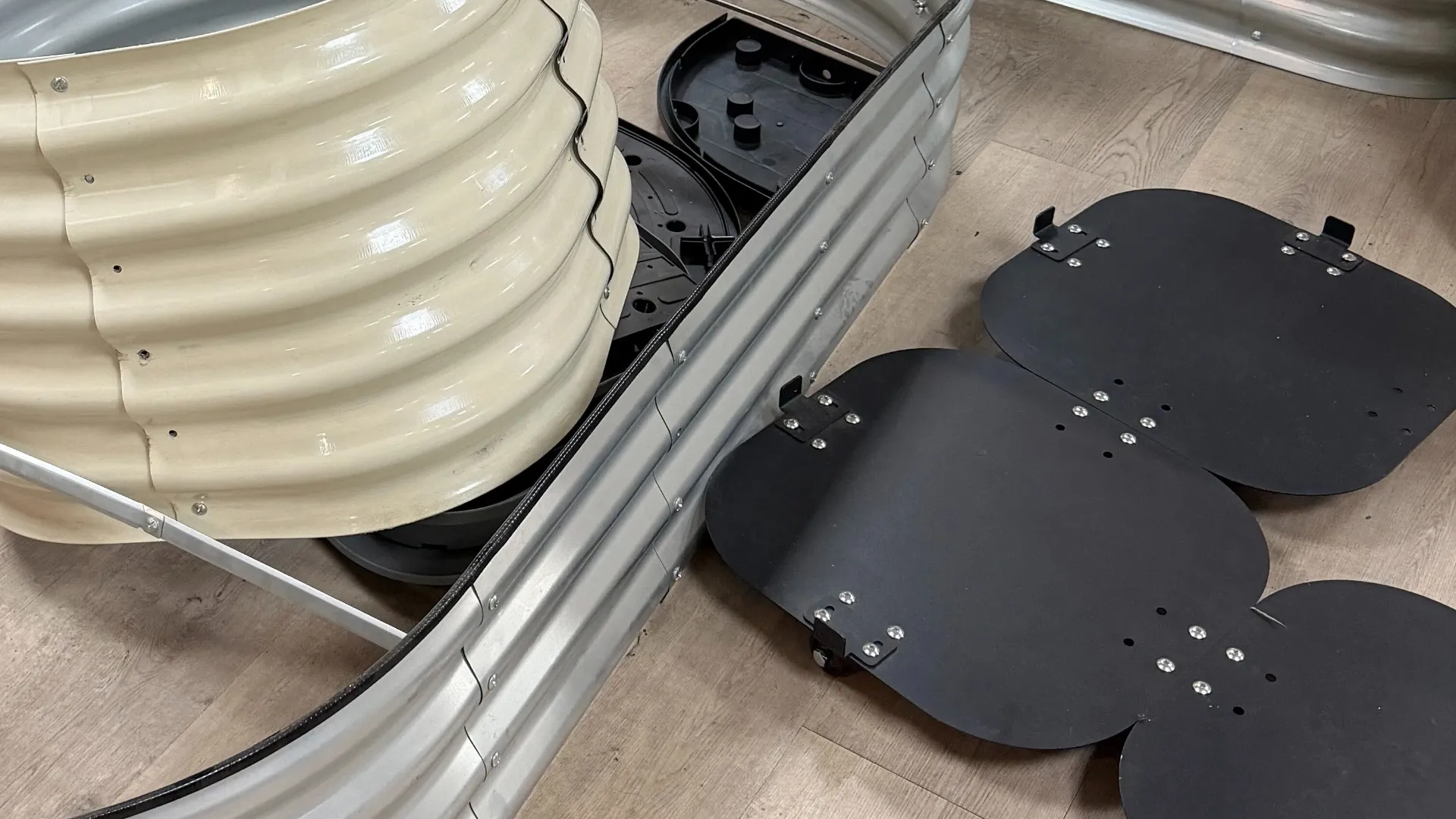
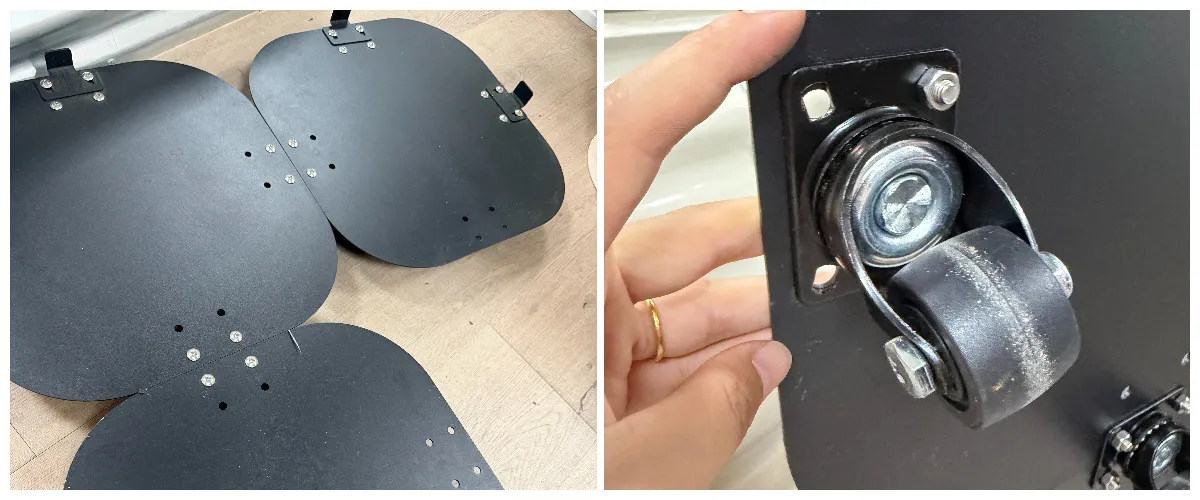
Raised beds with a base include a bottom panel. They are designed for use on patios, balconies, or any surface where soil contact is not possible. Drainage holes are typically pre-drilled. These are popular in urban gardening markets where customers do not have yard space.
Raised beds with wheels add mobility. A base with casters allows the planter to be moved — useful for renters, balcony gardeners, or retail displays. The trade-off is that wheels add cost and reduce the soil capacity compared to a same-sized open-bottom model.
Elevated planters stand on legs, bringing the planting surface to waist height. These are designed for ergonomic gardening — less bending, easier access. They typically have shallower soil depth and are suited for herbs, salad greens, and flowers rather than deep-rooted vegetables.
Modular kits are the configuration that most premium brands have built their identity around. A single set of panels can be assembled into multiple shapes and sizes — a 9-in-1 kit, for example, lets the customer build anything from a compact square to a long rectangular bed using the same panels. This design reduces SKU complexity for retailers: one product on the shelf can serve customers with very different garden layouts.
Different configurations are themselves a source of price differences. But what matters more is what you cannot see in the photos: materials and thickness.
If you are already comparing metal raised garden bed suppliers in China, request our latest model list and quotation sheet — it covers budget, mid-range, and premium specifications with material details, thickness options, and packaging configurations.
Once your product positioning is clear, the next step is to study how to price metal raised garden beds against real overseas reference brands.
Material Selection: Steel Type Matters More Than You Think
The metal raised garden bed market is not monolithic. Walk through the options and you will find at least four distinct material categories — each with a different price point, durability profile, and target customer.
Galvanized Steel (Budget to Mid-Range)
Galvanized steel is the workhorse of the industry. A zinc coating is applied to the steel surface to slow down corrosion. It is cost-effective, widely available, and used by brands targeting the volume market.
In practice, galvanized steel raised beds perform well in normal outdoor conditions. The zinc layer provides reasonable rust protection. But there is a known weakness: at cut edges and drilled holes — exactly where panels connect with bolts — the zinc coating is disrupted. Over time, these connection points are where rust typically starts.
Galvanized steel is a practical choice for budget-conscious channels, promotional bundles, and price-sensitive markets. It works. But it should not be positioned as a 20-year product. A more honest expectation, based on how these products perform in real outdoor use, is in the range of several years to a decade — depending on climate, soil acidity, and maintenance.
Al-Zn-Mg (Aluminum-Zinc-Magnesium) Coated Steel (Mid to Premium)
This is where the market gets interesting. Aluminum-zinc-magnesium coated steel — sometimes branded as Aluzinc, Zn-Al-Mg, or magnesium-aluzinc — is the material that premium brands like Vego Garden, Sproutbox Garden, and Vegega have built their positioning around.
The key difference from standard galvanized steel is the coating composition. By adding aluminum and magnesium to the zinc layer, the coating achieves significantly better corrosion resistance — industry data suggests improvement of up to 4 times that of standard galvanizing, with some brands claiming up to 20 times (this is a brand marketing claim, not an independent third-party test conclusion, and actual performance depends on the specific formulation and test conditions).
But the property that matters most for raised garden beds is something called cut-edge self-healing. When the steel is cut or drilled — which happens at every bolt connection point — the exposed edge is not left unprotected. Magnesium ions migrate to the cut surface and form a dense protective layer. In plain terms: the material seals its own wounds.
This directly addresses the single most common failure point in metal raised beds — rust starting at the bolt holes.
Al-Zn-Mg coated steel also has strong thermal reflectivity. One consumer concern about metal beds is whether summer heat will damage plant roots. Premium brands address this by pointing out that Aluzinc steel reflects a significant portion of solar radiation, which may help keep soil temperatures relatively stable compared to dark-colored plastic or wood.
On safety: some brands state that their Zn-Al-Mg surface treatment does not contain trivalent or hexavalent chromium and complies with the EU RoHS standard. This is a verifiable claim — RoHS testing can confirm the absence of these substances. However, it is worth noting that RoHS is an industrial hazardous substances restriction standard, not a specialized food-contact certification. If food safety is a key selling point for your market, the responsible approach is to present the RoHS compliance as evidence of material safety rather than making an absolute “100% food-grade” claim without corresponding certification.
If you need a clearer comparison between the two common metal options, read our detailed guide to galvanized steel vs aluminum-zinc-magnesium steel for metal raised garden beds.
Powder-Coated Steel
Some brands apply a powder coating over galvanized or base steel. This adds color options and an extra layer of surface protection. Powder coating can improve scratch resistance and visual appeal, but it does not change the underlying corrosion resistance of the base metal. If the base is standard galvanized steel, the long-term rust protection still depends on the zinc layer — not the powder coat on top.
Corten Steel (High-End Landscape)
Corten (weathering) steel develops a stable rust-like patina that acts as a self-protecting layer. It is durable and has a distinctive aesthetic that appeals to landscape designers and high-end architectural projects. However, corten is significantly more expensive, heavier, and the initial rust runoff can stain adjacent surfaces. It is not a volume product for garden retail — it serves a niche, design-driven segment.
Material Comparison at a Glance
| Property | Galvanized Steel | Al-Zn-Mg Coated Steel | Powder-Coated Steel | Corten Steel |
| Corrosion resistance | Good | Significantly better (industry data ~4x; some brands claim up to 20x) | Depends on base metal | Excellent (self-protecting patina) |
| Cut-edge behavior | An exposed edge may rust | Self-healing (magnesium migration) | Depends on base metal | Patina forms on exposed edges |
| Typical lifespan claim | Several years to a decade | 20+ years (brand claims) | Depends on base metal | 20+ years |
| Cost | Low to mid | Mid to high | Mid | High |
| Target market | Budget/volume | Premium retail/brand | Mid-range with color options | High-end landscape |
| Food safety claim | Generally safe | RoHS compliant (no Cr3+/Cr6+) | Depends on the coating | Not typically marketed for food |
Note on lifespan claims: “20+ years” is a brand marketing claim based on material properties and accelerated testing. Actual outdoor lifespan depends on climate, soil chemistry, installation, and maintenance. We recommend presenting these as design expectations rather than guarantees.
Thickness: 0.4mm, 0.6mm, or Thicker?
Steel thickness is one of the most consequential decisions in metal raised bed sourcing — and it is invisible in product photos.
We have compared three samples in our warehouse: 0.4mm galvanized steel, 0.6mm galvanized steel, and 0.6mm Al-Zn-Mg color-coated steel. The difference is immediately apparent when you pick them up. Not in appearance — in feel.
0.4mm Galvanized Steel — Budget Option
At 0.4mm (approximately 25-26 gauge), the panel is noticeably more flexible. You can feel it give when you press on it. This is not necessarily a defect — it is a material choice that serves a specific market.
0.4mm is suitable for price-driven channels: online marketplaces, promotional bundles, seasonal clearance, and customers who prioritize low cost over long-term durability. If your target market is a discount retail environment where the customer expects to replace the product after a few seasons, this thickness can work.
What it is not suited for: premium retail positioning, long-term outdoor use claims, or situations where the bed will be subjected to impact (lawnmower bumps, children playing, heavy soil pressure on tall configurations). A 0.4mm panel filled with wet soil in a tall bed will show visible bowing on the sidewalls.
0.6mm Galvanized Steel — Stronger Standard Option
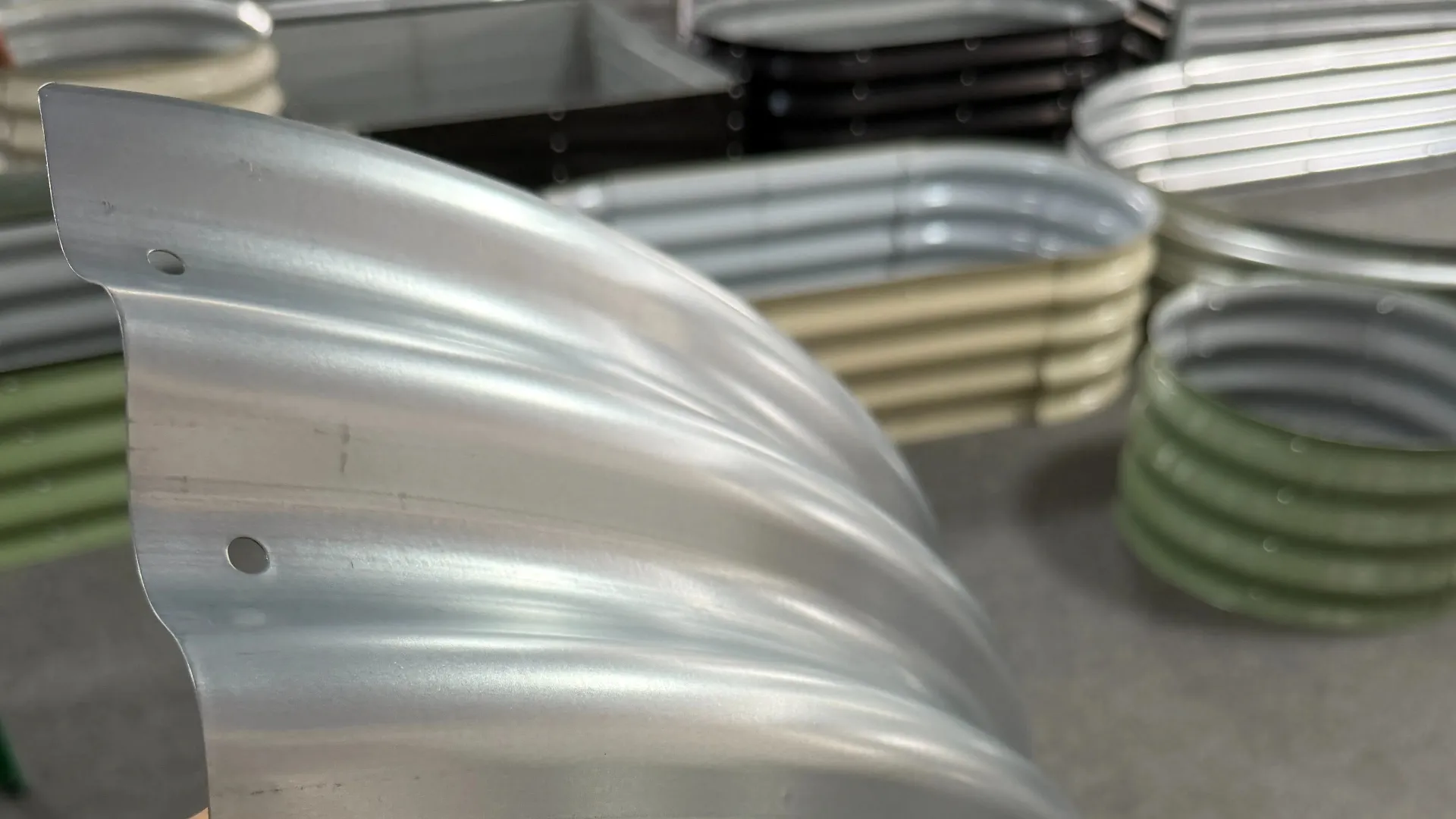
At 0.6mm (approximately 24 gauge), the panel has a noticeably more rigid feel. It holds its shape better under soil pressure and during shipping. This thickness is where many mid-range brands operate — it offers a meaningful step up in structural integrity without the price premium of Al-Zn-Mg coated steel.
For wholesale buyers who want a product that feels solid at a garden center display or survives shipping without bending, 0.6mm galvanized steel is a practical middle ground. It is strong enough for standard raised bed heights (up to about 17 inches) and gives customers confidence when they pick up the panel.
0.6mm Al-Zn-Mg Color-Coated Steel — Premium Retail-Grade Option
This is the configuration that aligns with what premium brands use. The 0.6mm thickness provides structural rigidity, while the Al-Zn-Mg coating adds the corrosion resistance and cut-edge self-healing properties discussed above. The color coating is applied at the steel mill — the color is baked into the coil, not painted on afterward. This means the color is consistent across the surface and does not chip off easily.
This material is suited for garden centers, brand websites, trade show samples, and markets where customers are willing to pay $150-$300+ for a raised bed. It supports a premium narrative: long-term outdoor use, better corrosion resistance, and a polished retail appearance.
For buyers comparing budget and mid-range options, our article on 0.4mm vs 0.6mm metal raised garden beds explains where each thickness works best.
What About Thicker Steel?
Some manufacturers offer 0.8mm or 1.0mm steel — for example, according to brand information, Raised Garden Beds Canada uses 0.8-1.0mm RGB steel alloy for their products, emphasizing durability in extreme cold climates. Thicker steel is stronger, but it is also heavier and more expensive to ship. For most export-oriented wholesale programs, 0.6mm represents the practical balance point between strength, weight, packaging, and cost.
Thickness Is Not the Only Variable
A common mistake is treating thickness as the sole quality indicator. It matters — but it works in combination with other factors:
- Corrugation depth: Deeper corrugation adds rigidity to the panel. A well-corrugated 0.4mm panel can be stiffer than a flat 0.6mm one.
- Panel connectors and support rods: Internal tension rods or cross-bracing reduce sidewall pressure significantly.
- Edge treatment: Rolled edges, safety trim, and corner caps all contribute to structural integrity and user safety.
- Bolt and hardware quality: Stainless steel hardware (304 grade) at connection points prevents the most common rust failure. Some suppliers cut costs by using lower-grade hardware — this is a detail that does not show up in photos but shows up in customer reviews after one winter.
Want to see the difference between 0.4mm galvanized, 0.6mm galvanized, and 0.6mm Al-Zn-Mg color-coated steel before you decide? Request our material comparison video — we show the thickness, flexibility, coating, and edge details side by side so you can judge with your own eyes.
Shapes and Configurations: Matching the Bed to the Space
Premium brands do not sell a single oval bed. They offer a range of shapes designed to fit different garden environments — and wholesale buyers should think the same way.
Oval and Round Beds
Soft, curved edges with no sharp corners. These are ideal for small courtyards, family gardens with children, flower beds, and community garden spaces. The rounded shape is also a safety selling point — no sharp edges for kids or pets to bump into. In retail, oval beds photograph well and have broad visual appeal.
Rectangular Beds
The standard workhorse. Rectangular beds are suited for greenhouse layouts, vegetable gardens, along-wall placement, and garden center displays. They are easy to standardize: predictable packaging dimensions, straightforward area calculations, and efficient shipping. For bulk wholesale, rectangular beds are often the highest-volume configuration.
U-Shaped Beds
U-shaped beds allow access from both inside and outside the bed — the gardener can step into the center area without walking on soil. This is valuable for larger gardens, greenhouse interiors, elderly gardeners, and anyone who wants to minimize bending and soil compaction. U-shaped beds command a higher retail price but require more panels and more complex packaging.
L-Shaped and Corner Beds
Designed for awkward spaces — greenhouse corners, along fence lines, narrow side yards. L-shaped beds turn unused corners into productive planting areas. They are often sold as modular kits that can also be assembled as straight rectangular beds, giving the customer flexibility.
Tall and Deep Beds
Heights of 24 inches to 32 inches serve specific needs: deep-rooted vegetables like carrots and potatoes, ergonomic gardening for users who cannot bend easily, and higher-visibility retail display. But taller beds require significantly more soil — a 32-inch bed uses nearly twice the soil volume of a 17-inch bed of the same footprint.
One lesson from customer reviews: very tall beds (32 inches) combined with wide or square footprints create a practical problem — the gardener cannot reach the center of the bed. For tall configurations, narrow or U-shaped designs are more functional than square ones.
Beds with Base or Wheels
These serve balcony gardeners, renters, patio markets, and mobile display needs. A base panel with drainage holes allows planting on hard surfaces. Wheels add mobility but also add cost and reduce soil depth. These configurations are popular in urban markets but require attention to drainage, weight capacity, and packaging.
Modular Multi-Size Kits (6-in-1, 9-in-1)
A modular kit uses a single set of standardized panels that can be assembled into multiple shapes and sizes. A 9-in-1 kit, for example, might allow configurations ranging from a compact 2’x2’ bed to a long 6’x1’ bed — all from the same box.
For wholesale buyers, this is where modular design becomes a strategic advantage. One SKU on your shelf can serve customers with small balconies, medium backyards, or long garden walls. It reduces inventory complexity, simplifies packaging, and creates a richer product story for retail.
This is not a proprietary technology — multiple brands offer similar modular configurations. But the execution quality varies: clear instructions, accurate panel dimensions, and well-organized hardware bags are what separate a good modular kit from a frustrating one.
If shape selection is a key part of your product line, you can also review our guide to metal raised garden bed shapes and configurations for greenhouses, patios, backyards, and retail displays.
Packaging and Accessories: Where Customer Reviews Are Won or Lost
If you read through metal raised garden bed reviews — on Amazon, on brand websites, on YouTube installation videos — a pattern emerges. The complaints are rarely about the steel itself. They are about what comes with it.
Hardware: The Bolt Hole Problem
Metal raised beds are bolt-together products. A standard modular kit might require an estimated 20 to 40 bolts, nuts, and washers (based on typical kits). Every connection point is a potential failure — for rust, for loosening, for missing parts.
The hardware grade matters. Stainless steel (304 grade) bolts and nuts resist corrosion at the connection points — exactly where rust starts on lower-grade alternatives. Some suppliers reduce cost by using lower-grade hardware, and the difference does not show up until the bed has been outdoors for a season. By then, it is a customer complaint.
Hardware packaging also matters. Are the bolts sorted into labeled bags by size? Is there a spare parts allowance — a few extra bolts in case one is lost during assembly? These are small details that have an outsized impact on the customer experience.
Safety Edge Trim and Corner Caps
Premium brands emphasize child-safe design: rounded corners, safety edge trim along the top panel edge, and rounded cap nuts that cover exposed bolt ends. These features prevent cuts during assembly and daily gardening use.
In B2B sourcing, these are not optional details for premium markets — they are expected. A garden center customer comparing two beds side by side will notice the one with sharp exposed bolt ends versus the one with rounded caps. The safety trim and cap nuts are inexpensive components, but their absence is immediately visible.
Protective Film: A Hidden Frustration
Many metal raised beds ship with a protective plastic film on the panels to prevent scratching during transport. This sounds like a good idea — and it is, for protection. But the execution varies dramatically.
Some brands use a double-sided film that takes over an hour to remove and generates a large amount of plastic waste. This has been a recurring complaint in independent product reviews. Other brands have moved to single-sided film — protecting only the exterior surface — which reduces removal time and waste.
If your market includes customers who care about sustainability, the protective film choice is worth discussing with your supplier. It is a small decision that affects the unboxing experience.
Instructions and Documentation
Assembly instructions are frequently mentioned in negative reviews. Common issues: unclear diagrams, missing hardware count lists, no indication of which configuration the instructions apply to (especially for modular kits), and no video reference.
For modular kits that can be assembled in multiple configurations, the instruction sheet needs to clearly show which panels and hardware correspond to each configuration. A QR code linking to an installation video is increasingly common among premium brands.
Packaging Strength
Metal panels are heavy and have sharp edges. During international shipping, inadequate packaging leads to: bent panels, scratched coatings, hardware bags bursting open and scattering bolts, and damaged outer cartons that make the product look used before it is even opened.
A garden center buyer who receives a shipment with bent panels and scattered hardware is not going to reorder. Packaging is not a cost to minimize — it is an investment in reducing after-sales problems.
Packaging Cost Reference
For a large raised bed (approximately 105x60x43cm carton), a printed retail box can add an estimated $4-$8 USD per unit to the cost (based on industry experience; actual cost depends on quantity, color complexity, and material). This is not a trivial number — but it needs to be weighed against the cost of returns, complaints, and damaged-goods replacements. For budget channels, a standard brown carton with a label may be sufficient. For premium retail, a printed box is part of the product experience.
Matching Product Configuration to Sales Channel
Different sales channels reward different product configurations. Here is a practical framework for matching your sourcing decisions to your market.
Online Marketplaces (Amazon, Walmart, Wayfair)
Price competition is intense. Customers shop by search terms, price filters, and review scores. The winning products in this channel tend to be: 0.4mm or 0.6mm galvanized steel, standard rectangular or oval shapes, 2-pack bundles, and competitive pricing. The review profile matters enormously — so hardware completeness, packaging integrity, and clear instructions are critical even at a lower price point.
If your product sells on Amazon at $69.99 for a 2-Pack, 0.4mm galvanized steel with standard packaging may be a reasonable configuration. But put that same product on a garden center shelf where customers pick it up and feel the panel, and the difference between 0.4mm and 0.6mm becomes a conversion issue. Channel determines configuration.
Garden Centers and Retail Stores
Customers touch the product. They pick up panels, check edges, and compare finishes. The winning products here are: 0.6mm steel (galvanized or Al-Zn-Mg), visible safety features (edge trim, rounded caps), attractive color options, and packaging that doubles as retail display. Modular kits are particularly strong in this channel because one SKU serves multiple customer needs.
Brand Websites and Direct-to-Consumer
This is where Al-Zn-Mg coated steel earns its premium. Customers on brand sites are researching, comparing materials, and willing to pay more for a better story — corrosion resistance, long-term value, color selection, and modular flexibility. The product content (material education, installation videos, configuration guides) is as important as the product itself.
Trade Shows and Sample Programs
At trade shows, you need samples that salespeople can use to explain differences quickly. Three samples — 0.4mm galvanized, 0.6mm galvanized, and 0.6mm Al-Zn-Mg color-coated — let a salesperson demonstrate the thickness and material difference in 30 seconds. Labeled as “budget comparison sample,” “stronger galvanized option,” and “premium retail-grade option,” they turn an abstract spec sheet into a tangible experience.
Cold Climate Markets (Canada, Northern Europe)
Customers in these markets prioritize durability through freeze-thaw cycles. Thicker steel (0.8mm+), robust coating systems, and hardware that will not corrode in wet, cold conditions are valued. The marketing narrative emphasizes endurance — “built to withstand Canadian winters” is a positioning that resonates. Al-Zn-Mg coated steel is particularly well-suited here because of its better corrosion resistance in moist, variable climates.
Wholesale Buyer’s Pre-Order Checklist
Before placing a bulk order for metal raised garden beds, use this checklist to verify that the product matches your market:
| Check Item | What to Verify |
| Material | Is it galvanized steel or Al-Zn-Mg coated steel? Does the supplier’s claim match the sample? |
| Thickness | Is it 0.4mm, 0.6mm, or thicker? Does it match your target price point and retail positioning? |
| Hardware grade | Are bolts, nuts, and washers 304 stainless steel? How many spare parts are included? |
| Edge safety | Are corners rounded? Is safety edge trim included? Are cap nuts rounded? |
| Protective film | Single-sided or double-sided? How easy is it to remove? |
| Instructions | Are configuration diagrams clear? Is there a hardware count list? Is a video QR code included? |
| Packaging | Is the carton strong enough for international shipping? Are panels separated and protected? Is hardware secured? |
| Color consistency | If ordering multiple colors, how is color matching controlled across batches? |
| Modular options | If offering modular kits, are all configurations tested and documented? |
| Sample verification | Has a sample been received, assembled, and checked before bulk production? |
Next Step: Review Your Garden Product Sourcing Plan
Choosing the right metal raised garden bed is not only about size and color. Material thickness, coating type, hardware quality, safety features, packaging strength, and instruction clarity all affect the final customer experience — and the review profile that determines whether your product sells.
The difference between a $34 bed and a $370 bed is not marketing. It is a series of specific decisions about steel, coating, thickness, hardware, and packaging — each of which can be verified before you commit to a bulk order.
If you are planning to source metal raised garden beds from China, request a sample set — we can send 0.4mm galvanized, 0.6mm galvanized, and 0.6mm Al-Zn-Mg color-coated steel panels so you can compare thickness, finish, and hardware quality in person before committing to a bulk order.
You focus on selling. Scarecrow Garden Supplier can help you source, verify, organize, and ship.
Send Your Requirement, We Help You Check the Right Option
Suitable for garden centers, wholesalers, importers, and e-commerce sellers who want to compare products before bulk purchasing.
Written by
ScarecrowGarden
💡About Scarecrow Garden Supplier Co., Ltd.
Scarecrow Garden Supplier Co., Ltd. is a China-based sourcing and wholesale partner specializing in garden tools, landscaping equipment, and outdoor supplies for international wholesalers, distributors, contractors, and brands.
With hands-on experience rooted in real garden use scenarios, we focus on durable materials, functional design, and stable large-volume supply. Our product range covers pruning tools, watering systems, hand tools, outdoor hardware, and customized garden solutions to support both retail and professional landscaping markets.
Beyond products, we help our partners navigate supplier selection, quality control, compliance requirements, and long-term sourcing strategies in China. Through our blog, we share practical insights on product selection, material comparisons, industry trends, and cost-effective purchasing—helping global buyers build stronger, more competitive supply chains.