





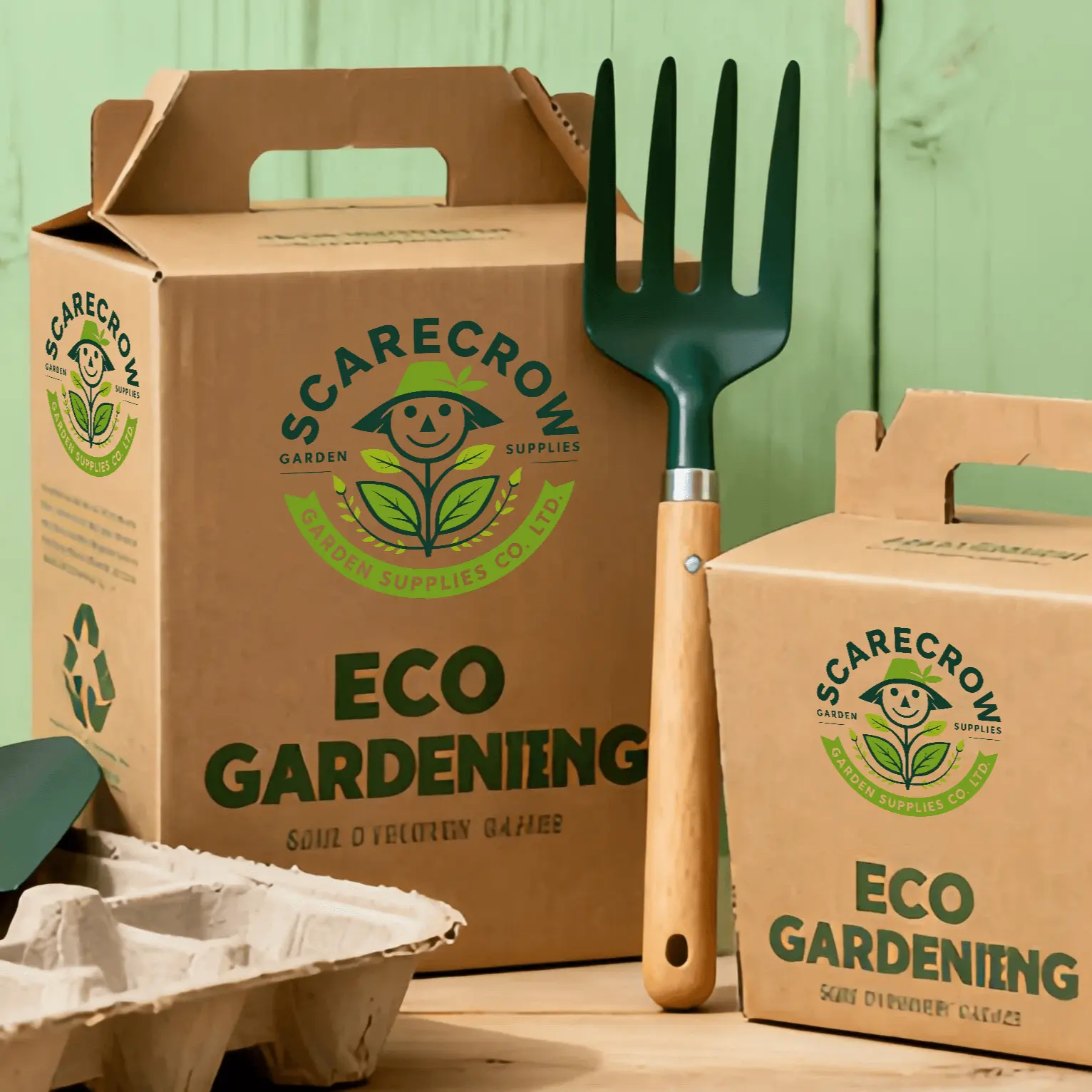


Two metal raised garden beds sit on a garden center shelf. Both are corrugated steel. Both have rounded corners. Both come in a box with hardware and instructions. One is priced at $59. The other is at $249.
The customer picks up both boxes. The heavier one feels more substantial. The color on the premium box looks richer. The hardware bag inside has more pieces. But can the customer really tell why one costs four times more?
Probably not. And that is exactly why pricing metal raised garden beds is harder than it looks. The differences that drive price — material thickness, coating chemistry, hardware grade, packaging quality — are invisible to most customers at the point of purchase. They only become visible over time: in how the bed holds up after two seasons, in whether the bolt holes start rusting, and in whether the customer would buy the same brand again.
This article breaks down how different brands in the metal raised garden bed market price their products — and what wholesale buyers can learn from each pricing tier.
Budget Reference: What $34-$80 Buys
At the budget end of the market, the product is defined by what it leaves out.
Typical specifications: 0.4mm galvanized steel (some budget options as thin as 0.3mm), standard rectangular or oval shapes, basic hardware (often not 304 stainless), brown carton packaging, limited or no color options, no safety edge trim, no modular configurations.
Typical retail price range: $34-$80 per unit, with 2-Pack bundles common on Amazon and discount platforms.
Key brands to observe: Garvee, Land Guard, and the many unbranded or private-label sellers on Amazon, Walmart, and Wayfair priced at $29.99-$69.99 for a 2-Pack.
What budget brands do well: They hit a price point that makes raised bed gardening accessible. A $59 raised bed is an impulse purchase. A $249 one is a considered decision. Budget brands serve the market that wants to try raised bed gardening without a big investment — and for that customer, the product works.
What budget brands cannot do: They cannot support a brand story. They cannot command customer loyalty. They cannot justify a price above $100 without the customer questioning whether they are overpaying. And they generate review profiles that reflect the material limitations: rust at bolt holes, thin panels that bow under soil pressure, and hardware that corrodes after one winter.
Pricing lesson for wholesale buyers: If your market is budget, own it. Price aggressively, sell volume, and do not try to position a budget product as premium. The worst outcome is a product priced at $89 that is neither cheap enough for budget buyers nor good enough for mid-range buyers.
Not sure which pricing tier fits your market? Buyers can use these three pricing tiers to understand how material, thickness, hardware and packaging affect retail positioning. Scarecrow currently focuses on 0.6mm Zn-Al-Mg metal raised garden beds for buyers looking for a stronger, premium-positioned product range.
Mid-Market Reference: What $60-$150 Buys
The mid-market is where most wholesale buyers should be thinking carefully — because this is the tier where pricing mistakes are most costly.
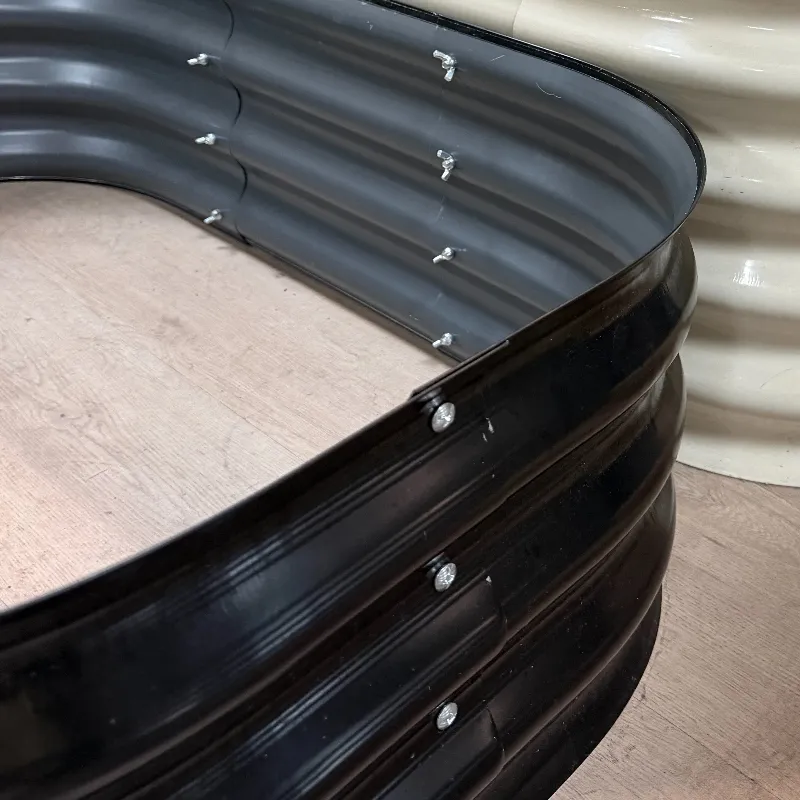
Typical specifications: 0.6mm galvanized steel, better hardware (often 304 stainless), some color options, improved packaging, possible modular configurations, and possible safety edge trim.
Typical retail price range: $60-$150 per unit.
Key brands to observe: Birdies (available at Bunnings in Australia, starting around 95 AUD / ~$62 USD for small configurations), KING BIRD (common on Amazon with mid-range pricing), and Vegega’s clearance pricing ($95-$167 depending on region).
What mid-market brands do well: They offer a meaningful step up in quality from budget products without the full premium price. The 0.6mm panel feels solid. The hardware holds up. The product can be positioned as “better value” rather than “cheapest option.”
The mid-market trap: This is the most competitive price tier. You are competing against budget brands on one side (who will always undercut you on price) and premium brands on the other (who will always outperform you on material story). The mid-market buyer needs a clear reason to choose your product over a cheaper alternative — and that reason needs to be more than “slightly better steel.”
Pricing lesson for wholesale buyers: In the mid-market, your pricing needs to be supported by visible differentiation. If a customer cannot tell the difference between your $99 bed and a $59 budget bed, they will buy the cheaper one. The differentiation needs to be tangible: better hardware, safety features, color options, modular design, or packaging that communicates quality.
If you are comparing mid-range and premium specifications, pay particular attention to panel thickness, coating type, hardware, edge treatment and packaging. These differences often explain why two visually similar raised beds are positioned at very different retail prices.
Premium Reference: What $150-$370+ Buys
Premium pricing is not about charging more for the same product. It is about building a product that is worth more — and then telling the story effectively.
Typical specifications: 0.6mm Al-Zn-Mg (Aluzinc / Zn-Al-Mg) coated steel, 304 stainless hardware with spare parts, safety edge trim and rounded cap nuts, 6-8 color options, modular multi-configuration kits, printed retail packaging, clear installation instructions with video references.Scarecrow currently focuses on 0.6mm Zn-Al-Mg metal raised garden beds for buyers building a premium-positioned product range.
Typical retail price range: $150-$370+ per unit, depending on size, height, and configuration.
Key brands to observe: Vego Garden (Classic 17“ standard models around $150-$250+, according to brand product pages), Sproutbox Garden (standard models around $150-$300+), Vegega 32” tall models ($200-$370+), Birdies tall configurations (320 AUD / ~$210 USD for 740mm height, per Bunnings NZ), Raised Garden Beds Canada (estimated$200+ for 0.8-1.0mm thick steel with local manufacturing premium).
What premium brands do well: They build a system, not just a product. The material story (Al-Zn-Mg steel, cut-edge self-healing, corrosion resistance) supports the price. The safety features (edge trim, rounded caps) address consumer concerns. The color range signals brand maturity. The modular design adds perceived value. The content education (material guides, installation videos, configuration charts) builds trust before purchase.
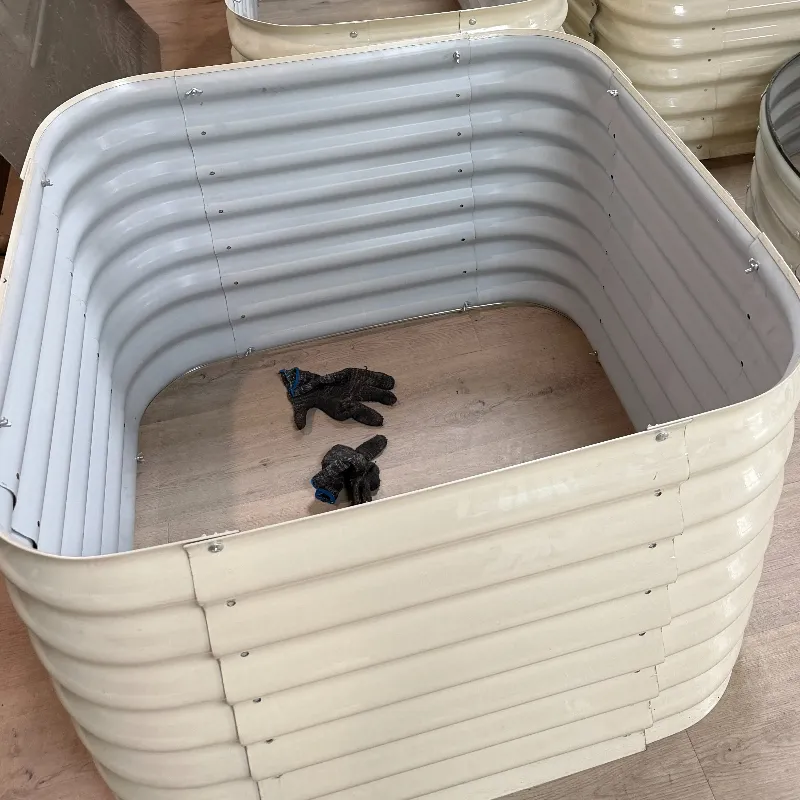
The premium pricing mechanism: Premium brands do not price based on cost-plus. They price based on value perception. A Vego Garden bed at $199 is not priced at $199 because the materials cost $80 and the margin is $119. It is priced at $199 because the brand has built enough perceived value that customers accept the $199 price — through material education, safety positioning, color curation, and a consistent brand narrative across every touchpoint.
Pricing lesson for wholesale buyers: Premium pricing requires premium execution. You cannot charge $200 for a product that arrives in a damaged box, has missing hardware, or comes with unclear instructions. Every element of the customer experience needs to match the price point. The price is a promise — and the product needs to deliver on it.
What to Compare When Setting Your Price
Pricing is not just about looking at what competitors charge. It is about understanding what drives those prices. Here are the variables that matter:
| Variable | How It Affects Price | What to Check |
| Material | Al-Zn-Mg vs galvanized steel can account for an estimated 30-50% of the cost difference | Confirm the actual material, not just the label |
| Thickness | 0.4mm vs 0.6mm affects both cost and perceived quality | Measure with a caliper if possible |
| Height | Taller beds use more steel and require more structural support | Compare prices at the same height |
| Shape | U-shaped, L-shaped, and modular kits use more panels than standard rectangles | Compare prices per panel, not per bed |
| Color range | More colors mean more steel coil SKUs and potentially higher minimum orders | Start with 3-4 proven sellers |
| Hardware grade | 304 stainless vs lower-grade hardware is a small cost difference with a large review impact | Check the hardware spec, not just the steel spec |
| Safety features | Edge trim, rounded caps, and corner treatment add cost but are expected at premium tiers | Include these in your cost calculation from the start |
| Packaging | Printed retail boxes can add an estimated $4-$8 USD per unit (based on industry experience) | Factor packaging into your landed cost |
| Modular design | More configurations per kit means more engineering and instruction quality | Invest in clear instructions; it affects reviews |
| Brand content | Material guides, installation videos, and configuration charts are marketing assets | Budget for content creation, not just product production |
Pricing should come after product definition. If your material, thickness, shape, and packaging are not fixed yet, start with our guide on how to choose metal raised garden beds for wholesale.
Common Pricing Mistakes
Mistake 1: Comparing 0.4mm galvanized against 0.6mm Al-Zn-Mg. This is the most common pricing error. You cannot set your price by looking at a premium brand’s retail price and then sourcing a budget-grade product. The customer will notice — and the review profile will reflect the gap between your price and your product quality.
To avoid comparing products from different quality levels, first understand the difference between 0.4mm vs 0.6mm metal raised garden beds.
Mistake 2: Pricing based on unit cost alone. A product that costs $20 to produce and sells for $60 is not necessarily better positioned than a product that costs $40 to produce and sells for $200. The margin per unit matters, but so does the market you are serving. A budget product in a premium market will not sell. A premium product in a budget market will not sell. Price for the market, not just for the margin.
Mistake 3: Ignoring packaging and logistics costs. Metal raised beds are large, heavy products. Shipping cost per unit can be significant — especially for thicker steel or printed retail boxes. If you price based on product cost alone and discover that freight adds 30% to your landed cost, your margin disappears.
Mistake 4: Not accounting for after-sales costs. Missing hardware, damaged panels, and unclear instructions all generate customer service costs — replacement shipments, refund processing, and negative review management. A product that saves $2 per unit on hardware quality but generates $10 per unit in after-sales costs is not a savings. It is a cost transfer from production to customer service.
Shape can change both cost and perceived value, so you should also compare metal raised garden bed shapes and configurations before setting your final price.
Mistake 5: Choosing a Price Tier Without a Clear Market Position. A three-tier Good-Better-Best structure can work for retailers serving very different customer groups, but it is not the only approach. Some buyers deliberately focus on one clearly defined quality level. The important point is that the material specification, retail price and target customer must match.
Building a Good-Better-Best Product Line
| Tier | Material | Target Retail | Target Channel | Positioning |
| Good | 0.4mm galvanized steel, basic colors, standard packaging | $34-$80 | Amazon, discount retail, 2-Pack bundles | “Entry-level option for new gardeners” |
| Better | 0.6mm galvanized steel, better hardware, safety features, and some color options | $60-$150 | Garden centers, mid-range e-commerce | “Stronger option with better features” |
| Best | 0.6mm Al-Zn-Mg coated steel, full color range, modular kits, premium packaging | $150-$370+ | Brand sites, premium garden centers, trade shows | “Premium retail-grade with long-term value” |
This framework is useful for understanding the market, even if you do not plan to sell all three tiers. The key is to know which tier your product actually belongs to before comparing competitors, setting retail prices or building your marketing message.
Scarecrow currently focuses on the premium specification shown above: 0.6mm Zn-Al-Mg steel with 304 stainless steel hardware and modular configurations.
Next Step: Review Your Garden Product Sourcing Plan
Pricing metal raised garden beds is not about finding the cheapest product and adding a markup. It is about matching your product specification to your market, your channel, and the price your customers are willing to pay — and then building a product that justifies that price at every touchpoint.
The brands that price successfully — from Garvee at the budget end to Vego Garden at the premium end — have one thing in common: their product matches their price. The customer gets what they pay for. No more, no less.
If you are building a premium metal raised garden bed range, we can provide samples of our 0.6mm Zn-Al-Mg models so you can check the panel thickness, coating, hardware, color and assembly before confirming a bulk order.
Our standard range includes 8", 11", 17" and 32" heights, with multiple modular configurations. MOQ starts from 10 sets, and mixed orders and OEM packaging are supported. View our 0.6mm Zn-Al-Mg metal raised garden beds
You focus on selling. Scarecrow Garden Supplier can help you source, verify, organize, and ship.
Need Help Before Bulk Ordering?
Get the Key Sourcing Details Before You Decide
Ask us for available models, quotation sheet, material comparison video, or sample support for your garden product sourcing plan.
Written by
ScarecrowGarden
💡About Scarecrow Garden Supplier Co., Ltd.
Scarecrow Garden Supplier Co., Ltd. is a China-based sourcing and wholesale partner specializing in garden tools, landscaping equipment, and outdoor supplies for international wholesalers, distributors, contractors, and brands.
With hands-on experience rooted in real garden use scenarios, we focus on durable materials, functional design, and stable large-volume supply. Our product range covers pruning tools, watering systems, hand tools, outdoor hardware, and customized garden solutions to support both retail and professional landscaping markets.
Beyond products, we help our partners navigate supplier selection, quality control, compliance requirements, and long-term sourcing strategies in China. Through our blog, we share practical insights on product selection, material comparisons, industry trends, and cost-effective purchasing—helping global buyers build stronger, more competitive supply chains.