




Updated 1 week ago
Indoor Greenhouse For Plants for Year-Round Herb Growing: What to Know

hqt
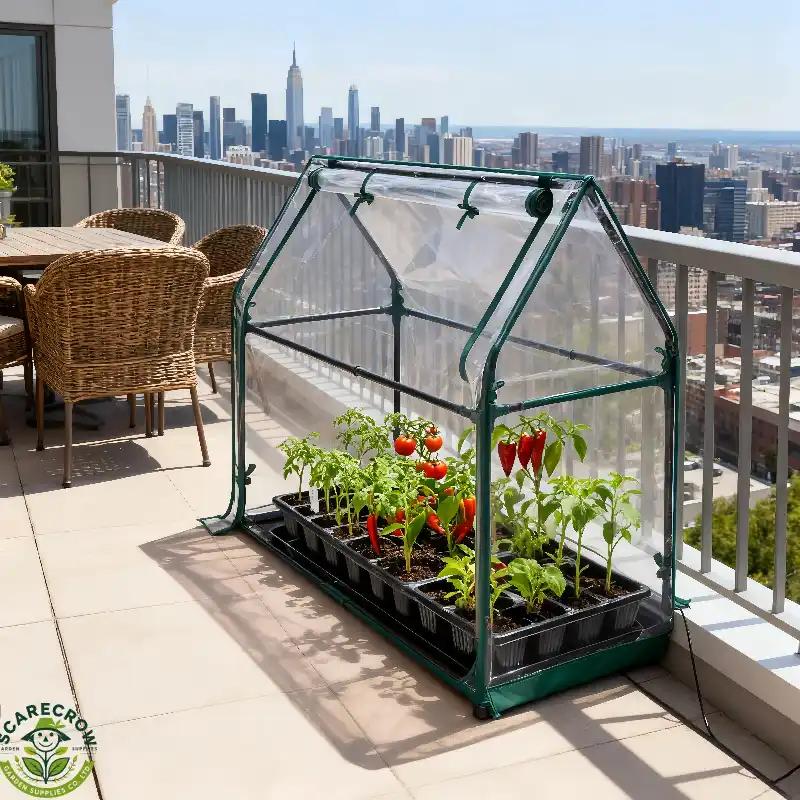
Indoor Greenhouse For Plants
A retailer may sell an indoor herb-growing kit in spring and receive complaints by winter: basil develops weak stems, rosemary starts losing foliage, and moisture collects inside the greenhouse cover. The enclosure has not necessarily failed. The growing conditions have changed, while the product is still being used as though it controls light, temperature, and humidity independently.
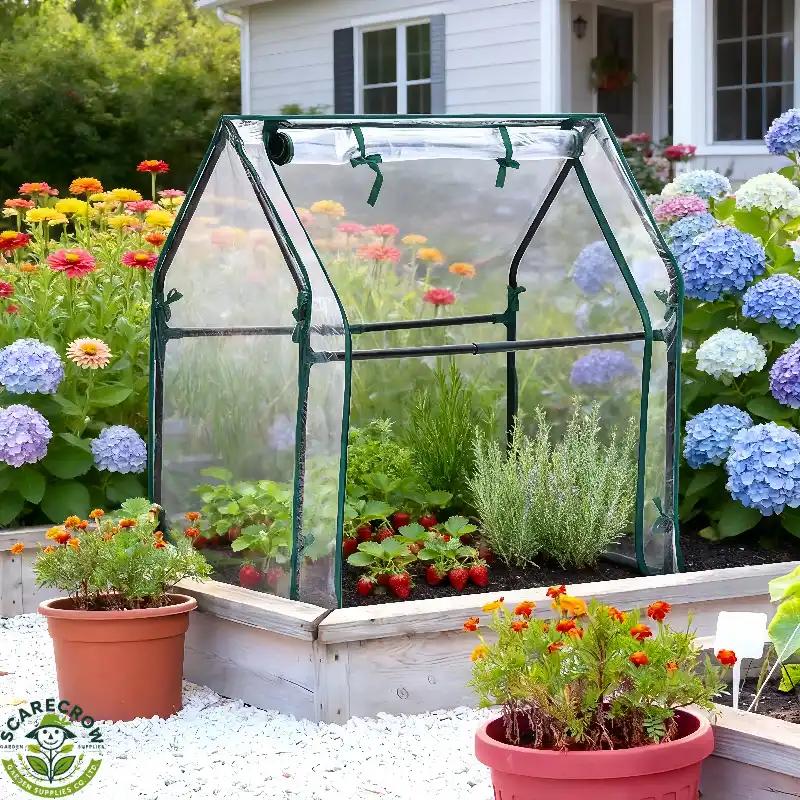
For wholesale buyers, the distinction matters. An Indoor Greenhouse For Plants can create a useful propagation environment, but year-round herb production requires a suitable balance of illumination, air exchange, root-zone moisture, and growing space.
At Scarecrow Garden Supplier, we recommend specifying compact indoor greenhouses according to their intended growing stage, not simply the number of herbs they can accommodate.
1. Can an Indoor Greenhouse Support Herbs Throughout the Year?
As long as the cover is transparent, an unheated greenhouse will not speed up moisture loss and air movement around the plants. It also will not generate light or regulate temperature actively.
During winter, the main constraint is often inadequate photosynthetic light. A windowsill in summer may not provide sufficient light during the December months, even if the indoor temperature remains comfortable.
When it comes to growth of herbs, in the long-run, the availability of light matters more than the length of the photoperiod.
Herb growth is dependent upon the amount of light during the day and not the length of the day. Extending the time of a light source does not ensure sufficient light and energy for compact and productive growth.
For indoor herb kits, buyers should look into:
• The quality of LEDs, not just wattage, and their placement. This will affect the light available to the herbs.
• The cover of the greenhouse. See how much of the available light can pass through it.
• How do thermal conditions inside the greenhouse compare to outside, especially next to cold windows?
• How much clearance do fully-grown plants need, taking into account pruning?
A few herbs don't like moisture and/or cold. Others prefer moisture and still need adequate light.
A seedling greenhouse can not be assumed to support herbs throughout the year.
2. Which Herbs Benefit from an Enclosed Growing Environment?
As herbs mature, humidity needs may change. Also, when seedlings are germinating or during cutting propagation, reduced moisture loss may be beneficial. Established plants may need more air exchange.
There are a few useful considerations when evaluating herb growing kits.
| Herb | Preferred Growing Conditions | Most Likely Failure Reason | Ideal Enclosure Use |
| Basil | Warm conditions, regular moisture, strong light | Chilling and winter illumination | Germination and early growth |
| Mint | Adequate moisture and drainage | Overcrowding and persistently wet media | Cuttings and young plants |
| Parsley | Moderate moisture and drainage | Weak winter growth | Germination and establishment |
| Thyme | Relatively dry conditions | Moisture and root rot | Short term propagation |
| Rosemary | Strong light and airy conditions | High humidity and prolonged | Cuttings |
Conflicting irrigation needs of the basil and rosemary combined in the same enclosed planter result in failure.
Individually removable planters for herbs in a mixed planting are preferable to a common growing bed. They allow easy watering based on needs of the individual plants as well as removal and replacement of harvested or poor performing plants.
3. How Much Humidity Is Too Much?
Within a closed system like a greenhouse, water vapor builds up as a result of evapotranspiration. As a result, the air within the greenhouse becomes saturated with water vapor. Vapor pressure deficit (VPD) is reduced, and as a result, relative humidity increases. When VPD is reduced, less water is lost from the leaves. This means that the surface of the leaves does not dry out as quickly. This ultimately protects the leaf from drying out too quickly.
This effect is beneficial for the initial stages of plant propagation; however, it becomes less helpful as the seedlings establish a functional root system.
Greenhouse roofs become covered with condensation due to contact with cooler outside air. This is an unreliable indicator of the moisture of the substrate and the water requirement of the plants.
In the early stages of plant development, it is important to manage the level of condensation on the roof of the greenhouse to avoid seedling damage.
A good operating sequence would be:
• To keep the growing medium of the seedlings evenly moist during germination, without it being waterlogged.
• To increase air movement and ventilation as the seedlings develop during the establishment of a functional root system.
• To facilitate adequate airflow during the vegetative growth of herbs to prevent the prolonged closure of the greenhouse.
• To study the conditions of water and/or humidity in the greenhouse after watering, because there might be standing water or wet leaves from watering.
Poor ventilation with water logged growing media can cause problems with fungi, and other pathogens, including damping off.
Scarecrow Garden Supply's mini portable greenhouse has a roll-up door with a zipper, which lets the user open it for air exchange without removing the cover.
However, the roll-up door does not control humidity, and therefore condensation can still occur on the inner surface of the roof. Customers should not expect that a zippered door would prevent condensation.
4. Why Does A Waterproof Base Not Solve Drainage Problems?
A waterproof base and drainage serve different functions. A waterproof base contains water spills, and protects desks, shelves, and floors. Plants need drainage to remove excess water from the root zone.
Leaving pots in collected runoff limits the availability of oxygen in the root zone, which can stress the plants and give the feeling of drought, and therefore, more water is added.
Our mini greenhouse has a watertight base pad with hook and loop closures. This serves the function of a waterproof barrier. However, assessment of leak resistance and convenience of cleaning the base should be made based on the arrangement of the containers used.
Water management can be assessed in three ways:
• Spill Containment: Add water to test pots and check base edges and fastening points for water.
• Drainage Management: Determine if runoff can be removed without lifting the entire structure.
• Cleaning Access: Look for moisture and algae in hard to reach spots.
Good drainage is crucial in the growing containers. Watertight enclosures are not a management strategy for root zone moisture.
5. Which Materials and Structural Details Impact Long-Term Use?
Scarecrow Garden Supply's portable greenhouse has a PVC cover and an iron frame with a plastic coating and plastic connectors. It has a zippered door.
Considering function over form, how do these elements perform?
| Component | Engineering Concern | Sample Verification |
| PVC cover | Light transmission, folding damage, surface degradation | Inspect clarity and seams after repeated handling |
| Coated iron frame | Corrosion at joints and damaged coating areas | Inspect exposed edges and connection points |
| Plastic connectors | Loosening or cracking during repeated assembly | Perform assembly and disassembly checks |
| Zippered door | Slider wear, seam strain, access restriction | Operate repeatedly and inspect stitching |
| Waterproof pad | Leakage at edges and fastening points | Conduct controlled watering checks |
Thermal considerations must be made if the cover is to be used for plant propagation with supplemental lighting. Lamp placement must be determined based on the cover's thermal limits.
The greenhouse is not meant to be a lighting system, thus compatibility with a specific grow light must be determined with the proposed installation.
Cover dimensions must be taken into account as a plant that fit under the cover as a seedling may not fit as a mature plant.
6. What Should Wholesale Buyers Confirm Before Ordering?
A greenhouse intended for seed starting would have different requirements for acceptance compared to one for continuous harvest of culinary herbs.
For seed starting, the greenhouse may require humidity retention, be compact and portable, and be easily assembled.
The second concerns the buyer specifying clearances for the removal of mature plants, the provision of supplemental lighting and exhaust fans, the provision of means of access for maintenance and cleaning, and the frequency of cleaning.
Prior to purchase, the following should be determined:
• The type of herb to be grown and the stage of propagation or harvesting.
• The internal dimensions of the growing containers and the clearances between those containers.
• The type of cover material, frame finish, and type of packaging.
• The acceptable sample criteria for water containment, repeated access, and assembly.
• Whether grow lights, plant pots, and plant trays are supplied or not.
Scarecrow Garden Supplier can provide OEM/ODM services for containers, bags, boxes, and packaging of different colors and with different branding and logos, subject to the order quantity and the feasibility of the manufacturing process.
For the development of indoor herb-growing kits, our Mini Portable Greenhouse with Waterproof Base serves as a reference design for the discussion of enclosure and accessory designs and wholesale orders.
FAQs
Q1. Can Scarecrow Garden Supplier's indoor greenhouse grow herbs year-round?
Yes, it can support herb propagation and early growth throughout the year. However, continuous harvesting requires sufficient lighting, suitable temperatures, and proper watering.
Q2. Which herbs are suitable for an indoor mini greenhouse?
Basil, mint, and parsley are suitable for seed starting and early growth. Rosemary and thyme can also be propagated, but established plants generally require better airflow and drier root conditions.
Q3. Does the indoor greenhouse provide enough light for winter herb growing?
The transparent PVC cover allows natural light through but does not increase available light. Supplemental LED lighting may be necessary during winter, depending on location and herb species.
Q4. How does Scarecrow Garden Supplier's greenhouse manage humidity?
Its transparent cover helps retain moisture around plants. The zippered roll-up door allows manual ventilation to reduce condensation and improve airflow when required.
Q5. Does the waterproof base eliminate the need for drainage?
No. The waterproof base helps protect surrounding surfaces from watering spills. Plant containers still need appropriate drainage to prevent waterlogging and root damage.