





Mesh bulb basket partly lifted from a garden bed
A basket is a handling system, not a container
Before choosing a basket, ask whether it is intended for later retrieval with bulbs and medium. The appeal of a planting basket is straightforward: plant the bulbs in a group, then lift the group later without digging blindly. Plan the documented retrieval method before burial, including the intended planted load and access to handling points.
Royal Horticultural Society guidance sets out planting parameters for bulbs in borders, and a basket has to accommodate the planting you intend. Check the intended species and planting situation for depth and spacing; general border guidance for most bulbs should not be applied automatically to every species or basket.
Those parameters define the basket's job. Assess its dimensions and handling limits against the planned planting and retrieval method.
Match the basket to the intended bulbs and arrangement
Before choosing anything, fix three things: the species, the group size, and the intended planting depth.
Species matters because post-lifting treatment differs.
Bulb storage requirements are not interchangeable. Obtain the post-lifting procedure for the actual species and purpose; check whether broader guidance applies to another crop. A basket that makes lifting easy is only useful if you already know what you will do with the bulbs once they are out.
Group size determines the basket's footprint.
Use the intended display and species guidance to plan the planting. The RHS grouping advice for borders is not a minimum capacity requirement for a bulb basket.
Depth determines whether the basket sits at the right level.
If the basket's own height is significant, its rim may end up above the intended soil surface, or the bulbs may end up shallower than the intended depth requires. That check takes a tape measure and is easy to forget until the basket is in the ground.
Openings, closure, and documented handling points
A planting basket's openings do two jobs that pull in opposite directions. They must let roots and shoots out, and they should not let the growing medium wash out or let the contents escape during lifting. Review openings against the planned planting and retrieval method.
What are the opening dimensions, and are they stated in millimeters?
If a base closure is supplied, how does it lock?
Where are the lifting points, and are they designed to be hooked or gripped?
If a lid or cover is supplied, what is it for?
Ask which parts are intended to support the planted load during retrieval, where lifting is permitted, and what limitations apply. Do not infer lifting capacity from the basket's appearance.
Ask which handling points remain accessible after planting and how they may be used.
Use the model drawing to identify which openings are relevant to planting, medium retention and later retrieval, and confirm the intended arrangement with the manufacturer.
Before planting, ask whether the selected basket is intended to be lifted with the bulbs and surrounding medium, and obtain its handling instructions.
Keep the planted location identifiable
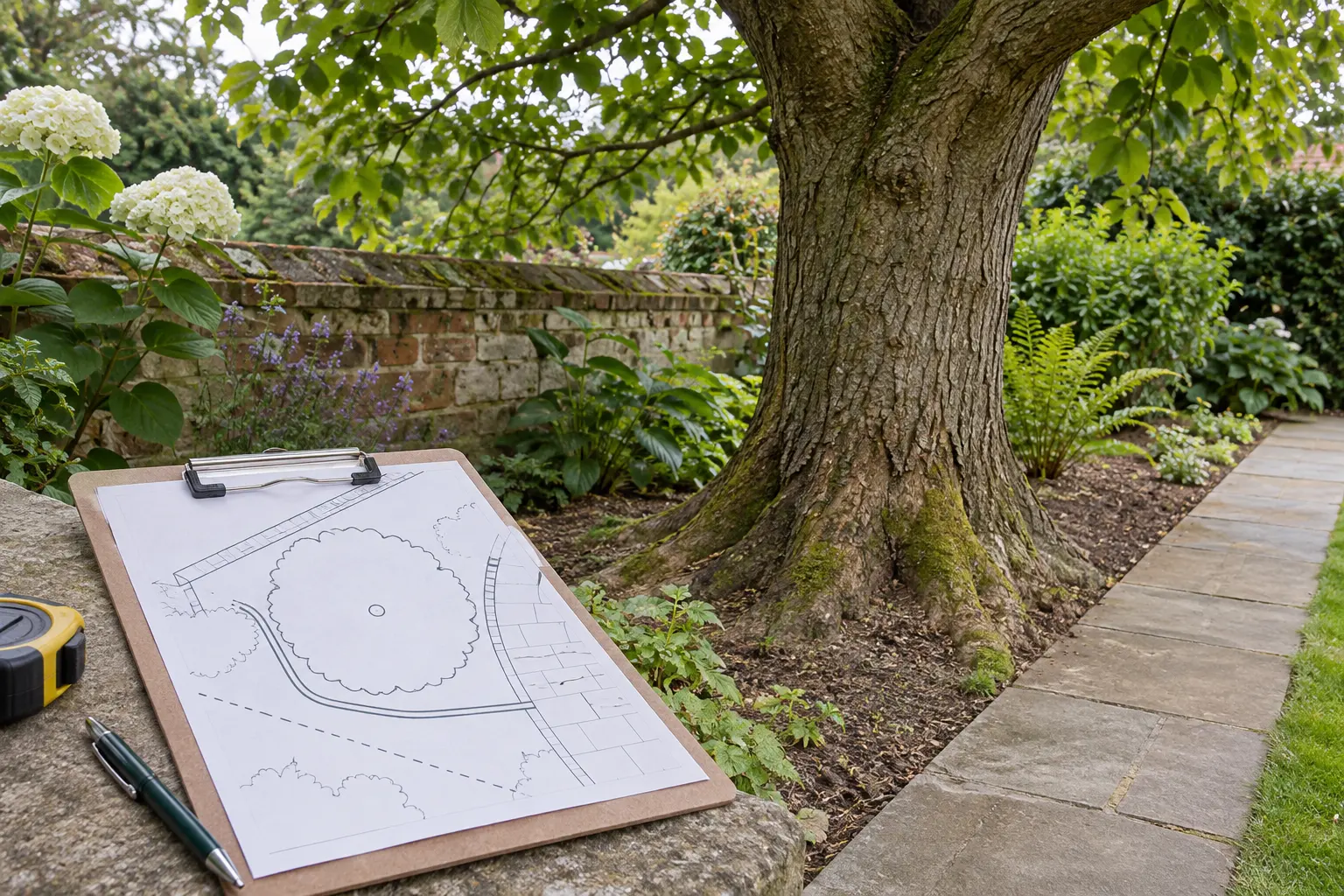
This is a planning point rather than a product point, and it is where retrieval planning can break down. A basket buried in a border in autumn can be difficult to find by spring.
Practical measures:
Record the position relative to a fixed feature, with a measurement, in a garden notebook.
Mark the group with a durable label placed at the edge of the planting, not in the middle.
If several groups of different species are planted, use a numbering scheme that survives the season.
Photograph the planting with a scale, at the time of planting.
None of this is sophisticated, and all of it is easy to omit, which is why lifting a basket often becomes an excavation.
Retrieval and storage under species-specific guidance
The retrieval plan should exist before planting, not after. Three questions:
When will the bulbs be lifted?
For bulbs grown for a summer display and lifted for storage, obtain the species-specific lifting criteria for the intended production and storage purpose, and record when that assessment is to be made.
What condition must they be in at lifting?
Use the crop procedure to decide what is acceptable for lifting and storage. Bulb pests and diseases exist and can spread in storage. RHS material on stem and bulb nematode, for example, describes a pest that feeds within bulb tissue, causing swelling, stunted growth, and distorted leaves. Stem and bulb nematodes can be carried within affected planting material, and visual inspection alone may not establish the cause of symptoms.
Where will they be dried and stored?
Obtain species-specific guidance for lifting, drying and storage before retrieval, and keep those instructions with the planting record. The essential point is that the drying and curing stage has its own requirements, and those requirements are species-specific.
Verify pest-exclusion claims separately
If pest exclusion is claimed, that is a different claim from “makes lifting easier,” and it requires different evidence. Request evidence for the named pest, basket model and installation conditions; opening dimensions alone do not document the result.
A planting basket is not a bulb planter
A bulb planter is a hole-making tool; a basket is a buried container for a group of bulbs. The two should be specified separately.
Five questions to settle before the basket is ordered
What species, and what is the post-lifting treatment for that species?
How many bulbs per group, at what spacing, and therefore what footprint does the basket need?
What is the intended planting depth, and does the basket's own height fit within it?
Do the base closure and the lifting points survive a full season of soil and water?
How will the location be recorded, marked, and found again next season?
Next step
Before you bury a basket, share the bulb species and the planting arrangement you plan with Scarecrow Garden Supplier. Ask for the selected model's planting, closure and lift-out instructions. Compare the documented height and installation arrangement with your intended planting depth, and resolve retrieval and handling limits before burial.

Written by
ScarecrowGarden
💡About Scarecrow Garden Supplier Co., Ltd.
Scarecrow Garden Supplier Co., Ltd. is a China-based sourcing and wholesale partner specializing in garden tools, landscaping equipment, and outdoor supplies for international wholesalers, distributors, contractors, and brands.
With hands-on experience rooted in real garden use scenarios, we focus on durable materials, functional design, and stable large-volume supply. Our product range covers pruning tools, watering systems, hand tools, outdoor hardware, and customized garden solutions to support both retail and professional landscaping markets.
Beyond products, we help our partners navigate supplier selection, quality control, compliance requirements, and long-term sourcing strategies in China. Through our blog, we share practical insights on product selection, material comparisons, industry trends, and cost-effective purchasing—helping global buyers build stronger, more competitive supply chains.