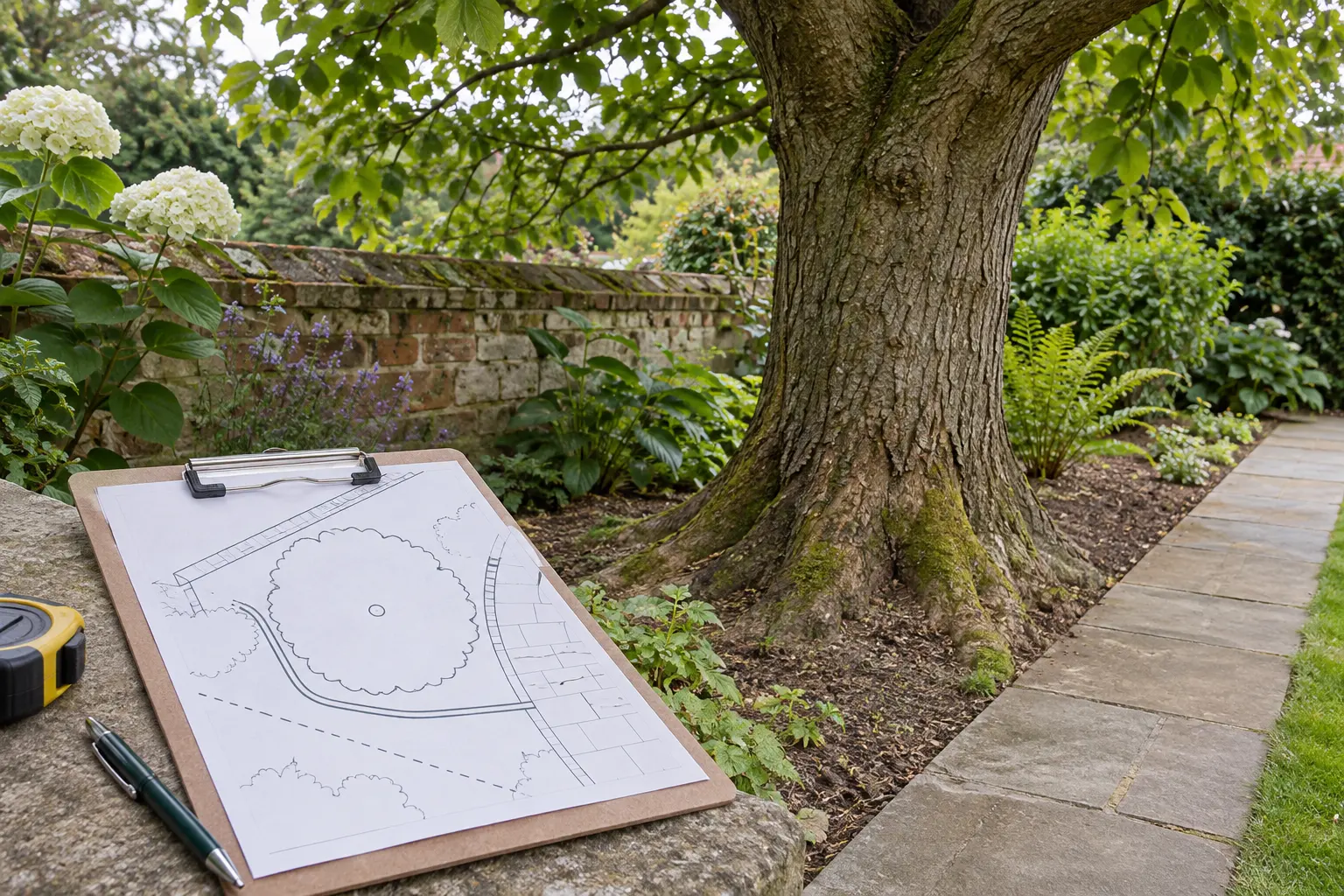









Greenhouse installation workflow: delivery, site preparation, foundation, assembly, anchoring, and handover.
“Installation included” is not a scope. It is a phrase that hides a scope, and two dealers quoting the same model can be selling work that differs by a prepared base and several separate tasks.
The work of getting a greenhouse from a delivery truck to a working structure has at least seven distinct stages, and the single most useful thing a dealer can do is name them and assign each one to a party, in writing, on the quote.
“Installation included” needs a defined scope
The seven stages differ in the skill they need, the insurance position they carry and the way they fail.
Offloading is getting the pallet off the truck without damage, which requires either equipment or people at a specific time. Moving to point is transporting the pallet or its contents from the drop location to the actual site, and it is where sites with narrow side access fail. Ground preparation is levelling and clearing, and it is the stage that most determines whether the frame assembles square. Base or foundation is a separate technical task with its own material decisions. Assembly is the frame and glazing. Fixing or anchoring is securing the structure against wind. Clean-up is removing packaging and offcuts.
A quote should state, line by line, which of those seven are included, and by whom. Which stages sit inside an installation package is a property of that offer rather than of the category, so the list has to be written for the specific quotation rather than copied from a general description of how installation works. One recurring dispute in this category is not a missing part but a scope gap: a customer who assumed ground preparation was inside a package in which it was never mentioned, and an installer who arrives to find an unlevel, obstructed site and either leaves or adds a charge on the spot.
Note that quoting this way also protects the dealer's margin. Unpriced work does not disappear. It either gets absorbed, or it gets argued about after the invoice.
The site has to be ready before the installer arrives
Someone has to check the site before the installation day, and that check has four parts: dimensions, access route, ground conditions, and manufacturer requirements.
Related reading: greenhouse foundation and base requirements.
Dimensions means the site actually matches the drawing the order was based on, including the door swing and the maintenance perimeter discussed in any proper site assessment. Access route means the pallet and the installers can physically reach the site, including gates, steps, gravel and overhead branches. Ground conditions means the surface is level, drained and suitable for whatever base the model requires. Manufacturer requirements means whatever the manual specifies as a precondition.
Photographs are useful evidence and they are not acceptance. A phone photo flattens a slope, hides a soft patch of ground, and cannot show whether a gate post will clear a pallet. Where a dealer accepts a customer's photos as site sign-off, that is a commercial arrangement to be written into the contract, and the contract should say what the customer is confirming and what the dealer is still checking. What a photograph cannot do is settle who is responsible when the site turns out to be wrong.
The honest position on who does the checking is that it depends on the contractual arrangement, and it needs to be decided rather than assumed. Some dealers send a checklist the customer completes and signs. Some send someone. Some require a paid pre-installation survey. All three work, provided the responsibility is written down and the customer knows what they are confirming.
One thing to be clear about in the offer: the supplier's role is to provide the configured unit, the parts list and the documentation, and it does not default to providing on-site construction in an overseas market. That sentence prevents a great deal of confusion when a customer reads “installation available” on a website and hears “someone will build it for me.”
Keep delivery and installation appointments connected
Delivery and installation are two appointments that have to be managed as one event chain, because the second depends on the first having gone right.
The chain has four points where it breaks. The delivery arrives on a date the installer did not know about, and sits on a drive. The customer signs for a delivery without checking the piece count, and a shortage is discovered during assembly. A damaged panel is found on the day of installation, when nothing can be done about it that day. The installer arrives before the goods, and charges for the visit.
The fix is administrative rather than technical, and it works through the contract and the paperwork rather than through anything the goods can do on their own. Book the two dates with a stated order and a stated gap between them. Require a piece count against the packing list at delivery, signed by whoever receives it, with discrepancies reported within the period the contract sets for doing so. Give the installer authority to stop if the goods are incomplete or damaged, and route that decision back to the dealer rather than letting it be negotiated at the customer's door.
A short gap between delivery and installation is generally better than a long one, but it should be long enough to resolve a missing part. A gap of zero sounds efficient, and it also means that a shortage or a damaged panel discovered at delivery has no time left to be put right before the installer is standing on the site, which is where the wasted visit comes from.
Deal with a site that does not match the agreement
Sites disagree with drawings. The installer should have a defined response for that, agreed before the day, in four possible directions: stop, add work, reschedule, or reconfirm.
The decision in each case rests on three things rather than on a preference. Safety comes first: unprepared ground, unsafe access, or a structure that cannot be fixed down safely ends the conversation for that day. Competence comes second: extra work is only an option where it falls inside what the installer is qualified and insured to do. And the contract comes third, because whether additional work can be added, at what price, and on what authority, is a term of the agreement rather than something to be settled at the customer's door.
Stopping is therefore the right default when the ground is unprepared, the access is blocked, or the site does not match the drawing. Where safety, competence or the terms of the contract call for it, stopping is the correct action, and what it costs depends on the contract and on the condition found on site rather than on a general rule. Adding work is acceptable when the extra task is within the installer's competence and is priced and approved before it starts, not after. Rescheduling is correct when a delivery problem makes installation pointless. Reconfirming is correct when the customer has changed the plan, the model or the position.
What should never happen is the installer quietly doing additional work to make the day succeed, unpriced, on ground they are not qualified to prepare. That is how a warranty argument starts two years later, when the frame has moved.
The permit question belongs here too. Installation and construction requirements differ enormously between markets, and this article cannot and should not give a universal answer. What it can say is that the applicable requirements in the destination market must be confirmed before quoting, and that a dealer selling across borders should assume nothing about the customer's local rules. Where a permit or inspection applies, it belongs in the scope line, assigned to a party.
Hand over the installed model, not just a signed invoice
The final stage is the one that determines whether the customer's next two years are easy or difficult, and it is usually the thinnest part of the process.
A proper handover identifies the actual model installed, not the order line. It includes the manual for that specific model and configuration, since a manual for a different variant can be actively misleading on vent operation or glazing replacement. It lists what was completed and by whom, which matters when a warranty question arises about the base as opposed to the frame. And it states plainly what the customer now owns as maintenance: clearing gutters, checking fixings, operating vents, cleaning glazing, and inspecting the structure after severe weather.
That last item is often skipped because it feels like a downer at the end of a happy sale. In practice it is the difference between a customer who calls you about a loose panel in year three and a customer who calls you about a collapsed frame after a storm. The customer who knows what to inspect inspects it.
A dealer who can hand over a written scope, a signed piece count, a stop-and-reconfirm policy and a model-specific handover sheet is offering something the cheap quote cannot match, and can say so without disparaging anyone.
One line belongs on that sheet even when the answer is “no”: who is responsible for on-site construction. If the offer does not include it, the quote should say so, and the customer should be able to see that it says so.
Preparing a greenhouse range for dealers who arrange local installation? Share the target models, foundation requirements and packing-list needs. We can coordinate product documentation and pre-shipment preparation on the China sourcing side. Local construction and installation are separate responsibilities.

Written by
ScarecrowGarden
💡About Scarecrow Garden Supplier Co., Ltd.
Scarecrow Garden Supplier Co., Ltd. is a China-based sourcing and wholesale partner specializing in garden tools, landscaping equipment, and outdoor supplies for international wholesalers, distributors, contractors, and brands.
With hands-on experience rooted in real garden use scenarios, we focus on durable materials, functional design, and stable large-volume supply. Our product range covers pruning tools, watering systems, hand tools, outdoor hardware, and customized garden solutions to support both retail and professional landscaping markets.
Beyond products, we help our partners navigate supplier selection, quality control, compliance requirements, and long-term sourcing strategies in China. Through our blog, we share practical insights on product selection, material comparisons, industry trends, and cost-effective purchasing—helping global buyers build stronger, more competitive supply chains.