






A wholesale business built on garden hand tools reaches a familiar plateau. The tool range is complete, the customer base is established, and growth now depends on selling more to the same customers or finding new ones. The obvious move is to add adjacent categories, and the obvious temptation is to add several at once.
The businesses that expand well and the ones that expand badly usually start from the same intention and diverge on sequencing. Expanding into four new categories simultaneously does not produce four times the opportunity. It produces four learning curves, four sets of supplier relationships, four packaging configurations, four after-sales problems, and a team that cannot tell which of them is working.
First, name the purpose, because it changes the choice
Expansion is not one decision. There are three distinct reasons to add a category, and each points to a different choice.
Increasing purchase frequency. The customer already buys tools, and a category they will buy more often than tools increases the number of buying occasions. Consumables serve this purpose: plant ties, labels, twine, replacement blades. They are low value, high frequency, and they bring the customer back.
Increasing order value. The customer buys tools, and a category they buy alongside tools increases the average basket. Containers and raised beds serve this, because a customer buying a planting tool is likely to be planting something. This is about basket depth rather than visit frequency.
Reaching a different buyer. The customer base is tool buyers, and a category attracts a different type of buyer who would not come for tools. Greenhouses and propagation equipment can serve this, because they attract the customer planning a growing season rather than the customer maintaining a garden.
These three objectives can conflict. A consumable range increases frequency but adds many low-value SKUs with high management load. A container range increases basket value but requires considerable space and packaging capability. Choosing which objective matters most for the next twelve months prevents an expansion that tries to serve all three and serves none.
The adjacency logic, based on what customers actually do
Adjacency should be defined by customer behaviour, not by product similarity. Two products in the same aisle are not necessarily adjacent; two products used in the same task are.
The US market data gives useful anchors for which behaviours are growing. Spending on vegetable and herb growing has been rising faster than the garden category as a whole, and renters now buy vegetable and herb seeds at higher rates than homeowners, at 43.5% against 36.6% for vegetables and 32.7% against 22.0% for herbs. Younger households are also converting lawn to natural or wildflower landscaping at nearly four times the rate of the oldest group, 19% against 5%.
Read as adjacency signals rather than as market headlines, these point somewhere specific. Growth in vegetable and herb growing, particularly among renters, is growth in container-based, small-space growing. That behaviour requires containers, growing medium, propagators, labels, and support products, and it requires small pack sizes and products suited to balconies rather than gardens.
A business selling hand tools to that customer has a natural extension into plant support and propagation, and a less natural extension into large greenhouses. The adjacency is real, but it has a direction.
There is a second force pushing expansion, from the supply side, and it is worth understanding because it shapes the terms on which a buyer can negotiate.
Chinese garden and hardware manufacturing sits in dense industrial clusters where capacity at the production end is substantial, and commentary within Chinese manufacturing points to overcapacity as a structural condition rather than a cyclical one. The consequence is that any single commodity garden item will attract price competition continuously, because the capability to make it is widely distributed. A supplier that wants a defensible position has to move toward differentiated products, packaging and complete ranges, which is precisely what an expanding buyer is asking for.
Which means category expansion is not only a buyer's strategy. It is also what the supply side is looking for, and that alignment is where a buyer gains leverage. A buyer who arrives with a coherent range plan, rather than a request for the cheapest version of one item, is offering a supplier something scarcer than another order.
The five dimensions that separate easy from hard
Every candidate category can be scored on five dimensions, and the differences between categories on these dimensions are much larger than they appear.
Customer familiarity. Does your existing customer already know this category and how to buy it, or does it require education? Plant ties require almost none. A greenhouse requires a great deal, and the customer's questions are technical.
After-sales complexity. What happens when something goes wrong? A broken plant tie is discarded. A damaged greenhouse panel is a claim, a replacement part, and possibly a whole-unit return. Categories differ by an order of magnitude here, and the difference shows up in operating cost rather than in gross margin.
Display and storage requirement. What does it take to present and hold the product? A pack of ties hangs on a peg. A raised bed occupies floor space and requires assembly handling. A greenhouse requires floor space, a display decision, and often a delivery arrangement. Each raises the cost of carrying the category beyond the cost of the goods.
Packaging and specification burden. How many specification fields does the category have, and how much of the packaging is custom? This is where categories differ most sharply. A tie has few fields; a raised bed has twenty, and a specification change in a raised bed cascades into packaging, instructions, and freight.
Procurement management load. How many SKUs, how many suppliers, and how much coordination per order? A tie range can be ten SKUs from one supplier. A greenhouse range can be four models from one supplier that require engineering documentation before you can list them.
Scoring candidates on those five gives a defensible starting order, and it usually surprises the business, because the categories that feel adjacent by product are often the hardest by operation.
A sequencing pattern that holds up
The pattern that works for most tool-led businesses is a progression from low to high burden, with a review at each step.
The first step is consumables adjacent to tools: plant ties, labels, twine, blades. They have low specification burden, low after-sales complexity, small pack sizes, and they increase purchase frequency. They also let the business build a habit of managing a broader range without taking on packaging or engineering complexity.
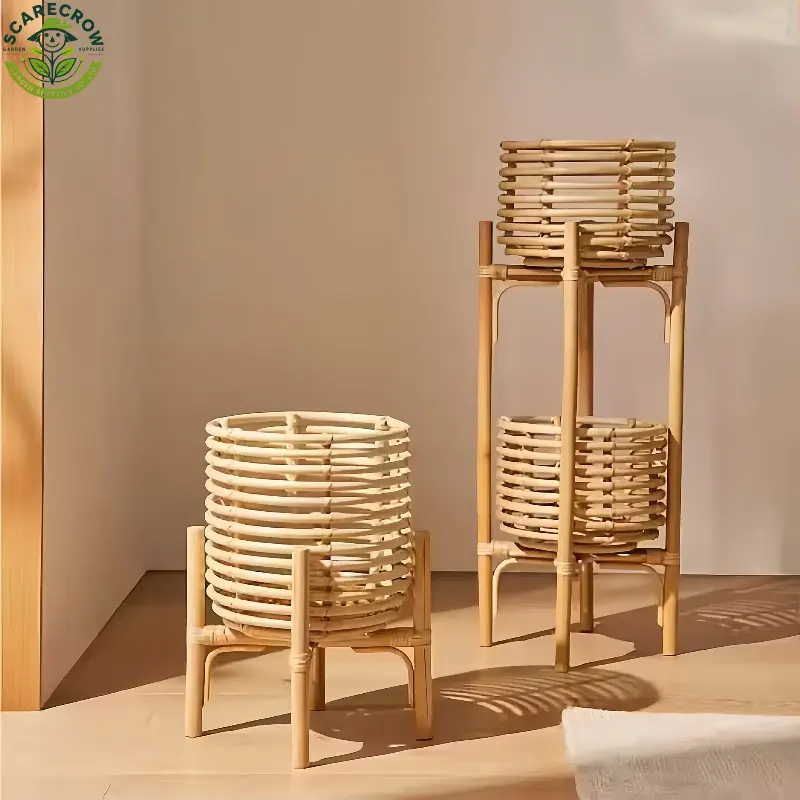
The second step is containers and propagation, in the smaller formats first: propagation trays, small planters, potting items. These increase basket value and serve the container-growing customer identified in the data. They carry moderate specification burden and moderate packaging complexity, and they teach the business how to manage a product with more specification fields.
The third step is structural products: raised beds, and then greenhouses. These are the highest burden categories, with the most specification fields, the most packaging dependency, the largest freight implications, and the most technical customer questions. They are also often the highest value per unit, which is why businesses reach for them early. Doing them third rather than first means the business has already learned how to manage specifications and packaging on lower-risk categories.
This sequence is not a rule. A business with an engineering background, or one whose customer base is already buying structural products elsewhere, can reasonably invert it. What should not be inverted is the underlying principle: each step should be chosen because it teaches something the next step will require.
What to test, and how
A new category should enter as a test with defined criteria, and the criteria should be set before the first order rather than judged afterwards.
Four measures, each with a threshold decided in advance. Sell-through rate against the planned rate, measured within the season rather than at the end. Return rate and support contact rate, which reveal whether the product is understood by the customer. Repeat purchase rate, which for consumables should be meaningfully high and for durables is less relevant. And the ratio of management effort to revenue, which is the measure most often ignored and most predictive of whether the category should continue.
The fourth measure deserves emphasis because it is where expansions quietly fail. A category can sell well and still be a bad addition if it consumes a disproportionate share of the team's time relative to what it contributes. A greenhouse range that generates three hours of technical questions per sale is not a good category for a business whose model is catalogue-driven, however good the margin looks.
Exit criteria matter as much as entry criteria
The counterpart to entering with criteria is leaving on criteria, and it is the rarer discipline.
A test with no exit criteria runs indefinitely, because there is always one more season to see whether it works. Written exit criteria, agreed before the first order, make the decision automatic: if sell-through is below a stated level and support contact rate above a stated level by a stated review date, the category is discontinued.
Discontinuing should also mean disposing of the remaining stock in a planned way rather than leaving it in the back of a warehouse for years, which is a cost that never appears as a category failure but is one.
What a supply partner needs to know about your expansion
Expanding a range changes what a supplier relationship has to deliver, and the change is not automatic.
A supplier that has handled tools well may not be the right supplier for containers, because the manufacturing base, the specification knowledge, and the packaging capability differ by category. The value of a coordinated supply relationship is that it can cover multiple categories, which reduces the number of relationships to manage, but only if the partner actually has the relevant capability in the relevant category.
Which makes one question worth asking early: which of these candidate categories can you support with real specification knowledge, and which would you be sourcing through the same channels I could access myself? A partner that can answer honestly is worth more than one that says yes to everything.
Scarecrow Garden Supplier is a China-based wholesale supplier of garden and outdoor products, including garden tools, greenhouses, raised beds and planters, plant supports, propagation supplies and other garden accessories. Working with a network of more than 200 cooperating factories, we supply international importers, distributors, retailers and other business buyers.
Whether you are replenishing an established product line or adding new garden categories, you can purchase individual products in wholesale quantities or combine different products and categories in a coordinated order. We also support specification confirmation, product checks, packaging and shipment preparation in China.
If you're considering new products for your garden range, send us the categories, product references or specifications you're interested in. We can discuss suitable wholesale options and the practical requirements for your order.

Written by
ScarecrowGarden
💡About Scarecrow Garden Supplier Co., Ltd.
Scarecrow Garden Supplier Co., Ltd. is a China-based sourcing and wholesale partner specializing in garden tools, landscaping equipment, and outdoor supplies for international wholesalers, distributors, contractors, and brands.
With hands-on experience rooted in real garden use scenarios, we focus on durable materials, functional design, and stable large-volume supply. Our product range covers pruning tools, watering systems, hand tools, outdoor hardware, and customized garden solutions to support both retail and professional landscaping markets.
Beyond products, we help our partners navigate supplier selection, quality control, compliance requirements, and long-term sourcing strategies in China. Through our blog, we share practical insights on product selection, material comparisons, industry trends, and cost-effective purchasing—helping global buyers build stronger, more competitive supply chains.