









Close-up of the curved opening of a green leaf collection bag, with leaves and part of a rake.
The bag is full, it is heavy, and it has to go into a bin whose opening is at chest height with a lid that hinges back. Everything about that operation is decided before the collection starts, and almost none of it is about the bag's capacity.
Most bag specifications describe collection: how much it holds, how strong the seams are, whether it can be dragged. The question that decides whether a customer keeps using the bag is different. Can it be emptied, by this person, into that bin, without the contents going on the ground.
Look at the opening before filling the bag
Start with the bin, not the bag.
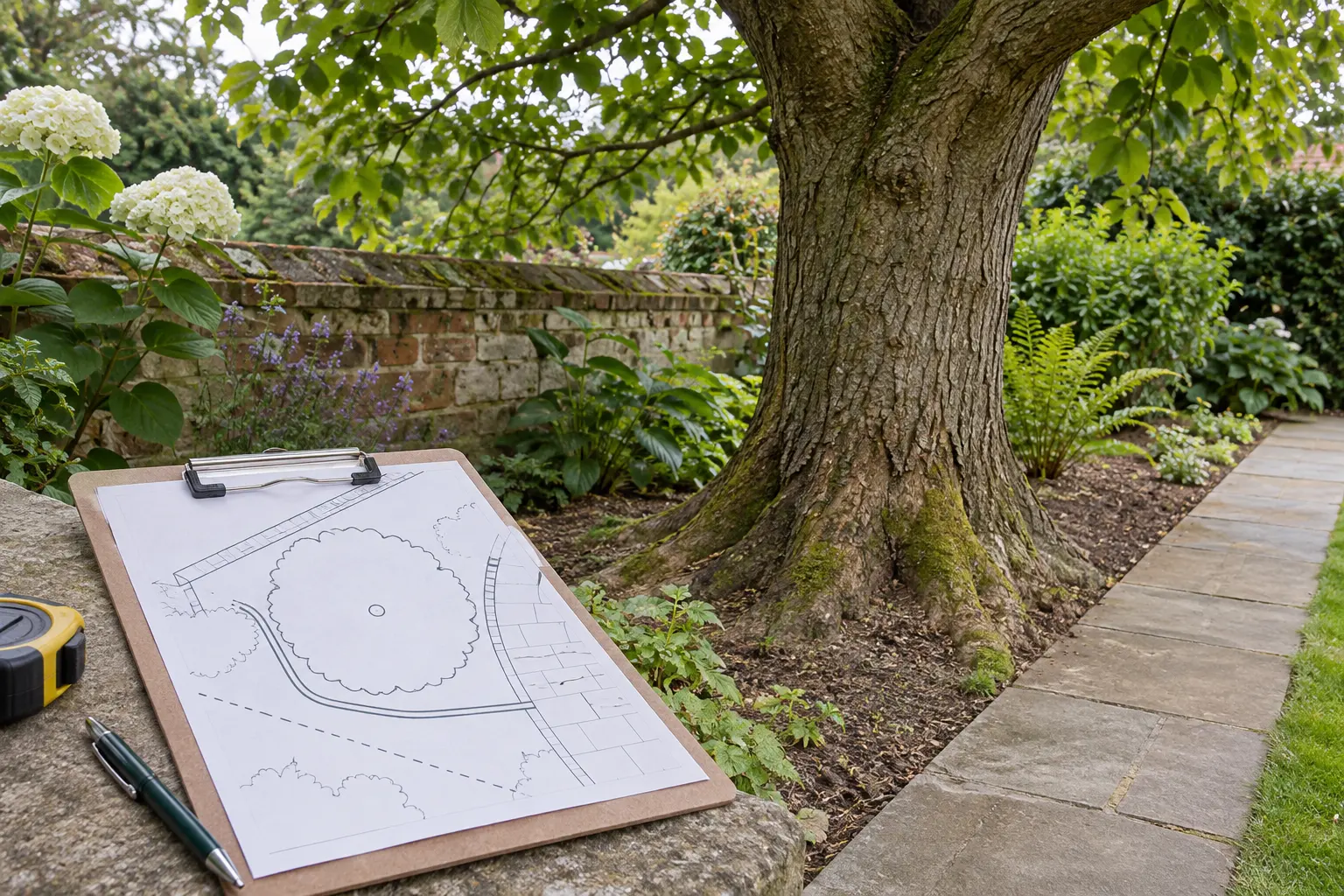
Record the opening: its shape, its dimensions, its height above the ground, and whether there is a rim or lip that the bag has to clear. Then record how the bin is normally loaded. A compost bin with a hinged lid that folds back gives a large opening but a lid that can fall forward. A tumbler with a hatch gives a small opening at a fixed height. A ground pile has no opening at all and accepts material from any direction.
A top-loaded compost bin deserves its own note. For a tall box or drum with an opening at waist or chest height, check the clear width, the rim the bag must pass, and where the lid rests when open. A hinged lid that will not stay clear can obstruct the transfer. The user should not have to hold a heavy bag up while also trying to keep the lid open.
That is the geometry the bag has to work with, and it is the reason the emptying motion matters more than the capacity figure. A bin loaded through the top sets a different task from one designed to be loaded through a low opening; a small bottom hatch may instead be intended for removing finished compost. Check which opening is actually used for adding material.
Then record the approach. Can the person stand directly in front of the opening with the bag, or is there a wall, a raised bed or a stack of pots in the way? A bin against a fence with a narrow approach changes the emptying motion entirely, from lifting and tipping to lifting, turning and tipping.
Those three records, opening, height and approach, define the emptying task. Two bins can both be described as compost bins and present completely different tasks. The operating rule that follows from it is simple: material goes into a bin in a way that can be managed afterwards, which means in practice that the person has to be able to place it, not throw it.
A half-dustpan leaf collection bag offers a different loading shape for ground-level collection; its route to your compost bin still needs checking.
Follow the bag from collection to emptying
Now trace the bag through the whole operation, because the failures happen at the transitions rather than in the middle.
Filling: the bag stands, or is held open, and material goes in. A bag that holds its own shape is easier to fill alone; a semi-rigid band or hoop is one way to keep the mouth open without a hand. A bag that resists being opened has to be held open while it is filled, adding an extra action to the job.
Moving: the bag is carried from the collection point to the bin, or dragged if its intended use permits it. Use the designated carrying handles. If the load is difficult to control, reduce the fill or use a suitable handling aid. A reinforced base and double stitching alone do not establish that the bag can withstand dragging over gravel.
Aligning: the bag has to be brought to the opening in a position from which it can be tipped. This is where the height of the bin matters most. Locate and clear the opening before lifting; if a chest-height opening makes the lift difficult to control, reduce the load or use another transfer arrangement. A ground pile allows the bag to be tipped from a standing position.
Tipping: and this is the step the bottom handle exists for. A bottom handle lets the user lift the base of the bag while the side handle controls the opening, which converts a lift-and-pour into a controlled tip. Without a bottom handle, check the intended emptying grip and method; the absence of that handle does not by itself mean the bag will collapse or spill.
Draining: wet leaves and grass clippings can make a load harder to handle, and some bags retain free water. Use any existing drainage features as instructed rather than adding holes to an unspecified bag. Emptying sooner or reducing the wet load may help, but drainage does not guarantee that compacted material will pour freely.
A supplier should describe this in the product copy, because a handle at the base is the single most useful emptying feature on a soft bag, and it is invisible in a photograph of a bag standing upright.
Choose a bag you can empty comfortably
The conclusion of the trace is not a bag specification. It is a fill level.
The variable the user controls is how much goes in. A bag filled to the point where it can no longer be lifted and tipped by one person has exceeded its practical working load for that person and that bin, whatever its rated capacity. Two-thirds full and easily emptied beats full and spilled.
That gives a supplier three useful pieces of guidance for a product page, all of them more helpful than a capacity figure.
Name the emptying requirement alongside the capacity. State that the bag has a bottom handle for tipping, or, if it does not, explain the intended emptying method and grip. Buyers who know this before they sell it will describe it correctly to their customers.
Give any documented rated load as well as capacity. The fill a particular person can comfortably lift and tip into a particular bin is separate from that rating and depends on the material, grip and lift height.
Name the bin types the bag suits. Tipping into a ground pile and lifting to a chest-height opening place different demands on the handles, base and manageable fill; the same bag may suit more than one arrangement.
For customers filling a lidded compost bin, write the guidance around the actual opening, lid clearance and approach. Show the available grips and how the bag behaves while tipping, then describe a fill level the user can manage without exceeding any stated load limit. Those details help the customer judge the transfer; a bottom handle or a stiff base alone does not make every load manageable.
Volume, seam strength and drag durability are separate questions from whether the customer can get the contents out, and a bag that passes on all three can still be a bag that nobody wants to empty twice.
Choosing bags for a particular composting setup? Share the bin opening, loading height and collection method with our team so we can compare suitable bag shapes and handling details.

Written by
ScarecrowGarden
💡About Scarecrow Garden Supplier Co., Ltd.
Scarecrow Garden Supplier Co., Ltd. is a China-based sourcing and wholesale partner specializing in garden tools, landscaping equipment, and outdoor supplies for international wholesalers, distributors, contractors, and brands.
With hands-on experience rooted in real garden use scenarios, we focus on durable materials, functional design, and stable large-volume supply. Our product range covers pruning tools, watering systems, hand tools, outdoor hardware, and customized garden solutions to support both retail and professional landscaping markets.
Beyond products, we help our partners navigate supplier selection, quality control, compliance requirements, and long-term sourcing strategies in China. Through our blog, we share practical insights on product selection, material comparisons, industry trends, and cost-effective purchasing—helping global buyers build stronger, more competitive supply chains.