




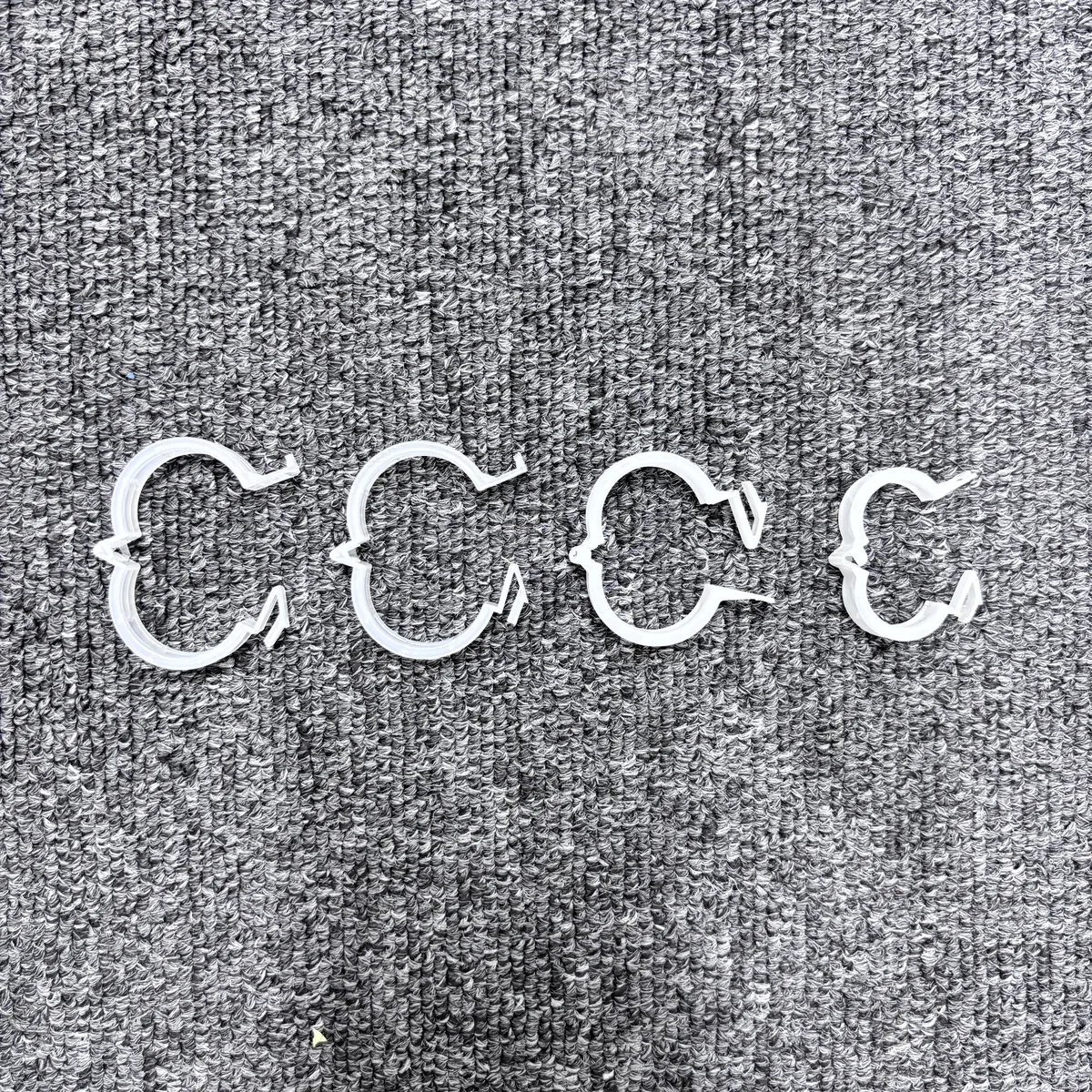
Four white round clips shown open, with their closing sections visible.
A buyer asking for a "plant support kit" may be asking for two different things. One buyer already has stakes, a frame or a support line in use and wants the parts that connect a plant to it. Another buyer has nothing in place and needs the structure itself. The same catalogue word covers both, but the offers behind them do not contain the same parts.
The distinction matters before any component list is written. If a supplier quotes a bag of clips against a request that also needs a framework, the offer leaves a requirement unmet. If the buyer already has suitable support, adding another framework may duplicate both cost and function.
The two offer designs below start from those different requirements. They are not supplied or tested kits, and they do not assume that every individual product needs to be sold in a bundle.
Begin with the support already in place
Before listing products, establish two things: what support the buyer already has, and which task the request is asking the offer to add.
Structural supports and the ties that connect a plant to them do different jobs. University of Minnesota Extension's guidance on supporting vegetables discusses trellises, stakes and cages, as well as tying plants to supports. That provides useful context for separating the framework from the connecting accessories; it does not establish the compatibility of any pictured clip.
The plant ties and support accessories category is a starting point for the accessory side of the request. A specific connection still needs a documented match between the offered part and the buyer's actual support, including the relevant dimensions, geometry and intended use.
So the first question is not "which clips do we include?" It is "what support is already available, and what must this offer add?"
Two offers built for different starting points
Architecture A — the buyer already has suitable support
If the buyer confirms a suitable stake, frame or support line is already available, the offer can focus on accessories and connections.
- Included: the connection/accessory family required for the stated task, carried forward as the core of the offer.
- Omitted: a second structural framework, unless the buyer separately requests one.
- Optional: a directional branch-training part, only when the request includes branch positioning rather than simple support.
- Unresolved: the match between the offered connection part and the buyer's specific support. A shared product name or a similar appearance does not settle it.
The pictured white round-clip family is one candidate for the connection role. The photograph shows the clips open; it does not establish a measured diameter, a confirmed line fit or a tested hold.
Architecture B — no suitable support is supplied or identified
If no suitable support is available or included in the request, clips alone do not supply the missing framework. There are two clear ways to describe the offer: include a separate structural-support requirement, or explicitly limit the offer to accessories and identify the support still needed.
- Included: a structural-support requirement as a separate line, or an explicit accessories-only scope with that dependency stated.
- Omitted: wording that presents accessories alone as a complete support system.
- Optional: the connection/accessory family alongside a suitable structure, according to the chosen support arrangement.
- Unresolved: which structure suits the buyer's crop, spacing and site, and which accessory matches it.
These are choices about the offer's scope, not a fixed component count or an entry/standard/premium ladder. Naming the missing structure does not mean that a particular supplier has offered it.
Where a branch-training option belongs
Some requests are about directing a branch as well as supporting a plant. That is an additional requirement, rather than a default component of every kit.
The pictured two-arm component is a candidate for that optional role. The photograph shows a central round section with two arms extending to opposite sides. The photograph alone does not establish how the part is mounted or used.
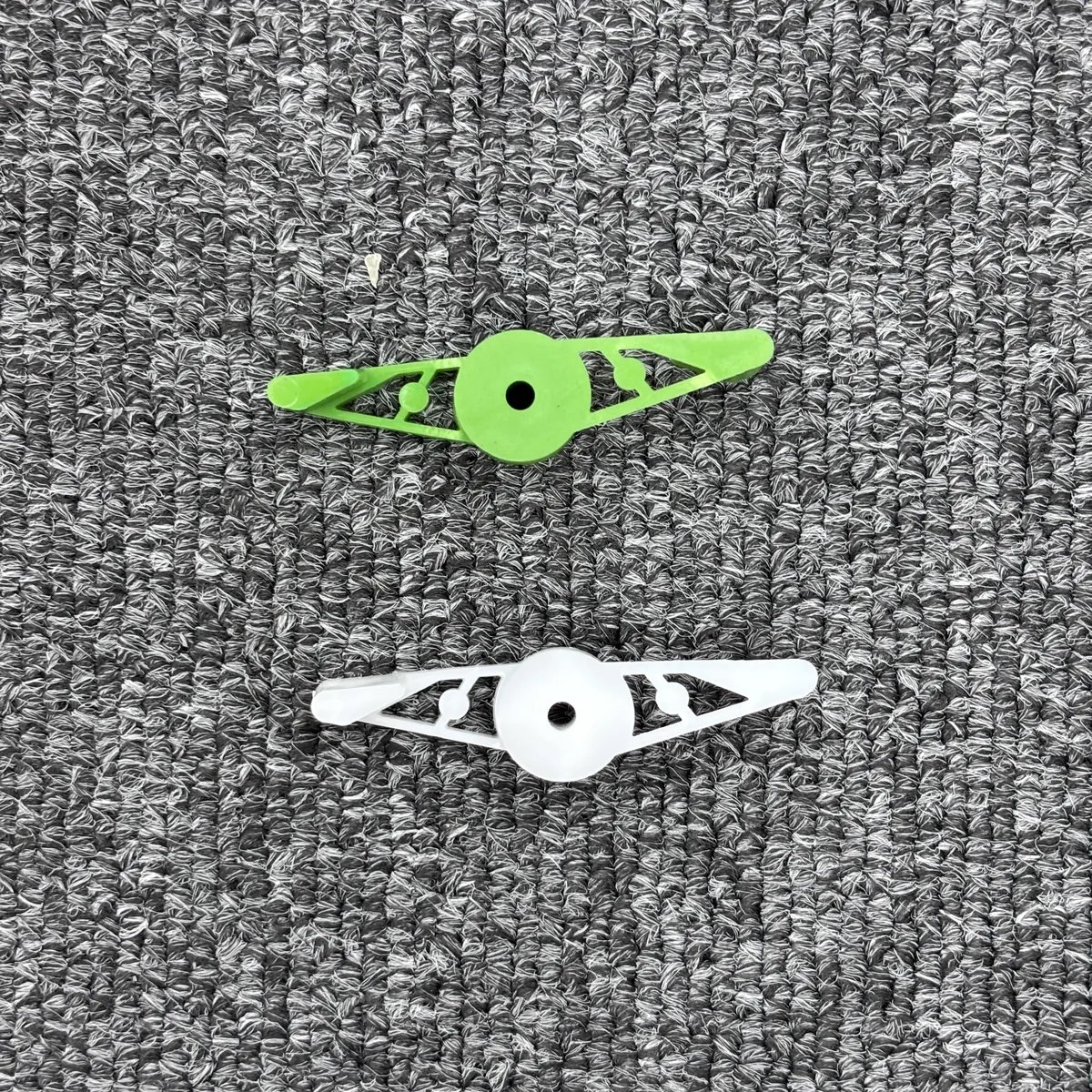
Where the buyer requests directional training, a matching branch-training component can be considered separately. Where that task is absent, there is no reason to add one simply to make the kit look more complete.
Removing duplication before the offer is final
Different names do not establish different required functions. Two items described as a "vine clip" and a "plant clip" may answer the same requirement. Without a documented distinct application, the second should remain an alternative rather than automatically becoming another item in the kit.
The reverse is also true. Similar functions do not prove interchangeability. Two parts that connect a plant to a support may differ in the supports they fit or the applications they suit. They remain separate candidates until the relevant match is documented.
The finished offer should make clear what each included part adds, which items are alternatives and which dependencies remain unresolved. That gives the buyer a reason for the contents before quantities are assigned.
Once those contents have been specified, pack-count control for plant training kits addresses the next question: whether a multi-component pack actually contains what was ordered.

Written by
ScarecrowGarden
💡About Scarecrow Garden Supplier Co., Ltd.
Scarecrow Garden Supplier Co., Ltd. is a China-based sourcing and wholesale partner specializing in garden tools, landscaping equipment, and outdoor supplies for international wholesalers, distributors, contractors, and brands.
With hands-on experience rooted in real garden use scenarios, we focus on durable materials, functional design, and stable large-volume supply. Our product range covers pruning tools, watering systems, hand tools, outdoor hardware, and customized garden solutions to support both retail and professional landscaping markets.
Beyond products, we help our partners navigate supplier selection, quality control, compliance requirements, and long-term sourcing strategies in China. Through our blog, we share practical insights on product selection, material comparisons, industry trends, and cost-effective purchasing—helping global buyers build stronger, more competitive supply chains.