






Updated 4 months ago
Are Solar-Powered Animated Butterfly Lights Worth Sourcing? Wholesalers Need to Understand These Three Realities First

ScarecrowGarden
💡About Scarecrow Garden Supplier Co., Ltd.
Scarecrow Garden Supplier Co., Ltd. is a China-based sourcing and wholesale partner specializing in garden tools, landscaping equipment, and outdoor supplies for international wholesalers, distributors, contractors, and brands.
With hands-on experience rooted in real garden use scenarios, we focus on durable materials, functional design, and stable large-volume supply. Our product range covers pruning tools, watering systems, hand tools, outdoor hardware, and customized garden solutions to support both retail and professional landscaping markets.
Beyond products, we help our partners navigate supplier selection, quality control, compliance requirements, and long-term sourcing strategies in China. Through our blog, we share practical insights on product selection, material comparisons, industry trends, and cost-effective purchasing—helping global buyers build stronger, more competitive supply chains.
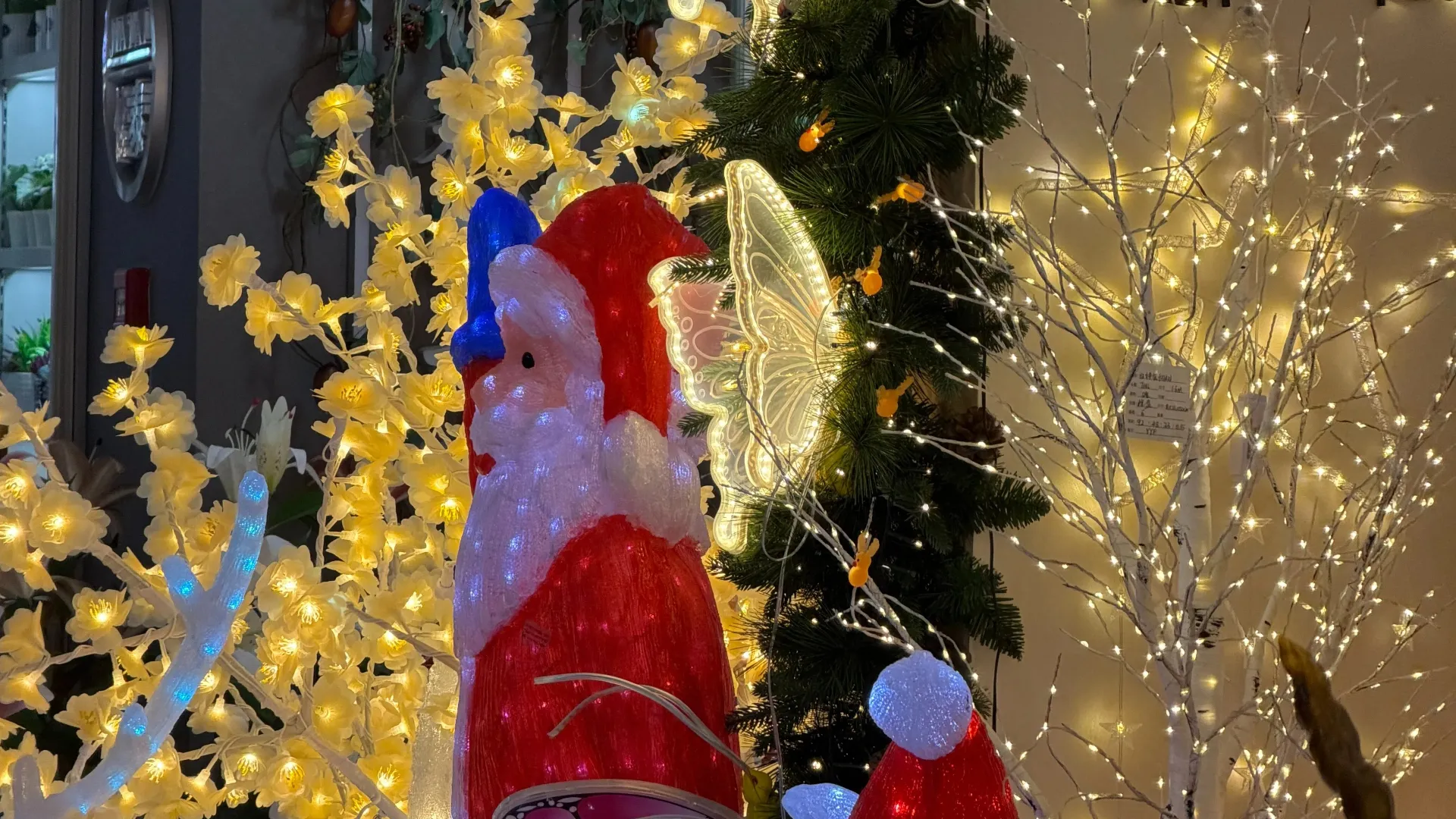
Wholesale Solar Butterfly Lights: 3 Realities Before You Source | Scarecrow Garden Supplier
“Solar-powered butterfly light” — these five words alone are already a selling point. No outlet, no wiring, just insert it into the soil and use it. For end consumers, this almost sounds like the perfect garden decorative light.
That is why many wholesalers’ first reaction when sourcing butterfly lights for the first time is: choose the solar-powered version.
Wait.
Solar power + butterfly light sounds beautiful. But when “solar power” and “animated wing flapping” are combined in one product, they create some contradictions you may not have considered. These contradictions will not show up during the sample stage — the sample is tested on a sunny day and works well. They will appear one by one after your customers have used the light in their gardens for three months.
For the basic selection logic of butterfly lights, read our Complete Buying Guide for Animated Butterfly Lights first. This article focuses on one question: Are solar-powered animated butterfly lights worth doing?
How Are Solar-Powered Animated Butterfly Lights Different from Ordinary Solar Garden Lights?
This is the starting point for understanding all the problems.
Ordinary solar garden lights work very simply: the solar panel charges during the day, and the LED lights turn on at night. The whole system only needs to drive a few LED beads, so the power demand is very low. One ordinary solar panel plus a small battery is enough. This is also why ordinary solar garden lights can be priced below $10 — the structure is simple and the power consumption is low.
Animated butterfly lights are different. They do not only need to emit light; they also need to drive a motor to flap the wings. The motor consumes far more power than LED beads. For a 20W animated butterfly light, the motor may consume more than half of the total power during operation.
This means that with the same solar panel and battery, a static LED light may stay on for 8 hours, while an animated flapping butterfly light may only last 4–5 hours. If RGB color changing or motion sensing is added, the runtime will be further shortened.
This is not a technical problem of any particular factory. The battery is only so large, the motor consumes power, and the lights also consume power. When the same amount of energy has to be shared across multiple functions, each function receives less power, so the runtime naturally becomes shorter.
Reality No. 1: Weather Has a Big Impact
The charging efficiency of a solar panel directly depends on the sunlight conditions. Charging is fast on sunny days, slow on cloudy days, and almost ineffective on rainy days. This is not news. But animated butterfly lights require much more power than ordinary solar lights, so the impact of weather is also amplified.
An ordinary solar garden light may still stay on for 4–5 hours on a cloudy day because LEDs require little power, and the battery charged from the previous day may still be enough. A solar-powered animated butterfly light may only flap and light up for 2–3 hours on a cloudy day because the motor’s continuous power consumption drains the battery faster..
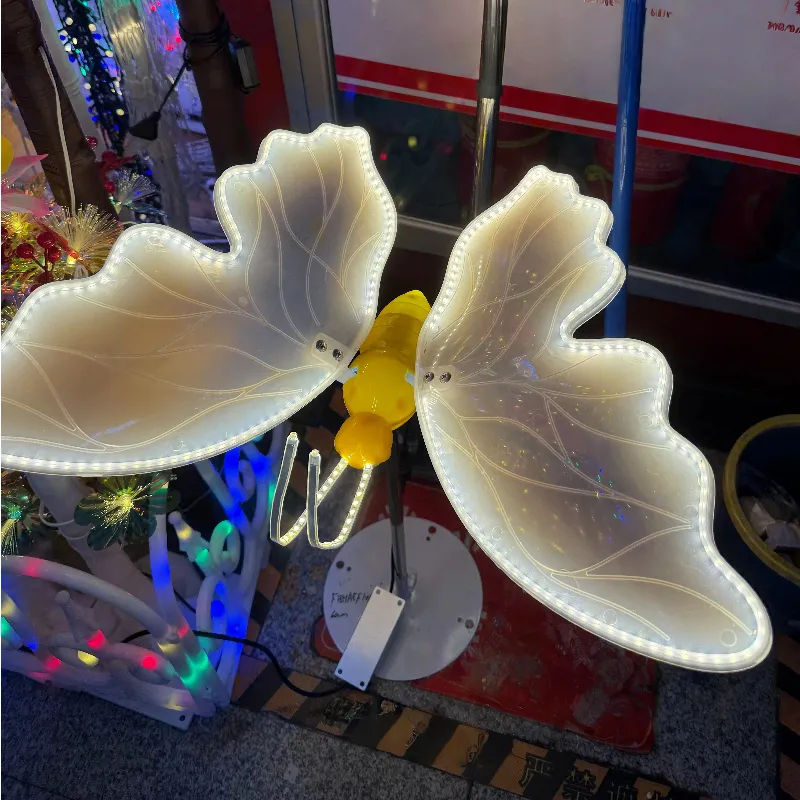
Winter is even more critical. In regions above 40 degrees north latitude, such as Canada, Northern Europe, and northern parts of the UK, winter daylight can be so short that it gets dark at three or four in the afternoon. Solar panels charge much less efficiently under low-angle sunlight, while low winter temperatures also reduce battery discharge performance. Under this double impact, the winter performance of solar-powered animated butterfly lights may disappoint both you and your customers.
Customers will not blame the weather. They will blame the product you sold them.
What Should Wholesalers Do?
If your customers are mainly located in northern North America, Northern Europe, or the UK, where winter solar efficiency is too low, it is recommended to focus on electric-powered models and use solar-powered models as a supplement. If customers insist on solar-powered models, you must clearly explain in advance that winter performance will decline.
If your customers are in Southern Europe, Australia, or the southern United States, where sunlight is abundant, the solar-powered version will offer a much better experience and can be used as a main product.
Reality No. 2: Battery Life Is Limited
The rechargeable battery inside the solar module is a consumable component. Like a mobile phone battery, its capacity gradually decreases with repeated charge and discharge cycles.
A new solar battery may support animated wing flapping + lighting for 6–8 hours after being fully charged. After 1–2 years of use, the same charging time may only support 4–5 hours. After 3 years, it may be reduced to only 2–3 hours.
The speed of this decline depends on battery quality and the use environment. High temperatures accelerate battery aging — if your customers are in hot regions, the battery life may be shorter. Low temperatures reduce discharge efficiency — customers in cold regions will notice that lighting time becomes significantly shorter in winter.
The problem is that end consumers often do not know the battery can be replaced. When they see the butterfly light staying on for a shorter and shorter time, their first reaction is not “the battery needs to be replaced,” but “this product is broken” — and then they return it or leave a negative review.
What Should Wholesalers Do?
When sourcing, confirm whether the battery in the solar module is replaceable. If it is, clearly write the replacement method in the product instructions. This small action can reduce many returns caused by “the light no longer works.”
If your customers are e-commerce sellers, it is recommended to state on the product page: “Solar battery life is about 2–3 years and supports replacement.” Setting reasonable expectations in advance costs much less than handling complaints afterward.
Reality No. 3: There Is a Conflict Between Wing-Flapping Effect and Runtime
This is the core contradiction of solar-powered animated butterfly lights, and it is also something many wholesalers do not realize.
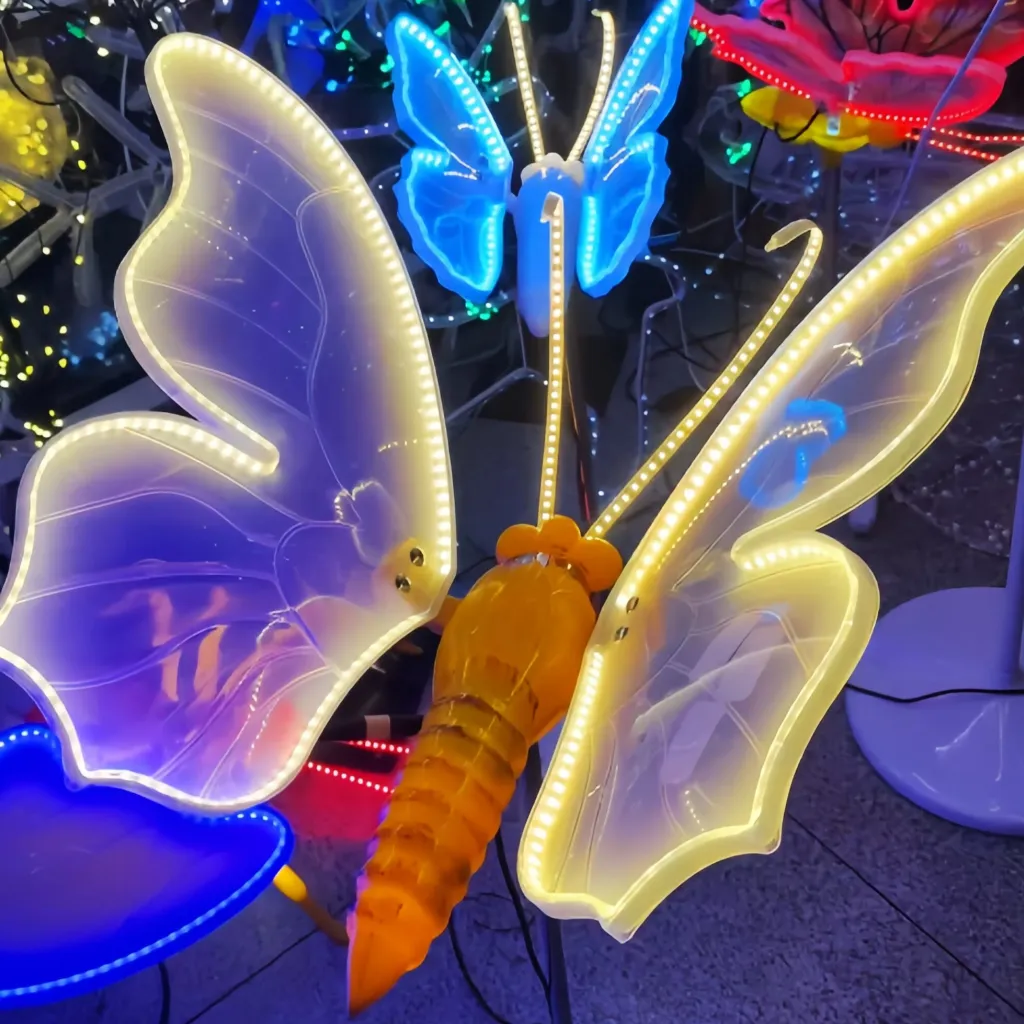
The flapping motor of an animated butterfly light requires continuous power. The larger the flapping angle, the higher the motor power consumption. Because the flapping effect and runtime are both affected by motor load, buyers should also review motor selection for dynamic butterfly lights before deciding on a solar version.The faster the flapping speed, the faster the battery drains. The brighter the light, the higher the LED power consumption. RGB color changing consumes more power than single-color lighting. Although a motion sensor can save power by keeping the product on standby when no one is nearby, it also increases system complexity.
All these functions are competing for power from the same battery. Under solar power conditions, you cannot have 80° wing flapping + high-brightness lighting + 8-hour runtime at the same time. Physically, it cannot be done.
How do low-cost solar solutions handle this contradiction? Usually in two ways:
Reduce the flapping effect: reduce the flapping angle, slow down the flapping speed, or even use intermittent flapping, where the wings move for a while and then stop for a while. This saves power, but the animated effect is weakened. What consumers see is not a “living butterfly,” but a light that “moves occasionally.”
Reduce the runtime: keep the flapping effect, but shorten the lighting time from 8 hours to 4–5 hours. Consumers can see the butterfly flapping in the first half of the night, but the light goes out in the second half.
Neither option is ideal. But for wholesalers, you need to know that this contradiction exists before you can make a reasonable sourcing decision.
What Should Wholesalers Do?
If your customers have high requirements for the wing-flapping effect, such as commercial displays or garden center displays, electric-powered models are a more reliable choice. Solar power output cannot support continuous 80° wing flapping.
If your customers do not have high requirements for the flapping effect and care more about the convenience of “no wiring + automatic lighting,” solar-powered models can meet their needs. But it is recommended to choose smaller sizes, under 24 inches. Smaller wings require less power to flap, making them easier for solar power to support.
Which Markets Are Suitable for Solar-Powered Models?
| Market Feature | Is the Solar Version Suitable? | Reason |
|---|---|---|
| Sunny regions, such as Southern Europe, Australia, and the southern United States | ✅ Suitable | High charging efficiency and better user experience |
| Residential gardens where wiring is inconvenient | ✅ Suitable | No wiring is the core need |
| Gift products | ✅ Suitable | Convenient to give as a gift and does not require installation |
| Light-use scenarios, such as occasional decorative lighting | ✅ Suitable | Runtime requirements are not high |
| Northern North America, Northern Europe, and the UK | ⚠️ Use with caution | Winter charging efficiency is too low |
| Commercial displays, such as hotels and restaurants | ❌ Not suitable | Stable operation is required, and “the light does not work on cloudy days” is unacceptable |
| Large animated butterfly lights above 24 inches | ❌ Not suitable | Solar power cannot support large-wing flapping |
| Customers with high requirements for the flapping effect | ❌ Not suitable | The flapping effect of the solar version is not as good as the electric-powered version |
Which Markets Are More Suitable for Electric-Powered Models?
Electric-powered models, such as DC12V, DC24V, or DC36V versions, do not have the three problems of weather dependence, battery lifespan, and power conflict. The brightness is consistent, the wing-flapping effect is stable, and performance is not affected by the season.
But electric-powered models have a higher installation threshold: they require a transformer, wiring, and a nearby power outlet. For residential gardens without an outdoor socket, installing an electric-powered model means running an extension cord from indoors. Some consumers find this troublesome, and some find it unattractive.
A practical judgment standard is this: the problem of electric-powered models, which is wiring, is something consumers can solve themselves — they can buy an extension cord. The problem of solar-powered models, which is the light not working well in bad weather, is something consumers cannot solve. The former is an inconvenience; the latter is a product failure. In negative reviews, the severity of these two problems is completely different.
Configurations You Must Confirm When Sourcing Solar-Powered Models
If you decide to source solar-powered models, confirm these parameters before placing an order:
☐ Solar panel specifications, including power and size
☐ Battery capacity, mAh
☐ Motor power and flapping angle
☐ LED quantity and brightness
☐ Whether the battery supports replacement
☐ Waterproof rating, IP65
☐ Full-charge runtime when flapping and lighting operate at the same time
☐ Description of cloudy-day performance
If you also compare electric-powered versions, check wholesale configurations for animated butterfly lights so the quotation includes the correct wires, transformer, sensor, RGB option, and installation accessories.
Pay special attention to “full-charge runtime.” Many suppliers mark “8–10 hours lighting,” but this may refer to lighting only without wing flapping. The runtime when animated flapping and lighting operate at the same time may be only half of the stated value. Ask clearly.
Selection Advice Between Solar-Powered and Electric-Powered Models
If you are doing the butterfly light category for the first time, start with electric-powered models to test the market. Electric-powered models are stable, have lower return risk, and offer a more predictable customer experience. After the category has proven itself, you can decide whether to introduce the solar-powered version based on customer feedback.
For the residential gift market, solar-powered models can be used as a supplement. Gift scenarios do not require extremely strong wing-flapping performance, and the convenience of no wiring is more important.
For high-end customers, offer both electric-powered and solar-powered options so customers can choose for themselves. The electric-powered version ensures performance, while the solar-powered version ensures convenience.
It is not recommended to give up electric-powered models simply because “solar-powered models are easier to sell.” Solar-powered models perform well under specific conditions, but they are not a universal solution. If you only offer solar-powered models, you will miss customers who care about stability and wing-flapping performance.
Final Thoughts
Many wholesalers assume that the solar-powered version is the “more advanced choice,” while the electric-powered version is the “backup option.” In reality, it may be the opposite.
The problem of electric-powered models can be solved by the consumer — just buy an extension cord. The problem of solar-powered models cannot be solved by the consumer — when the weather is bad, the light does not work well, and that is not something the consumer can control. The former is an inconvenience; the latter is a product failure. In negative reviews, the severity of these two problems is completely different.
So the key question is not “Is solar power good?” The key question is: when your customers encounter a problem, can they solve it themselves? If they can, the solar-powered version is a differentiated selling point. If they cannot, the electric-powered version is the safer choice.
If you are not sure whether your market should choose solar-powered or electric-powered butterfly lights, or if you want to test both versions but do not want to manage two supply chains, we can help you create a dual-version configuration. Electric-powered and solar-powered models can be combined in one order according to a suitable ratio, then inspected and consolidated for shipment after arrival at the warehouse.
Talk to Queenie about solar vs electric butterfly light options for your market.
[Prices mentioned in this article are based on current market conditions. Please refer to real-time quotations for specific pricing.]
Simplify Your Garden Product Sourcing from China
We help you combine multiple product categories into one sourcing flow with supplier matching, sample verification, and consolidated shipping.
Written by
ScarecrowGarden
💡About Scarecrow Garden Supplier Co., Ltd.
Scarecrow Garden Supplier Co., Ltd. is a China-based sourcing and wholesale partner specializing in garden tools, landscaping equipment, and outdoor supplies for international wholesalers, distributors, contractors, and brands.
With hands-on experience rooted in real garden use scenarios, we focus on durable materials, functional design, and stable large-volume supply. Our product range covers pruning tools, watering systems, hand tools, outdoor hardware, and customized garden solutions to support both retail and professional landscaping markets.
Beyond products, we help our partners navigate supplier selection, quality control, compliance requirements, and long-term sourcing strategies in China. Through our blog, we share practical insights on product selection, material comparisons, industry trends, and cost-effective purchasing—helping global buyers build stronger, more competitive supply chains.