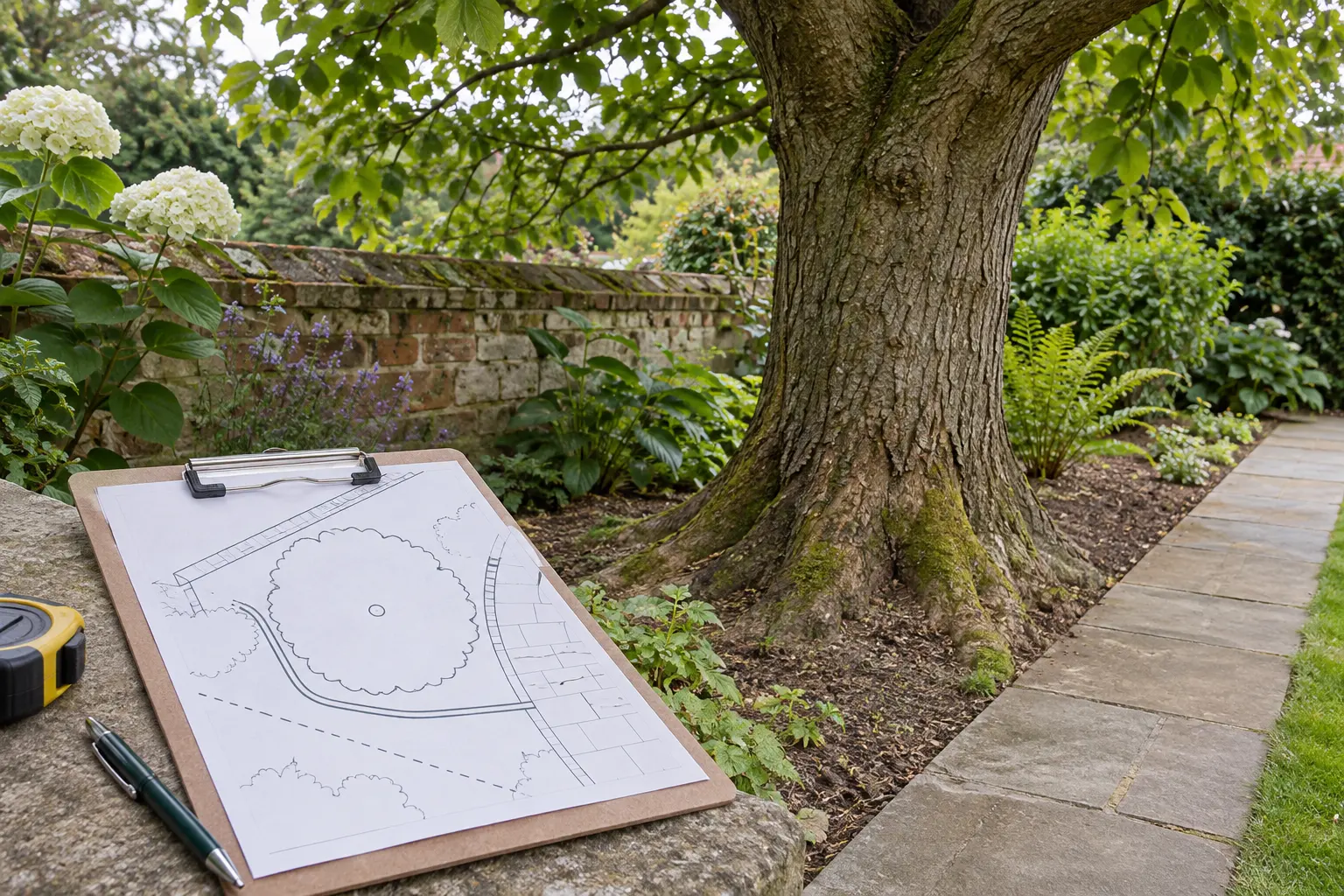







Recovered plant ties sorted into labelled containers for inspection and reuse assessment
“Reusable” on a plant tie is a property of the object. It is not an inventory, and the gap between those two statements is where the second season's supply quietly disappears.
A tie that has been used once and removed is not the same as a tie that is available to issue. It has to come back, be judged, be processed, be stored and be found again. Each of those stages can lose stock, and an operation that does not plan for them is relying on none of them leaking.
The tie has to come back first
The first number in any re-use calculation is the recovery quantity, and it is determined by what happens at crop end rather than by anything about the product.
At the end of a crop, ties leave the crop in four ways. They are removed deliberately and collected, which is recovery. They are removed and dropped, which is loss into the floor, the debris or the compost. They are cut, if the removal method is cutting, which removes them from the system entirely unless the cut piece is still usable. And they leave attached to crop debris that is being disposed of, which is an easy route to unintended loss because the tie leaves the building with the crop.
Which route dominates is a function of how the crop is taken out, not of the tie. A crop cleared by a crew with a specific instruction to collect ties produces a different recovery rate from a crop cleared by a crew whose task is to empty the greenhouse before the next planting. The difference can be large, and it is entirely within the operation's control.
The practical implication is that re-use is a work instruction before it is a product claim. If the removal instruction does not mention ties, the ties are being disposed of by default, and the product's reusability is a wasted property.
Separate recovered quantity from usable quantity
Once ties are back, the counting has to be done in stages rather than in one figure, because a single figure hides where the loss is.
Three quantities are useful. Recovered, meaning ties that came back to the collection point. Awaiting processing, meaning ties that came back but have not yet been judged or cleaned. Usable, meaning ties that have been judged and are ready to issue.
The difference between recovered and usable is where most of the honest accounting sits. A tie comes back with soil on it, or with plant residue, or kinked from being pulled, or with a deformed closure. Some of that is fixable, some is not, and the judgement has to be made by someone with a criterion rather than by whoever is sorting.
The criterion is the crux, and it is not the operation's to invent. Whether a tie may be re-used at all, and under what conditions, is a product question that starts with the manufacturer's own guidance. On top of that sit the physical condition of the individual tie, the operation's plant health requirement for material going back to a crop, and whatever rules apply in the market where the crop is grown. All four belong in the judgement, and an operation that decides for itself that a tie “looks fine” is making a judgement it has no basis for.
The honest position on numbers here is that none of the three quantities has a published benchmark. Published recovery rates, re-use allowances and service lives for plant ties are not readily available, and this article will not manufacture one. It also will not offer a service life, a number of seasons a tie can be expected to last, or a cleaning frequency, because no source behind this piece supports any of those figures. What can be offered is the structure of the calculation and the warning that any percentage quoted as an industry norm is someone's experience rather than a standard.
Keep the processing route compatible with the material
Processing is where good intentions produce bad outcomes, because the cleaning method that is right for one material is wrong for another, and the wrong method can destroy the stock it is meant to save.
The organising principle is compatibility between the material, the closure mechanism and the cleaning route. A tie with a metal component and a tie that is entirely polymer cannot be treated identically. A closure that depends on a spring or a fine mechanism is more vulnerable to the cleaning route than a simple moulded hook. Heat, certain chemicals and prolonged wetting all affect different materials differently.
The second input is plant hygiene. Ties that have contacted crop foliage and have been stored damp between crops are a plausible route for carrying material from one crop to the next. Whether that matters, and how much, depends on the crop and on the operation's own hygiene standard, which is why the requirement should come from the operation's crop plan rather than from a generic instruction.
What must not be done is to publish a universal disinfection recipe in a product guide, or to infer one from an adjacent product. The correct instruction is that the processing route must be confirmed against the material, against the operation's plant health requirements and against any applicable rule, and that where the material or the cleaning method is unknown, the tie does not go into usable stock and is not re-issued on the assumption that it will be fine.
That is a stricter rule than it may sound, and it is the right one, because the alternative is a batch of ties in service on a crop with nobody able to say what they were exposed to. What it does not mean is that every tie is single-use. A tie the manufacturer permits to be re-used, that has been inspected and found sound, and that has been processed by a route confirmed for its material, is a tie that can go back into service.
Count the work behind the second use
Labour is one of the costs that has to be counted in a re-use programme, and it is the one that stays invisible until it is costed. It is not the only one that decides whether the programme is viable. Material ageing, how well a tie takes cleaning, the hygiene requirements the operation works to, and the proportion of ties actually recovered can each make a programme unworkable on its own, and none of them show up until the operation tries it.
Five tasks sit behind every re-used tie. Collection at crop end, which is a change to how the crop is cleared. Sorting, which separates the obviously unusable from the possibly usable. Cleaning, which has a duration and a method. Drying, which needs space and, in a wet climate, time. And storage in a form that keeps type and batch identifiable, plus re-issue, which means someone has to find the stock and move it to the crop.
Each of those is a small task and together they are a real cost, and the comparison is against the price of a new tie rather than against zero. This is the calculation that decides whether a re-use programme makes sense for a given operation, and it is a calculation the operation has to do with its own wage rates and its own layout. A supplier cannot do it for them, but a supplier can make it easier by making the processing cheap: ties that are quick to sort, easy to clean, and identifiable when loose.
The design implication is worth putting to a buyer. If a product is going to be re-used, the features that make re-use practical are worth as much as the features that make first installation good: a closure that survives being opened and re-closed, a colour or marking that identifies type after the packaging is gone, and a form that does not trap soil in a way that makes cleaning slow.
Order against recoverable stock, not the reusable label
The final and most consequential point is about how the label influences the order, and it is a warning rather than a method.
Related reading: hook-and-loop plant tie roll ordering units.
Because the product is marked reusable, someone in the procurement chain will reduce the next order on the assumption that a stock of usable ties exists. That assumption is only valid if the recovered, processed and usable quantity has actually been counted. Where it has not, the reduction is a deduction from inventory that does not exist.
The safe rule is to order against a counted usable quantity, and to treat uncounted recovered stock as zero until it has been through processing. That is conservative, and it is the right direction to be conservative, because the cost of being short is a crop that cannot be supported while the cost of being long is some stored stock.
There is a second discipline that goes with it: keep the type identifiable. Once ties of three specifications are loose in a crate, the usable quantity is really a sorting job, and the practical availability of the right tie at the right moment is lower than the count suggests. Packaging, labelling and segregated storage are what convert a pile into stock.
For the trade, the useful supply structure reflects this. Operations that re-use ties need top-up quantities more than they need a single large annual order, because their consumption is a residual after recovery rather than a gross figure. That argues for smaller, more frequent deliveries and for packaging that supports the operation's own re-issue, alongside the larger single-order pattern that suits an operation which treats ties as consumables. Both are legitimate, and a supplier who can serve both is more useful than one who only quotes cartons.
Reviewing plant ties for greenhouse or nursery purchasing? Share the tie material, closure type, reuse requirements and order quantities. Scarecrow Garden Supplier can help compare product specifications and packing options for single-product bulk orders or mixed sourcing.

Written by
ScarecrowGarden
💡About Scarecrow Garden Supplier Co., Ltd.
Scarecrow Garden Supplier Co., Ltd. is a China-based sourcing and wholesale partner specializing in garden tools, landscaping equipment, and outdoor supplies for international wholesalers, distributors, contractors, and brands.
With hands-on experience rooted in real garden use scenarios, we focus on durable materials, functional design, and stable large-volume supply. Our product range covers pruning tools, watering systems, hand tools, outdoor hardware, and customized garden solutions to support both retail and professional landscaping markets.
Beyond products, we help our partners navigate supplier selection, quality control, compliance requirements, and long-term sourcing strategies in China. Through our blog, we share practical insights on product selection, material comparisons, industry trends, and cost-effective purchasing—helping global buyers build stronger, more competitive supply chains.