






Updated 2 months ago
Tube Inner Diameter, Line Length and Emitter Count: Sizing a Small Drip Irrigation Kit Without Guesswork
SCARECROW GARDEN SUPPLIER

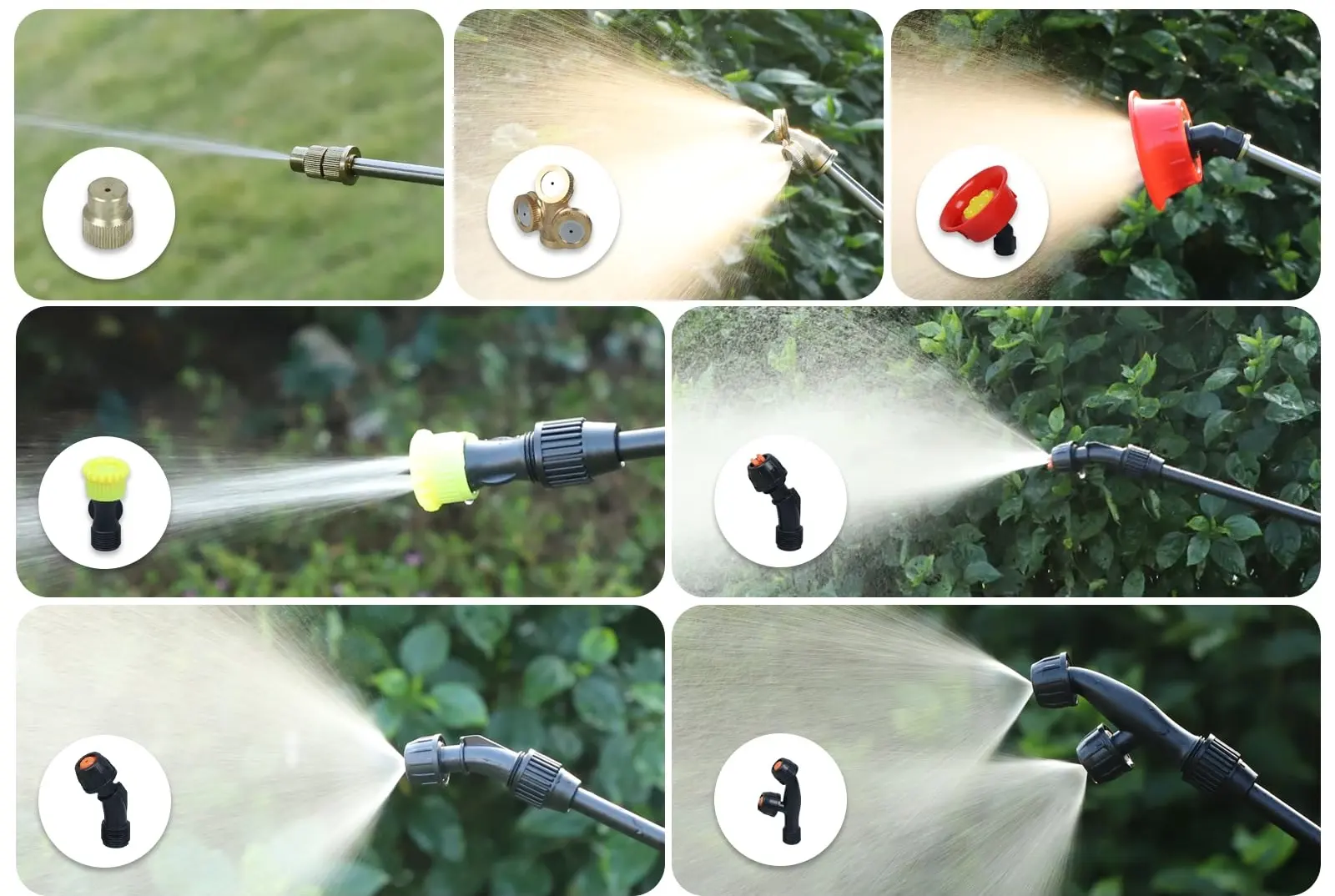
Battery powered backpack electric garden sprayer with 7 nozzles and dual wands
A solar irrigation kit includes a length of tubing, a number of drippers, and a pump with a rated flow. These three elements must be matched — a pump that works well with 10 meters of tubing and 10 drippers may struggle with 15 meters and 15 drippers, not because the pump is defective, but because the system is asking it to do more than it was designed for.
For buyers sourcing kits, understanding how tube ID, line length, and emitter count interact helps evaluate whether a kit configuration is balanced or overstretched.
Why Outer Diameter Alone Is Not Enough
Tubing specifications on product pages and spec sheets often list the outer diameter (OD) or simply the tube length (e.g., “15 m tubing”). The OD tells you the physical size of the tube but not its flow capacity. What determines flow capacity is the inner diameter (ID) — the space inside the tube through which water travels.
Two tubes with the same OD can have different IDs if their wall thickness differs. A 6 mm OD tube with 1 mm walls has a 4 mm ID. A 6 mm OD tube with 0.5 mm walls has a 5 mm ID. The second tube has 56% more cross-sectional area, which means significantly less friction loss per meter.
For drip irrigation, the ID determines:
- How much pressure is lost per meter of tubing (friction loss)
- How many drippers can be supported on a single line before flow at the end drops unacceptably
- How stiff or flexible the tubing is (thicker walls = stiffer tube)
Buyers should ask for the tube ID, not just the OD or length. If the supplier only provides OD, ask for the wall thickness — ID = OD minus 2 × wall thickness.
Pressure Loss Grows with Length and Fittings
Water moving through a tube loses pressure due to friction. This loss accumulates along the length of the tube:
- At 1 meter from the pump, pressure loss is minimal.
- At 10 meters, pressure loss is significant.
- At 15 meters with 15 T-joints, pressure loss can significantly reduce flow at the last dripper compared to the first. The exact reduction depends on tube ID, flow rate, and T-joint design — test with the actual configuration rather than relying on estimates.
Every fitting adds resistance:
- T-joints — Where the main line branches to a dripper, the T-joint creates a split that reduces pressure in the main line. 15 T-joints on a line means 15 points of pressure reduction.
- Connectors — Straight connectors between tube segments add minor resistance but are less disruptive than T-joints.
- Bends — Tight bends in the tubing add resistance. Gentle curves do not.
The product’s kit configuration — how many T-joints, how much tubing, how many drippers — is essentially a pressure budget. The pump provides a certain amount of pressure. Each meter of tubing and each fitting consumes some of that pressure. The remaining pressure at the end of the line determines the flow at the last dripper.
Emitter Count as a Total-Demand Variable
Each dripper on the line is an outlet that consumes flow. The pump’s total flow capacity is divided among all the drippers:
- 10 drippers on a 400 mL/min pump = approximately 40 mL/min per dripper (before pressure loss)
- 15 drippers on a 400 mL/min pump = approximately 27 mL/min per dripper (before pressure loss)
- 30 drippers on an 800 mL/min pump = approximately 27 mL/min per dripper (before pressure loss)
But this even division only exists in theory. In practice, the first drippers get more flow and the last drippers get less. The more drippers on the line, the greater the difference between the first and last.
Some kits use dual-line configurations (two 15-meter tube sets, 30 drippers total) to distribute flow across more outlets. This is a product configuration choice — the buyer should verify the tube ID and line configuration against the actual product specification.
Elevation and Reservoir Height
The height difference between the water source and the drippers adds another pressure demand:
- 0 cm elevation difference: full pump pressure available for tubing and drippers
- 50 cm elevation: pump must use part of its pressure capacity to lift water
- 100 cm elevation: more pressure consumed by lift, less available for drippers
For a kit designed for balcony use (bucket on the ground, plants on the railing), the elevation demand may be 80–120 cm. This significantly reduces the flow available at the drippers. The kit configuration that works at zero elevation may not work at 100 cm elevation.
A Configuration Table Suppliers Should Complete for Each Kit
To evaluate whether a kit configuration is balanced, the supplier should provide (or the buyer should test and record):
| Parameter | Value to Record | Why It Matters |
| Tube inner diameter (mm) | e.g., 4 mm | Determines friction loss per meter |
| Tube length (m) | e.g., 15 m | Total friction loss scales with length |
| Number of T-joints | e.g., 15 | Each T adds pressure loss |
| Number of drippers | e.g., 15 | Total flow demand on the pump |
| Pump max flow (mL/min) | e.g., 400 | Total flow budget |
| Pump max head (m) | e.g., 1.5 | Maximum lift capacity |
| Flow at first dripper (mL/min) | Test result | Baseline flow |
| Flow at last dripper (mL/min) | Test result | End-of-line performance |
| Test elevation (cm) | e.g., 0 cm | Conditions under which flow was measured |
This table tells the buyer whether the kit is balanced (first and last dripper flow are similar) or overstretched (last dripper flow is much lower than first). It also provides a reference for comparing different kit configurations and for verifying repeat orders.
Review our solar watering kit and send your target tubing distance, elevation, watering points and quantity. We can help compare practical kit configurations.
View Solar Drip Irrigation KitA kit that claims “15 drippers” but delivers 30 mL/min at the first dripper and 10 mL/min at the last is technically supporting 15 drippers — but not equally. The buyer should know this before promising customers that all 15 drippers will water their plants effectively.