







Wholesale Soil Moisture Detection Tools Guide for B2B Buyers & Importers
Abstract
Maintaining a good soil moisture level is essential for successful cultivation, especially for indoor plants, balcony gardens, or small outdoor plots. Gardeners can use a stable soil moisture sensing tool not only to prevent overwatering, but also maintain plants in a healthy state.
In this way, gardeners can prevent the plants from both waterlogging and drought stress. This can allow for the normal absorption of minerals like iron, nitrogen, potassium, and phosphorus, and prevent the reduction of these plants' lifespan.
This article looks into moisture-related stressors in confined growing spaces. At the same time, it weighs the pros and cons of popular soil moisture sensing devices. Then it lays out evidence-based moisture management strategies for small-scale gardens. At last, it points out accessories that boost the detection system's efficiency.
Strategic deployment of a calibrated soil moisture detection tool is vital for promoting resilient plant growth and increasing the sustainability of indoor and outdoor small-scale cultivation projects.
Moisture Challenges in Indoor and Balcony Gardening
Why Moisture Fluctuates Rapidly in Indoor and Balcony Environments
Indoor plants and balcony gardens have different kinds of moisture problems from large outdoor garden beds. The reason is that indoor growing environments are created by artificial climate control. Also, localized microclimates produce soil moisture fluctuations more rapidly than open landscapes.
Indoor forces like heating and cooling of air conditioners or a lack of airflow desiccate potting media quickly, even with ambient humidity levels suitable for humans. Potted plants are standard for indoor balcony gardens. However, those with a small rhizosphere cannot reach groundwater through manual or mechanized watering.
Common Watering Risks: Underwatering vs. Overwatering
Another major factor is the absence of natural rain. It can replenish the moisture in the soil of the balcony and indoor areas. The rain in windy balconies is irregular, and the wind speed on balconies is faster. Additionally, containers do not all receive even sun exposure, so evaporation may vary. Also, some containers may not fully dry when there is partial shading, resulting in some containers not reaching a uniform moisture content.
Overwatering is equally dangerous, as poor drainage causes the root zone to be trapped with excess moisture. Consequently, hypoxic conditions form, root rot and fungal proliferation take place, and nutrients leach out.
Limitations of Visual Judgement Without Measurement Tools
New gardeners rely on visual clues like soil color and wilting leaves to assess moisture. However, surface drying can mask saturated roots, and wilting may result from overwatering or underwatering.
This uncertainty highlights the need for an accurate tool that can measure soil moisture, a critical factor in ensuring efficient water uptake and sustaining plant health.
Types of Soil Moisture Detection Tools
There are many types of soil moisture detection tools designed to suit different budgets and gardening needs. These tools are widely used in personal gardening setups, including indoor plants and balcony gardens. A means to understand the working principles and performance indicators, as well as practical limits on each tool, needs to be identified as to which tool should be applied to a particular plant care cause.
1. Analog Soil Moisture Meters: The Entry-Level Choice
The most common and cheapest is the analog soil moisture meter, a handheld meter where you push two metal prongs into the soil. It has a dial marked with numbers 1 through 10 or "dry" to "wet." It is battery-free and easy to use for beginners or people with a few plants. It only offers relative moisture readings, which get worse in high-organic soils where organic matter insulates probes, messing with the conductivity measurements.
2. Digital Moisture Meters: Precision for Enthusiasts
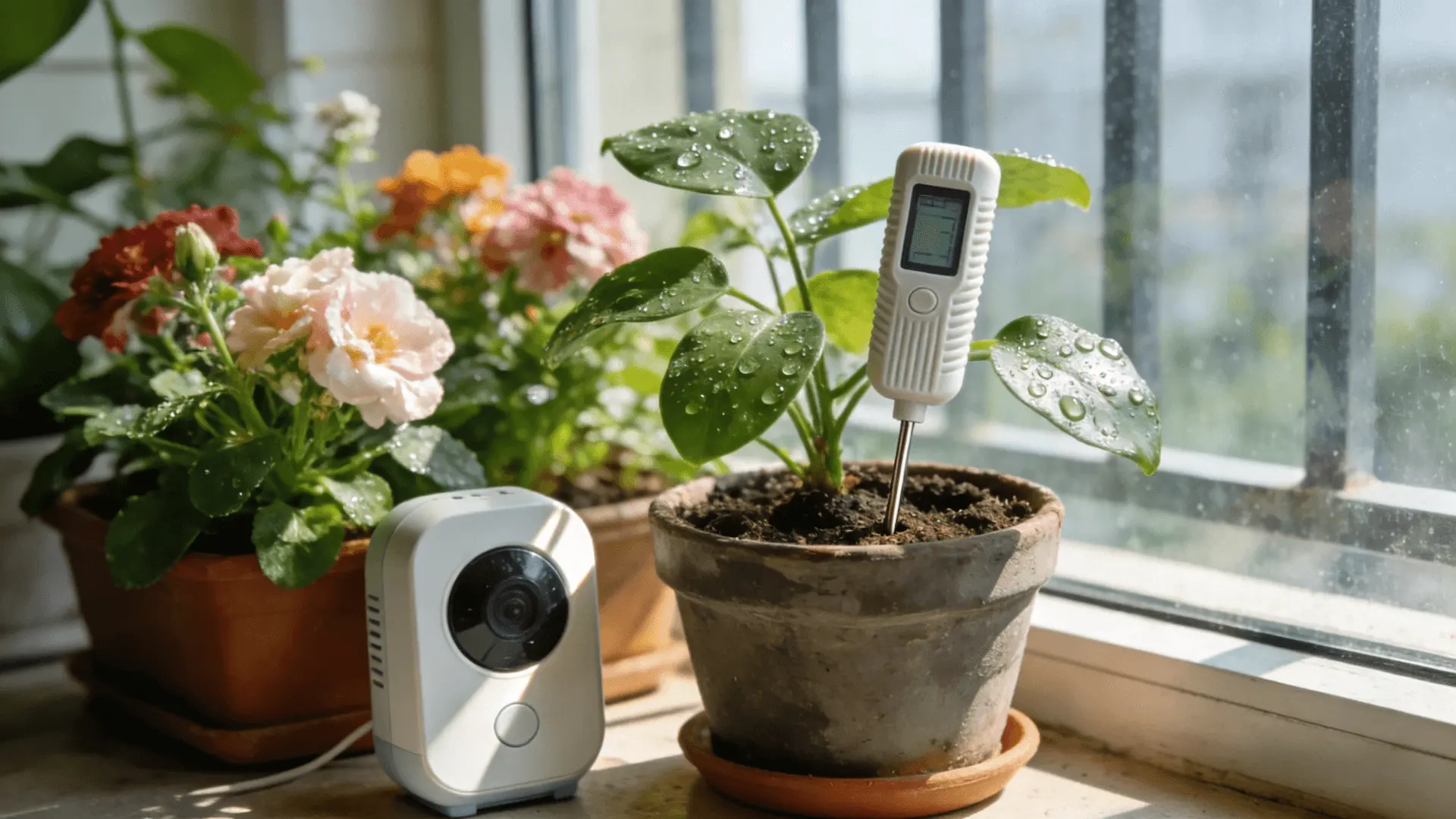
Due to better accuracy and more capability, digital soil moisture meters have gained favor. They use electronic resistivity sensors to quantify the soil moisture and show numbers (as a percentage or standard unit) on a screen. Many combine additional sensors for soil pH and light intensity as all-in-one diagnostic garden accessories.
They are more likely to be used by cultivators who have different plants with different water requirements, such as ferns that like water and succulents that can survive in drought. More advanced models can contain data logging to capture long-term moisture trends and refine watering schedules based on empirical data instead of a heuristic guess. The main limitation is that they are battery-dependent and more costly than analog alternatives.
3. Smart Wireless Sensors: High-Tech Automation
Connected with a phone or home automation equipment through Bluetooth or WiFi to convey real-time moisture information and reach alert thresholds, wireless smart soil moisture sensors suit digital gardeners and larger balcony garden owners.
These electronic devices can start supplying water once the water content drops under a predetermined amount. The function fits mobile or active shoppers. With high-frequency data, this can obtain the distribution at various root depths and hydrological observation of an area with precision.
Their biggest disadvantage is being the most expensive up front in the soil moisture category and requiring stable wireless connectivity to fully unlock all of the automation.
4. Traditional Moisture Probes: The Low-Tech Backup
A traditional low-tech alternative is the moisture probe or finger test tool—a simple, elongated metal or hardwood rod inserted into the soil and felt with your fingers.
Lightweight, portable, and maintenance-free, it serves as a reliable backup for electronic tools when power or networking is unavailable.
It is limited by the fact that it depends on subjective users to judge their own tactile interpretation of the soil being damp; there are subjective interpretations from person to person, which lead to inconsistent and non-repeatable measures, especially for novice users.
Best Practices for Small Gardens
To manage small-scale garden moisture effectively, one needs the right tools properly calibrated, as well as cultivation based on evidence, even with high-quality soil moisture detection tools. Based on the grounds of horticultural research, the following pointers conducive to an ideal state of soil humidity and long-term vitality of plants are provided.
Proper Use and Calibration of Soil Moisture Sensors
Proper use of soil moisture detection tools involves inserting the probes 2 to 4 inches into the soil (the main root zone of most container-grown plants) away from the pot edges and not in contact with the roots to avoid root damage and incorrect readings.
Each balcony container should be tested on its own, as there is quite a large variation in relative humidity even if the pots are next to each other and hold the same type of plant, as they create their own microclimates.
Digital and smart soil moisture detectors need to be calibrated regularly according to the manufacturer's instructions in order to reduce sensor drift, which causes loss of accuracy over time.
Adjusting Watering Based on Plant Type and Season
Requirements vary for different plants. For example, tropical plants like monstera need constant moisture, while cacti and succulents need dry periods between watering. Soil moisture detector data determines watering times rather than fixed time periods that change with the seasons.
In winter, growth is slower and evaporation is lower, so the frequency is reduced. In summer, high temperatures accelerate transpiration and evaporation. For balcony gardens, plants should be watered in the early morning or late evening to reduce evaporation and help water reach the root zone.
Improving Drainage and Moisture Retention in Containers
Soil structure and drainage are basic factors to stop waterlogging, which damages root breathing and encourages disease. Poor quality potting soils have no coarse materials like perlite or vermiculite, making them tight and holding too much water.
All pots need to be able to drain freely. Empty any saucer under indoor pots as soon as they get wet to keep standing water from hurting roots. A surface layer of organic mulch like pine bark chips or coconut coir, can lower evaporation by 30%, stabilize the temperature of the soil, stop weeds from growing, and reduce the need to water often.
Grouping plants by their water needs is the key to balcony gardening. Clustering plants with the same or similar needs helps with targeted watering, optimizing resources, and minimizing stress on the plants.
Succulents will do great in a sunny, well-ventilated area that quickly dries out the soil; on the contrary, tropical plants will be happier in a shady, humid microclimate that reduces evaporation and keeps the soil moisture consistent.
Supporting Tools and Accessories
A soil moisture detection device reaches its best effect when used in combination with other garden accessories related to the plant's water and growing medium conditions, so that the whole system can work efficiently to control the hydrological cycle of the indoor or balcony garden.
Accessories That Improve Water Delivery and Retention
A long-spout watering can is used to provide water directly to the soil at the base of the plants through precise irrigation so as not to get the leaves wet (which increases the chances of fungal disease). Enabling targeted watering to reduce runoff in small containers, a narrow-spout design works best, and a removable rose attachment is good for producing a light mist for fragile seedlings.
Utilizing an under-soil reservoir and capillary action for constant moisture without manual watering, self-watering planters are suitable for busy gardeners or those who tend to over-water. Soil moisture sensors can monitor the reservoir; self-watering planters reduce manual watering by 50% and prevent root stress caused by over-watering for tropical plants and herbs.
Mulch lessens evaporation, keeps soil temperature in check, and curtails weed and plant contention for water. Organic mulch, such as shredded bark and straw, degrades slowly, contributing more organics to the soil and enhancing its water-holding capacity and microbial levels. A 1-2 inch layer is recommended for container interiors to avert wet atmospheres that are ideal breeding grounds for fungus gnats.
Environmental and Soil Monitoring Tools That Complement Moisture Sensors
A humidifier is very necessary in indoor gardens for tropical plants needing 50-70% ambient humidity for their transpiration and nutrient uptake processes, complementing soil moisture in dry climates or spaces with heating and cooling. To reduce the loss of leaves to drying and maintain soil moisture, room or tabletop humidifiers can increase the humidity locally.
Regarding nutrient access and water usage, soil pH testing is vital. These soil pH testers, typically available alongside digital soil moisture testers, monitor how soil pH affects plant nutrient absorption.
Most macro-nutrients are available at soil pH 6-7, while acid-loving plants such as the azalea need a 4.5-5.5 pH to absorb iron and manganese. Combined moisture and pH tests allow for the adjustment of interrelated factors to improve moisture and nutrition for thriving plants.
Conclusion
Building a Reliable Moisture Management System for Small Gardens
For indoor growing, balcony gardening, and small-scale landscape maintenance, ideal soil moisture is the core prerequisite. It is imperative to have an accurate tool for soil moisture detection in the growing environment in order to have evidence-based cultivation due to unique hydrological problems. An analog, digital, or smart tool chosen must be well-calibrated, deployed correctly, and integrated into a moisture management system.
Following recommended practices such as species-specific watering, soil improvement, and grouping plants according to their moisture requirements maximizes the benefits of soil moisture detection tools, promoting healthy plant growth and reducing water-related stress.
Pairing moisture detection tools with accessories like self-watering planters, mulch, and humidifiers will create a coordinated setup to optimize soil moisture conditions and increase the sustainability of indoor and balcony gardens.
Sourcing Garden Tools with Long-Term Performance in Mind
For importers, distributors, and wholesale buyers, sourcing garden tools is not just about price, but about long-term reliability and product-market fit.
At Scarecrow Garden Supplier, we help B2B buyers select and source suitable garden tools based on their target market, order volume, and sales channels.
If you are planning to source garden tools for wholesale or retail distribution, feel free to contact us to discuss your requirements and explore suitable sourcing solutions.

Written by
ScarecrowGarden
💡About Scarecrow Garden Supplier Co., Ltd.
Scarecrow Garden Supplier Co., Ltd. is a China-based sourcing and wholesale partner specializing in garden tools, landscaping equipment, and outdoor supplies for international wholesalers, distributors, contractors, and brands.
With hands-on experience rooted in real garden use scenarios, we focus on durable materials, functional design, and stable large-volume supply. Our product range covers pruning tools, watering systems, hand tools, outdoor hardware, and customized garden solutions to support both retail and professional landscaping markets.
Beyond products, we help our partners navigate supplier selection, quality control, compliance requirements, and long-term sourcing strategies in China. Through our blog, we share practical insights on product selection, material comparisons, industry trends, and cost-effective purchasing—helping global buyers build stronger, more competitive supply chains.
Related Articles

Lithium-Ion vs Lead-Acid Batteries in Electric Sprayers: Weight, Runtime, Charging and Shipping Trade-Offs
Timer Accuracy and Power-Loss Memory in Automatic Irrigation Controllers: A Buyer Test
