






Custom Garden Products: 3D Printing vs Tooling for Garden Wholesalers
In our daily communication with buyers, one question comes up again and again: “We already have a product image. Why do we still need to pay for expensive tooling? Can’t we just 3D print it?”
It is a fair question. In some cases, 3D printing is absolutely part of the solution. But for many commercial garden products, 3D printing is only a starting point—not the final manufacturing method.
If you are planning to customize a garden product based on a reference image, sketch, or existing market sample, the key issue is not simply whether 3D printing is possible. The real question is which production route fits your material, target quantity, budget, quality expectations, and long-term business plan.
What 3D Printing Can Do Well
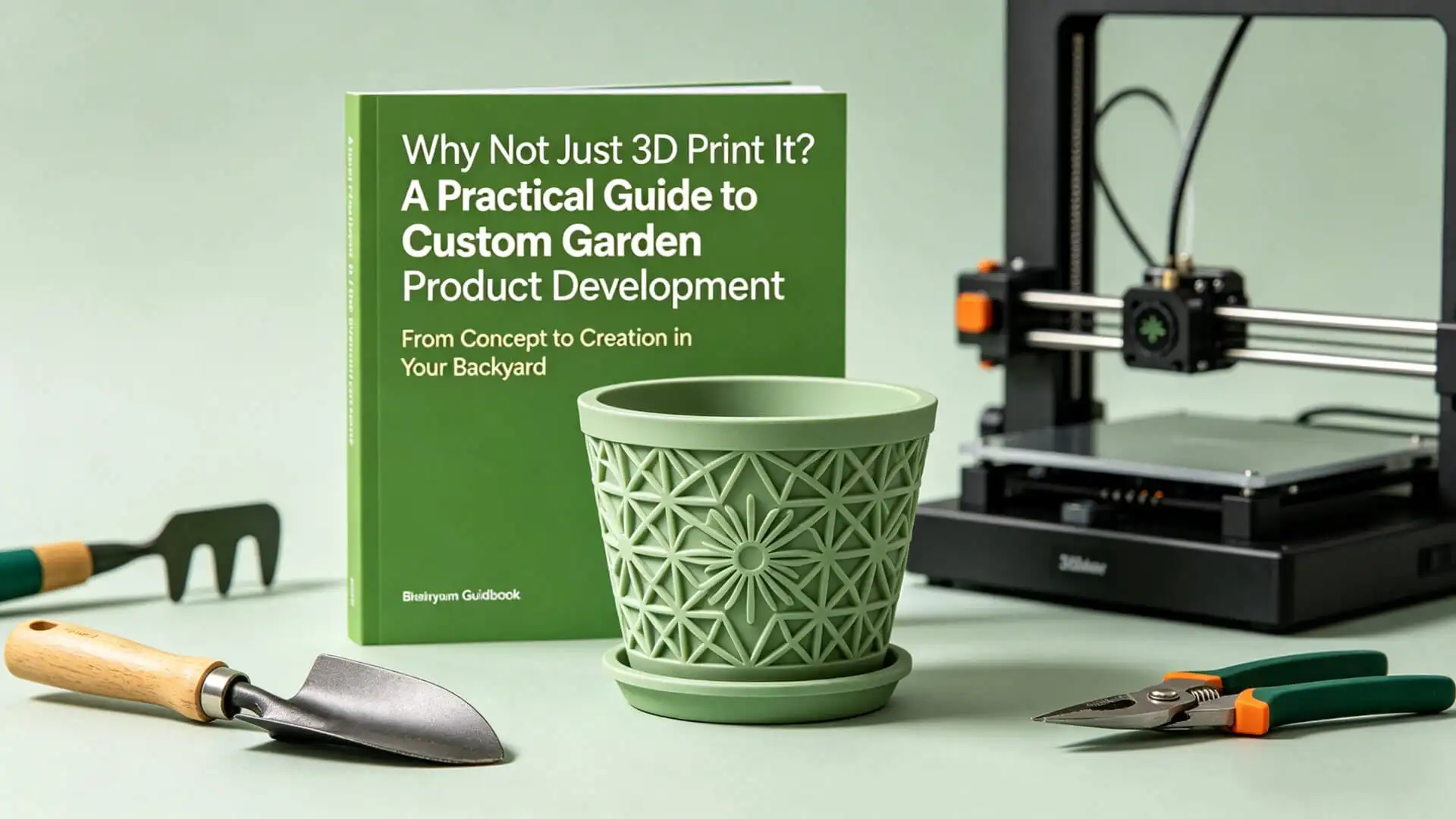
3D printing is very useful in the early stage of product development. It helps buyers confirm shape, basic dimensions, general structure, and assembly logic before investing in more expensive production tools.
It is especially suitable when you need to review a concept quickly, discuss design revisions internally, or decide whether a new product idea is worth moving forward.
Where 3D Printing Becomes Limited
For wholesale business, 3D printing usually cannot replace real commercial production. Once the project moves beyond concept validation, other concerns become more important: consistency, durability, surface finish, production speed, unit cost, outdoor performance, and repeatability from batch to batch.
This is why many 3D-printed samples look acceptable in the prototype stage, but still do not reflect the true quality or cost structure of the final product.
Three Main Ways to Develop a Custom Garden Product
Option 1: 3D-Printed Prototype
Best for
Early-stage concept testing, dimensional confirmation, internal discussions, and quick visual evaluation.
Typical budget range
A project budget around RMB 30,000 is roughly equivalent to about USD 4,100–4,300, depending on exchange timing. This is usually the lower-risk entry point for evaluating whether a new idea should continue.
Advantages
Fast to produce, no steel mold required, easy to revise, and helpful for checking the overall structure before formal production decisions are made.
Disadvantages
The material often does not match the final production material, the surface finish may still feel like a prototype, and the unit cost becomes too high if quantities increase. In most cases, it is not suitable as the final manufacturing path for real wholesale orders.
Option 2: Soft Tooling or Small-Batch Trial Production
Best for
Pilot runs, limited market testing, first-stage launch evaluation, and projects where buyers want a more realistic result without immediately committing to a full production mold.
Typical budget range
A working budget around RMB 45,000–60,000 is approximately USD 6,200–8,800. This is often the most practical middle route for buyers who want to reduce risk while getting closer to real production quality.
Advantages
Lower investment than full production tooling, better realism than a basic 3D-printed prototype, suitable for limited trial quantities, and helpful for testing market response before making a bigger tooling decision.
Disadvantages
The unit cost is still relatively high, tooling life is more limited, and if the project performs well, the buyer may still need to invest in formal production tooling later.
Option 3: Full Production Tooling and Standard Mass Production
Best for
Confirmed projects, repeat orders, stable product programs, and wholesale business that depends on consistent quality and competitive unit cost.
Typical budget range
A formal production tooling budget of RMB 100,000 and above is roughly USD 13,800+ to USD 14,700+, depending on complexity, number of cavities, and material requirements.
Advantages
Best consistency, lower long-term unit cost, stronger process control, higher efficiency, and a more reliable path for repeated wholesale production.
Disadvantages
Higher initial investment, longer development time, and design changes after mold opening can become more expensive.
Different Materials Require Different Production Decisions
Recycled Plastic Products
For products made from recycled polypropylene, recycled PE, or similar plastics—such as trays, planters, bins, organizers, or seedling accessories—3D printing can help confirm appearance and structure, but it usually does not replace injection molding for real commercial production.
Why? Because the final product must meet practical production requirements such as wall thickness stability, mold release, shrinkage control, stacking performance, outdoor durability, and repeatable quality across larger quantities.
For this type of product, the common path is usually: prototype validation first, then injection molding or another suitable plastic process once the product is ready for commercial production.
Stainless Steel Products
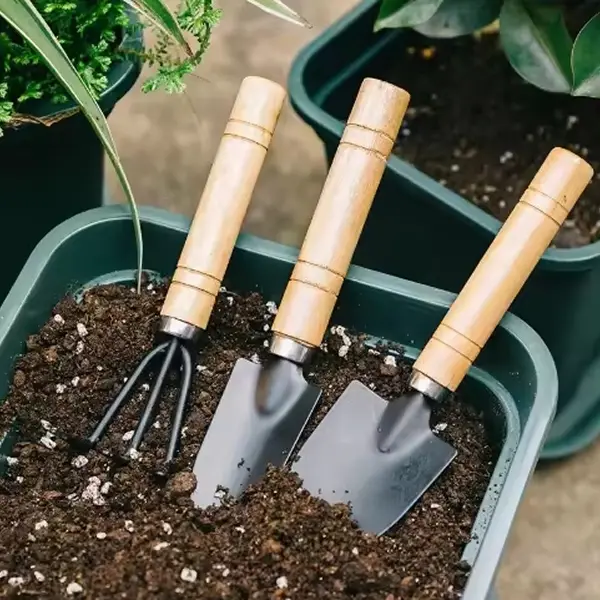
For stainless steel garden products—such as hand tools, scoops, trowels, weeders, brackets, or structural metal components—3D printing is rarely the practical final answer for wholesale production.
These products are more commonly produced by stamping, laser cutting, bending, deep drawing, welding, polishing, forging, or machining. In these cases, the required “tooling” may not be an injection mold, but it can still include stamping dies, forming dies, welding jigs, polishing fixtures, or other dedicated production tools.
So even when the product is not plastic, tooling costs may still be necessary if the buyer wants stable quality and efficient repeat production.
Soft Plastic Covers, Films, and Flexible Components
For products such as mini greenhouse covers, protective sleeves, liners, and flexible storage items, the main production methods are often cutting, sewing, heat sealing, high-frequency welding, or die cutting. In these cases, 3D printing is usually not relevant as the final manufacturing method.
Other Rigid Plastics: ABS, PP, PE, and Similar Materials
For many rigid plastic garden accessories, the best production route depends on whether the part is structural or decorative, the required wall thickness, outdoor exposure, impact resistance, texture requirements, and expected order quantity. Depending on these factors, the correct method may be injection molding, blow molding, thermoforming, extrusion with secondary processing, or rotational molding.
A Simple Decision Framework
Choose 3D printing if
You only need to confirm the concept, shape, dimensions, or assembly logic, and the project is still at an uncertain stage.
Choose soft tooling or small-batch production if
The design is mostly confirmed, you want something closer to the real product, and you need to test the market before investing in a full production tool.
Choose full tooling and mass production if
The product has clear sales potential, repeat-order logic is strong, and cost, consistency, and production efficiency now matter more than early-stage flexibility.
Questions Buyers Should Ask Before Making the Decision
Before choosing a production route, buyers should clearly define the target quantity, final material, intended sales channel, durability requirements, and whether the product is only for evaluation or for long-term repeated business. These answers often determine the correct production path more than the product image itself.
My Practical Advice
If you are still exploring an idea, start with a prototype. If you want to test the market, move to a trial-production route. If the product is already validated and you expect repeat orders, formal tooling is usually the right long-term decision.
The most expensive mistake is not always opening a mold. Very often, the bigger mistake is using the wrong method at the wrong stage. A buyer may try to save tooling cost by forcing a product into a 3D-print route that is not commercially suitable. The result is often higher unit cost, misleading sample quality, lost time, and eventually a second round of investment anyway.
Conclusion
If you only have a product image and want to turn it into a real garden product, 3D printing can be a valuable starting tool—but it is not always the right final manufacturing solution.
For most wholesale and distribution projects, 3D printing works best for concept validation, soft tooling works best for pilot testing, and formal production tooling works best for long-term commercial business. The correct answer depends on the material, the process, the expected quantity, and the actual business goal.
Quick Comparison Table
| Route | Best for | Approx. budget (USD) | Main advantage | Main limitation |
| 3D-printed prototype | Concept review and early validation | USD 4,100–4,300 | Fast and flexible | Not suitable for real wholesale production in most cases |
| Soft tooling / trial production | Pilot orders and market testing | USD 6,200–8,800 | Lower risk before full tooling | Still higher unit cost and limited tooling life |
| Full production tooling | Repeat orders and long-term scale | USD 13,800+ | Best consistency and lower long-term unit cost | Higher initial investment |
FAQ Module
Q: Can 3D printing replace tooling for a custom garden product?
A: Usually no. It is excellent for prototype validation, but most wholesale products still need a proper production process such as injection molding, stamping, bending, welding, or another material-specific manufacturing method.
Q: When does it make sense to pay for tooling?
A: Tooling makes sense when the design is already validated, the product has clear sales potential, and stable quality, lower unit cost, and repeat production are important for the business.
Q: Is tooling only for plastic products?
A: No. Plastic products may require injection molds, but stainless steel and other metal products may also require stamping dies, forming tools, welding jigs, or polishing fixtures.
Q: What is the best option if I only have a product image?
A: In most cases, start with design evaluation and a prototype. After confirming dimensions, structure, and intended material, you can decide whether to move into soft tooling or full production tooling.
Q: How do recycled plastic products differ from stainless steel products in development?
A: Recycled plastic products often move toward injection molding or another plastic-forming process, while stainless steel products are more likely to use stamping, cutting, bending, welding, forging, or machining.
Written by
ScarecrowGarden
💡About Scarecrow Garden Supplier Co., Ltd.
Scarecrow Garden Supplier Co., Ltd. is a China-based sourcing and wholesale partner specializing in garden tools, landscaping equipment, and outdoor supplies for international wholesalers, distributors, contractors, and brands.
With hands-on experience rooted in real garden use scenarios, we focus on durable materials, functional design, and stable large-volume supply. Our product range covers pruning tools, watering systems, hand tools, outdoor hardware, and customized garden solutions to support both retail and professional landscaping markets.
Beyond products, we help our partners navigate supplier selection, quality control, compliance requirements, and long-term sourcing strategies in China. Through our blog, we share practical insights on product selection, material comparisons, industry trends, and cost-effective purchasing—helping global buyers build stronger, more competitive supply chains.