






Updated 4 months ago
Why Do Metal Planter Box Prices Vary So Much Between Factories? Differences in Materials, Thickness, Coatings, and Packaging
ScarecrowGarden
💡About Scarecrow Garden Supplier Co., Ltd.
Scarecrow Garden Supplier Co., Ltd. is a China-based sourcing and wholesale partner specializing in garden tools, landscaping equipment, and outdoor supplies for international wholesalers, distributors, contractors, and brands.
With hands-on experience rooted in real garden use scenarios, we focus on durable materials, functional design, and stable large-volume supply. Our product range covers pruning tools, watering systems, hand tools, outdoor hardware, and customized garden solutions to support both retail and professional landscaping markets.
Beyond products, we help our partners navigate supplier selection, quality control, compliance requirements, and long-term sourcing strategies in China. Through our blog, we share practical insights on product selection, material comparisons, industry trends, and cost-effective purchasing—helping global buyers build stronger, more competitive supply chains.

Material comparison for metal raised garden beds, including galvanized steel and Zn-Al-Mg steel
The Same Size, but a 40% Price Difference—Why?
You send inquiries to three Chinese suppliers for the same specification metal planter box—120cm × 60cm × 43cm, color-coated steel—and receive three quotations. The lowest price is nearly 40% cheaper than the highest.
You may think: why not simply choose the cheapest one? After all, they look the same.
The problem is that looking the same does not mean being the same. Almost all price differences in metal planter boxes come from what you cannot see: materials, thickness, coatings, and packaging. A lower quotation is not necessarily “better value”; it often means costs have been reduced somewhere. Those cost savings can eventually become your after-sales problems.
This article breaks down exactly where metal planter box quotations differ. Once you understand the differences, you can determine where the lower-priced option is cutting costs—and whether those savings will affect your customers.
Material Differences: “Stainless Steel” May Not Mean the Same Thing
Materials are the biggest source of quotation differences. Even within the category of “metal planter boxes,” the cost of different materials can vary by two to three times.
201 vs. 304 Stainless Steel: Same Appearance, 40% Cost Difference
If you are sourcing stainless steel planter boxes, quotations may simply state “stainless steel” without specifying the grade. However, 201 and 304 stainless steel differ in cost by approximately 40%, and the difference in corrosion resistance is even greater.
Grade 201 replaces part of its nickel content with manganese. In humid or coastal environments, it may begin to rust within six months. Grade 304 can remain rust-free for more than ten years under similar conditions.
Visually, 201 and 304 are almost impossible to distinguish. If you receive a stainless steel planter box quotation that is significantly below market level, the first question to ask is: Is it 304 or 201 stainless steel? Can the grade be clearly specified on the quotation?
Galvanized Steel vs. Zinc-Aluminum-Magnesium Steel: Different Substrates, Different Lifespans
For color-coated steel planter boxes, much of the price difference comes from the substrate.
The cost difference between a standard galvanized substrate and a zinc-aluminum-magnesium (ZAM) substrate is approximately 20–30%, but the difference in corrosion resistance is far greater. According to third-party SGS salt spray test data, zinc-aluminum-magnesium steel can withstand more than 9,000 hours of salt spray testing, far exceeding ordinary galvanized steel.
If two quotations differ by 20–30%, the substrate may be the reason. The cheaper option may use standard galvanized steel, while the more expensive one uses zinc-aluminum-magnesium steel.
The substrate determines the minimum level of corrosion protection. Once the paint coating ages, the substrate becomes the final line of defense.
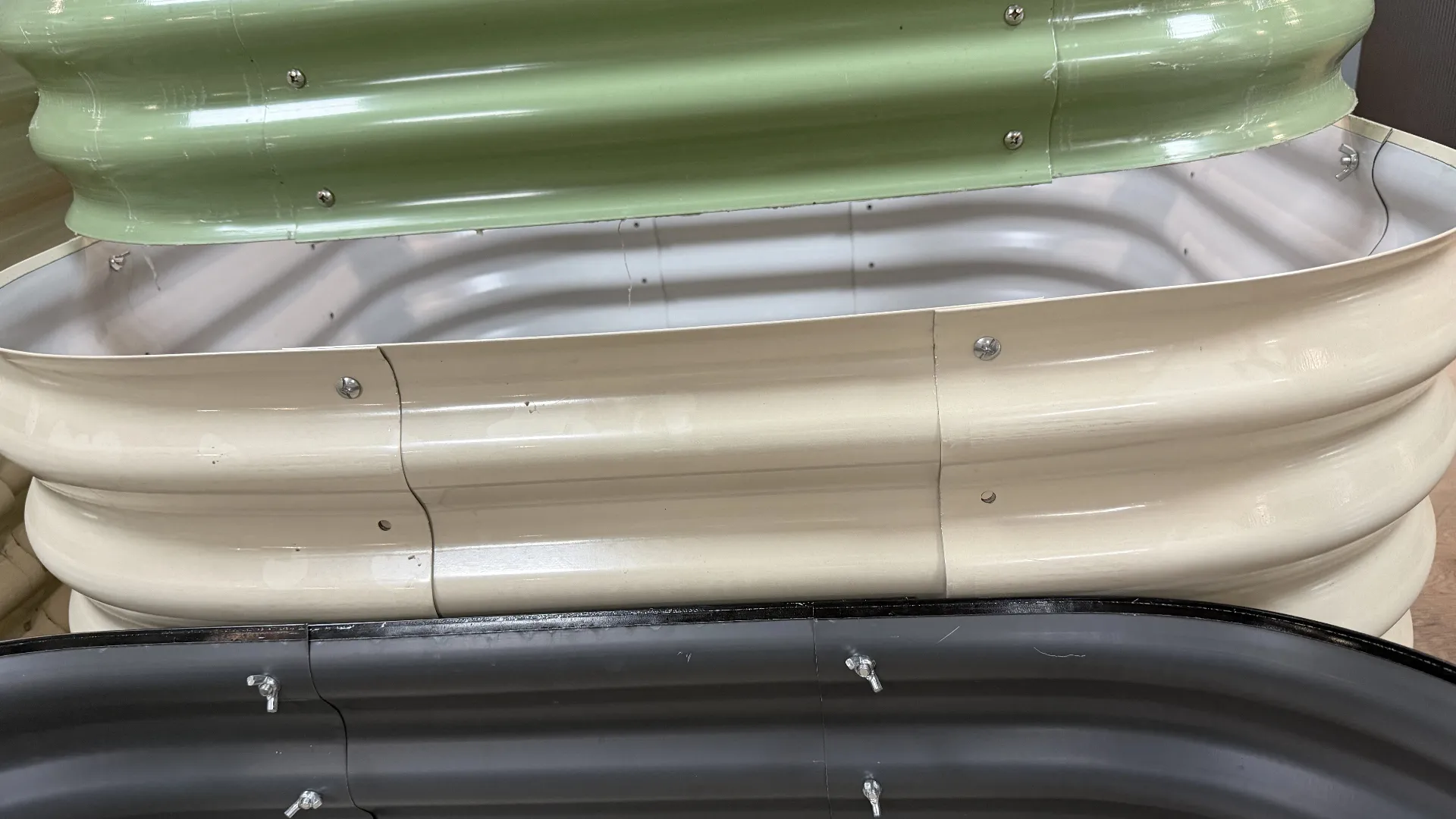
Quick Reference: Material Differences
| Difference | Lower-Cost Option | Higher-Cost Option | Cost Difference | Impact on End Users |
|---|---|---|---|---|
| Stainless Steel Grade | 201 | 304 | About 40% | 201 may rust within six months in humid environments |
| Color-Coated Steel Substrate | Standard Galvanized | Zinc-Aluminum-Magnesium (ZAM) | About 20–30% | Corrosion resistance lifespan differs by several times |
| Aluminum Alloy Grade | Recycled Aluminum | Virgin 6063 Aluminum | About 15–25% | Recycled aluminum has inconsistent strength and is more prone to deformation |
The last row deserves special attention.
Aluminum planter boxes also vary significantly in material quality. Virgin 6063 aluminum offers much better strength and consistency than recycled aluminum, but at a higher cost.
The strength of recycled aluminum can be inconsistent. Within the same shipment, some planter boxes may easily withstand soil pressure while others may deform when filled. This inconsistency is rarely visible during sample evaluation but often appears during mass production.
If you are still comparing suppliers, it is worth reviewing our complete Metal Raised Garden Bed Buying Guide first. It explains the key specifications, sourcing risks, and quality checkpoints that every importer should evaluate before requesting quotations.
Thickness Differences: A 0.2mm Gap Can Mean a 3x Performance Difference
Thickness is the second-largest source of price differences and one of the most overlooked factors by buyers.
For planter boxes, common steel thicknesses are 0.2mm, 0.4mm, and 0.6mm. On a quotation sheet, the difference between 0.4mm and 0.6mm may appear insignificant.
A thicker flat sheet has much higher theoretical bending stiffness, but finished raised-bed performance also depends on corrugation, steel grade, panel dimensions, bracing and connection structure. Do not convert the flat-sheet calculation into a product-level “3.375× stronger” claim.
Approximate Relationship Between Thickness and Cost
| Thickness | Relative Material Cost | Relative Stiffness | Recommended Planter Height |
| 0.2mm | 1x | About 0.04x | Not recommended for planting |
| 0.4mm | About 1.6x | About 4x | Up to 29cm |
| 0.6mm | About 2.1x | About 13.5x | Up to 43cm |
The Illusion Created by Color Coatings
A 0.6mm color-coated steel panel may feel and look slightly thicker due to the paint system.
However, the total coating thickness is only about 0.03–0.04mm and contributes virtually no structural strength.
The Bottom Line on Thickness
If two quotations use different panel thicknesses, they are not directly comparable. Ask both suppliers to quote the same thickness, coating, hardware, configuration and packaging before judging the price gap.
0.4mm is not unusable, but buyers should understand its limitations. It is suitable only for lower planter boxes and should ideally include reinforcement.
Do not set a universal height limit from thickness alone; verify the complete panel structure and approved sample.
Lower prices are often achieved by reducing material thickness, simplifying coatings, or cutting corners in production. These decisions frequently lead to the issues discussed in Common Quality Problems with Metal Raised Garden Beds.
Coating Differences: Two “Color-Coated Steel Planter Boxes” Can Differ in Price by 30–50%
Cost and Lifespan Differences Between Coating Systems
| Coating Type | Outdoor Lifespan | Initial Fading | Relative Cost | Typical Application |
| PE Polyester | 7–8 Years | 2–3 Years | Lowest | Budget planter boxes and short-term projects |
| SMP Silicon-Modified Polyester | 10–12 Years | 3–5 Years | Medium | Mid-range planter boxes |
| HDP High-Durability Polyester | Around 15 Years | 5–7 Years | Medium-High | Best value option |
| PVDF Fluorocarbon | 20+ Years | 10+ Years | Highest | Coastal and extreme environments |
The lifespan figures above are based on industry estimates. Actual performance depends on climate, maintenance, and installation conditions.
HDP offers the best balance of cost and performance. It costs somewhat more than PE but provides approximately 15 years of outdoor durability and achieves 60–80% of PVDF's weather resistance.
How to Confirm the Coating Type
Most quotations do not specify the coating system.
You must ask.
If a supplier cannot clearly explain the coating type, it is most likely PE. If they are using HDP or PVDF, they will usually mention it proactively because it is a strong selling point.
Substrate + Coating Must Be Evaluated Together
The coating determines color retention.
The substrate determines corrosion resistance.
A strong combination is:
Zinc-Aluminum-Magnesium Substrate + HDP Coating
This provides both corrosion protection and long-term color stability.
A higher-risk combination is:
Standard Galvanized Steel + PE Coating
The color may fade within two to three years, and corrosion can begin once the coating deteriorates.
Coating specifications are one of the biggest reasons quotations vary. Learn more about coating performance in our guide to Rust Prevention and Outdoor Durability for Metal Raised Garden Beds.
Packaging Differences: Money Saved on Cartons and Cushioning Often Becomes Return Costs
| Difference | Lower-Cost Option | Higher-Cost Option | Cost Difference | Impact on End Users |
| Carton Strength | Single-Wall Corrugated | Double-Wall Corrugated | About 3–5% | Greater risk of deformation and moisture damage during transport |
| Panel Protection | No Separation Layer | Foam or PE Film Separators | About 2–3% | Surface scratches caused by friction during shipping |
| Spare Hardware | Exact Quantity | 10% Extra Included | About 1–2% | Missing hardware can lead to returns |
| Gloves | Not Included | Cotton Gloves Included | About 0.5% | Sharp panel edges may cause injuries and negative reviews |
| Instruction Manual | Simple Line Drawings | Illustrated Guide + QR Video | About 1–2% | Poor assembly experience and complaints |
Each difference appears small—3%, 2%, 1%.
Combined, they represent an 8–13% difference in packaging cost.
Cutting costs on packaging is often the least economical place to save money.
Packaging quality can significantly affect pricing. To understand how packaging choices influence customer satisfaction and return rates, see Metal Raised Garden Bed Packaging and Assembly Issues.
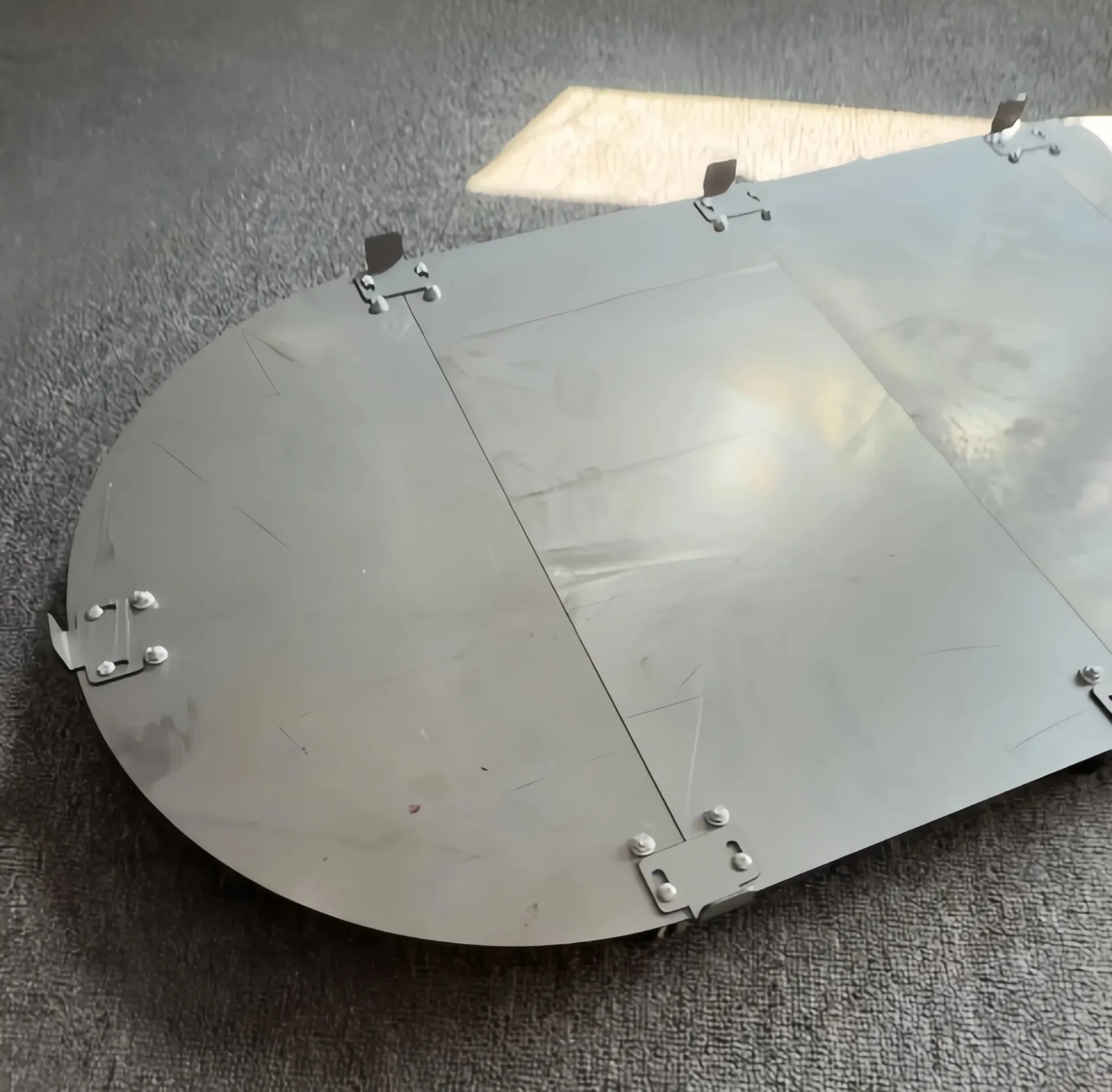
Factory Differences: What You Cannot See on the Quotation
Trading Company vs. Factory
Some quotations come directly from manufacturers; others come from trading companies.
A trading company is not necessarily more expensive. Sometimes they are cheaper because they compare prices among multiple factories and select the lowest-cost supplier.
The problem is that the cheapest factory often has the lowest quality standards.
How to Identify Whether You Are Dealing with a Factory or a Trading Company
Look at the level of detail in the quotation.
Factories usually provide detailed specifications, such as material grade, thickness, and coating type.
Trading company quotations may be more generic:
- “Stainless Steel Planter Box” instead of “304 Stainless Steel Planter Box”
- “Color-Coated Steel” instead of “ZAM Substrate + HDP Coating”
A vague quotation is often a sign that they have not yet decided which factory or specification will be used.
Ask about production capacity and lead times.
Factories can usually provide specific numbers, such as:
- 800–1,000 sets per day
- 25-day lead time
Trading companies often need to “confirm with the factory.”
Ask whether factory inspections are possible.
Factories usually welcome inspections.
Trading companies may say they can “arrange” one—which means they need permission from the actual manufacturer.
Review payment terms.
Factories often require:
- 30% deposit
- Balance before shipment
Trading companies may offer more flexible terms because they manage the supplier relationship and earn their profit from the price difference.
Trading companies can still be valuable partners. They may help you locate suitable suppliers and coordinate multiple product categories.
However, you should know who you are dealing with because product quality, inspections, consistency, and after-sales support ultimately depend on the actual factory.
Large Factory vs. Small Factory
Large factories typically charge 5–15% more than small factories.
In return, they usually provide:
- Better equipment precision
- Stronger quality control systems
- More reliable lead times
Small factories often offer lower prices because of lower equipment and labor costs.
The trade-off may include:
- Larger tolerances
- Greater batch-to-batch variation
- Less predictable delivery schedules
A practical example is hole-position accuracy.
Large factories may maintain tolerances within 0.5mm, making assembly easy.
Small factories may have tolerances of 1–2mm, forcing end users to bend panels to align holes.
Many “difficult assembly” complaints originate from this issue.
A Realistic Quotation Comparison Scenario
Assume you receive three quotations for the same 120 × 60 × 43cm color-coated steel planter box.
| Item | Quote A (Lowest) | Quote B (Middle) | Quote C (Highest) |
| Unit Price | $XX | $XX + 25% | $XX + 40% |
| Substrate | Standard Galvanized | ZAM | ZAM |
| Thickness | 0.4mm | 0.6mm | 0.6mm + Reinforcement |
| Coating | PE | HDP | HDP |
| Packaging | Basic | Standard | Premium |
| Supplier Type | Small Factory / Trader | Medium Factory | Large Factory |
Where did Quote A save money?
- Standard galvanized substrate
- 0.4mm thickness
- PE coating
- Basic packaging
- Small factory or trading company sourcing
Quote B costs 25% more but provides:
- Zinc-aluminum-magnesium substrate
- More than 9,000 hours salt spray resistance
- 0.6mm steel thickness
- HDP coating
- Improved packaging standards
Quote C costs 40% more than A.
Most of the additional cost comes from:
- Reinforcement structures
- Premium packaging
- Higher manufacturing consistency
If your customers are highly sensitive to deformation, reinforcement may be worth the extra investment.
Which quotation offers the best value?
Usually not A.
The costs removed from A often reappear later as returns and negative reviews.
For most wholesalers, B represents the most balanced choice.
C is appropriate for markets with higher quality expectations.
The Complete Picture of Quotation Differences
| Category | Lowest Quote | Mid-Level Quote | Highest Quote |
| Stainless Steel Grade | 201 | 304 | 304 |
| Color-Coated Steel Substrate | Standard Galvanized | ZAM | ZAM |
| Steel Thickness | 0.4mm | 0.6mm | 0.6mm + Reinforcement |
| Coating Type | PE | HDP | PVDF |
| Packaging Standard | Basic | Standard | Premium |
| Supplier Type | Small Factory / Trader | Medium Factory | Large Factory |
The lowest quotation typically saves money through:
- Lower-grade materials
- Thinner steel
- Lower-performance coatings
- Minimal packaging
- Less capable manufacturing partners
Every cost reduction has the potential to become an after-sales issue.
The Bottom Line on Price Differences
A lower quotation is not necessarily “better value.” It simply means costs have been reduced somewhere.
Your job is to determine whether those reductions will affect your customers.
Three Recommendations
1. Require detailed specifications on every quotation.
Not “stainless steel,” but “304 stainless steel.”
Not “color-coated steel,” but “zinc-aluminum-magnesium substrate with HDP coating.”
Not “0.4–0.6mm,” but the exact thickness.
The more specific the quotation, the easier it is to compare suppliers accurately.
2. Compare value, not just price.
A 0.6mm planter box costs approximately 30% more than a 0.4mm version, but delivers over three times the stiffness.
An HDP coating may cost 20% more than PE but can extend color retention by seven years or more.
If the extra cost reduces returns and negative reviews, it is often a worthwhile investment.
3. Send us your quotations for comparison.
If you are unsure why two quotations differ, send them to us.
Scarecrow can help you compare them line by line—materials, thickness, coatings, packaging—and identify which differences may affect product performance and after-sales costs, and which differences are acceptable.
Send Your Requirement, We Help You Check the Right Option
Suitable for garden centers, wholesalers, importers, and e-commerce sellers who want to compare products before bulk purchasing.
Written by
ScarecrowGarden
💡About Scarecrow Garden Supplier Co., Ltd.
Scarecrow Garden Supplier Co., Ltd. is a China-based sourcing and wholesale partner specializing in garden tools, landscaping equipment, and outdoor supplies for international wholesalers, distributors, contractors, and brands.
With hands-on experience rooted in real garden use scenarios, we focus on durable materials, functional design, and stable large-volume supply. Our product range covers pruning tools, watering systems, hand tools, outdoor hardware, and customized garden solutions to support both retail and professional landscaping markets.
Beyond products, we help our partners navigate supplier selection, quality control, compliance requirements, and long-term sourcing strategies in China. Through our blog, we share practical insights on product selection, material comparisons, industry trends, and cost-effective purchasing—helping global buyers build stronger, more competitive supply chains.