






Why Cheap Wholesale Plant Labels Cause Main Product Returns (2026 Guide) | Scarecrow Garden Supplier
Plant labels are one of the lowest-cost products in the gardening industry. PVC plastic plant labels can cost as little as $0.01–0.15 per piece wholesale (based on market research; please contact Scarecrow Garden for current pricing). An entire carton of labels may be worth less than a single pruning shear. However, many wholesalers overlook one critical fact: plant labels themselves are rarely returned because their value is too low for customers to bother returning them. But when labels are chosen incorrectly, it is often seed trays, seed starter kits, and flower pots that get returned.
A customer buys a seed starting kit with seeds. If the label cannot be written on properly or the writing fades after watering, they can no longer identify what was planted or how it should be cared for. The plant dies, and instead of returning the $0.05 label, the customer returns the entire seed-starting system. The label caused the problem, but the main product takes the blame.
This article helps garden centers, wholesalers, and distributors understand:
- The hidden risks of plant labels as a supporting consumable product
- The key differences among PVC, bamboo, and wooden labels in terms of writing performance and outdoor durability
- How plant labels should be bundled with main products
- What information should be written on labels to directly reduce product returns
Are Plant Labels a Marking Tool or a Supporting Consumable?
Many wholesalers classify plant labels as a “marking tool,” similar to markers or measuring tapes—something optional and secondary.
This positioning is incorrect.
Plant labels are actually supporting consumables. They are naturally tied to seed trays, seed packets, and flower pots. Understanding this distinction directly affects both your purchasing decisions and your sales strategy.
Why Are Plant Labels Consumables Instead of Tools?
A tool is purchased once and used for years. Consumables must be replenished regularly.
Every time customers sow new seeds, transplant plants, or start a new growing season, they need new labels. Whether it is spring seed starting, summer repotting, or autumn bulb planting, labels are purchased repeatedly.
PVC plastic labels may cost only $0.01–0.15 wholesale, while retail pricing on Amazon can range from $5–12 per 100 pieces, allowing markups of three to five times or more. However, the real profit of labels is not in the product itself—it is in helping sell the main products.
Four Characteristics That Make Labels a Must-Have Supporting Product
| Characteristic | Description | What It Means for Wholesalers |
|---|---|---|
| Low Decision Barrier | Customers rarely compare prices; they simply add them to the basket | Easy add-on sale |
| High Repurchase Rate | Needed every time new plants or seeds are started | Consistent repeat purchases |
| Essential Companion Product | Naturally paired with seed trays, seed kits, and pots | Ideal for bundling |
| Low Cost, High Margin | Wholesale $0.01–0.15; retail $5–12/100 pcs; markup can reach 3–5x or more | Extremely attractive margins |
Key Point: Customers are rarely shopping specifically for plant labels. They purchase labels while buying seed trays, seeds, or flower pots. Therefore, the purchasing strategy should not be “How many labels should I stock?” but rather “What labels are needed to support my main product lines?”
Suitable Buyer Types
| Buyer Type | Label Requirement | Purchasing Priority |
| Garden Centers | Seedling areas, potted plants, and tree sections all require labels | Multiple materials and sizes |
| Nurseries/Growers | Large-scale variety identification | PVC labels focused on value |
| Distributors | Diverse downstream customers | Full category coverage |
| E-commerce Sellers | Attractive appearance plus affordability | Bamboo + PVC combination |
What Happens When the Wrong Label Is Chosen? From Unreadable Writing to Product Returns and Reputation Damage
This is a hidden risk many wholesalers fail to recognize:
Plant labels themselves have extremely low return rates because they are inexpensive. However, selecting the wrong label can directly cause returns of the main products.
The Return Chain: Label → Plant Death → Main Product Return
The process often looks like this:
- The label cannot be written on properly.
- Some PVC labels are too smooth for pencils.
- Labels may be too small to record both plant names and dates.
- Customers forget what they planted.
- A few weeks later, seedlings emerge.
- The writing has faded or become unreadable.
- Customers do not know how to care for the plant.
- There are no care instructions.
- Different plants require different watering and growing conditions.
- The plant dies.
- The customer returns the main product.
- Not the $0.05 label.
- The $15 seed starter kit or $25 planter set.
Plant labels are a hidden return multiplier. The label itself is rarely returned, but it can significantly influence return rates of related products.
Industry feedback indicates that when care instructions are included on labels, plant-related return rates can decrease because customers are no longer left guessing how to care for their plants.
Three Label Problems Most Likely to Cause Returns
| Problem | Description | Result |
| Poor Writing Surface | Smooth PVC causes pencil marks to rub off; low-quality marker ink smears after watering | Variety confusion → care mistakes → returns |
| Rapid Outdoor Deterioration | Wood cracks and fades in 3–6 months; bamboo weathers in 6–12 months | Lost identification → complaints |
| Label Too Small | Small arrow labels provide little writing space | Missing care instructions → plant loss → returns |
Reminder: These issues may appear to be label problems, but customers often return the seed tray, seed kit, or flower pot instead.
The label caused the problem, but the main product pays the price.
Offline Stores: Less Returns, More Reputation Damage
The previous example mainly applies to online sales.
For garden centers and nurseries, the consequences can be even worse.
Customers often do not bother returning a $10 plant or a low-cost label. Instead, they stop shopping at the store and tell others about their negative experience.
The Reputation Damage Chain
- Label writing becomes unreadable.
- Plant dies due to improper care.
- Customer does not return the plant.
- Customer shares the bad experience with neighbors and local gardening groups.
- The store's reputation suffers.
According to common industry experience, one dissatisfied customer may influence eight to ten potential buyers.
Online vs Offline Impact
| Scenario | Result of Choosing the Wrong Label | Scale of Damage |
| Online Sales | Returns and negative reviews | Lost order + lower future conversion |
| Offline Sales | No return, but negative word-of-mouth | Reputation damage affecting multiple future customers |
Key Point: The risk of choosing the wrong label extends beyond returns. In physical retail environments, reputation damage can be far more expensive than a refund.
PVC, Bamboo, or Wood: Which Labels Cause Return Problems?
Our previous article compared PVC, bamboo, and wooden labels in detail. Here we focus specifically on two factors directly related to returns:
- Writing performance
- Outdoor durability
Writing Performance
Can customers clearly write on the label?
| Material | Pencil Writing | Marker Writing | After Watering | Return Risk |
| PVC Plastic | ⚠ Smooth surfaces may erase easily | ✅ Usually acceptable | ⚠ Low-quality PVC may cause smearing | Medium |
| Bamboo | ✅ Natural writing surface | ✅ Excellent ink absorption | ✅ Less smearing | Low |
| Wood | ✅ Excellent | ✅ Excellent | ⚠ May blur over time outdoors | Low |
Important Finding: Not all PVC labels are difficult to write on. Surface treatment is the deciding factor.
Some products receive customer reviews such as “easy to write on, even with pencil,” proving that proper surface finishing solves the issue.
Always conduct writing tests with both pencils and markers during sample approval.
Outdoor Durability
| Material | Outdoor Lifespan | Typical Performance | Impact on Returns |
| PVC Plastic | 2–3 years | Resistant to fading; may eventually become brittle | Low |
| Bamboo | 6–12 months | Gradual weathering and fading | Medium |
| Wood | 3–6 months | Discoloration, cracking, possible mold | High |
Material Selection by Application
- Seed starting and nursery use (3–6 months): PVC or bamboo
- Indoor pots and succulents: Bamboo or wood
- Trees and shrubs outdoors: PVC
- Retail plant displays: Foldable PVC labels
Quick Purchasing Guide
| Main Application | Recommended Material | Recommended Style | Key Checkpoint |
| Seedling Identification | White PVC T-Type | 10 × 6 cm | Writing surface quality |
| Indoor Potted Plants | Bamboo T-Type | 10 × 6 cm | Natural writing performance |
| Succulents & Window Plants | Bamboo Arrow Style | 10 × 2 cm | Attractive appearance |
| Outdoor Trees | PVC Hanging Tags | 6 × 4 cm | UV resistance |
| Retail Plant Displays | Foldable PVC Labels | 10 × 8 cm | Space for care instructions |
How to Bundle Labels with Seed Trays, Seeds, and Flower Pots
Plant labels are not a standalone category. They are naturally paired with seed trays, seeds, and flower pots.
Model 1: Seed Tray + Labels
Every seed tray requires labels.
Recommended ratio:
- 100-cell tray → 100–120 labels
Model 2: Seed Packets + Labels + Marker
A complete sowing identification kit.
Suggested ratio:
- One seed packet → 2–3 labels
Model 3: Flower Pots + Labels
Foldable labels act as mini instruction cards.
Information can include:
- Plant name
- Care instructions
- Price
Model 4: Mixed-Color Sets
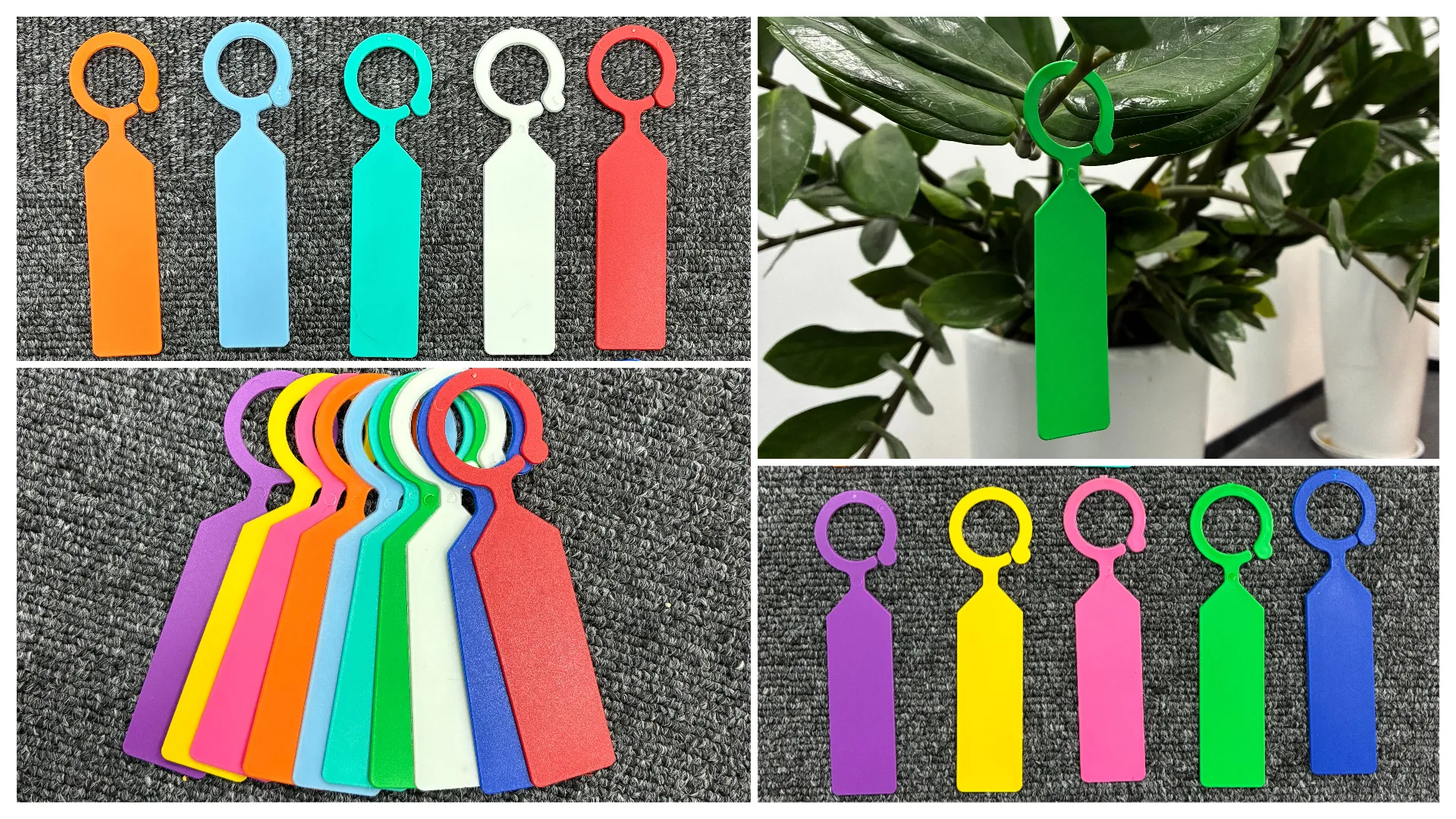
White, green, pink, blue, yellow, and red mixed together.
Industry experience suggests mixed-color packs often outperform single-color versions.
Profit Logic Behind Bundling
| Bundle | Label Cost | Main Product Cost* | Typical Retail Bundle Price* | Value Added |
| Seed Tray + 100 PVC Labels | $0.50–1.50 | $3–8 | $8–15 | Converts a tray into a complete growing solution |
| Seed Pack + Bamboo Labels + Marker | $0.20–0.35 | $1–3 | $5–10 | Increases perceived value significantly |
| Pot + Foldable Label | $0.05–0.15 | $2–5 | $6–12 | Reduces returns through care guidance |
*Based on industry experience and market observations.
What Should Be Written on Labels to Reduce Returns?
Many garden centers only print the plant name.
That is not enough.
Three Layers of Information
| Level | Content | Why It Matters |
| Level 1 | Plant variety name | Prevents variety confusion |
| Level 2 | Care instructions | Helps customers keep plants alive |
| Level 3 | Special reminders | Prevents common mistakes |
The second layer is often the most important.
Adding care instructions costs almost nothing but may significantly reduce plant-related returns.
Foldable Labels: A Mini Instruction Manual
A foldable label can include:
Front
- Plant name
- Product image
- Retail price
Inside
- Light requirements
- Watering schedule
- Fertilization guidance
- Common problems
Back
- Nursery logo
- Contact details
- Brand information
Labels Can Become a Brand Asset: The BlewLabel Story
A real example comes from Centerton Nursery.
In the late 1980s, Denny Blew redesigned the nursery's plant labels, introducing larger labels with care instructions and a distinctive bright blue color instead of traditional black-and-white designs.
According to industry reports, customers began asking specifically for “the plants with the blue labels.” The label evolved into a recognizable brand asset known as BlewLabel®.
Later, matching blue containers were introduced, making the products even more recognizable in retail environments.
Lesson for Wholesalers: Labels can evolve from simple identification tools into powerful branding assets that improve customer recognition and loyalty.
Key Points to Confirm Before Purchasing Plant Labels
| Inspection Item | What to Verify | Why It Matters | How to Check |
| Writing Performance | Pencil and marker compatibility | Poor writing causes customer complaints | Conduct actual writing tests |
| Water Resistance | Does writing remain readable after watering? | Prevents information loss | Perform watering tests |
| Outdoor Durability | Resistance to fading and cracking | Ensures long-term identification | Verify UV-resistant formulations |
| Color Consistency | Consistent color across production batches | Prevents quality complaints | Compare against Pantone references |
| Size Compatibility | Fits trays and pots correctly | Avoids usability issues | Compare against actual products |
| Mixed-Color Packaging | Support for sorting and repackaging | Important for retail bundles | Confirm warehouse capabilities |
Most Important Tests:
- Writing test
- Water resistance test
- Color consistency inspection
Completing these three checks eliminates most common label-related problems.
Recommended Product Mix by Customer Type
Garden Centers
| Product | Material | Size | Suggested Quantity |
| White PVC T-Type | Plastic | 10 × 6 cm | 3,000 pcs |
| Mixed-Color PVC T-Type | Plastic | 10 × 6 cm | 2,000 pcs |
| Bamboo T-Type | Bamboo | 10 × 6 cm | 1,000 pcs |
| Foldable PVC Labels | Plastic | 10 × 8 cm | 1,000 pcs |
Nurseries and Growers
| Product | Material | Size | Suggested Quantity |
| White PVC T-Type | Plastic | 10 × 6 cm | 5,000 pcs |
| Large White PVC T-Type | Plastic | 15 × 6 cm | 2,000 pcs |
| PVC Hanging Tags | Plastic | 6 × 4 cm | 1,000 pcs |
Distributors
| Product | Material | Size | Suggested Quantity |
| White PVC T-Type | Plastic | 10 × 6 cm | 5,000 pcs |
| Mixed-Color PVC T-Type | Plastic | 10 × 6 cm | 3,000 pcs |
| Bamboo T-Type | Bamboo | 10 × 6 cm | 2,000 pcs |
| Wooden T-Type | Birch Wood | 10 × 6 cm | 1,000 pcs |
| Foldable PVC Labels | Plastic | 10 × 8 cm | 2,000 pcs |
Recommendation: Start with three core SKUs:
- White PVC T-Type 10 × 6 cm
- Mixed-Color PVC T-Type 10 × 6 cm
- Bamboo T-Type 10 × 6 cm
Expand into foldable, wooden, and hanging labels after validating demand.
How We Support Buyers
Scarecrow Garden Supplier helps garden centers, nurseries, distributors, and e-commerce sellers source plant labels from China—with writing tests, water-resistance checks, and consolidated bundle packaging for seed starting kits and plant retail displays.
If you are sourcing plant labels in volume, we can help with:
- Writing Performance Testing – We test samples using both pencils and markers and conduct watering tests to verify readability before shipment.
- Bundled Product Packaging – Seed trays + labels + markers, seed packs + labels, or flower pots + foldable labels can be assembled into ready-to-sell retail kits.
- Care Content Reference for Foldable Labels – We can provide care information templates covering light requirements, watering schedules, temperature ranges, and special reminders.
👉 Contact us: Queenie@gardentoolswholesale.com — Tell us about your customer type and label requirements to receive a recommended sourcing plan and wholesale quotation.
Frequently Asked Questions
Q: Which plant label material is least likely to cause returns?
White PVC T-type labels. They provide excellent visibility, 2–3 years of outdoor durability, and low cost. However, always verify writing performance through sample testing.
Q: What if labels are difficult to write on?
This is most commonly caused by poor PVC surface treatment. Always conduct pencil and marker writing tests during sample evaluation.
Q: Can labels be purchased together with seed trays and markers?
Yes. In fact, bundled purchasing is recommended because it ensures size compatibility and allows retail-ready kit assembly.
Q: How long do bamboo and wooden labels last outdoors?
Bamboo typically lasts 6–12 months outdoors, while wood generally lasts 3–6 months. PVC is better suited for long-term outdoor use.
Q: What is the difference between foldable labels and standard T-type labels?
Foldable labels provide three to four times more writing space and can include plant names, care instructions, and pricing information.
Q: Why does mixed-color packaging require secondary sorting?
Production lines usually manufacture only one color at a time. Mixed-color packs must be manually assembled from separate inventory.
Q: Do care instructions on labels really reduce returns?
Industry feedback suggests that care instructions help reduce plant losses caused by improper maintenance, which can lower return rates and protect both profit margins and brand reputation.
Q: Which SKUs should first-time buyers start with?
Three core products:
- White PVC T-Type 10 × 6 cm
- Mixed-Color PVC T-Type 10 × 6 cm
- Bamboo T-Type 10 × 6 cm
These cover the majority of customer requirements and provide a strong foundation before expanding the assortment.
Simplify Your Garden Product Sourcing from China
We help you combine multiple product categories into one sourcing flow with supplier matching, sample verification, and consolidated shipping.
Written by
ScarecrowGarden
💡About Scarecrow Garden Supplier Co., Ltd.
Scarecrow Garden Supplier Co., Ltd. is a China-based sourcing and wholesale partner specializing in garden tools, landscaping equipment, and outdoor supplies for international wholesalers, distributors, contractors, and brands.
With hands-on experience rooted in real garden use scenarios, we focus on durable materials, functional design, and stable large-volume supply. Our product range covers pruning tools, watering systems, hand tools, outdoor hardware, and customized garden solutions to support both retail and professional landscaping markets.
Beyond products, we help our partners navigate supplier selection, quality control, compliance requirements, and long-term sourcing strategies in China. Through our blog, we share practical insights on product selection, material comparisons, industry trends, and cost-effective purchasing—helping global buyers build stronger, more competitive supply chains.