






Updated 4 months ago
Oxford vs. PVC vs. PE: Which Is Better for Bulk? – A Guide from a Waterproof Garden Mat Supplier

hqt
Waterproof Garden Mat Supplier
A material selection challenge will arise when sourcing indoor repotting mats in bulk for distribution. As a Waterproof Garden Mat Supplier, we get this question a lot: "When placing bulk orders, which one should I choose: Oxford fabric, PVC, or PE?" All three offer differing balances of price performance, durability, waterproofness, as well as how compactly they can be stored. We hope this guide will assist you in determining which material best targets the clientele you have, as well as the limitations of your logistics, by remaining as neutral and un-biased as possible with the data we have.
1. Material Snapshot: A Review of Oxford, PVC, and PE
To compare the three, we must first recognize the context of the repotting mat and the function of the material.
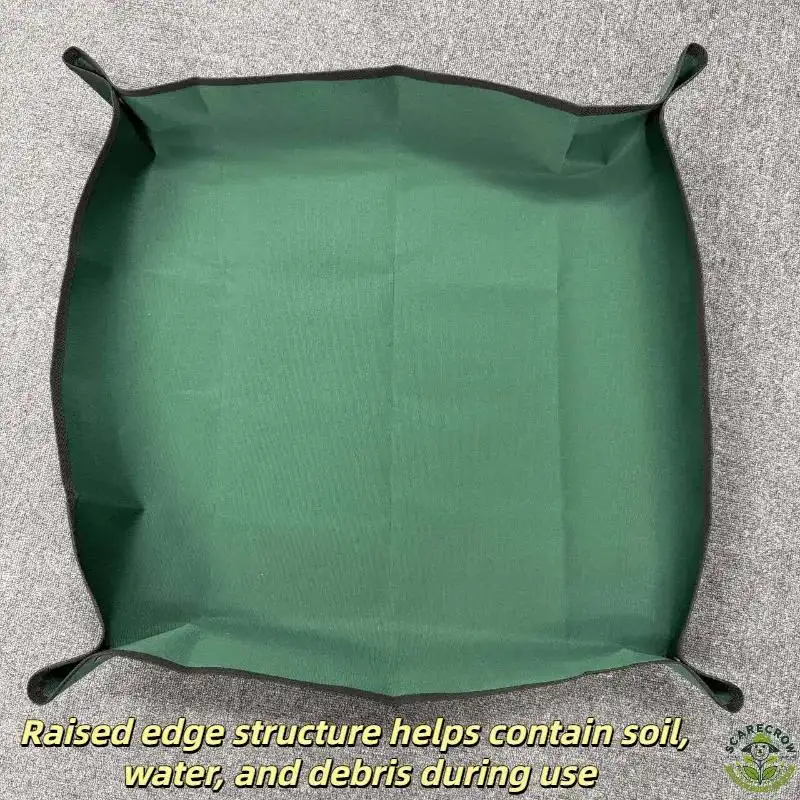
•Oxford Fabric (with some sort of water-resistant coating): A woven fabric of polyester or nylon with a coating of polyurethane (PU) or acrylic; remains flexible and lightweight and maintains a foldable structure.
•PVC (Polyvinyl Chloride): A solid plastic sheet, often reinforced with an inner mesh, heavy, and non-porous; typically cannot be folded without creasing.
•PE ( Polyethylene): A type of plastic that film is lightweight and thin and has a high tear resistance. It is low cost and typically used for disposable tarps. Usually considered a single use material.
2. Waterproof Performance: Can the Material Hold Soil and Liquids?
The repotting mat needs to contain all soil and liquid it holds.
•Oxford Fabric: During normal indoor use, the coating on Oxford Fabric stops moisture from getting to the other side. If it were to be tested, it could achieve a hydrostatic head of 1000mm. (SGS-GA-126 standard) and noted as moisture penetration resistant. The fabric can contain a spill and is reinforced to prevent tearing in the presence of moisture.
•PVC: Completely solid and sheets are waterproof. However, seams and stitching are weak spots – the mat can be waterproofed by sewn edges and sealed PVC mats, which are optimal, but come at a higher cost.
•PE: Can be waterproofed if puncture free. Thin PE can be easily torn by soil clumps and leave a leaking mess.
✅ Verdict for bulk buyers: For repeated indoor use, Oxford fabric is the best option. For heavy-duty outdoor use, PVC can be used, but will add weight to the product. PE can be used as a single-use promotional giveaway, but not valued outside of that use.
3. Durability & Longevity: How Many Repotting Cycles Can Each Material Withstand?
Wholesale buyers need to sell products that can stand multiple uses without complaints
•Oxford fabric: Can last over 500 cycles of folding and use. Average lifespan is 2-3 years of home use.
•PVC: Will deteriorate and constant use will lead to sheet cracking especially in temperatures below 10°C. Folded PVC develops permanent creases that may split.
•PE: Typically tears after 2–3 uses. UV and heat accelerate embrittlement. Not recommended for any product marketed as "reusable."
✅ Verdict for bulk buyers: Oxford fabric provides the best return on investment for retail customers who expect repeated use. PVC leads to higher return rates after one winter. PE should be avoided for regular repotting tasks.
4. Storage & Logistics: Space Efficiency in Your Warehouse
Warehouse space is money. How each material packs and ships directly affects your freight and storage costs.
•Oxford fabric: Folds flat to approx. 30×30×3 cm per piece (0.0027 m³). 1,000 pieces occupy only one euro pallet. Lightweight – 0.15 kg per unit, reducing sea freight charges.
•PVC: Cannot be folded without damage. Must be rolled or laid flat. One rolled PVC mat takes 5–8 times the volume of a folded Oxford mat. Weight is 2–3 times heavier per same size.
•PE: Folds compactly but creases become weak points. Ultra-lightweight (≈0.05 kg), but low perceived value discourages premium pricing.
✅ Cost verdict for bulk buyers: Oxford fabric wins for lowest storage and shipping costs. The costs of PVC fabric and its transport are high. PE fabric has low storage costs, but has poor quality.
5. Ease of Cleaning and Maintenance for End Users
Easy cleaning means increased purchases and reviews.
•Oxford fabric: A damp cloth, or a rinse. Dirt is repelled and the coating dries in 15 minutes. Care is not needed.
•PVC: Dirt will not come off and a static surface means dirt will stick and scrubbing with soap is needed. It cannot be washed and leaves a stain.
•PE: Dirt can stick, but is intended for disposable uses.
✅ Cost verdict for bulk buyers: Oxford fabric justifies the claim of “easy to clean” more than any of the other options, and is the easiest sell for indoor gardening. PVC and PE options clean the least.
6. Environmental and Safety Considerations for EU/US Compliance
More sellers are asking for materials that are safe for the environment and non-toxic.
•Oxford fabric: Can be made with recycled RPET (GRS-certified) and safe for REACH and Prop 65 with water-based PU coatings free of phthalates.
•PVC: Uses plasticizers, like DEHP, that leach out and dioxins are released in the manufacturing process. Banned in multiple children's products.
•PE: Safe for food contact, but is a single-use product that is not safe for the environment and could be made microplastic.
✅Cost verdict for bulk buyers: Oxford fabric will be the easiest to put an ecolabel for. Compliance from other options will not be possible in the near future, especially PVC fabric systems.
7. Cost Comparison: Total Cost of Ownership for Wholesalers
PE shows the least cost for initial purchase, but consider the full value of the cost.
| Material | Per-unit cost (1000pcs) | Freight cost factor | Return rate (est.) | Customer lifetime value |
| Oxford | Medium ($$) | Low | <2% | High (repeat purchases) |
| PVC | Medium-High ($$$) | High (heavy) | 5–10% (cracking) | Low |
| PE | Low ($) | Very low | 20%+ (tearing) | Very low (one-off) |
•When looking at returns, storage, and customer satisfaction, Oxford fabric shows lower total costs, despite higher costs per piece.
•PVC fabric tends to have pricing comparable to Oxford, but distributes hidden freight and return costs.
•PE fabric can be good for promotions, such as a "free tarp with soil bag", but should not be sold on its own, as it will damage brand reputation.
Bulk buyers can trust that for most retail and e-commerce models, Oxford fabric will present the best value.
8. Suggested Materials for Different Buyer Profiles
If we consider ourselves a Waterproof Garden Mat Supplier, we have the following suggestion:
�� For Buyers-Who-Focus-on-Fulfillment-Centers (like Amazon, Shopify), the Sample offered is Garden Mat made of Oxford Fabric (size 73*73cm, foldable). The lighter the material, the cheaper the shipping. Since the mats are foldable, the rate of returns will be reduced and account health will be improved.
�� For in-store garden centers: Oxford fabric in display colors of choice. PVC mats may sit unsold due to poor foldability.
�� For landscaping service companies (B2B): Heavy-duty PVC only if workers are rough on equipment – but offer Oxford as a lighter alternative for indoor jobs.
�� For promotional giveaways (trade shows, Earth Day events): PE film is acceptable as a disposable item, but never market it as "reusable."
9. How Our Oxford Fabric Mat Addresses Bulk Buyer Needs
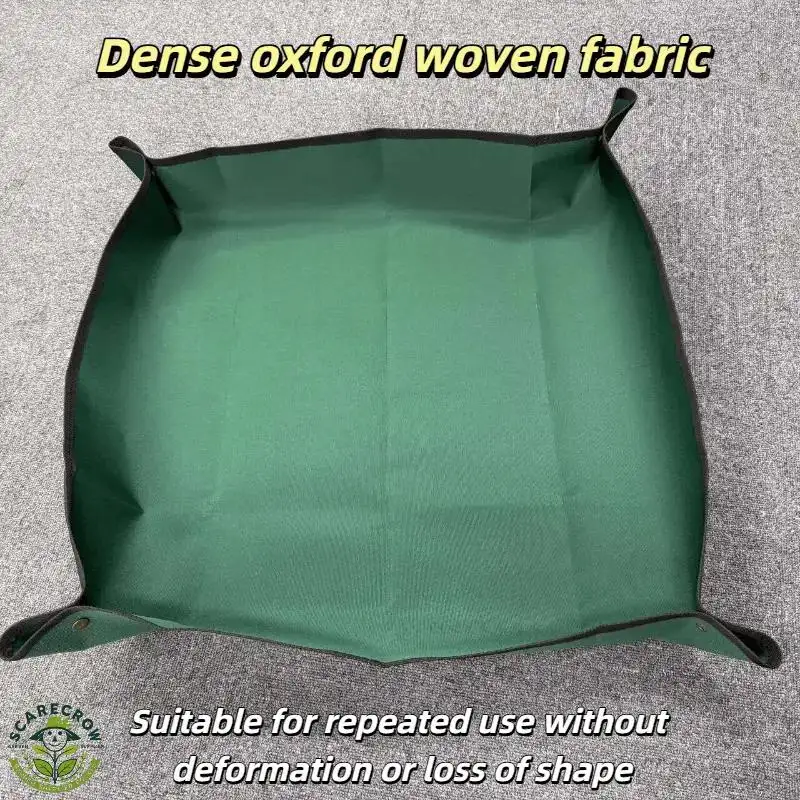
Our Waterproof Oxford Indoor Repotting Mat for Plant Care exemplifies the advantages discussed above:
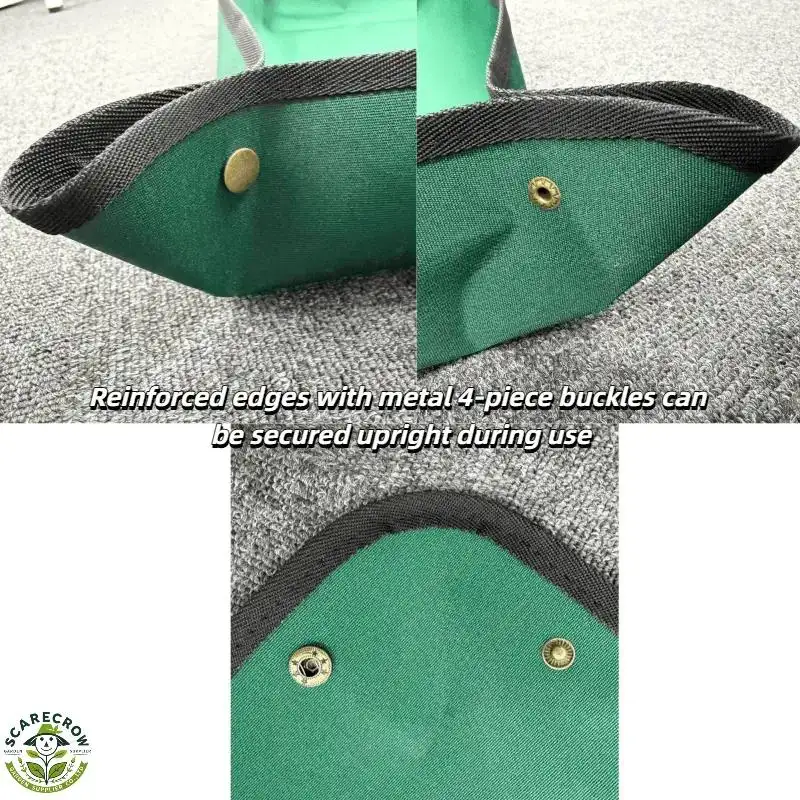
•Raised reinforced edges: Contain soil without leaking – a common failure point for PE and sewn PVC mats.
•Weighs 0.15 kg and rollable to save 70% storage space.
•SGS-GA-126 certified and coating tested: Confirmed waterproof and reusable
material.
•Only 50 pieces for per order: Small batch test has low market test risks.
•OEM Friendly: Custom colors and logos with Private Label.
Final Recommendation for Wholesalers & Distributors
The cheapest per-unit cost is not the best way to choose a repotting mat. The total cost of ownership needs to be considered, accounting for freight, storage, returns, and customer acquisition. Where indoor gardening mats are concerned, for 90% of applications, waterproof Oxford fabric is the best option for durability and foldability. PVC is for niche heavy outdoor applications. PE is for cheap, disposable, single-use mats.
As a Waterproof Garden Mat Supplier, we encourage purchasing a sample of the Oxford mat (SGS-GA-126) and doing a side-by-side comparison with PVC and PE mats. The ease of handling, cleaning, and folding will be evident and your customers will appreciate the difference and reorder.
Want to repot in bulk? [Get a Quote] on bulk orders. Ask about wholesale buyer custom packaging.
FAQs
Q1: How long does an Oxford fabric repotting mat last for home users?
A: Expect 2–3 years of weekly use with no significant wear to the coating.
Q2: Are your Oxford mats REACH or Prop 65 compliant?
A: Absolutely. Our water-based PU coating does not contain phthalates, lead, or restricted heavy metals.
Q3: May I obtain a sample prior to placing a bulk order?
A: Sample orders for evaluation prior to bulk orders are accepted and the cost is usually reimbursed in the bulk order.
Q4: What is the ultimate size when folded for storage and transportation?
A: A 73×73 cm mat folds to roughly a size of 30×30×3 cm. This is a reduction of over 70% in the space needed when compared to a mat that is rolled.
Q5: Is private label packaging offered for distributors?A: We do offer this and we provide custom polybag, retail hang tags, and instructions inserts, as well as branded boxes cartons.