







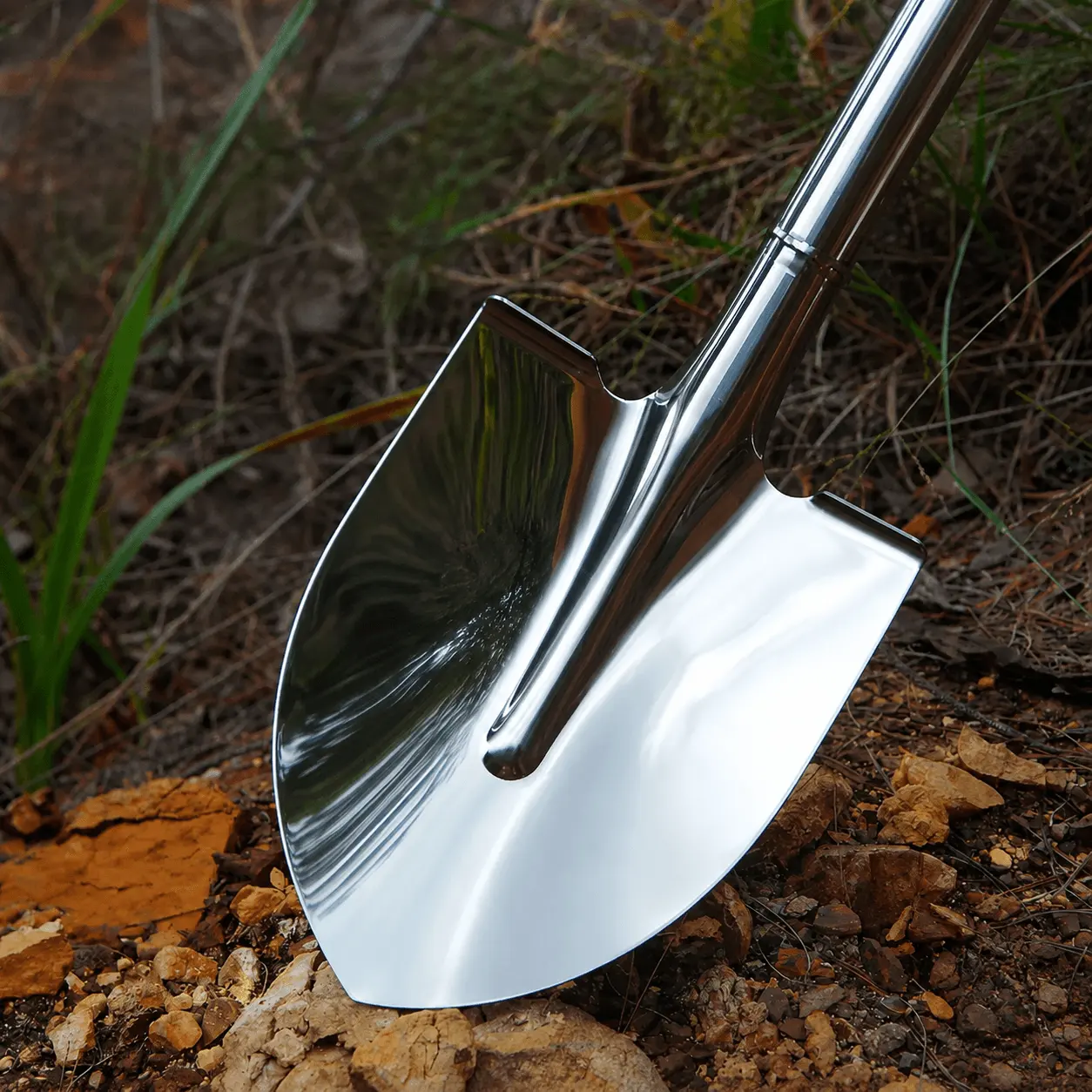
round point shovel buying guide for wholesale buyers
Two quotes come back for the same target: a round point shovel, 15 gauge, wood handle, D-grip. One price is lower. The instinct is to take the lower one.
That instinct is only safe if the two quotes describe the same tool. Often they do not, and the lower figure is not a better price. It is a price for something else, or a price that cannot be compared yet.
So the job is not to pick the cheaper number. It is to adjudicate the offer: decide whether the two quotes are comparable, whether one is deliberately a different product, or whether one of them still cannot be compared until you get one more fact. That decision is what this article is about. It is not another blank form to fill in.
What the two quotes actually said
Here are two quotation fragments. They are illustrative, not a real supplier exchange, and no price or model number is required for the point.
Quote A reads: "Round point shovel, 15 gauge, wood handle, D-grip." It declares a nominal gauge. It does not name the gauge system, and it does not say where on the blade the thickness applies or whether the figure is the raw sheet or the finished blade.
Quote B reads: "Round point shovel, blade 1.7 mm, measured at the shoulder. Wood handle, D-grip." It states a measured thickness and a location.
It is tempting to conclude that B is thinner, or that B is more honest, or that B is automatically the better offer. None of that follows yet. A nominal 15 gauge and a measured 1.7 mm may or may not describe the same blade. Whether they do depends on the gauge system A is using, the material, and the measurement point. Quote B is not automatically better because it carries a decimal. It is better only in one narrow sense: it tells you what was measured and where. That is the kind of detail A left out.
So the two fragments do not yet disagree. They are under-specified in the same place, from opposite directions.
Now add a genuinely different mismatch, so the example is not just the same missing field twice. Suppose A and B both write "wood handle" but neither names the species, and one of them does not make clear whether the quote is for the assembled shovel or for a head and a separate handle. Species and assembled-versus-separate are not gauge problems. They are separate unknowns that decide what is actually being sold. A buyer who resolves only the gauge question can still end up comparing two different tools.
The gauge number is not the measurement
This is worth stating plainly, because it is where the comparison most often goes wrong.
An isolated gauge number is not the actual matched thickness. The same gauge number can correspond to different real thicknesses depending on the gauge system and the material, so the figure only becomes comparable once the system, the object it applies to and the measurement point are all stated. Once they are, a gauge figure is usable like any other specification. If you need blade thickness as a purchasing requirement, the comparable figure is millimetres, measured at a stated point, on both offers.
That does not mean you should demand millimetre data before you do anything. It means that until both quotes carry the same kind of figure, the gauge dimension is not aligned, and a price difference that rests on it is not interpretable.
Three things you can do with the gap
Once you see the misalignment, the next step is one of three dispositions. Pick the one that matches what you found.
If the two offers genuinely describe different physical tools, you have a declared difference to deal with. You can ask the supplier to counteroffer against your target specification, so the quote comes back aligned. Or you can decide, on purpose, to evaluate the cheaper offer as an alternative product, with its own specification and its own role in your range. What you should not do is average the two or quietly treat the difference as if it were not there. That is how a real difference becomes a hidden one.
An unknown term is the second case. If a term is simply undefined, such as an unnamed wood species or an unclear grip construction, the missing fact is small and obtainable. Get it before ranking the two offers on that dimension. Unknown is not the same as inferior, and it is not the same as free. It is a question with an answer, and the answer decides whether the offers are comparable.
A matched target and scope is the only case where price actually compares. If the two quotes describe the same tool on the same basis, then you can compare the actual quoted prices, at the same quantity, the same timing, and the same delivery and inclusion basis. This is the only case where the price difference is a price difference.
To make this concrete, here is one disposition carried all the way through. Quote A declares 15 gauge with no system and no measurement point. Quote B measures 1.7 mm at the shoulder. You decide thickness is a purchasing requirement, so the gauge dimension is not yet comparable. You do not reject A and you do not accept B. You ask A one specific question: what is the actual steel thickness in millimetres at the shoulder, and which gauge system is your 15 based on. Until that reply arrives, the two offers are held, not ranked. That is the whole output for this dimension, and it is a real decision rather than a note to investigate later.
What this is not
The guardrails matter as much as the method, because a few reasonable-sounding shortcuts are wrong.
A gauge number is not the actual thickness measurement. Appearance cannot prove steel grade, heat treatment, coating process or the internal composition of a handle, so you cannot settle the comparison by looking at the two samples. A deeper socket does not by itself establish a stronger joint. Two samples that look similar do not prove the two offers come from the same specification or the same batch.
Some dimensions are not buyer-verifiable at all. Where a requirement is a genuine engineering specification, the appropriate evidence may be a measurement method and a report from the supplier, not your own caliper reading on one sample. And packaging volume is physical information about the shipping carton. It is not the freight price.
None of this means that no comparison is ever possible until every variable in the universe matches. It means the comparison is qualified: it holds for the dimensions you have actually aligned, and it is silent on the ones you have not.
What you leave with
The outcome of this adjudication is a next action, not a filled-in table.
Either you send a counteroffer request that forces the two offers onto the same specification, or you approve a cheaper offer as a deliberate alternative product with an understood difference, or you hold both until one specific fact arrives. Any of those three is a decision. A long blank comparison worksheet is not.
The lower number is not the answer. The answer is whether the two numbers describe the same tool, and if they do not, what you are going to do about it before you buy.

Written by
ScarecrowGarden
💡About Scarecrow Garden Supplier Co., Ltd.
Scarecrow Garden Supplier Co., Ltd. is a China-based sourcing and wholesale partner specializing in garden tools, landscaping equipment, and outdoor supplies for international wholesalers, distributors, contractors, and brands.
With hands-on experience rooted in real garden use scenarios, we focus on durable materials, functional design, and stable large-volume supply. Our product range covers pruning tools, watering systems, hand tools, outdoor hardware, and customized garden solutions to support both retail and professional landscaping markets.
Beyond products, we help our partners navigate supplier selection, quality control, compliance requirements, and long-term sourcing strategies in China. Through our blog, we share practical insights on product selection, material comparisons, industry trends, and cost-effective purchasing—helping global buyers build stronger, more competitive supply chains.