



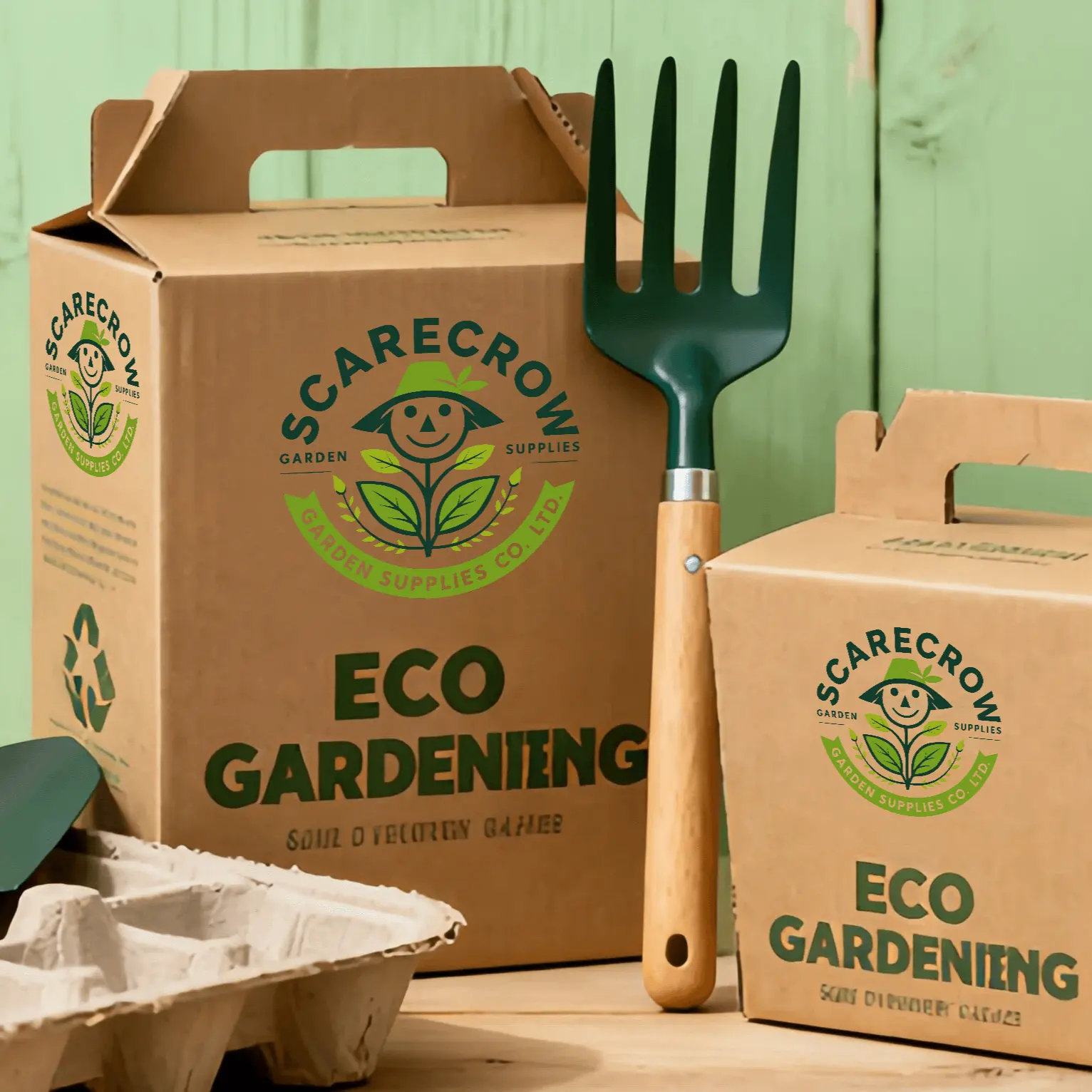


A trowel weighs almost nothing and costs almost nothing, and neither of those facts tells you whether it belongs in a plant shipment.
Two things decide it, and price and weight are not among them. Can the trowel be packed so it cannot damage the plant or the pot? And does what it adds to the order cover the cost of including it on every shipment? A trowel that is secured without changing anything is the easy case. A trowel that requires new dunnage, a wider box or a protective sleeve is still a decision rather than an answer.
What a hard, pointed object does inside a box
Packaging textbooks describe the job of internal cushioning in three parts, and all three apply to a trowel more than they apply to a plant.
The first is absorbing shock. A parcel gets dropped, tipped and stacked, and the energy of those events travels through the box to whatever is inside it. The second is preventing movement inside the container, so an item cannot shift into a different position between packing and delivery. The third is keeping the item from striking the container itself, or striking other items in the same container.
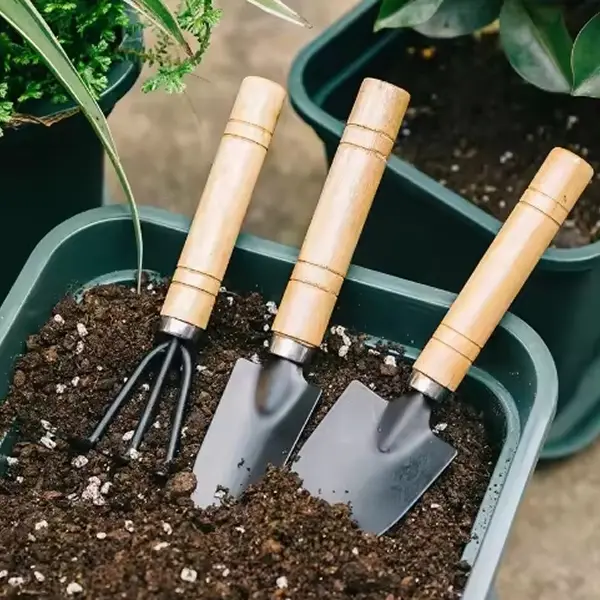
A plant is soft and deforms slightly under load. A trowel is the opposite. It is rigid, it has a point, and its point concentrates whatever force reaches it into a very small area. Those are the properties that make it dangerous to everything else in the parcel, including the pot. The point is the part to plan around, and it is not the only part that can cause damage. A metal ferrule where the handle meets the blade, a sharp edge along the blade, and any loose fitting can all mark a pot or a leaf, and which of them matters depends on the tool you actually stock.
The textbook answer to a pointed item is specific and undramatic. A product with a protruding point should have that point wrapped or capped before it goes into the container, and the item should then be held in place so it cannot move. Neither step is complicated. Both are usually skipped when a shop starts adding tools to plant shipments, because the trowel looks harmless next to a plant that clearly needs more care.
Partial protection versus full protection
There are two recognised approaches to cushioning, and knowing which one applies to what you are shipping saves money and materials.
Full cushioning means the item is surrounded by cushioning material on all sides, filling the space between the item and the outer wall. It is what you do with something fragile, or something that cannot tolerate a knock from any direction. It costs material, and it usually costs volume.
Partial cushioning means cushioning is placed where the risk actually is, at corners or at specific vulnerable points, and the rest of the item is held by the structure of the box or by a fitted insert. It is appropriate for items that are robust overall but have one exposed weak point.
A trowel is usually a candidate for partial cushioning, because the handle and blade are the parts least likely to be damaged and the point is the part most likely to cause damage. That is a starting judgement about the category, not a finding about your tool. Handle materials vary, and a wooden handle can crack, a plastic one can shear at the ferrule, and a blade edge can be rolled by a knock. Check the actual tool rather than assuming the category description covers it.
Applying full cushioning to a trowel is not wrong, but it is expensive in a way nobody notices, because the cost appears as a bigger box and a higher weight tier rather than as a line item called cushioning.
The packing decision is mostly a geometry decision
Before deciding how to protect a trowel, measure the parcel you are already sending.
Take a real packed parcel at the size and weight you typically ship. Measure the interior void space, meaning the volume not occupied by the pot, the plant, and the existing dunnage. Compare that against the trowel's dimensions, not its weight. A trowel is long and thin, and the shape matters more than the number on the scale.
Three outcomes are possible.
If the trowel fits inside the existing void with room for a cap and a wrap, and the parcel stays under its current weight tier, it adds a small amount of material and a few seconds of labour. That is a viable accessory, and there is nothing more to decide.
If the trowel fits but only if the parcel moves up a weight tier, this is where most of the money is, and it is the outcome shops least often check. The trowel's real cost is not the trowel. It is the whole shipment now billed at the next tier, on every order, for as long as the trowel is in the box. Work that number out before you commit. Take the packed weight with the trowel, find the tier it lands in, and compare the shipping cost of that parcel against the same parcel without the trowel. If the difference is larger than the margin on the trowel, the trowel is being subsidised by the plant, and no amount of protective packing will fix that.
If the trowel does not fit, or fits only by removing dunnage the plant needs, it does not belong in that parcel at all. It may still be a product you sell, but it is a separate shipment, priced with its own minimum labour.
The point is the whole problem
Every failure a trowel causes in transit starts at the point, and almost all of them happen because the point was left free.
A capped point cannot puncture a bag of soil. A trowel held against the wall of the box with a fitted insert cannot slide across and press into a pot. A trowel packed loose among other items will do both of those things eventually, because a parcel gets handled by people who do not know or care what is inside it.
The practical solutions are unglamorous and cheap. A cardboard sleeve folded around the blade takes seconds and costs almost nothing. A small plastic cap sourced with the tool is faster still, if the supplier offers one. Either way, the purpose is not to protect the trowel. The trowel will be fine. The purpose is to protect everything else from the trowel.
There is an additional benefit that shops do not expect. When the point is capped, the trowel can be placed against the box wall instead of floating in the middle of the parcel. That changes where dunnage has to go, and sometimes removes the need for any.
Validate the protection, then price it
These are two separate questions and they get settled differently. Whether the trowel is held safely is a question about the parcel in transit. Whether the trowel is worth carrying is a question about the invoice. Running them together produces conclusions that do not hold.
To validate the protection, pack three parcels the way you intend to ship and treat them the way a carrier will. One turn-over and a listen is a quick check for gross movement, and it is not a test. Movement you cannot hear can still mark a pot, and a parcel that survives a shake in a quiet room has not been tested against stacking, a drop, or a day in a van. Pack the real combination, at the real weight, and leave it for the length of your longest realistic transit before you open it. Then read the box as well as the contents: a dent in the inner wall shows you where the trowel went.
To price it, weigh the packed parcel against the same parcel without the trowel and compare the billed cost on your own account. That comparison answers one question, which is whether the trowel moved this shipment into a different charge. It does not tell you whether the packing method protects anything, and a favourable weight result is not evidence that the parcel is safe.
Nothing about the two exercises is publishable as a standard. No rule sets out how a garden trowel should be packed into a plant shipment, and anyone who tells you there is one is describing their own practice. What does exist are general packaging requirements that apply to parcels of this kind, and they are worth knowing because they describe the conditions your method has to survive rather than a method to copy.
Carrier mail standards for parcels containing more than one item require that the items be cushioned so they protect each other as well as against outside force, and that heavy or dense items not travel with fragile ones unless they are separated. Postal guidance on sharp or pointed contents points the same way as the textbook: protect the point. Those are general rules for multi-item parcels, not rules written for plants, and they set the floor rather than the answer.
One more general point, because it is often mistaken for a certificate. Passing a recognised transit test shows that a pack design performed under the conditions that test specifies. It is not a statement from a carrier that the parcel is safe, and it does not transfer into a guarantee on your shipments. Treat a test result as evidence about a design, and treat your own three parcels as evidence about your own bench.
When the trowel should not be in the parcel at all
There is one situation where the correct answer is to keep the trowel out of the plant shipment, and it is narrower than it sounds.
That situation is when it only fits by removing protection the plant needs. A plant is the reason the order exists. If the trowel requires the pot to lose its cushioning, the trowel is competing with the product and it will occasionally win, which is not a trade worth making.
The other case often put in this category is not the same thing. A trowel added to answer a question the buyer did not ask is a positioning problem, not a packing problem. If the plant is bought as a gift or as a finished display piece that will stay in its pot for a year, the trowel is clutter the buyer will discard or feel mildly annoyed about. Neither reaction shows up in any metric and both cost you something, but the item still ships safely. Whether to offer it is a merchandising decision, and it does not require taking it out of the parcel by default.
Packed safely, and worth its cost
A trowel belongs in a plant parcel when it can be packed so that it does not damage the plant or the pot, and when what it adds to the order covers what it costs to include. Those are two separate tests and both have to pass.
The first is about the point, the ferrule and any sharp edge, and about whether the tool can be held still inside the box without removing the protection the plant needs. The second is about money: the billed cost of the parcel with the tool against the same parcel without it, measured on your own account, against what the tool brings in.
Staying inside the same weight band and the same outer carton is one way to pass the second test, and it is the easiest. It is not a condition. A trowel that pushes the parcel into a higher band may still be worth carrying if the amount it adds covers the increase on every order. What makes it worth checking carefully is that the increase lands on every shipment for as long as the tool stays in the box, so the margin on one trowel has to cover it repeatedly.
The practical sequence is short. Pack three parcels that way, leave them for a real transit duration, open them and read the box. Then weigh the same parcels with and without the tool and compare the billed cost. If the pack holds and the money works, the tool stays. If the pack fails, fix the pack before you decide anything about the money, because a damaged order costs more than any weight band. Comparing packing formats side by side with mixed accessory packing is quicker than working it out from a catalogue page.
Before adding a tool to your plant parcels, check how it packs. Share your most common parcel with Scarecrow Garden and request packing reference for the tools you are considering.

Written by
ScarecrowGarden
💡About Scarecrow Garden Supplier Co., Ltd.
Scarecrow Garden Supplier Co., Ltd. is a China-based sourcing and wholesale partner specializing in garden tools, landscaping equipment, and outdoor supplies for international wholesalers, distributors, contractors, and brands.
With hands-on experience rooted in real garden use scenarios, we focus on durable materials, functional design, and stable large-volume supply. Our product range covers pruning tools, watering systems, hand tools, outdoor hardware, and customized garden solutions to support both retail and professional landscaping markets.
Beyond products, we help our partners navigate supplier selection, quality control, compliance requirements, and long-term sourcing strategies in China. Through our blog, we share practical insights on product selection, material comparisons, industry trends, and cost-effective purchasing—helping global buyers build stronger, more competitive supply chains.