








The tool is in the shed, it cost real money, and it has done four seasons. The replacement seed trays arrive from a different supplier, and the first attempt at ejecting a plug produces a bent pin, a torn cell and a tray that no longer sits flat.
The tool was made for a specific tray, and the new tray is not that tray. Whether the two can work together is answerable with two drawings and one cautious test.
Map the pin pattern against the drain holes
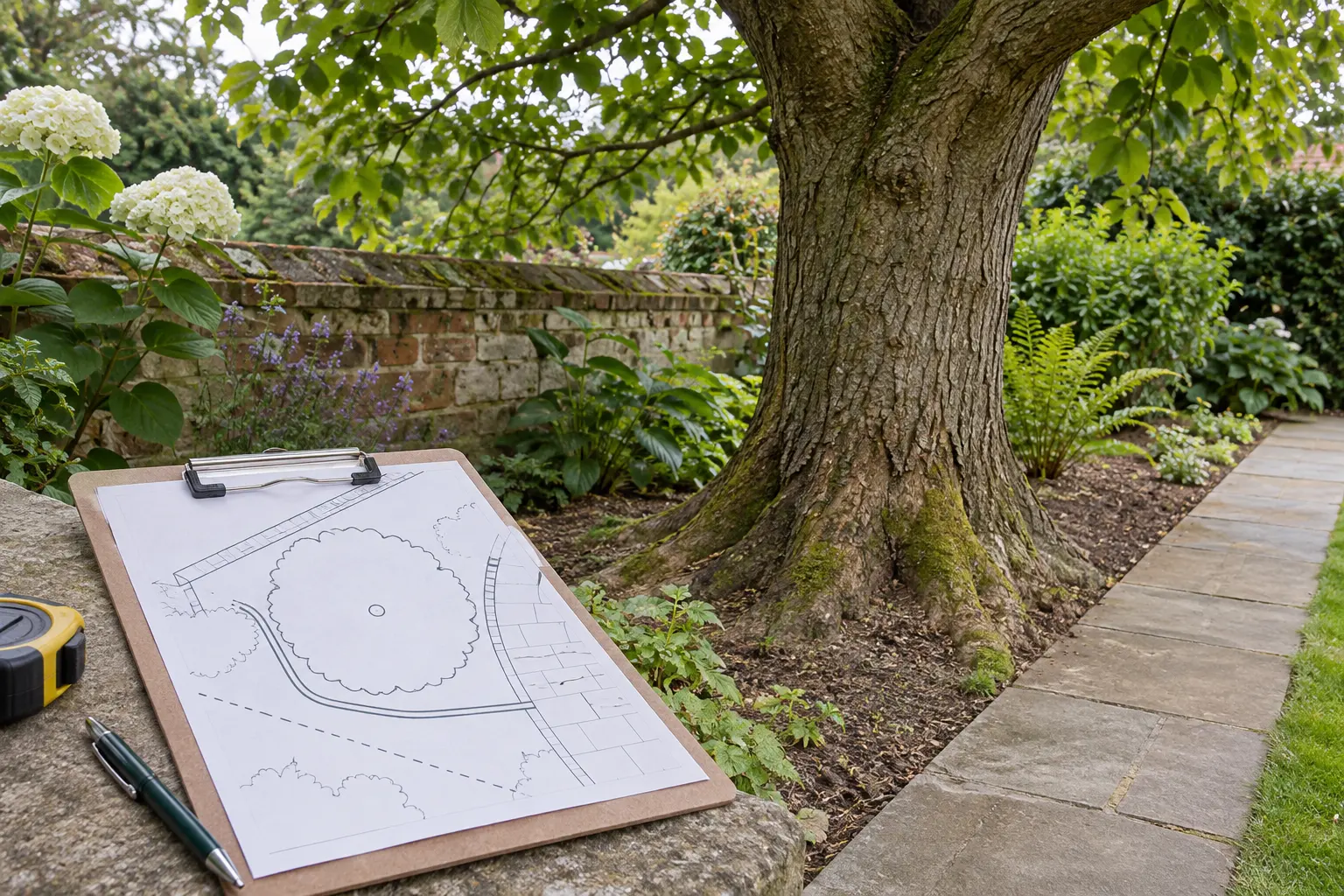
The first drawing is a plan view, and its job is to compare two patterns that are easy to assume and hard to verify.
Draw the pin layout of the tool: the number of pins, their spacing in both directions, the offset of the pattern relative to the tool's frame, and the pin diameter and tip shape.
Draw the drain hole layout of the tray, at the same scale: the number of cells, the cell spacing, the position of each drain hole within its cell, and the hole diameter.
Then overlay them in the same orientation, using the actual locating features as the reference. What to look for is not whether the patterns are similar. It is whether every pin lands inside a drain hole when the tool is seated against the tray's locating features. A pattern that is right in count and pitch but offset by half a cell can drive a pin into the cell base instead of through the drain hole.
For a fixed pin block, pin count, pitch, diameter and offset define part of the interface. A change on the tray side can prevent alignment, but different tray models can share the same interface. Compatibility therefore depends on the measured geometry and the permitted use, not simply on whether the tray has a different name or supplier.
If a tool has interchangeable heads, confirm which head is specified for the proposed tray and include it in the compatibility record. A removable head may allow different pin patterns, but it does not establish compatibility by itself. Check the complete interface for each tool, head and tray combination.
Note also the version. A tray model can be revised, and a drain hole can move within a cell without the tray's overall dimensions changing. Record the tray model and any revision on the drawing, so the comparison is against the current part.
Check the travel and support points
The second drawing is a section, and it answers a different question: what happens as the tool moves.
Mark the relative travel between pins and tray, whether the pins move or the tray is lowered onto fixed pins, and what stops that movement. Some tools bottom out on the tray, some on their own frame, some on the bench.
Mark the tray's support points. Where the tray rests when it is on the bench, and whether the tray has a rim or a foot that holds the cell bottoms off the surface. This matters because the ejection action needs the tray supported while the pins push. A tray whose cells are unsupported will flex under the pin load, and flexing cells release plugs unevenly.
Mark possible interference. A tool with a frame that sits over the tray edge needs clearance at the rim. A tray with a thicker rim than the tool expects will keep the tool from seating, which means the pins never reach full depth. Excessive relative travel can damage the plug or tray; pins entering an upright tray from below push the plug upward, away from the bench.
Mark the direction. Pins that enter from below need access to the drain holes, support for the tray and clearance for the plugs to rise; do not invert a planted tray unless the tool's instructions expressly require it. That is an ergonomic requirement on the operator and it is part of whether the pair works.
The two drawings together tell a buyer whether the pair is geometrically possible. They do not tell anyone whether it works in practice, which is why there is a third step.
Align an empty tray without forcing it
The third step is a trial, and its most important property is that it is gentle.
Take an empty tray, position it as the tool is designed to be used, and move through the specified trial travel without forcing it. Then check alignment at every pin, by eye and by feel.
If the pins enter the holes freely, initial alignment has passed; proceed to a loaded test only after support, clearance and permitted travel have also been confirmed. If any pin contacts the cell floor, stops against plastic, or needs pressure to enter, stop. A forced trial on an empty tray is how cells get torn and how pins get bent, and neither outcome tells you anything you did not already know from the drawings.
Then progress, one variable at a time. Empty tray, then tray with dry mix, then tray with a germinated plug. Each stage adds a failure mode: mix can block a hole, and a plug with a healthy root system is what the tool is really being asked to move.
Two things about the trial come from how plugs behave rather than from this article. Plug ejection works better when a healthy root system has formed and has bound the mix, so a trial on recently sown trays will not predict performance on finished plugs. And moisture state matters: very wet mix may slump, while excessively dry mix may break apart or release differently; the result depends on the crop, medium and tray. Water, let the excess drain away, and eject when the mix is moist but not dripping. A trial run on the wrong moisture state will produce a wrong conclusion about the fit.
Record the matched pair and its limits
The output is a record, and the record is what protects the buyer at the next order.
Write the pair: tool model and tray model, with the revision. Attach the two drawings. State the trial conditions, including moisture state and plug stage. State the result.
Then write what has not been established. An empty-tray geometry check and a trial on one tray is not a production validation. It does not establish ejection rate across a full tray, it does not establish how the pair behaves after a hundred cycles, and it does not establish what happens with a different media or a different crop's root structure.
That separation is the whole point of the exercise. A buyer who says “the tool fits the tray” has made a claim about geometry. A buyer who says “the tool fits the tray, we tested it on a drained tray with established plugs and it ejected cleanly, and we have not tested it at production volume” has made a claim that will survive contact with the customer.
And one sentence belongs in the product copy for any tray sold to customers who already own tools: state the tool compatibility that has been confirmed, and state that other tools have not been tested. A tray sold without that sentence is a tray that will be returned by a customer whose pins did not line up.

Written by
ScarecrowGarden
💡About Scarecrow Garden Supplier Co., Ltd.
Scarecrow Garden Supplier Co., Ltd. is a China-based sourcing and wholesale partner specializing in garden tools, landscaping equipment, and outdoor supplies for international wholesalers, distributors, contractors, and brands.
With hands-on experience rooted in real garden use scenarios, we focus on durable materials, functional design, and stable large-volume supply. Our product range covers pruning tools, watering systems, hand tools, outdoor hardware, and customized garden solutions to support both retail and professional landscaping markets.
Beyond products, we help our partners navigate supplier selection, quality control, compliance requirements, and long-term sourcing strategies in China. Through our blog, we share practical insights on product selection, material comparisons, industry trends, and cost-effective purchasing—helping global buyers build stronger, more competitive supply chains.