





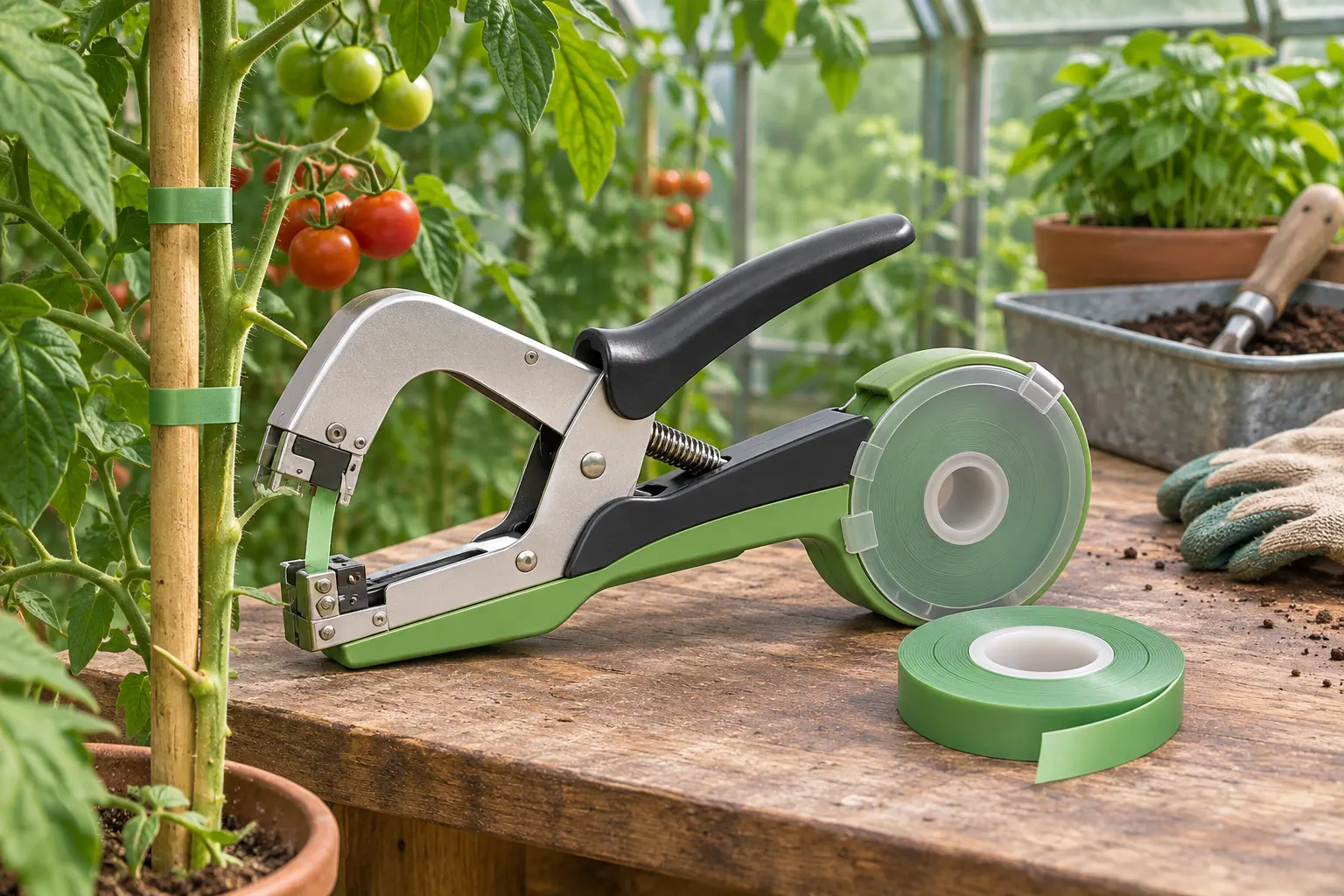
Unbranded plant tying tool with separate tape roll and staples
The expensive mistake is the near-match
Tying tools for vines, tomatoes, and nursery stock sit in a category where the consumable, not the tool, is the recurring purchase. That makes compatibility the central commercial question, and it is also the question that visual comparison answers worst.
Identify the actual tool before reordering consumables; visual similarity does not confirm compatibility. Obtain the current written compatibility list for that exact machine.
Identify the tool model and generation
Compatibility begins with the machine. Before ordering consumables, record:
• The exact model designation on the tool body
• The generation or revision marking, if present
• The serial number, where one is marked
• The date of the manual you are working from
• The part numbers the manual lists for tape and for staples
If the manual is not available, that is the first task, not a detail to work around. A current manual or a written compatibility confirmation tied to the exact model and revision is the document that connects a machine to its consumables.
Separate tape dimensions, roll format, and staple designation
Record the compatibility fields required by the actual tool documentation.
Obtain the approved tape dimensions, roll format and loading direction for that model. Ask the manufacturer to resolve any difference between the refill label and that record before use.
Tape dimensions. Width and thickness, as the manual states them.
Roll format. Core diameter, roll outer diameter, and the direction of winding.
Tape material and behavior. Ask for the refill's material identification and its documented intended plant-tying use. Do not infer stretch, weathering behaviour or suitability for a growing stem from appearance. For living plants, closure tension matters. Ask how the documented closure accommodates the crop, growth and support requirement.
Staple designation. Match the staple designation to the exact machine's current approved list, and record only the dimensions the actual documentation uses.
Because these properties interact, a compatibility record is more useful than a list of “suitable refills.” The record should hold, per machine, the approved tape part number with the dimensions the manual gives, and the approved staple part number with its designated dimensions, plus the manual revision that lists them.
Tying machines and wire-tie products are separate categories
Manufacturer documentation for tying tools typically separates tying machines, plant tapes and their staples from unrelated fastening hardware. A buyer should not infer compatibility between a plant tape tool and a wire-tie product just because both are described as “for tying plants.” They use different mechanisms and different consumables, and one does not inform the other. Keep this record specific to the tape-and-staple tool identified; instructions for a different fastening mechanism are not a substitute.
Make similar-looking packs distinguishable after purchase
Once tape and staples are decanted from their packaging, or two part numbers sit side by side on a shelf, the visual difference disappears. Keep confirmed compatibility identifiable during storage and issue.
Practical measures:
• Keep the original packaging until the roll is finished, or label the roll with the part number
• Label stored refills with the confirmed tool model and consumable designation, and keep unconfirmed items separate
• Mark the shelf position, not just the product
• Record the machine each refill is approved for on the storage bin
• Keep the manual revision number next to the refill stock, so a specification can be checked without a search
• Check existing stock against the current compatibility record before reissuing it; age alone does not establish incompatibility
What a defensible compatibility statement looks like
A statement worth holding in the purchasing file has a specific shape. It names the machine, its generation, the consumable part numbers, and the document those part numbers came from. It does not say “fits most tying tools.” It does not say “universal.”
For buyers in markets where the tool was supplied by a third party, obtain current model-specific documentation from an authoritative source, which may be the tool supplier or the manufacturer. The consumable supplier can confirm what their product is; the tool documentation, or a written confirmation tied to the model, is what confirms what the tool accepts. Retain that confirmation with the purchase record.
The record to build before every reorder
This list belongs in the purchasing file rather than in a message to the supplier. It is the record a buyer should already hold, and be able to produce, when a consumable order is placed.
1. Is the exact model and generation of each tool recorded?
2. Is there a current manual for each tool on file, and is its revision date known?
3. Are tape width and thickness recorded as dimensions, where the manual gives them?
4. Are roll core diameter and winding direction confirmed?
5. Are staples recorded by the designation and dimensions the documentation uses?
6. Are tool consumables kept separate from wire ties and other fastening products?
7. Can a person in the storeroom tell two similar packs apart without opening them?
Next step
Have the tool model, its revision marking and the refill labels to hand when you contact Scarecrow Garden Supplier. Ask for written confirmation of the exact tape and staple combination that applies to that machine. Check the returned part designations against the tool manual and the refill labels, and keep the confirmed combination in the reorder record.

Written by
ScarecrowGarden
💡About Scarecrow Garden Supplier Co., Ltd.
Scarecrow Garden Supplier Co., Ltd. is a China-based sourcing and wholesale partner specializing in garden tools, landscaping equipment, and outdoor supplies for international wholesalers, distributors, contractors, and brands.
With hands-on experience rooted in real garden use scenarios, we focus on durable materials, functional design, and stable large-volume supply. Our product range covers pruning tools, watering systems, hand tools, outdoor hardware, and customized garden solutions to support both retail and professional landscaping markets.
Beyond products, we help our partners navigate supplier selection, quality control, compliance requirements, and long-term sourcing strategies in China. Through our blog, we share practical insights on product selection, material comparisons, industry trends, and cost-effective purchasing—helping global buyers build stronger, more competitive supply chains.