







Updated 1 day ago
Energy Efficient Plant Heat Mat with Thermostat Technology For Greenhouse Propagation

hqt
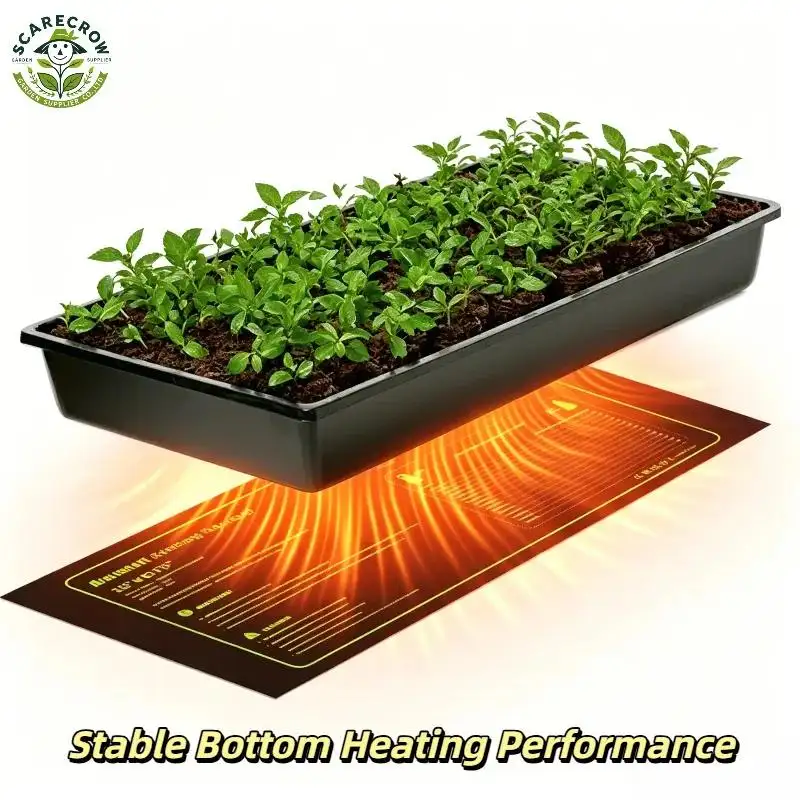
Plant Heat Mat with Thermostat
Seed propagation requires a balance of multiple variables, including oxygen, moisture, and nutrients as well aslight and temperature. Among these, the temperature of the rooting medium is often overlooked. While the air in a greenhouse may be at an appropriate temperature, the growing medium may still be too cold to promote germination and may negatively affect uniformity of seedling development.
The Plant Heat Mat with Thermostat is designed to provide bottom heat to seed trays and other plant propagation containers. Heat mats are significantly more efficient than traditional greenhouse heating methods, which warm the air in the greenhouse, and help direct the energy to the root zone.
Why Root-Zone Temperature Is Critical For Seed Germination
Heat mats are used in a variety of markets, including seed and plant propagation, greenhouse production, and retail gardening. Mat's ability to be heated and controlled by a thermostat, as well as its waterproof design, allows it to be used in various applications.
Seeds, like other living things, are affected by the temperature of their surroundings and may remain dormant if the conditions are not optimal. The heat mat creates a warmer rooting zone for the seeds to germinate. In order for seed germination to occur, the growing medium may need to be warmed to a specific temperature, and a heat mat may help in achieving this.
| Seed Type | Recommended Germination Temperature | Typical Germination Time | Heat Mat Application |
| Tomato | 24–29°C (75–85°F) | 5–10 days | Improves early spring propagation |
| Pepper | 24–30°C (75–86°F) | 7–21 days | Helps maintain warm soil conditions |
| Basil | 21–27°C (70–80°F) | 5–10 days | Supports faster herb propagation |
| Eggplant | 24–30°C (75–86°F) | 7–14 days | Benefits from stable bottom heat |
| Cucumber | 21–29°C (70–85°F) | 3–10 days | Supports uniform seed starting |
| Lettuce | 15–21°C (59–70°F) | 4–10 days | Usually does not require strong heating |
Tomatoes, peppers, eggplants, and basil are some of the many crops that benefit from bottom heating.
How Plant Heat Mat with Thermostat Works
In the case of a Plant Heat Mat with Thermostat, the goal is not just to create a source of heat, but to create a controlled source of heat.
A standard heat mat creates a constant source of heat and is therefore unable to control heat.
The process is as follows:
•The growing medium is constantly monitored for temperature.
•Based on the temperature setting, the thermostat determines whether heat should be applied or removed.
•Heating elements are placed in direct contact with the seed trays. This reduces the variance in the growing area and provides uniform conditions for germination.
•Control of large numbers of seed trays is important for the efficient propagation of greenhouse crops.
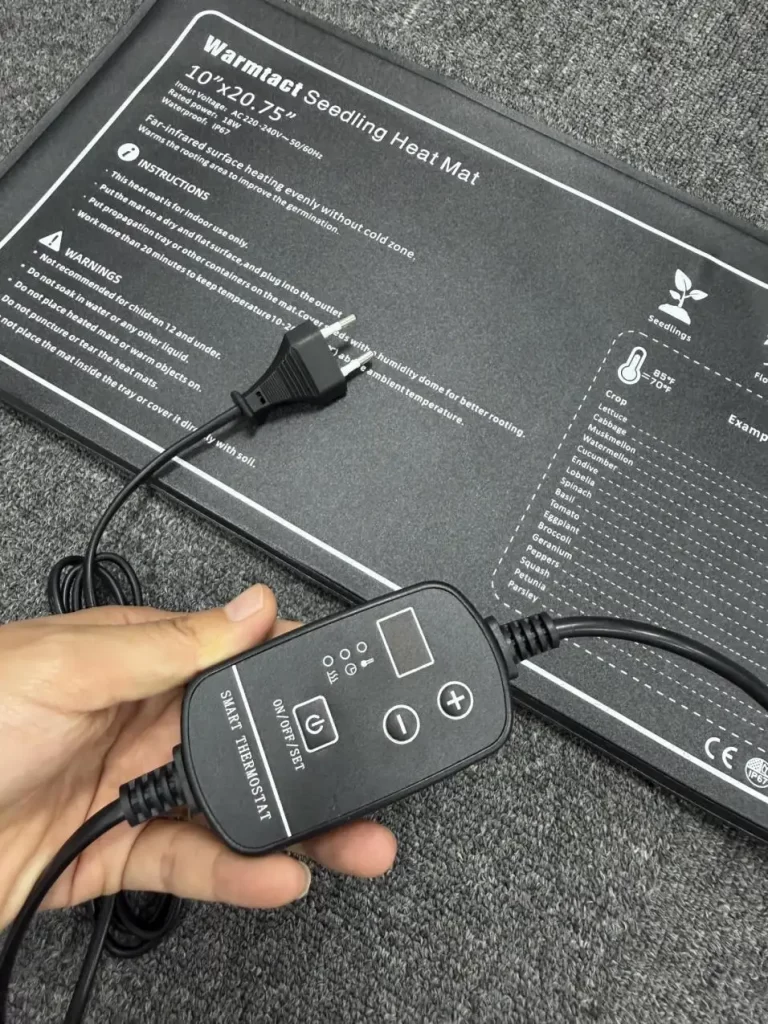
Scarecrow Garden Supplier Plant Heat Mat Design
As a major supplier of horticultural products to the major multiple retailers, Scarecrow Garden Supplier Ltd has developed a detailed knowledge of customer expectations. Our design and development policies encourage the introduction of new products to meet customer needs.
The seedling heat mat is designed with:
| Product Feature | Technical Function |
| Waterproof outer surface | Protects internal heating components from moisture |
| Flexible heating structure | Provides consistent heat distribution across the surface |
| Thermostat compatibility | Allows growers to control temperature according to crop requirements |
| Durable construction | Supports repeated use in indoor and greenhouse environments |
| Multiple size options | Fits different seed trays and propagation setups |
Waterproof Seedling Heat Mats from Scarecrow Garden Supplier are great for various plant propagation uses including seed trays, greenhouse benches, and propagation domes.
Factors to Consider When Selecting a Plant Heat Mat With Thermostat
There are factors aside from the core functionality that influence the decision-making process for farmers and nurseries. These include:
Heating Area
The size of the mat is dependent on the size of the seed tray. From a business standpoint, larger mats can be more energy efficient if the nursery uses trays of varying sizes.
Power Output
Power is measured in watts and defines the heating potential of the mat. For even heating, the wattage can be balanced based on the other factors.
Temperature Control
Thermostats offer more control over the environment. For example, if the theme is used for peppers, then the temperature can be set to a level higher than that which is optimal for lettuce.
Other Features
If a propagation mat is used in a greenhouse, it is essential that the mat have a waterproof outer coating in order to withstand the humidity and water cycles of a greenhouse.
Energy Efficient Systems
Use of plant heat mats has increased in recent years. They are used for:
•Nurseries
•Greenhouse Seed Starting
•Indoor Gardening Systems
•Garden Retail Products
It is also beneficial for consumers to purchase a plant heat mat if they are interested in propagating plants themselves.
Quality Control for Wholesale Heat Mat Production
From a distributor's perspective, consistency in heat mats is more important than improvements in functionality. This is because a defective heat mat can ruin a nursery's crop.
Scarecrow Garden Supplier evaluates:
| Quality Check | Purpose |
| Heating performance testing | Confirms stable heat output |
| Temperature control testing | Ensures thermostat accuracy |
| Waterproof inspection | Verifies moisture resistance |
| Electrical safety testing | Improves product reliability |
| Final inspection | Maintains batch consistency |
Conclusion
Energy efficient Plant Heat Mats with Thermostats allow for the precise control of root-zone temperatures and reduce energy costs associated with unneeded space-heating. For germination, many seeds require a heated, stable environment and a propagation Heat Mat can supply that.
Scarecrow Garden Supplier manufactures Wholesale Heat Mats for seedling propagation and offers those products to Greenhouse and Garden suppliers and Distributors. With a focus on manufacturing products that enable reliable seedling and plant propagation, Scarecrow Garden Supplier offers thermal mats, which are waterproof and thermostatically controlled. Scarecrow offers a variety of Heat Mat products that enable growers to create controlled and automated environmentally responsive growing systems for plants.
FAQs
Q1. What is a Plant Heat Mat with Thermostat used for?
A Plant Heat Mat with Thermostat is designed to provide controlled bottom heat for seed trays, propagation containers, and greenhouse growing systems. It helps maintain stable root-zone temperatures during seed germination and early plant growth.
Q2. Why choose a thermostat-controlled heat mat instead of a standard heat mat?
A thermostat-controlled heat mat can automatically regulate temperature according to growing requirements. Compared with fixed-output heat mats, it helps reduce overheating risks and improves energy efficiency during propagation.
Q3. What seeds can be used with Scarecrow Garden Supplier Plant Heat Mat with Thermostat?
Scarecrow Garden Supplier heat mats are suitable for many seed-starting applications, including:
•Tomatoes
•Peppers
•Basil
•Eggplants
•Cucumbers
•Flowers
•Vegetable seedlings
The thermostat function allows growers to adjust conditions according to different seed temperature requirements.
Q4. What temperature range is suitable for seed propagation with a heat mat?
Different seeds require different temperatures. Warm-season crops such as tomatoes and peppers generally perform well around 24–30°C (75–86°F), while cool-season crops may require lower temperatures.
A Plant Heat Mat with Thermostat helps growers maintain suitable conditions for different plants.
Q5. Are Scarecrow Garden Supplier seedling heat mats waterproof?
Yes. Scarecrow Garden Supplier designs seedling heat mats with a waterproof outer structure suitable for greenhouse and indoor gardening environments where regular watering and humidity are common.