






Updated 6 hours ago
Small Plant Pots Wholesale: How Pot Structure Affects Performance

hqt
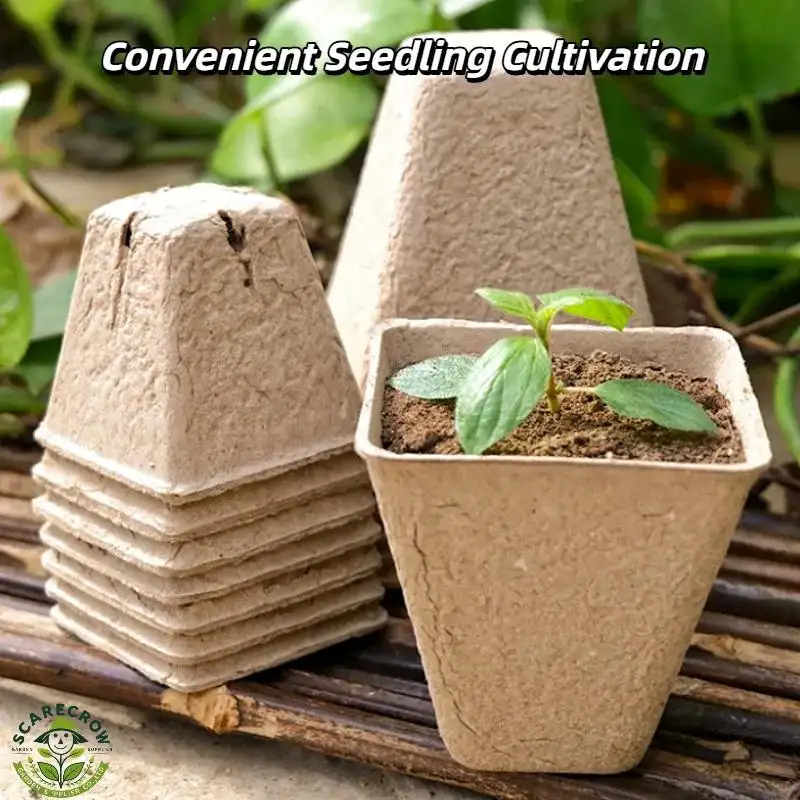
Small Plant Pots Wholesale
For Small Plant Pots Wholesale, size and price are only part of the specification. From our experience at Scarecrow Garden Supplier, two parameters deserve much more attention in biodegradable plant-fiber pots: wall thickness and fiber compression density.
They determine how a pot behaves during substrate filling, irrigation, tray handling, nursery growing, transportation, and final transplanting. For commercial buyers, the goal is not to select the thickest or hardest pot. The goal is to match pot structure to the actual propagation cycle.
Our SGS-PC-392 biodegradable seedling pot is designed around this principle, with adjustable size, wall thickness, and fiber density for different nursery, greenhouse, and retail applications.
Why Wall Thickness and Fiber Density Matter
The performance of a Plant-Fiber Pot is influenced by a combination of factors including:
•The type and composition of plant fibers
•Wall thickness
•Fiber compaction
•Moisture in the growing media
•Greenhouse environment
•Duration of propagation
•Requirements for transport and shipment
•Conditions for direct transplanting
Diameter is not an accurate indicator of pot size. As such, relying on diameter alone for Plant-Fiber Pot specifications is not adequate.
SGS-PC-392 Specification
| Term | Definition |
| Model number | SGS-PC-392 |
| Material | Plant fibers |
| Product type | Biodegradable pot for seedling propagation |
| Size | Standard and custom |
| Wall thickness | As per requirement |
| Fiber density | As per requirement |
| Weight | Depends on size and wall thickness |
| Structure | Porous and biodegradable |
| Transplanting | Direct transplanting |
| Usage | Starter pots for nursery, greenhouse, garden, floriculture, and horticulture |
| Packaging | Bulk and retail |
Custom packing and labeling service is available.
Because of the information provided, we can better tailor our Plant-Fiber Pot designs to various crops and ways of producing crops. This allows us to develop a more differentiated product line than if we were trying to meet a wide variety of grower needs with a single product.
The Impact of Wall Thickness on Pot Performance
1.Resistance to Collapse under Load
Wall thickness also impacts the mechanical strength of a pot. When considering propagation, a pot with a thicker wall can help the pot resist collapse from substrate loading. Collapse of the pot can occur during various mechanical stresses the pot is exposed to within the greenhouse as well as during transport to the sale point.
2.Wet Strength Is More Important Than Dry Strength
A common purchasing mistake is evaluating biodegradable pots only when they are dry.
Plant fiber absorbs and interacts with moisture. After repeated irrigation, the pot wall may soften gradually. Its actual performance therefore depends on:
Watering Frequency + Substrate Moisture + Humidity + Drainage + Growing Duration.
We suggest testing sample strength after actual (reasonable) irrigation cycles rather than relying on dry-hand strength for Small Plant Pots Wholesale.
3. Strength Required Depends on Growing Cycle
The manner in which plants are propagated influences the type of support required by the pot.
The support structure for a pot used to support short term seedling propagation may not have to endure as long a time as a pot used to support a more permanent propagation.
At Scarecrow Garden Supplier, wall thickness can therefore be adjusted according to crop type and expected growing cycle.
How Fiber Density Changes Pot Behavior
Wall thickness describes how much material forms the pot wall. Fiber density describes how tightly those fibers are compressed.
This distinction is important because two pots with similar dimensions and thickness can perform differently.
Lower Compression Density
A relatively open fiber structure may provide:
•Greater porosity
•Faster moisture exchange
•Lower overall weight
•Good suitability for shorter propagation cycles
Higher Compression Density
A more compact structure can generally provide:
•Higher rigidity
•Better resistance to deformation
•Improved shape retention
•More stable handling during longer nursery cycles
But higher density is not automatically better.
For a biodegradable pot, overly compact fiber may reduce some of the open structure buyers expect from plant-fiber containers. The correct design should balance strength, airflow, moisture behavior, and transplant performance.
Thickness and Density Must Be Specified Together
For Small Plant Pots Wholesale, we normally treat thickness and density as linked design variables.
| Pot Structure | Main Characteristics | Typical Application |
| Thin wall + lower density | Lightweight, open structure | Fast seed starting |
| Thin wall + higher density | Compact and material-efficient | Retail propagation kits |
| Thicker wall + moderate density | Better handling with balanced porosity | General nursery use |
| Thicker wall + higher density | Stronger shape retention | Longer growing and handling cycles |
These are general engineering principles rather than fixed performance guarantees. Irrigation, substrate, humidity, fiber formulation, and crop type must also be considered.
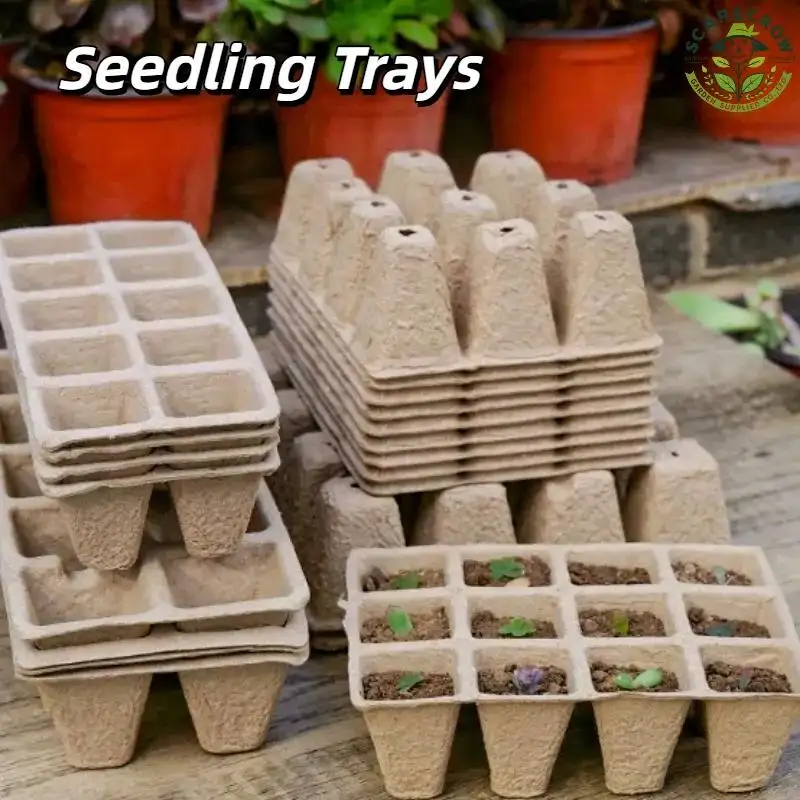
Matching Small Plant Pots Wholesale to the Growing Program
Before confirming a specification, we recommend that buyers define five key conditions.
Growing Duration
How long must the pot maintain sufficient strength before transplanting?
Irrigation Method
Is the crop watered by misting, top watering, drip irrigation, or bottom watering?
Handling Frequency
Will pots remain in one tray, or will they be repeatedly moved, packed, and transported?
Root and Transplanting Requirements
Our plant-fiber pot (SGS-PC-392) allows for direct transplanting. This reduces the need for handling when removing plants from pots.
Packaging and Distribution
Structural strength and weights of pots, labels and cartons must be evaluated for both bulk nursery and retail seed starting packages.
Our Process at Scarecrow Garden Supplier
We are able to modify SGS-PC-392 pots to vary the length, thickness, fiber density and color of our potting mix to better fulfill your individual needs.
For our wholesale and private label businesses, we can provide:
•Pots of various sizes
•Wall thickness customization
•Fiber density customization
•Potting mix customization with your logo
•Potting mix labels and retail selling labels
•Custom potting mix insert instructions
•Custom cartons
•Bar code labeling
•Seed starting mix consisting of multiple varieties
Flexibility is provided for Nursery suppliers, garden retailers, distributors and private label customers seeking a Small Plant Pots Wholesale program.
Conclusion
Selecting Small Plant Pots Wholesale is not simply a matter of choosing a thicker biodegradable pot. The better approach is to match wall thickness, fiber density, irrigation frequency, growing cycle, handling conditions, and transplanting method as one system.
Our SGS-PC-392 plant-fiber seedling pot is design flexible and amenable to multiple uses in nurseries, greenhouses and retail. If you are producing Small Plant Pots Wholesale, you are invited to provide us with your crop type and growing cycle, the size of pot you wish to produce, the method of irrigation you will employ, the format of packaging you will use and the quantity of each pot in your order. We can evaluate with you the feasibility of using a plant-fiber pot in your project.
FAQs
Q1. What material does Scarecrow Garden Supplier use for its biodegradable seedling pots?
Scarecrow Garden Supplier’s SGS-PC-392 seedling pots are made from plant fiber. The material is designed to provide a breathable structure while supporting biodegradable and transplant-friendly nursery applications.
Q2. Can Scarecrow Garden Supplier customize Small Plant Pots Wholesale specifications?
Yes. Scarecrow Garden Supplier can adjust pot size, wall thickness, fiber compression density, color, and packaging according to nursery, greenhouse, retail, or private-label requirements.
Q3. How does Scarecrow Garden Supplier determine the right wall thickness for plant pots?
Wall thickness should be selected according to the growing cycle, watering frequency, handling requirements, substrate conditions, and expected transplanting time rather than pot diameter alone.
Q4. Can the fiber density of SGS-PC-392 plant pots be adjusted?
Yes. Fiber compression density can be adjusted to achieve different balances of rigidity, porosity, moisture interaction, and shape retention for different propagation programs.
Q5. Are Scarecrow Garden Supplier plant fiber pots suitable for direct transplanting?
Yes. SGS-PC-392 plant fiber pots are designed for transplant-friendly applications, allowing seedlings to be planted with the pot where appropriate and reducing unnecessary root disturbance.