






Updated 4 months ago
Common Quality Problems with Metal Raised Garden Beds: Which Details Cause the Most After-Sales Trouble for Wholesalers?
ScarecrowGarden
💡About Scarecrow Garden Supplier Co., Ltd.
Scarecrow Garden Supplier Co., Ltd. is a China-based sourcing and wholesale partner specializing in garden tools, landscaping equipment, and outdoor supplies for international wholesalers, distributors, contractors, and brands.
With hands-on experience rooted in real garden use scenarios, we focus on durable materials, functional design, and stable large-volume supply. Our product range covers pruning tools, watering systems, hand tools, outdoor hardware, and customized garden solutions to support both retail and professional landscaping markets.
Beyond products, we help our partners navigate supplier selection, quality control, compliance requirements, and long-term sourcing strategies in China. Through our blog, we share practical insights on product selection, material comparisons, industry trends, and cost-effective purchasing—helping global buyers build stronger, more competitive supply chains.

Metal raised garden bed quality inspection showing panel thickness, hardware and edge treatment
The Sample Passed, but the Bulk Order Had Problems—Why?
Many wholesalers have had this experience: everything looked fine during sample approval. The color was correct, the thickness seemed sufficient, all accessories were included, and assembly was smooth.
But once the bulk shipment reached customers, complaints started coming in—warping, rusting, missing parts, or assembly issues.
This is not a coincidence. There is a systematic gap between samples and mass production. Samples are carefully prepared by the factory, while bulk orders are produced on assembly lines. Problems that cannot be seen during the sample stage often become obvious once mass production begins.
This article is not meant to scare you. It is designed to help you identify the most common quality issues found in bulk metal raised garden beds, understand how they happen, and learn what you can do during the sourcing process to reduce risk.
This is the third article in our Metal Raised Garden Bed Sourcing Guide series. The first article covered five key procurement dimensions: material, thickness, coating, packaging, and inspection. The second article analyzed the reasons behind price differences among suppliers. This article focuses on quality issues—the areas most likely to cause problems in mass production.
Many of these quality issues can be identified long before production starts. Our Metal Raised Garden Bed Buying Guide outlines the inspection points and supplier questions that help wholesalers avoid costly after-sales problems.
Warping and Bulging: The Number One Cause of Negative Reviews Worldwide
Based on industry experience, approximately 35–40% of negative consumer reviews for metal raised garden beds are related to "too thin" or "deformed" products, making this the most common complaint. This is not because customers are overly demanding—it is simply physics.
How Warping Happens
When a raised bed is filled with moist soil, the soil applies not only downward pressure but also outward pressure on the side walls.
A raised garden bed measuring 120 cm × 60 cm × 43 cm can hold approximately 350 kg of moist soil when filled. The lateral pressure on the side walls can reach roughly 260 kg per meter. If the steel panels are too thin, the side walls will gradually bulge outward under continuous pressure.
This is not a matter of "if" it happens—it is a matter of "when." Side walls made from 0.4 mm steel may begin deforming within weeks. A 0.6 mm panel may last several months. Thicknesses above 0.8 mm are generally required to maintain long-term structural stability.
Why You Cannot See It During the Sample Stage
Samples arrive empty. There is no soil inside. You pick them up, examine them, and think they feel acceptable.
But your customer fills the bed with soil, and three months later the side walls start bulging. Only then do you realize that 0.4 mm steel was not strong enough.
How to Identify the Risk Early
- Confirm thickness. Ensure the quotation specifies the steel substrate thickness, not the "coating-inclusive thickness." Measure the sample with a caliper and verify that the actual thickness matches the quotation. Coatings add approximately 0.03–0.04 mm but do not contribute to structural strength.
- Ask about reinforcement. If the thickness is only 0.4–0.6 mm, ask whether the factory uses internal support frames or reinforcing ribs. For raised beds taller than 43 cm, 0.6 mm steel without reinforcement will eventually deform. For detailed reinforcement solutions, refer to the "Reinforcement Is More Cost-Effective Than Increasing Thickness" section in the first sourcing guide.
- Understand gauge conversions. 0.6 mm steel is approximately 24 gauge, significantly thinner than the 16 gauge (1.2 mm) commonly recommended for professional-grade products. If your customers are sensitive to thickness, you should understand this difference in advance.
Rust: Connection Points and Damaged Coatings Are the First Areas to Fail
Rust-related complaints rank second among negative reviews and account for approximately 25–30% of issues based on industry experience.
Corrosion does not occur evenly across a metal raised bed. It almost always starts at specific vulnerable locations.
The Three Most Common Rust Locations
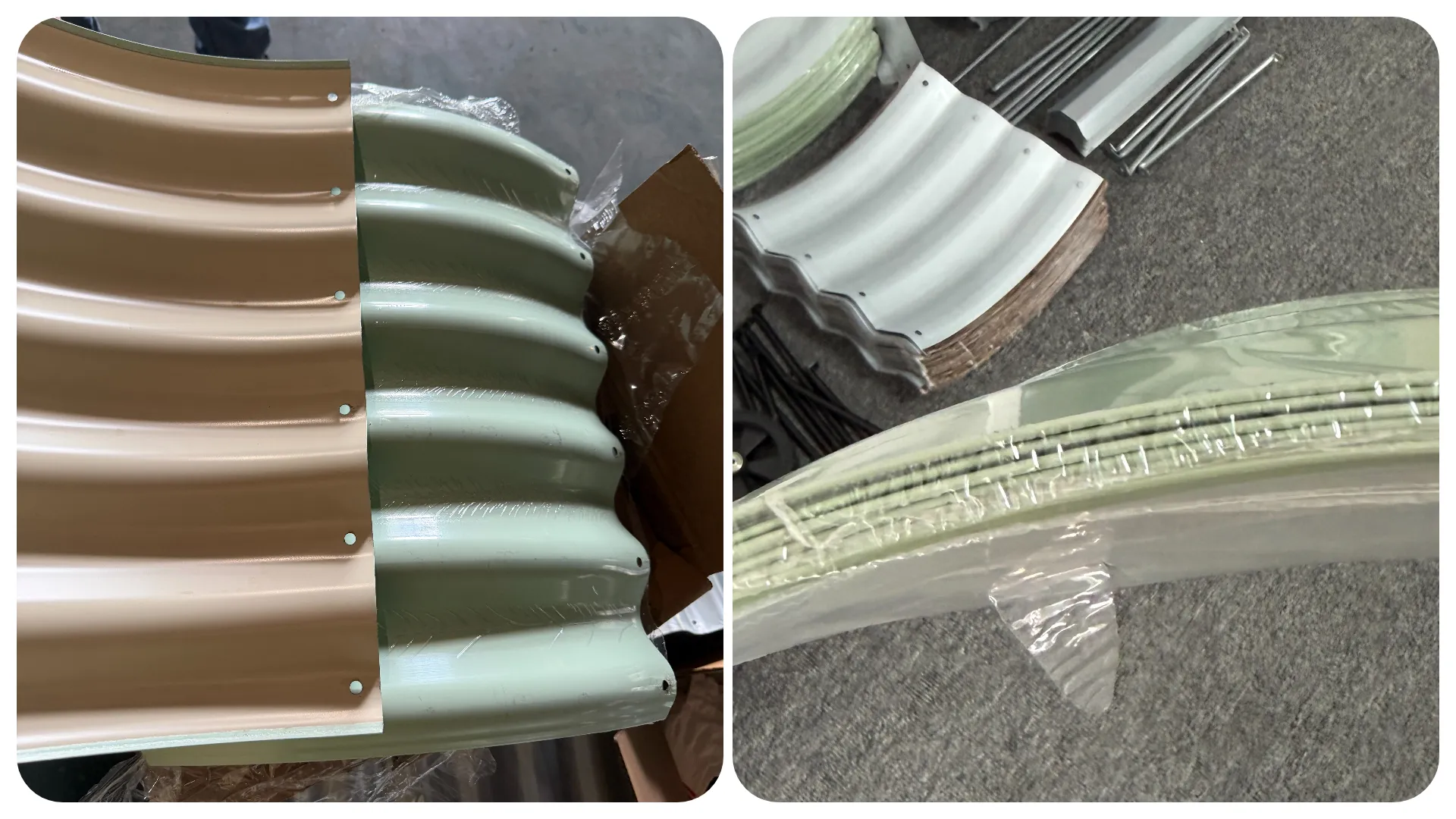
Around Bolt Holes
Raised garden beds are typically assembled using punched holes and bolts. They are not welded and usually do not use snap-fit connections.
Punching holes cuts through the protective coating and exposes the steel substrate beneath. If no anti-corrosion treatment is applied afterward, rust often begins around the bolt holes.
We have seen raised beds develop visible red rust around bolt-hole edges within six months because no protective coating was applied after punching.
Damaged Coating Areas
Any damage to the coating—whether from transportation, assembly, or daily use—can become the starting point of corrosion.
The coating acts as the primary corrosion barrier for color-coated steel raised beds. Once damaged, the steel substrate is directly exposed to moisture and air.
The Bottom Panels
The bottom of a raised bed remains in constant contact with moist soil and may experience standing water if drainage is inadequate.
Because moisture remains there the longest, the bottom is often where corrosion begins.
Corrosion Differences Between Galvanized Steel and Aluminum-Zinc-Magnesium Steel
The substrate material makes a significant difference in corrosion resistance.
Once the zinc layer on ordinary galvanized steel wears away or corrodes, the underlying steel begins to rust.
Aluminum-zinc-magnesium steel provides more stable protection. The aluminum layer slows zinc consumption, while magnesium provides cut-edge self-healing properties.
According to SGS salt spray testing data, aluminum-zinc-magnesium steel substrates can withstand more than 9,000 hours of salt spray testing.
Cut-edge self-healing is a major advantage. Bolt holes in raised beds are punched, which cuts through the protective coating. Ordinary galvanized steel leaves exposed edges vulnerable to corrosion. Aluminum-zinc-magnesium steel forms a protective layer at the cut edge through magnesium activity, helping protect the exposed steel.
If two quotations differ by 20–30%, the substrate material may be the reason. Lower-priced products often use ordinary galvanized steel, while higher-priced products may use aluminum-zinc-magnesium steel.
The substrate determines the baseline corrosion resistance of the raised bed.
For a complete analysis of substrate and coating combinations, refer to the fourth guide in this series, which focuses on anti-corrosion coatings.
How to Identify the Risk Early
- Ask about the substrate type. Is it galvanized steel or aluminum-zinc-magnesium steel? If the quotation does not specify, ask.
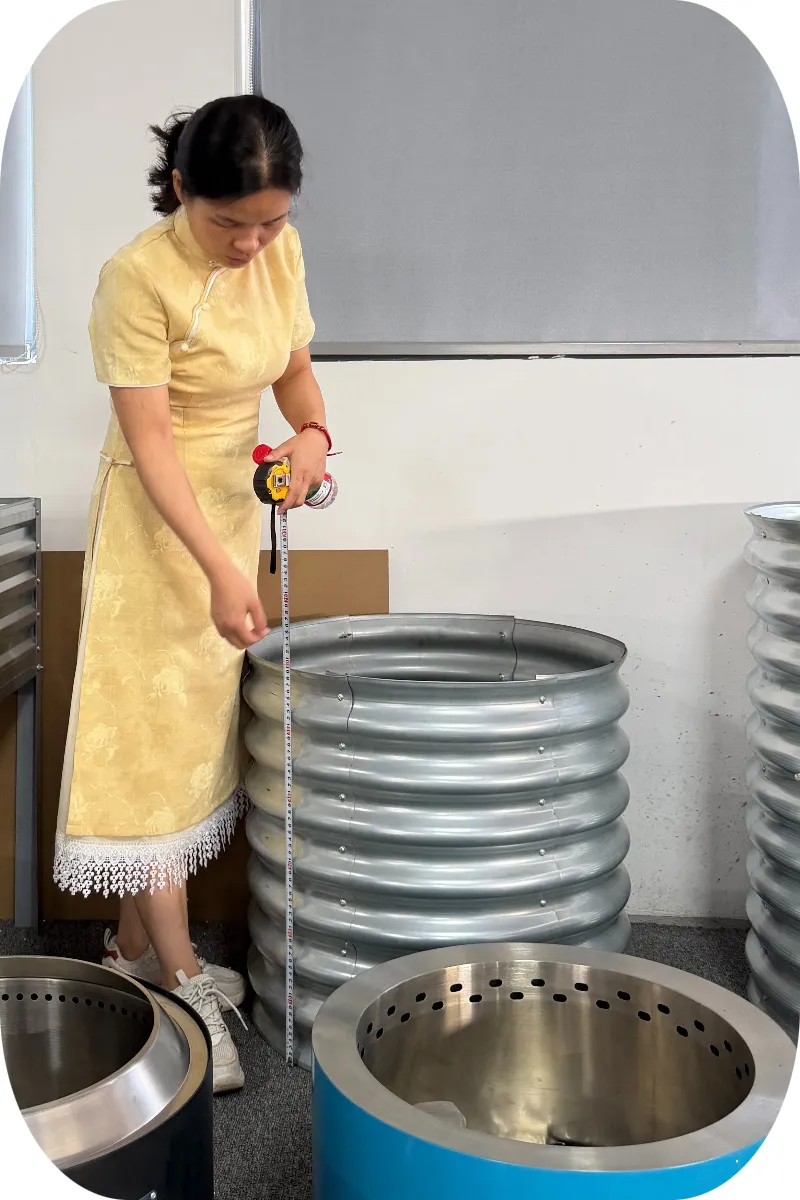
- Inspect connection points. Check whether the bolt-hole edges have received anti-corrosion treatment. Since punching cuts through coatings, untreated edges will rust first.
- Check drainage design. Does the bottom include drainage holes? Have those areas been protected against corrosion? Poor drainage accelerates rust formation.
Missing Parts and Assembly Difficulties: Problems Hidden in Packaging
Based on industry experience, missing accessories account for approximately 15–20% of negative reviews, while assembly difficulties account for around 10–15%.
Together, these issues represent 25–35% of complaints.
Both are closely related to packaging practices.
For a complete analysis of packaging and assembly, including inspection checklists and improvement recommendations, refer to the fifth article in this series.
Missing Accessories: A Small Problem with a Big Impact
An accessory pack for a metal raised garden bed may include:
- Bolts
- Nuts
- Washers
- Connector plates
- Screws
- Gloves
- Assembly instructions
If two bolts are missing, the customer may not be able to complete assembly. If assembly cannot be completed, returns become likely.
Factories rarely omit accessories intentionally. The real cause is counting errors during mass production.
Sample accessories are usually packed carefully by hand. Bulk production relies on fast-moving assembly lines, where omission rates are naturally higher.
Assembly Difficulties: Hole Alignment and Instructions Matter Most
Consumers who complain about difficult assembly are usually experiencing one of two problems.
Misaligned Holes
Hole-position tolerances are too large.
Consumers may need to force panels into position before bolts can be inserted.
High-quality punching equipment can maintain tolerances within 0.5 mm. Lower-end equipment may allow deviations of 1–2 mm.
Just a few millimeters of misalignment can make assembly frustrating or impossible.
Poor Instructions
Some manuals contain only simple line drawings without step-by-step guidance.
Others claim that "no tools are required" even though screwdrivers or wrenches are actually necessary.
How to Identify the Risk Early
- Assemble the sample yourself. Any difficulties you experience will likely affect your customers as well.
- Count the accessories. Compare actual quantities against the packing list.
- Ask about spare parts. Does the factory include an additional 10% of accessories? If not, the risk of shortages is higher.
- Review the instruction manual. Is there a QR code linking to an assembly video? Videos are often easier for consumers to follow than paper instructions.
Coating Issues: Fading, Scratches, and Color Variations
Coating-related complaints account for approximately 5–10% of negative reviews.
Although the percentage is lower, these problems have two important characteristics:
First, they directly affect product appearance and customer satisfaction.
Second, coating damage can eventually lead to corrosion, creating additional problems.
Fading: PE Coatings Begin to Fade After 2–3 Years
The coating type determines color durability.
- PE (Polyester): begins fading after 2–3 years and may chalk after 5–7 years.
- HDP (High-Durability Polyester): generally begins fading after 5–7 years.
- PVDF (Fluorocarbon): can maintain color stability for more than 10 years.
If customers notice significant color fading after only two years, the product is most likely using a PE coating.
Many quotations do not specify the coating type.
You need to ask.
If a factory cannot clearly explain the coating system, it is usually PE. Manufacturers using HDP or PVDF generally highlight these materials because they are important selling points.
Scratches: Friction During Transportation
For knock-down packaged raised beds, panels may rub against each other during transportation if no protective separators are used.
Vibration during shipping can create scratches.
For color-coated steel products, scratches not only affect appearance but also create potential corrosion points.
Color Differences: Variations Between Coil Batches
Factories purchase pre-painted steel coils from steel mills.
Different production batches may have slight color variations.
If one production run uses coils from different batches, visible color differences may appear between raised beds.
Customers placing several units side by side can easily notice these differences.
How to Identify the Risk Early
- Ask about the coating type. Is it PE, SMP, HDP, or PVDF? Require this information to be listed on the quotation.
- Inspect packaging. Are foam separators or PE protective films used between panels? Without them, scratching risks increase.
- Check color consistency. Do all panels in the sample have the same color tone? Minor differences in samples often become more noticeable in mass production.
Food-Safety Complaints: When Customers Ask, "Can I Grow Vegetables in It?" and You Cannot Answer
This is not a traditional quality issue, but it can directly lead to complaints and returns—especially when customers market the product as a vegetable planter or raised garden bed for edible crops.
Which Materials Are Safe for Growing Vegetables?
| Material | Food-Growing Safety | Notes |
|---|---|---|
| 304 Stainless Steel | ✅ Safest | No risk of heavy metal leaching |
| Aluminum Alloy | ✅ Safe | Aluminum does not leach into soil the same way zinc can |
| Galvanized Steel | ⚠️ Requires Liner | Zinc may leach in acidic soils; PE liners are recommended |
| Color-Coated Steel | ⚠️ Requires Liner | Coatings are not designed for food-contact applications and may degrade after 5–7 years |
| Weathering Steel | ❌ Not Recommended | Contains alloying elements such as copper and chromium (composition varies by grade); professional guidance generally advises against direct food cultivation |
If your customer advertises a galvanized steel or color-coated steel raised bed as "food-safe" without using a liner, complaints may arise once end users question its suitability.
How to Address the Issue Early
- Confirm the intended application. If vegetables are the primary use, your material options become much more limited. 304 stainless steel and aluminum alloy are the safest choices.
- If using galvanized steel or color-coated steel, recommend PE-film or HDPE-board liners and clearly state in product descriptions that liners are recommended when growing edible plants.
- Do not market weathering steel raised beds as vegetable planters. We have seen customers do this and later receive complaints from end users.
The Bottom Line on Quality Issues
After-sales problems with metal raised garden beds are not random.
Warping is usually caused by insufficient thickness.
Rust results from weak substrates or inadequate coatings.
Missing parts are often caused by poor packaging processes.
Missing parts and assembly difficulties are among the most common reasons for customer dissatisfaction. Our article on Metal Raised Garden Bed Packaging and Assembly Issues explores these risks in greater detail.
Coating problems originate from coating selection and inadequate transportation protection.
Food-safety complaints arise when material selection does not match customer expectations.
Most of these issues can be identified and controlled during the sourcing stage.
The key is knowing what to inspect.
If you are preparing an order for metal raised garden beds, send us your product specifications and sales channels.
Scarecrow can help you evaluate whether the thickness is sufficient, which substrate is appropriate, whether the coating system matches your market, whether the packaging standard is adequate, and whether food-safety labeling or recommendations are necessary.
Send Your Requirement, We Help You Check the Right Option
Suitable for garden centers, wholesalers, importers, and e-commerce sellers who want to compare products before bulk purchasing.
Written by
ScarecrowGarden
💡About Scarecrow Garden Supplier Co., Ltd.
Scarecrow Garden Supplier Co., Ltd. is a China-based sourcing and wholesale partner specializing in garden tools, landscaping equipment, and outdoor supplies for international wholesalers, distributors, contractors, and brands.
With hands-on experience rooted in real garden use scenarios, we focus on durable materials, functional design, and stable large-volume supply. Our product range covers pruning tools, watering systems, hand tools, outdoor hardware, and customized garden solutions to support both retail and professional landscaping markets.
Beyond products, we help our partners navigate supplier selection, quality control, compliance requirements, and long-term sourcing strategies in China. Through our blog, we share practical insights on product selection, material comparisons, industry trends, and cost-effective purchasing—helping global buyers build stronger, more competitive supply chains.