







Metal Raised Garden Beds in Outdoor Garden
For Small and Medium Wholesalers, the First Question Is Not “Which Metal Raised Garden Bed Has the Most Features?”
For a small or medium-sized garden wholesaler, the first question is not which metal raised garden bed has the most features, the widest range of materials, or the most color options.
The real questions are: Which styles can your customers understand quickly? Which sizes are unlikely to sit in your warehouse? Which colors are safe enough to test without creating slow-moving inventory?
Large wholesalers can place orders for 20 SKUs at a time, 500 units per SKU, and accept that a few may not sell well. Small and medium wholesalers cannot. Your budget is limited, your warehouse space is limited, and your time and manpower for handling after-sales issues are limited. A poor product choice does not simply mean low sales—it occupies warehouse space, ties up cash flow, and takes shelf space away from products that could be performing well.
This article provides a low-risk framework for selecting metal raised garden beds: what to choose first, what to avoid initially, and how to test the market.
This is the first article in our “Low-Risk Product Selection for Small Wholesalers” series. The second article focuses on which products to test first, while the third article explores sizing and color strategies in detail.
Step 1: Choose the Style — Customers Judge Appearance First, Material Second
When small and medium wholesalers select raised garden beds, the first question is not “Which material should I choose?” It is “Does this product look attractive and easy to sell?”
When consumers walk into a garden center or browse an e-commerce store, they see the appearance and functionality of the planter—whether it is elevated, mobile, or ground-level. They do not see the chemical composition of the steel. Your downstream customers think the same way: garden centers care about how the planter looks on display, while online sellers care about whether product photos attract clicks.
Material matters, but it is the second step. Style comes first.
Three Main Types of Metal Raised Garden Beds
| Style | Description | Why Consumers Buy It | Suitable For | Price Level |
|---|---|---|---|---|
| Ground Raised Bed | Sits directly on the ground without a bottom panel; soil contacts the ground | Lowest price, large planting capacity, ideal for vegetables | Budget-conscious consumers, large planting areas | Lowest |
| Elevated Raised Bed (With Legs/Base) | Raised on legs with a bottom panel | No bending, cleaner planting, suitable for patios and balconies | Seniors, balcony and patio gardeners, people who prefer not to bend | Mid to High |
| Raised Bed with Wheels | Elevated bed plus wheels | Easy to move, can follow sunlight, convenient for patio cleaning | Small-space gardeners, consumers who need flexibility | Highest |
These three styles serve completely different customer needs. Ground beds appeal to consumers looking for affordability and capacity. Elevated beds attract customers seeking convenience and comfort. Wheeled beds appeal to those who value mobility.
A customer rarely considers all three styles at the same time—their need is usually clear.
What Should Small and Medium Wholesalers Choose First?
Recommendation: Start with ground-raised beds.
The reason is not that ground beds are the “best” option—they are simply the safest.
Ground-raised beds are the foundation product of the market. They generate the highest search volume, require the least customer education, and have the lowest price barrier. Your downstream customers—garden centers and e-commerce sellers—also find them easier to accept.
Elevated and wheeled beds can generate higher margins, but they come with several considerations:
- Higher cost: Elevated beds require additional legs and bottom panels, while wheeled beds require wheel assemblies. The same-size planter may cost 30–50% more than a ground bed.
- Higher purchase resistance: Elevated and wheeled beds are significantly more expensive, so consumers need stronger reasons to buy.
- Larger shipping volume: Legs, bases, and wheel components occupy packaging space. A container can typically hold fewer elevated beds than ground beds.
These products are not bad choices—just not ideal for the first order. Once the ground-bed category performs well, consider adding elevated and wheeled options.
Once you have identified the right raised garden bed style, the next question is which specific planter box products should be included in your first trial order. Our guide on which metal planter boxes small and medium wholesalers should test first explains how to build a low-risk starter assortment.
Step 2: Choose the Material — Once the Style Is Fixed, Decide What It Should Be Made Of
Style determines what the planter looks like. Material determines how long it lasts.
Small and medium wholesalers do not need to master every material immediately. What matters is understanding which materials are most suitable for the styles you plan to sell.
Two Main Entry-Level Materials
| Material | Why It Is Suitable for Beginners | Important Considerations |
| Aluminum-Zinc-Magnesium Color-Coated Steel | Lower cost, multiple color options, the most common material in the market | Must choose the correct thickness (minimum 0.6mm) and coating system (at least SMP) |
| 304 Stainless Steel | Rust-resistant, food-safe for vegetables, recognized by premium customers | Costs 2–3 times more than color-coated steel |
Aluminum-zinc-magnesium color-coated steel is generally the safest starting point.
Raised garden beds are commonly available in 0.2 mm, 0.4 mm, and 0.6 mm thicknesses. However, 0.2mm and 0.4mm materials are often too thin, creating significant risks of wall bulging and base deformation. A 0.6mm steel base is generally considered the minimum practical thickness and is best suited for beds no taller than 43cm.
304 stainless steel is more suitable for premium markets. If your customers are upscale garden centers or landscape designers, its rust resistance and food-safe image can be compelling selling points. However, its cost is typically two to three times higher than that of color-coated steel.
What to Avoid Initially
- Aluminum planters: Lightweight, rust-resistant, and available with wood-grain finishes, but expensive and not universally accepted for vegetable gardening.
- Galvanized steel planters without color coating: The cheapest option, but the silver-gray appearance lacks visual appeal and some consumers question food safety.
- Corten steel planters: Unique rusted appearance and strong social media appeal, but not ideal for vegetable gardening, can stain surfaces, and require more customer education.
Step 3: Choose the Size — Start with Sizes That Are Less Likely to Become Dead Inventory
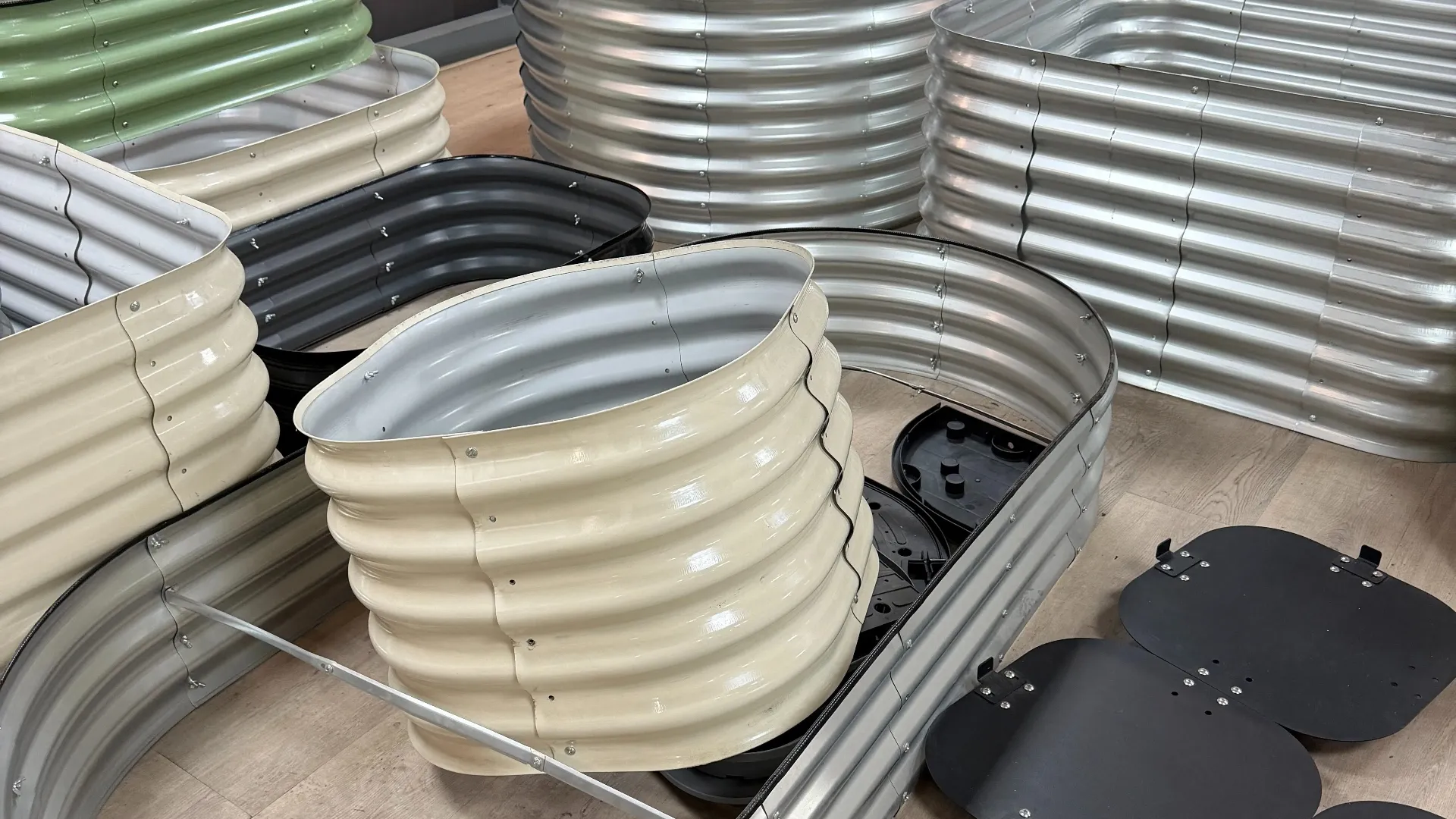
Metal planter dimensions are influenced by manufacturing limitations. Lengths and widths are typically produced in 30cm increments (60 cm, 90 cm, 120 cm, etc.), while heights usually follow three standards: 29 cm, 43 cm, and 60 cm.
For small and medium wholesalers, the key principle is simple:
Choose the two or three sizes your customers are most likely to buy. Do not try to cover every possible application.
| Height Category | Typical Size | Sales Potential | Recommended Thickness |
| Low (29cm) | 120 × 60 × 29cm | High, but lower margins | 0.6mm |
| Medium (43cm) | 120 × 60 × 43cm | Highest | 0.6mm with reinforcement |
| Tall (60cm) | 120 × 60 × 60cm | Moderate | Minimum 0.8mm |
Recommendation: Start with the medium-height version.
The 120 × 60 × 43cm size is one of the most common raised garden bed dimensions globally. Customers understand it easily, and demand tends to be strong.
Use low-height beds as entry-level products and add taller options only after the medium-height range proves successful.
Raised beds taller than 60cm are generally not recommended because they often require machine adjustments, custom steel coil sourcing, and significantly greater structural strength.
Size selection does not only affect shipping and storage costs. It also determines how quickly inventory moves. If you are unsure which planter box sizes create the lowest inventory risk, see our detailed guide on metal planter box sizes and colors for slow-moving inventory control.
Step 4: Choose the Color — Start with Safe Colors and Expand Gradually
Color selection requires strategy.
Too few colors may make your offering look limited. Too many colors can create slow-moving inventory.
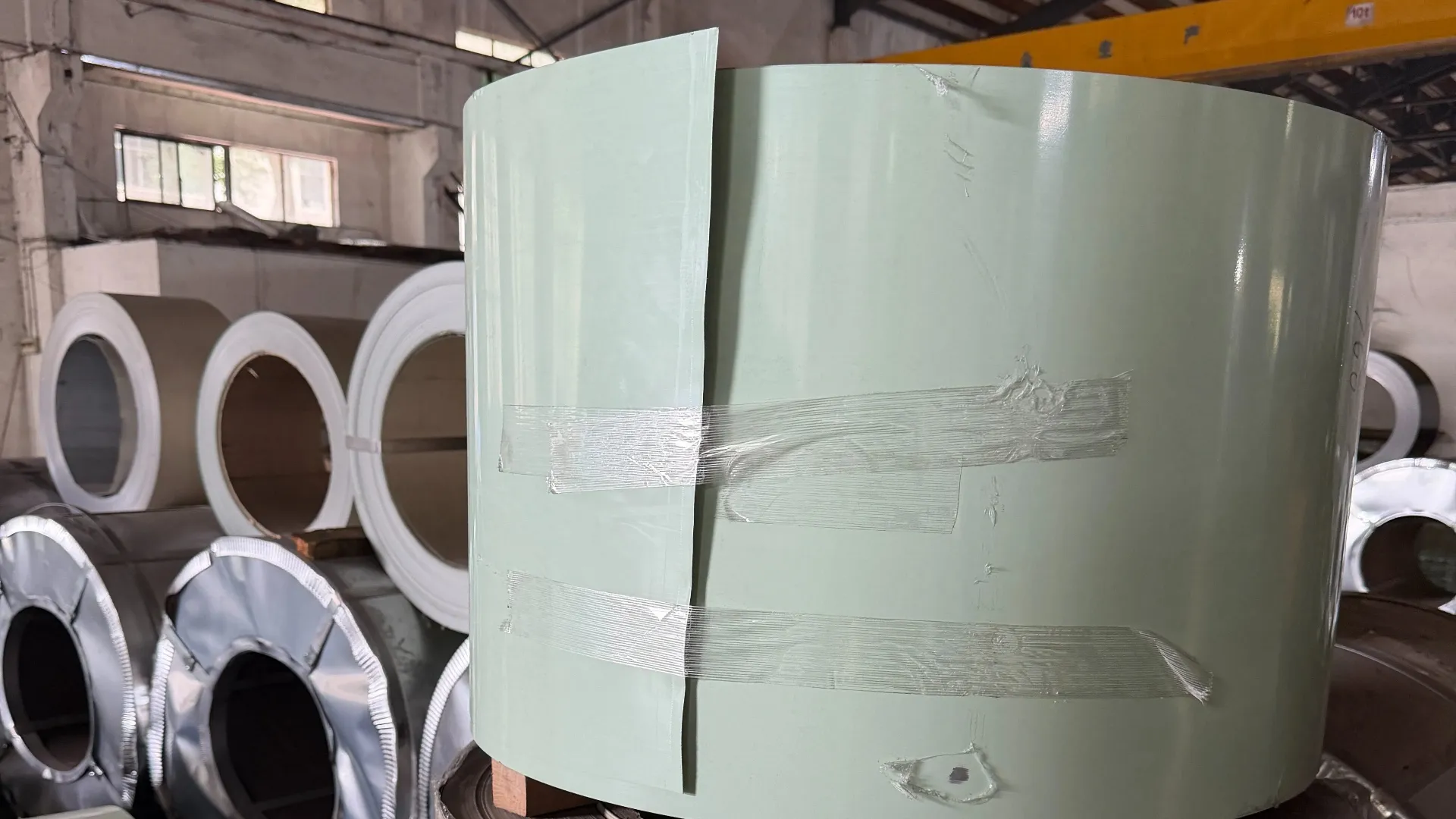
Color-coated steel planters are not painted after production—the color comes from the steel coil itself. Different factories source different coil colors. If you want broader color options, you may need sourcing support from multiple suppliers. Scarecrow can help consolidate these options.
Safe Color Strategy
| Color | Risk Level | Why It Works | Suitable Markets |
| Black | Safest | Versatile, hides dirt, strong outdoor appeal, high search volume | All markets |
| Dark Green | Safe | Blends naturally with garden environments | Europe, North America, Australia, New Zealand |
| Cream / Warm White | Safe | Clean appearance, modern style, strong contrast with plants | Premium and modern markets |
| Warm Gray / Graphite | Relatively Safe | Contemporary and premium appearance | Premium markets |
Avoid initially:
- Bright colors such as red, blue, and yellow
- Pure white
- Wood-grain finishes
Start with no more than three colors and expand only after confirming market demand.
Many wholesalers lose money not because they chose the wrong product, but because they launched too many color options at once. We explain a safer approach in our article about metal raised garden bed sizes and colors inventory strategy.
Step 5: Choose the Thickness — Not “The Thicker the Better,” but “Thick Enough”
Many small wholesalers make one of two mistakes:
- Choosing the thinnest option because it is the cheapest.
- Choosing the thickest option because it feels safer.
Neither approach is ideal.
Thickness Recommendations for Small and Medium Wholesalers
| Bed Height | Recommended Thickness | Cost Level | Risk Level |
| 29cm | 0.6mm | Lowest | Low |
| 43cm | 0.6mm with reinforcement | Medium-Low | Medium |
| 60cm | Minimum 0.8mm | Medium | Lower risk than using 0.6mm |
Important Reminder: Coatings typically add approximately 0.03–0.04mm to total thickness.
Some suppliers quote “0.6mm including coating,” meaning the actual steel substrate may only be around 0.56mm. Structural strength comes from the steel substrate—not the coating.
Always confirm whether the thickness specification refers to the steel substrate or the total coated thickness.
Step 6: Control After-Sales Risk — Small Wholesalers Have Less Room for Error
Large buyers often have dedicated teams handling complaints and returns.
Small wholesalers usually do not.
One return case may require your direct involvement—time that could otherwise be spent growing the business.
Common raised garden bed issues follow predictable patterns:
- Excessive deformation due to thin materials: 35–40%
- Rust-related complaints: 25–30%
- Missing hardware: 15–20%
- Assembly difficulties: 10–15%
- Coating defects: 5–10%
More than 80% of negative reviews can be prevented before placing an order.
After-Sales Minimum Standards
- Do not sell 0.4mm raised beds to vegetable gardening customers.
- Do not sell products without assembly instructions.
- Do not sell products without spare hardware.
Confirm the hardware count against the packing list and consider a small spare hardware allowance based on the actual model and supplier packing method. Do not publish a fixed percentage unless it is an agreed order specification.
Low-Risk Product Selection Checklist for the First Order
| Category | Recommended for First Order | Avoid Initially |
| Style | Ground-raised garden beds | Launching all three styles at once |
| Material | 0.6mm Zn-Al-Mg steel with 304 stainless steel hardware | Aluminum, bare galvanized steel, Corten steel |
| Size | Select from 8", 11", 17" and 32" based on use case and actual model availability | Heights above 60cm, unusual shapes |
| Color | Green, Cream and Dark Gray as core public colors; Light Green may be added when needed | Bright colors, pure white, wood-grain finishes |
| Thickness | 0.6mm for low beds; 0.6mm reinforced for medium beds | 0.2mm and 0.4mm |
| Target Customers | Define your customer group before selecting products | Trying to serve every customer segment immediately |
| Quality Control | Assemble samples, count hardware, review instructions | Placing bulk orders without inspection |
This is not necessarily the optimal solution—optimal depends on your market, customer base, and budget.
But it is one of the least risky approaches.
Start with a manageable first order, validate demand, and then expand.
If you are considering your first metal raised garden bed order, send us your market, target customer type, and budget. Scarecrow can help you create a product selection plan tailored to your actual situation—not a full catalog recommendation, but a practical starting point for testing the market.
Send Your Requirement, We Help You Check the Right Option
Suitable for garden centers, wholesalers, importers, and e-commerce sellers who want to compare products before bulk purchasing.
Written by
ScarecrowGarden
💡About Scarecrow Garden Supplier Co., Ltd.
Scarecrow Garden Supplier Co., Ltd. is a China-based sourcing and wholesale partner specializing in garden tools, landscaping equipment, and outdoor supplies for international wholesalers, distributors, contractors, and brands.
With hands-on experience rooted in real garden use scenarios, we focus on durable materials, functional design, and stable large-volume supply. Our product range covers pruning tools, watering systems, hand tools, outdoor hardware, and customized garden solutions to support both retail and professional landscaping markets.
Beyond products, we help our partners navigate supplier selection, quality control, compliance requirements, and long-term sourcing strategies in China. Through our blog, we share practical insights on product selection, material comparisons, industry trends, and cost-effective purchasing—helping global buyers build stronger, more competitive supply chains.