







Metal raised garden beds in different shapes and modular configurations
More Color Choices Are an Advantage—But Also a Risk for Small and Medium Wholesalers
Having more color options is a good thing—your customers like having choices. But every color is also a separate inventory item. If you choose six colors and four of them do not sell, you are left with four colors of raised garden beds sitting in your warehouse.
The same applies to sizes. Factories can produce many different sizes, but not every size has market demand. An 180 cm-long raised garden bed may look impressive, but it comes with higher shipping costs, takes up more warehouse space, and requires a bigger purchasing decision from consumers. If it sits in your warehouse for six months, what it occupies is not just space—it occupies your cash flow and your confidence.
This article explains two things in detail: how to choose sizes without creating excess inventory, and how to select colors without making costly mistakes.
This is the third article in the “Low-Risk Product Selection for Small and Medium Wholesalers” series. For the overall product selection framework, refer to the first article on low-risk sourcing strategies. For recommendations on which products to test first, refer to the second article on initial product testing.
Inventory planning becomes much easier when the right product structure is selected from the beginning. Our low-risk raised garden bed selection guide explains how wholesalers should choose styles, materials, thicknesses, and starter configurations.
Size Selection: First Understand the Basic Rules Behind Raised Garden Bed Dimensions
The dimensions of metal raised garden beds are not chosen randomly. There are two rules many buyers do not know.
Rule 1: Length and Width Must Be Multiples of 30
Common sizes include 60 cm, 90 cm, 120 cm, 150 cm, and 180 cm. This is determined by steel coil widths and factory machinery.
The standard steel coil width is approximately 67cm. Factories use 67cm coils to produce 60cm-wide bed panels. When 67cm is cut into 60cm panels, the remaining 7cm becomes scrap material, which is considered normal waste.
However, if you want a 70cm-wide raised bed, a 67cm steel coil cannot produce it. A narrower coil cannot create a wider panel. You would need a wider steel coil, and wider coils are not standard specifications. They usually require full-coil customization with high MOQs.
Rule 2: Only Three Standard Height Options Exist
The standard heights are:
- 29cm
- 43cm
- 60cm
These heights correspond to existing factory molds and production line configurations.
Producing other heights requires adjusting press brake tooling and punching positions. This means production downtime, machine setup, and material waste. The factory will pass these additional costs on to you.
Once you understand these two rules, you will know which dimensions are considered standard (lower cost and faster lead times) and which are customized (higher cost, higher MOQ, and longer lead times).
Standard Sizes vs. Custom Sizes
| Size Type | Example | Cost | Lead Time | Recommendation |
|---|---|---|---|---|
| Standard Sizes | 120×60×43cm, 90×60×29cm, 60×60×60cm | Low | Fast (around 25 days) | ✅ First-choice for initial orders |
| Custom Widths (non-multiples of 30) | 100×70cm, 140×80cm | High (custom steel coils required) | Slow | ⚠️ Only after stable demand is confirmed |
| Custom Heights (not 29/43/60cm) | 120×60×80cm | High (machine adjustment required) | Slow | ⚠️ Generally not recommended |
Market Performance of the Three Standard Heights
| Height | Typical Size | Consumer Profile | Price Range | Sales Potential |
| Low Profile (29cm) | 120×60×29cm | Balconies, small spaces, flowers | Lowest | High (but lower margins) |
| Medium Height (43cm) | 120×60×43cm | Vegetable gardening, mainstream buyers | Mid-range | Highest |
| Tall Height (60cm) | 120×60×60cm | Buyers who prefer less bending, seniors | Highest | Moderate (higher purchase barrier) |
Recommendation: Start with the medium-height model.
The 120×60×43cm size is the most searched raised garden bed size in the global market. Low-profile beds can serve as entry-level products, while tall beds can be added after the medium-height version proves successful.
Raised Garden Beds Taller Than 60cm: Why Small and Medium Wholesalers Should Avoid Them
Some consumers ask, “Do you have an 80cm-high raised garden bed? I do not want to bend over.”
This sounds like a valid request, but for small and medium wholesalers, raised beds taller than 60cm are generally not recommended.
The reason is not lack of demand—it is manufacturing complexity.
First: Machine Adjustments
Raised garden bed bending and punching equipment is configured around the three standard heights: 29 cm, 43 cm, and 60 cm.
Producing anything above 60 cm requires changing tooling and punching positions. This is not simply changing a parameter—it often means replacing tooling.
Tool changes involve production downtime, setup costs, and scrap generation. The factory will transfer those costs to the buyer.
Second: Full-Coil Steel Purchases
A 60cm-high raised garden bed already uses most of the available width of standard steel coils.
Greater heights require wider steel coils, which are generally not standard products and often require full-coil purchases.
The MOQ for a full steel coil is usually measured in tens of tons.
You probably do not need tens of tons of steel just to produce an 80cm-high raised garden bed.
Third: Significantly Higher Side Pressure
When filled with soil, side pressure increases with bed height.
A 60cm-high raised bed already experiences substantial side pressure, making 0.8mm steel the practical starting point.
At 80cm, pressure increases significantly. In many cases, 0.8mm steel may no longer be sufficient, and 1.0mm or thicker steel becomes necessary.
The higher material cost may exceed what consumers are willing to pay.
Therefore, raised beds taller than 60cm are not impossible to produce—they are simply not suitable for first-time orders from small and medium wholesalers.
If your customers genuinely require them, consider custom solutions after your standard products have proven successful.
Why You Should Not Launch Too Many Sizes Initially
Every additional size creates another SKU.
Every additional SKU creates additional inventory.
Small and medium wholesalers have limited warehouse space and limited capital.
Three sizes that sell well are better than six sizes that sell halfway.
For example:
If you have six SKUs and only three sell well, then 50% of your inventory is slow-moving.
Those products occupy warehouse space, tie up cash, and reduce your ability to restock products that are actually selling.
If all three SKUs sell consistently, inventory turnover improves and capital efficiency increases.
If you are still deciding which raised bed products deserve a place in your first order, read our guide on which metal planter boxes wholesalers should test first.
Color Selection: Safe Color Strategy + Multi-Factory Sourcing
How Colors Are Created—and Why Your Choices Depend on Steel Coil Inventory
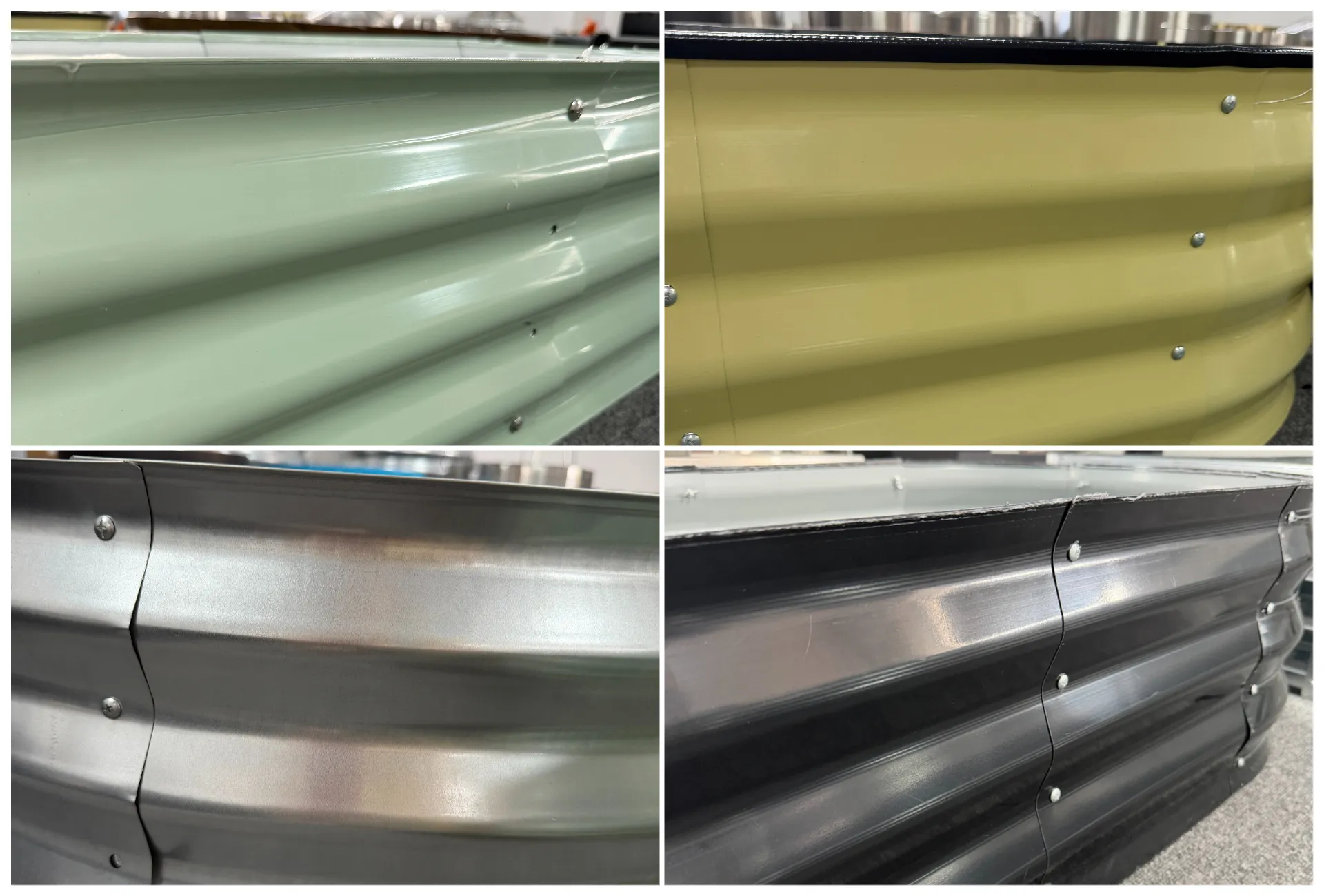
Colors on pre-painted steel raised garden beds are not applied after manufacturing.
The color already exists on the steel coil before production begins.
Each color corresponds to a specific steel coil.
Custom colors require custom steel coil orders, which typically involve high MOQs.
An important detail:
Different factories stock different colored coils.
Factory A’s “dark green” may not perfectly match Factory B’s “dark green.”
Factory A may currently stock black and dark green coils, while Factory B may stock ivory and warm gray coils.
This means:
- If you buy from one factory, your color options are limited by that factory’s coil inventory.
- If you buy from multiple factories, you gain more color options.
- However, dealing with multiple factories means multiple quotations, inspections, and logistics arrangements.
This is where Scarecrow can help.
We consolidate sourcing from multiple factories while managing inspection and shipment coordination through a single contact point.
Safe Colors: Start With These
| Color | Safety Rating | Why It Is Safe | Suitable Markets |
| Black | ⭐⭐⭐ | Versatile, hides dirt, strong outdoor appearance, high search volume | All markets |
| Dark Green | ⭐⭐⭐ | Blends naturally with garden environments, vegetable-growing appeal | Europe, North America, Australia, New Zealand |
| Ivory / Warm White | ⭐⭐⭐ | Clean appearance, modern style, strong contrast with plants | Premium markets, modern designs |
| Warm Gray / Graphite | ⭐⭐ | Modern appearance, premium feel, adaptable to most settings | Premium markets |
Black is the safest choice.
Across most e-commerce platforms, black raised garden beds generate higher search volume and sales than other colors.
Consumers purchase raised beds to grow plants, not to make the raised bed itself the focal point.
Black allows plants to remain the visual focus and blends well into most outdoor environments.
Ivory may surprise some buyers.
Many people assume white is unsuitable outdoors because it shows dirt.
However, ivory differs from pure white.
Its warmer tone hides dust and rain marks better while maintaining a clean and bright appearance.
In many premium garden centers, ivory raised beds display better than darker colors because they create stronger visual contrast with plants and flowers.
Colors That Require Caution
| Color | Risk Level | Reason |
| Pure White | Medium | Shows dirt most easily. After several months outdoors, dust and rain marks become highly visible. Ivory is generally safer. |
| Bright Colors (Red, Blue, Yellow) | High | Attractive but niche. Slow sales can quickly become dead inventory. |
| Wood Grain | Medium-High | Requires wood-grain transfer printing, increasing costs. Consumer acceptance varies by region. |
| Copper / Antique Copper | Medium | Has demand but remains niche. Not as safe as black. |
The Hidden Cost of Mixed-Color Packaging
If your downstream customers (such as e-commerce sellers) request mixed-color packs—for example, ten raised garden beds in different colors—additional sorting and repackaging are required.
Factory production lines normally produce one color at a time.
Mixed-color packaging means different colored units must be regrouped in the warehouse.
This secondary packaging process either results in additional factory charges or requires a middle-stage warehouse service, such as Scarecrow’s consolidation warehouse.
For first orders, single-color packaging is strongly recommended.
Consider mixed-color packs only after your initial inventory has proven successful.
Size and Color Combination Strategies
When combining size and color planning, small and medium wholesalers can structure their first product lineup as follows:
Option A: Minimal Startup (3 SKUs)
| SKU | Size | Color | Positioning |
| 1 | 120×60×43cm | Black | Main product |
| 2 | 120×60×43cm | Dark Green | Alternative option |
| 3 | 120×60×43cm | Ivory | Test light-color demand |
Three SKUs, one size, three colors.
This is the simplest and lowest-risk approach.
Monitor which colors sell best and restock only the successful ones.
Ivory acts as a low-risk test of demand for lighter-colored raised beds.
Option B: Cover Two Price Segments (4 SKUs)
| SKU | Size | Color | Positioning |
| 1 | 120×60×43cm | Black | Main product |
| 2 | 120×60×43cm | Dark Green | Alternative option |
| 3 | 120×60×43cm | Ivory | Test light-color demand |
| 4 | 120×60×29cm | Black | Entry-level model |
Four SKUs, two sizes, three colors.
The low-profile model serves as an entry-level product with a lower purchasing barrier.
The medium-height model serves as the main profit-generating product.
Option C: Cover All Three Height Segments (5 SKUs)
| SKU | Size | Color | Positioning |
| 1 | 120×60×43cm | Black | Main product |
| 2 | 120×60×43cm | Dark Green | Alternative option |
| 3 | 120×60×43cm | Ivory | Test light-color demand |
| 4 | 120×60×29cm | Black | Entry-level model |
| 5 | 120×60×60cm | Black | Premium model (higher margin) |
Five SKUs, three heights, three colors.
Tall models generally offer higher margins but also require greater customer commitment.
They are most suitable for wholesalers who already have access to premium customer segments.
Scarecrow’s current standard raised garden bed range uses 0.6mm Zn-Al-Mg steel. Do not create separate thickness rules by height unless the specific model drawing or supplier specification requires it.
Recommendation:
Start with Option A or Option B.
Expand only after proven sales performance.
Do not begin with Option C unless you already have clear demand from premium customers.
Three Principles for Avoiding Slow-Moving Inventory
1. Fewer SKUs Are Better Than More
Three or four successful SKUs are better than six SKUs that sell only halfway.
Slow-moving inventory does more than occupy space—it reduces confidence in the product line and makes buyers hesitant to reorder successful products.
2. Add Colors Gradually
Start with two or three safe colors.
Expand only after successful sales.
Multi-factory sourcing can broaden color options later, but there is no need to do everything at the beginning.
3. Start With Medium Height and Expand Later
The 120×60×43cm size is the safest starting point.
Low-profile models can serve as entry-level products.
Tall models can be introduced after the medium-height version proves successful.
Raised garden beds taller than 60cm are generally not recommended because machine adjustments and custom steel coil requirements make them unsuitable for small and medium wholesalers.
Inventory control is only one part of a successful sourcing strategy. For a complete framework covering product selection, material choices, size planning, and purchasing risk reduction, see our low-risk metal raised garden bed sourcing plan.
Not sure which sizes and colors fit your market?
Tell us about your sales channels and customer types.
Scarecrow can help you plan your first SKU combination—not by recommending an entire catalog, but by identifying the safest starting point that minimizes inventory risk.
Simplify Your Garden Product Sourcing from China
We help you combine multiple product categories into one sourcing flow with supplier matching, sample verification, and consolidated shipping.
Send Your Requirement, We Help You Check the Right Option
Suitable for garden centers, wholesalers, importers, and e-commerce sellers who want to compare products before bulk purchasing.
Written by
ScarecrowGarden
💡About Scarecrow Garden Supplier Co., Ltd.
Scarecrow Garden Supplier Co., Ltd. is a China-based sourcing and wholesale partner specializing in garden tools, landscaping equipment, and outdoor supplies for international wholesalers, distributors, contractors, and brands.
With hands-on experience rooted in real garden use scenarios, we focus on durable materials, functional design, and stable large-volume supply. Our product range covers pruning tools, watering systems, hand tools, outdoor hardware, and customized garden solutions to support both retail and professional landscaping markets.
Beyond products, we help our partners navigate supplier selection, quality control, compliance requirements, and long-term sourcing strategies in China. Through our blog, we share practical insights on product selection, material comparisons, industry trends, and cost-effective purchasing—helping global buyers build stronger, more competitive supply chains.