







Updated 4 months ago
Metal Planter Box After-Sales Problems: The Pitfalls Small and Medium Wholesalers Fear Most

ScarecrowGarden
💡About Scarecrow Garden Supplier Co., Ltd.
Scarecrow Garden Supplier Co., Ltd. is a China-based sourcing and wholesale partner specializing in garden tools, landscaping equipment, and outdoor supplies for international wholesalers, distributors, contractors, and brands.
With hands-on experience rooted in real garden use scenarios, we focus on durable materials, functional design, and stable large-volume supply. Our product range covers pruning tools, watering systems, hand tools, outdoor hardware, and customized garden solutions to support both retail and professional landscaping markets.
Beyond products, we help our partners navigate supplier selection, quality control, compliance requirements, and long-term sourcing strategies in China. Through our blog, we share practical insights on product selection, material comparisons, industry trends, and cost-effective purchasing—helping global buyers build stronger, more competitive supply chains.

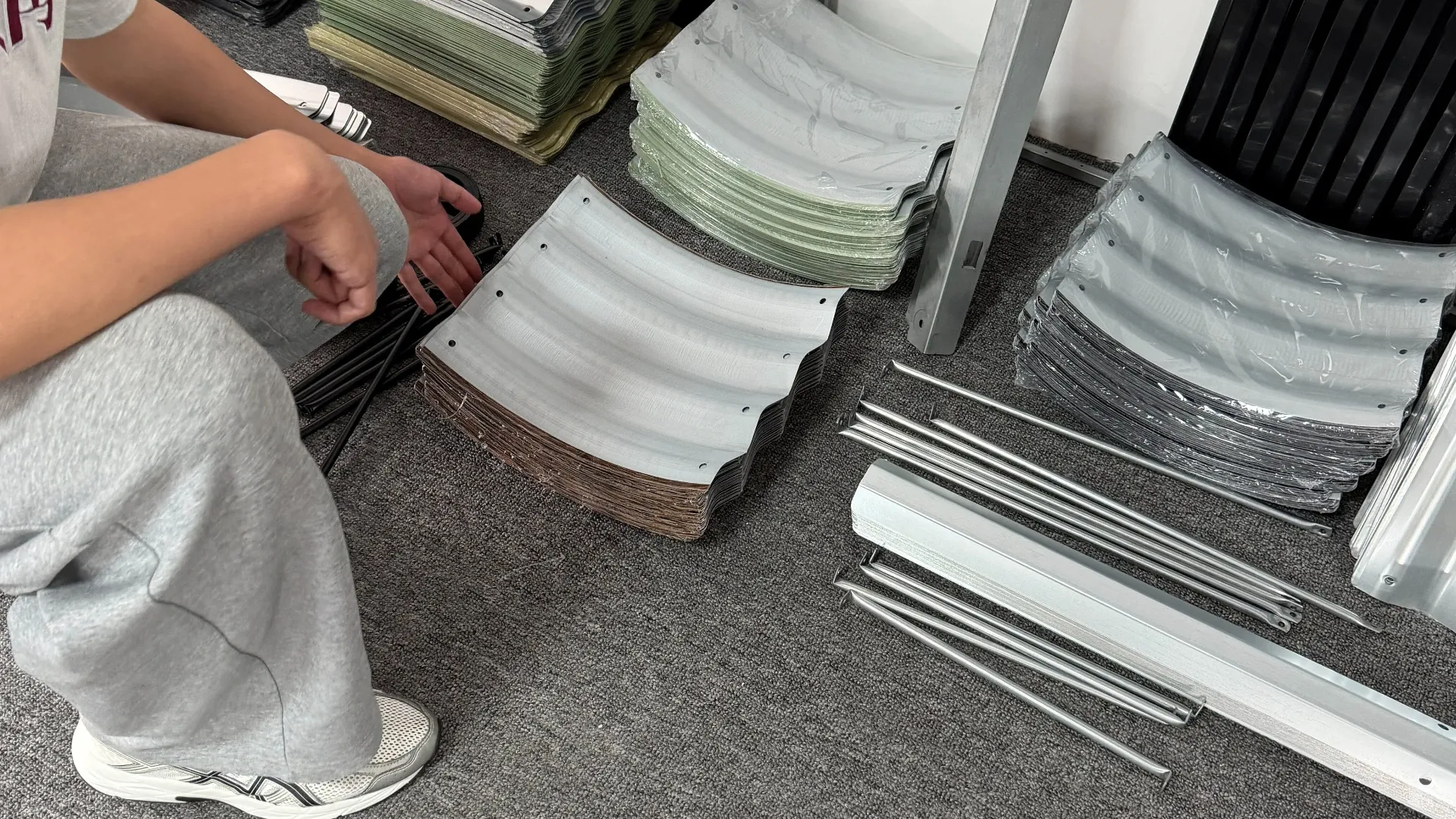
Metal raised garden bed hardware, rounded edge treatment and packaging details
Large Buyers Have Teams to Handle Complaints. You Don’t.
When a large wholesaler receives 10 returns, its after-sales team handles them, and the rest of the business keeps running.
For Scarecrow’s current standard range, the main checks are 0.6mm Zn-Al-Mg panel specification, 304 stainless steel hardware, rounded edge treatment, complete parts, clear instructions and reinforced packaging.
When a small or medium wholesaler receives 10 returns, you handle them yourself — and every return takes time away from serving other customers.
Many after-sales problems begin long before the product reaches the customer. They often originate during product selection. Our low-risk metal raised garden bed selection plan for small and medium garden wholesalers explains how to reduce these risks from the beginning.
What is worse: some after-sales problems are not really “product problems.” They are issues that could have been avoided before placing the order.
This article does not repeat the technical analysis of quality problems. For that, see Series One Article 3 on quality issues and Article 5 on packaging and assembly problems. This article ranks after-sales problems from the perspective of small and medium wholesalers: which problems hurt you the most, and which ones you can control before placing an order.
This is the fifth article in the “Low-Risk Product Selection Series for Small and Medium Garden Wholesalers.” For how add-on products can increase order value while reducing returns, see the fourth article on add-on sales. For how Scarecrow Garden Supplier helps control risks before shipment, see the sixth article on Scarecrow’s service.
Five Major After-Sales Problems, Ranked by Damage to Small and Medium Wholesalers
1. Too Thin / Deformation — The Most Damaging, but Fully Controllable
How consumers complain:
“The side walls bulged after I filled it with soil.”
“The bottom collapsed.”
“The planter box became deformed.”
Why it happens:
The material is too thin. The planter box market mainly uses 0.2 mm, 0.4 mm, and 0.6 mm metal sheets. In real use, 0.2 mm and 0.4 mm will almost certainly deform. Once filled with soil, the side pressure is too high for thin steel sheets to withstand. 0.6 mm is an entry-level thickness, but for a medium-height planter box around 43 cm high, 0.6 mm still needs reinforcement.
Damage to small and medium wholesalers:
Returns, negative reviews, and customer loss. Consumers will not say, “This planter box is too thin at 0.4 mm.” They will say, “This planter box is poor quality.” That negative review affects your whole product line, not just one SKU.
What you can do before placing an order:
- Do not sell planter boxes below 0.4 mm to vegetable-growing customers. No matter whether the factory says “it is enough,” deformation after soil filling is a physical rule, not a matter of luck.
- A 0.6 mm medium-height planter box around 43 cm high must be reinforced with bottom supports or ribs.
- A 0.6 mm tall planter box around 60 cm high carries an even higher risk. Use at least 0.8 mm.
- Confirm that the thickness refers to the steel substrate thickness, not the total thickness including coating. The coating adds around 0.03–0.04 mm but does not provide structural strength.
2. Missing Accessories — Not the Most Damaging, but the Most Frequent
How consumers complain:
“Two screws are missing, so I cannot assemble it.”
“There is no instruction manual.”
“The accessory bag is empty.”
Why it happens:
Assembly line counting errors. During the sample stage, workers count accessories carefully. During mass production, accessories are placed quickly on the production line. Repeated manual placement over a long period makes missing parts much more likely than in samples.
Damage to small and medium wholesalers:
If two bolts are missing, the consumer cannot assemble the product. If they cannot assemble it, it becomes a return. The return rate may not be high, but the frequency is high — it can happen in every batch of mass production.
What you can do before placing an order:
- Ask the factory to include 10% extra accessories. The cost is almost negligible.
- Require accessories to be packed separately. Loose parts inside the carton can easily slide into corners.
- During inspection, randomly check accessory quantities.
Accessories can increase average order value when used correctly, but they must be managed carefully. Our article on how metal raised garden beds help garden retailers increase average order value explains how retailers bundle accessories without overwhelming customers.
3. Rust — Highly Damaging, but It Takes Time to Appear
How consumers complain:
“It started rusting after half a year.”
“There is red rust around the bolt holes.”
“The bottom rusted through.”
Why it happens:
The wrong substrate was selected. Ordinary galvanized steel has limited rust resistance, with a salt spray test of around 500 hours. In humid outdoor environments, rust may begin to appear within six months to one year. Bolt hole edges, where the coating is cut during punching, and the bottom area, which remains in long-term contact with wet soil, are the first places where rust usually appears.
Damage to small and medium wholesalers:
Rust complaints usually appear after consumers have used the product for 3–6 months. This means the mass goods have already been shipped, and you may already be selling the second batch. The usual solutions are replacement or refund, but by that time, you may no longer have much leverage with the factory.
What you can do before placing an order:
- Choose zinc-aluminum-magnesium-coated steel. Its salt spray test exceeds 9,000 hours, far higher than ordinary galvanized steel.
- Zinc-aluminum-magnesium coated steel has a self-healing effect on cut edges, so punched edges will not be the first place to rust.
- If the budget allows, 304 stainless steel is the top-level option for rust prevention.
4. Difficult Assembly — Common in Reviews but Easy to Find in Advance
How consumers complain:
“The holes do not line up. It took me all afternoon to assemble.”
“The panel edges are too sharp and cut my hands.”
“The instruction manual is impossible to understand.”
Why it happens:
Punching tolerance is too large, panel edges are not deburred, and the instruction manual only uses simple line drawings. Small factories may have punching tolerances of 1–2 mm. If the holes shift by a few millimeters, consumers may not be able to assemble the product.
Damage to small and medium wholesalers:
Reviews about difficult assembly are highly damaging because consumers usually interpret the problem as “poor product quality,” not “I am bad at assembly.” A review saying “it cannot be assembled” has a much greater impact on conversion than a review saying “the color is slightly different.”
What you can do before placing an order:
- Assemble the sample yourself. If you encounter problems during assembly, your customers will encounter them too.
- Check whether the panel edges have burrs. Touch them by hand.
- Ask the factory to provide a QR code linking to an assembly video.
- Require cotton gloves as a standard accessory.
5. Coating Problems — Appearance Complaints That Affect Repeat Purchases
How consumers complain:
“The color is different from the picture.”
“There are scratches on the surface.”
“There is a smell.”
Why it happens:
Color differences may come from different factories or different batches of steel coils. Scratches may be caused by friction between panels during transportation. Odor may come from volatile substances released by PE topcoat under high temperatures. The smell usually disappears after a few days of ventilation, but consumers do not know that.
Damage to small and medium wholesalers:
Coating problems usually do not cause returns because the product function is not affected. However, they influence how consumers judge product quality and reduce repeat purchases.
What you can do before placing an order:
- Require buffer layers between panels, such as foam or PE film, to prevent transportation scratches.
- Confirm the topcoat type. PE topcoat may have a slight smell, while SMP, HDP, and PVDF are basically odorless.
- Confirm in advance that there may be batch color differences between samples and mass production, and communicate this to downstream customers beforehand.
Which After-Sales Problems Can Be Controlled in Advance?
| After-Sales Problem | Can It Be Controlled in Advance? | How to Control It | Does It Require Professional Knowledge? |
|---|---|---|---|
| Too thin / deformation | ✅ Fully controllable | Choose the right thickness and reinforce medium-height planter boxes | No |
| Missing accessories | ✅ Fully controllable | Add 10% extra accessories, pack accessories separately, and count them during inspection | No |
| Rust | ✅ Controllable | Choose zinc-aluminum-magnesium-coated steel or stainless steel | Requires understanding substrate differences |
| Difficult assembly | ✅ Controllable | Assemble the sample yourself and check tolerance and burrs | No |
| Coating problems | ⚠️ Partly controllable | Choose the right topcoat and add buffer layers | Requires understanding topcoat differences |
More than 80% of after-sales problems can be controlled before placing the order. You do not need testing equipment, and you do not need deep technical knowledge. What you need is someone to take a look at the factory side for you.
The After-Sales Bottom Line for Small and Medium Wholesalers
- Do not sell planter boxes below 0.4 mm. Returns are highly likely, not a rare accident.
- Do not sell planter boxes without extra accessories. A 10% accessory surplus costs almost nothing but can cover assembly line errors.
- Do not sell planter boxes without assembly instructions. If consumers cannot assemble the product, it becomes a return.
- Do not sell bare galvanized steel planter boxes to vegetable-growing customers. Rust complaints after half a year are highly likely.
- Do not place a mass production order without inspection. There may be differences between samples and mass goods.
You do not have to visit the factory yourself to confirm these bottom lines — but someone needs to confirm them for you.
Worried about after-sales problems with metal planter boxes? Send us your product list and factory quotation. Scarecrow helps you check each item before placing the order — thickness, accessories, packaging, and assembly experience — so you can confirm everything before mass production.
Many of these issues can be identified before shipment through sample comparison, packaging inspection, and accessory verification. See how Scarecrow helps small and medium-sized wholesalers build a metal planter box product line from China.
Send Your Requirement, We Help You Check the Right Option
Suitable for garden centers, wholesalers, importers, and e-commerce sellers who want to compare products before bulk purchasing.
Written by
ScarecrowGarden
💡About Scarecrow Garden Supplier Co., Ltd.
Scarecrow Garden Supplier Co., Ltd. is a China-based sourcing and wholesale partner specializing in garden tools, landscaping equipment, and outdoor supplies for international wholesalers, distributors, contractors, and brands.
With hands-on experience rooted in real garden use scenarios, we focus on durable materials, functional design, and stable large-volume supply. Our product range covers pruning tools, watering systems, hand tools, outdoor hardware, and customized garden solutions to support both retail and professional landscaping markets.
Beyond products, we help our partners navigate supplier selection, quality control, compliance requirements, and long-term sourcing strategies in China. Through our blog, we share practical insights on product selection, material comparisons, industry trends, and cost-effective purchasing—helping global buyers build stronger, more competitive supply chains.