








Updated 13 hours ago
Garden Trowel Size and Blade Shape: Narrow, Wide and Transplanting Designs Compared
SCARECROW GARDEN SUPPLIER
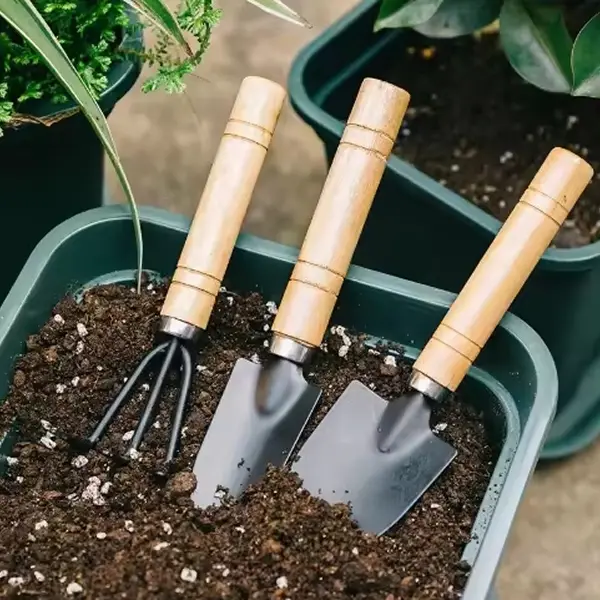
When a buyer says “garden trowel,” the image that comes to mind is a standard digging tool — a blade, a handle, a point. But “trowel” covers a range of blade shapes and sizes that serve fundamentally different purposes. A narrow transplanting trowel and a wide general-purpose trowel are not variations of the same product. They are different tools for different tasks, and a buyer who stocks both without understanding the distinction ends up with SKU overlap and confused customers.
What Buyers Mean by Trowel “Size”
“Size” is not a single dimension. A trowel’s size is defined by multiple measurements, each of which affects how the tool performs:
| Dimension | What It Means | Why It Matters |
| Blade width | The widest point of the blade | Determines how much soil the blade can move per scoop |
| Blade length | From the tip to the neck/socket | Determines how deep the blade can reach in one push |
| Overall length | From blade tip to handle end | Affects leverage, packaging size, and user posture |
| Handle length | From the grip to the neck | Longer handles provide more leverage for raised-bed or border work |
| Blade curvature | How concave the blade is | Deeper curvature holds more soil; flatter blades are better for scraping |
A spec sheet that says “trowel, 30cm” tells the buyer almost nothing. Is 30cm the blade length or the overall length? Is the blade wide or narrow? Is the handle short or long? Without these dimensions defined separately, two suppliers quoting a “30cm trowel” may be describing very different tools.
Narrow and Transplanting Blades — Access, Planting Holes and Confined Spaces
Narrow-blade trowels are designed for precision work: digging small holes for seedlings, transplanting, working in dense plantings, and planting bulbs at specific depths.
Key characteristics:
- Narrow blade width (commonly 3-5cm at the widest point, based on supplier listings — not standardized specifications): Fits between established plants, in rock garden crevices, and in tight spaces where a wide blade cannot access.
- Blade length varies by purpose: Short blades (as little as 3-4cm) are used for mini cell tray work — transplanting seedlings from propagation trays. Longer blades (10-15cm) reach deeper for bulb planting.
- Depth markings: Some narrow trowels have depth graduations stamped or printed on the blade — typically in inches or centimeters. These help the user plant at consistent depths, which matters for bulbs that require specific planting depths.
- Blade angle: Some transplanting trowels have an angled blade (the blade is set at an angle to the handle, not in line). This ergonomic design reduces wrist strain when working close to the ground or in raised positions.
When this blade shape creates a genuinely different SKU: A narrow transplanting trowel is not a substitute for a general-purpose trowel. It does a different job. A buyer who stocks only standard wide trowels is missing the customer who needs precision planting tools.
Wide and General-Purpose Blades — Soil Movement and Broad Digging
Wide-blade trowels are the workhorses — designed for moving soil, mixing amendments, digging holes for larger plants, and general garden tasks.
Key characteristics:
- Wide blade (commonly 6-9cm at the widest point, based on supplier listings — not standardized specifications): Moves more soil per scoop. Better for mixing compost into soil, transferring soil into pots, and digging holes for potted plants.
- Blade shape: Slightly concave to hold soil. Some designs have a rounded tip; others have a pointed tip for penetrating harder soil.
- Overall length: Standard trowels are typically 25-35cm overall. Long-handled versions (50-60cm overall) are designed for raised-bed gardening or border work where the user stands rather than kneels.
- Edge treatment: Some wide blades have a sharpened edge (cut at an angle) to improve penetration into soil. The edge sharpness affects cutting through roots and sod. Blade thickness and bend resistance determine whether a wide blade holds up under heavy digging — but that is a separate specification. Here, the focus is on shape and size.
When this blade shape creates a genuinely different SKU: A wide general-purpose trowel and a narrow transplanting trowel serve different tasks. But two wide trowels with the same width, same length, and same material — just from different suppliers — are the same product. That is SKU duplication, not range depth.
Graduated and Specialty Shapes — When They Create a Different SKU Role
Beyond the narrow-vs-wide distinction, some trowel designs occupy genuinely different positions in a product range:
Graduated / depth-marked trowels: Blades with stamped depth markings (e.g., 1”, 2”, 3” or 2cm, 5cm, 10cm). These are not just decorative — they serve a practical purpose for bulb planting and consistent-depth seeding. A depth-marked trowel is a different SKU from an unmarked trowel of the same size because it serves a different use case.
Serrated-edge trowels: Blades with a serrated edge on one side, designed to cut through roots and sod. These occupy a niche position — they serve a customer who needs to clear root-filled soil when preparing a new bed or transplanting established shrubs where root systems are dense.
Mini / propagation trowels: Very small trowels (overall length as short as 17cm) designed for working with seedling trays, small pots, and propagation work in a greenhouse or indoor setting. These serve indoor seed starting and propagation — not outdoor garden digging. A customer who starts seeds in cell trays needs a tool small enough to lift a single seedling without disturbing its neighbors.
The test for whether a specialty shape earns a SKU: Does it serve a task that no other trowel in the range can do? If the answer is yes, it earns its place. If the specialty feature (serration, depth marks) could be added to an existing SKU without changing the core design, consider whether a separate SKU is necessary.
Packaging, Display and Set-Building Implications
Blade and handle size affects three areas beyond the product itself:
Packaging: Longer trowels (50-60cm overall) require longer cartons, which increases CBM and shipping cost. Short trowels (17-25cm) can be packed efficiently and may qualify for parcel shipping rates. If a buyer stocks both long and short trowels, the packaging strategy must accommodate both.
Retail display: Trowels are displayed in three common ways:
- Hang-tagged on pegboard (requires a hang hole or tag attachment on the handle)
- In blister packs (requires consistent product dimensions for the blister mold)
- Loose in bins (requires no packaging but risks surface damage)
A narrow transplanting trowel and a wide general-purpose trowel may not fit the same blister pack or hang-tag display. The buyer should confirm that the display method works for each blade shape.
Set building: Trowels are natural candidates for tool sets — a narrow transplanting trowel, a wide general-purpose trowel, and perhaps a mini propagation trowel packaged together. Sets can create higher per-transaction value than individual sales, but only if the tools in the set are genuinely different. A set of three trowels that are all the same width and length is a multipack, not a true set. The customer who buys a set expects tools for different tasks. If the only difference is the handle color, the set offers limited functional value.
Sample Measurement Checklist — Blade Dimensions, Curvature, Edge and Handle
When samples arrive, measure before you decide. Visual inspection is not enough — two trowels that look similar may have different dimensions that affect performance.
| Measurement | Tool Needed | What to Record |
| Blade width (widest point) | Caliper | mm |
| Blade length (tip to neck) | Ruler | mm |
| Blade curvature depth | Caliper (depth gauge) | mm — how concave is the blade? |
| Edge sharpness | Visual + tactile | Is the edge sharpened, squared, or serrated? |
| Neck / socket type | Visual | Integral tang, socket, or welded? |
| Handle length | Ruler | mm |
| Overall length | Ruler | mm |
| Handle diameter | Caliper | mm |
| Weight | Scale | grams |
| Balance point | Finger balance test | Where does the tool balance? |
Buyer Verification Checklist: Trowel Size and Shape
| Question | If Yes | If No |
| Does the channel serve customers who do precision planting (seedlings, bulbs)? | Stock a narrow transplanting trowel | A wide general-purpose trowel may suffice |
| Does the channel serve raised-bed or border gardeners? | Consider a long-handled trowel | Standard length is fine |
| Does the channel sell tool sets? | Build a set with genuinely different blade shapes | Skip sets — individual sales are fine |
| Are there customers who need root-cutting capability? | Consider a serrated-edge model | Not needed for this channel |
| Does the channel serve propagation / indoor gardening? | Consider a mini trowel | Not relevant to this customer base |
Before placing your order:
- Request full dimension specifications for each trowel model — blade width, blade length, overall length, handle length, and curvature.
- Compare samples with a measurement checklist — measure blade dimensions, test edge sharpness, and evaluate handle comfort.
- Map your range to avoid SKU duplication — confirm that each blade shape serves a different task for a different customer.
Explore Garden Trowel Options
Compare trowel sizes, blade shapes, handles and sourcing options before building a wholesale hand-tool range.
View Wholesale Garden TrowelsResearch Notes
- Blade dimension ranges (narrow 3-5cm, wide 6-9cm, overall 25-35cm, long-handled 50-60cm, mini 17cm) are common ranges observed in supplier product listings, not standardized industry specifications. Actual dimensions vary by model and supplier. Buyers should verify all dimensions on physical samples.
- Range-planning guidance is based on general product category management principles. Actual SKU decisions should be driven by the buyer’s specific market, channel, and customer base.