







Updated 4 months ago
Metal Raised Garden Bed Packaging and Assembly Issues: How They Affect Reviews, Returns, and Retail Reputation

ScarecrowGarden
💡About Scarecrow Garden Supplier Co., Ltd.
Scarecrow Garden Supplier Co., Ltd. is a China-based sourcing and wholesale partner specializing in garden tools, landscaping equipment, and outdoor supplies for international wholesalers, distributors, contractors, and brands.
With hands-on experience rooted in real garden use scenarios, we focus on durable materials, functional design, and stable large-volume supply. Our product range covers pruning tools, watering systems, hand tools, outdoor hardware, and customized garden solutions to support both retail and professional landscaping markets.
Beyond products, we help our partners navigate supplier selection, quality control, compliance requirements, and long-term sourcing strategies in China. Through our blog, we share practical insights on product selection, material comparisons, industry trends, and cost-effective purchasing—helping global buyers build stronger, more competitive supply chains.

Flat-packed metal raised garden bed panels and hardware in reinforced carton packaging
The First Thing Your Customer Does Isn’t Plant Flowers—It’s Assemble the Bed
When a metal raised garden bed leaves a factory in China, it is not a finished product. It is a collection of flat-packed panels, a bag of bolts and nuts, an instruction manual, all packed inside a carton.
That means the first thing your end customer does—whether they buy from a garden center or an online store—is not gardening. It is assembly.
And the assembly experience directly influences whether they leave a positive review or a negative one.
Missing parts, unclear instructions, panel damage and difficult assembly are recurring after-sales risks for flat-packed raised garden beds. Check these issues directly on samples and during pre-shipment inspection rather than publishing an unsupported percentage of reviews.
These complaints are not about the product itself. Customers are not saying the garden bed looks bad or that the steel is poor quality. They are saying they cannot assemble it, parts are missing, or they cut their hands during installation.
More importantly, these are problems you can often prevent before placing an order.
This article is the fifth installment in our Metal Raised Garden Bed Purchasing Guide series, focusing on packaging and assembly. For packaging cost differences, refer to Part 2: Price Difference Analysis. For after-sales issues caused by missing parts and assembly difficulties, refer to Part 3: Quality Issues Guide. For packaging inspection procedures, refer to Part 1: Complete Purchasing Guide.
Flat-Pack Packaging Saves Freight but Transfers Risk to the End User
Metal raised garden beds are commonly flat-packed for shipping. Our current models use an open-bottom design, so do not describe a standard “base panel” unless the selected model actually includes one. Pack panels, 304 stainless steel hardware, instructions and compatible accessories according to the confirmed model.
For wholesalers, flat-pack packaging offers three major advantages:
- Reduced shipping volume
- Lower freight costs
- Better warehouse efficiency
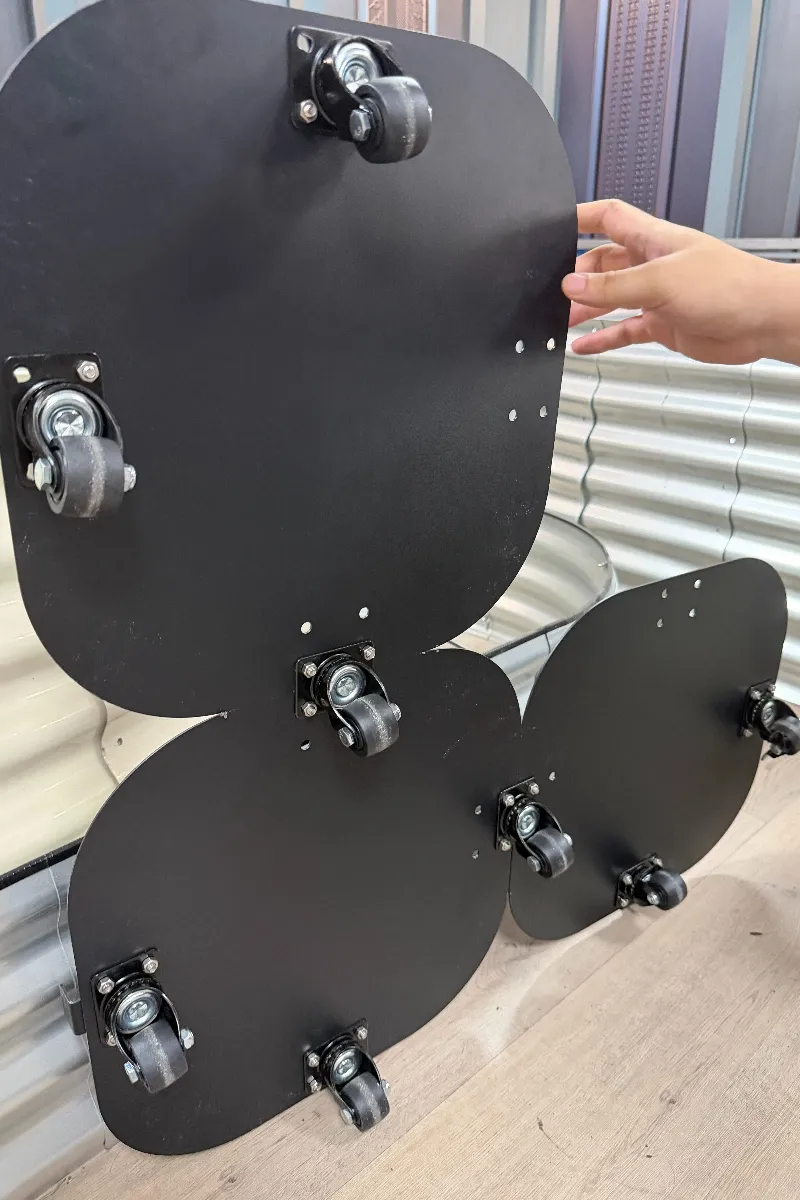
It also reduces transit damage because there are fewer protruding components that can be crushed during transportation.
However, flat-pack packaging requires customers to assemble the product themselves. And the assembly experience is often reflected directly in your store reviews.
There is another commonly overlooked risk: panel-to-panel friction.
If there is no protective layer between metal panels, vibration during transportation can cause surfaces to rub against each other, creating scratches.
For powder-coated or color-coated steel garden beds, scratches are not merely cosmetic issues—they can become the starting point of corrosion. Once the protective coating is damaged, the exposed steel substrate is vulnerable to moisture and air.
What You Can Do
Ask the factory to place foam sheets or PE protective film between panels.
The additional cost is minimal, but it can prevent transportation scratches—which are often the first issue customers notice when opening the package.
Packaging and assembly are often overlooked during sourcing. Before placing a bulk order, we recommend reading our Metal Raised Garden Bed Buying Guide, which covers the most important product and supplier checks for wholesale buyers.
Missing Parts: Third Most Common Negative Review, Top Two Return Reason
Based on industry estimates, missing hardware accounts for approximately 15–20% of negative reviews for metal raised garden beds worldwide.
Among e-commerce return reasons, missing parts consistently ranks among the top two, alongside complaints that the product is too thin.
A typical hardware pack may include:
- Bolts
- Nuts
- Washers
- Connecting brackets
- Screws
- Gloves
- Instruction manual
These components may seem insignificant, but if two bolts are missing, the customer may be unable to complete assembly. And if assembly cannot be completed, a return often follows.
Why Parts Go Missing
In most cases, missing parts are not intentional.
The cause is usually counting errors during mass production.
Sample orders are often packed carefully by hand, with each item counted individually.
Mass production is different. Hardware is typically packed on a production line where workers repeatedly place components into bags at high speed. The likelihood of omissions is significantly higher.
As a result, the sample you inspected may contain all components, while mass-production units delivered to consumers may not.
How to Reduce the Risk
Require 10% extra hardware
The cost is almost negligible. Bolts and nuts cost only a few cents each, but a 10% surplus can compensate for counting errors during production.
If a factory refuses to provide extra hardware, consider it a warning sign.
Use separate hardware bags
Loose hardware scattered inside the carton can slide into corners during transit. Customers may assume parts are missing when they simply cannot find them.
A clearly visible hardware bag improves customer experience immediately.
Count hardware during inspection
During quality inspection, open hardware bags and verify quantities against the packing list.
This is one of the simplest and most effective verification methods.
Assembly Difficulties: Misaligned Holes, Sharp Edges, and Unclear Instructions
Based on industry estimates, assembly difficulties account for approximately 10–15% of negative reviews for metal raised garden beds worldwide.
The most common customer complaints fall into three categories.
Misaligned Holes
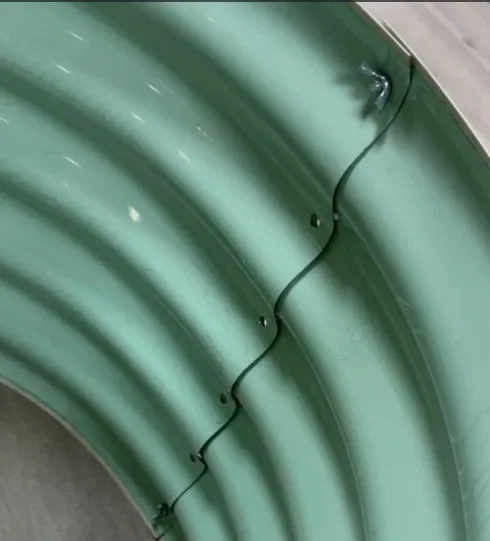
Metal raised garden beds are typically assembled using pre-drilled holes and bolts.
There is no welding and usually no snap-fit structure.
Assembly quality depends heavily on hole alignment accuracy.
Large manufacturers may control punching tolerances within 0.5 mm, while smaller factories may experience variations of 1–2 mm.
A few millimeters of misalignment can make assembly extremely frustrating. Customers may need to force panels into position, potentially damaging the coating or deforming the metal.
This issue is often difficult to detect from a sample because sample units are usually selected carefully and may have tighter tolerances than mass-production batches.
What You Can Do
Assemble the sample yourself.
If you need to force parts together or struggle to align holes, your customers will likely experience the same problem.
Sharp Panel Edges
Cut metal edges may contain burrs.
If the factory does not perform proper edge finishing or deburring, customers can easily cut their hands while reaching inside the garden bed to tighten hardware.
A review mentioning injuries caused by sharp edges can be significantly more damaging than a complaint about color differences.
What You Can Do
Request edge deburring or chamfering.
Include a pair of cotton gloves in the hardware pack.
The cost is very low, but it can help prevent injury-related complaints.
Instructions That Are Difficult to Understand
Many garden bed instruction manuals contain only simple line drawings with limited step-by-step guidance.
Some manuals claim that no tools are required when a screwdriver or wrench is actually needed.
When customers follow unclear instructions and fail to complete assembly, they often conclude that the product itself is defective.
What You Can Do
Request a QR code that links to an assembly video.
Video instructions are often much easier to follow than printed manuals.
If you sell into English-speaking markets, confirm that both the manual and the assembly video are available in English.
Packaging Inspection Checklist: What to Check During Quality Control
Finding packaging problems after the shipment arrives is expensive.
Inspecting packaging before shipment is one of the lowest-cost quality control measures available.
Retail Packaging (What Consumers Receive)
| Inspection Item | Why It Matters | How to Check |
|---|---|---|
| Hardware completeness | Missing parts lead to returns | Count components against the packing list |
| Separate hardware bag | Loose parts are easily overlooked | Verify all hardware is packed in a dedicated bag |
| Protective layer between panels | Prevents transportation scratches | Check for foam sheets or PE film |
| Clear instructions | Reduces assembly difficulties | Read the manual yourself |
| QR code for assembly video | Easier than paper instructions | Scan and verify the link works |
| Rounded edge treatment | Check handling safety | Inspect edge protection on the actual sample |
| Carton strength | Weak cartons can deform during transit | Apply pressure and inspect rigidity |
Many customer complaints that appear to be product defects actually originate from packaging or assembly-related problems. See Common Quality Problems with Metal Raised Garden Beds for additional examples.
Master Carton (Shipping Packaging)
| Inspection Item | Why It Matters | How to Check |
| Clear carton markings | Required for warehousing and logistics | Verify product, quantity, and origin labels |
| Carton strength | Necessary for long-distance shipping | Inspect corrugated board thickness |
| Consistent carton quantities | Prevents shortages and overages | Randomly inspect multiple cartons |
The Real Cost of Returns and Negative Reviews
The cost of a returned garden bed extends far beyond the value of the product itself.
For e-commerce sellers, a single return often means:
- Product loss because opened packaging is difficult to resell
- Return shipping costs and potential warehouse fees
- Lower store ratings and reduced conversion rates
- Permanent customer loss
For garden centers and retail stores, staff must spend time handling returns when customers bring products back.
Most small and mid-sized retailers do not have dedicated customer service departments. Time spent processing returns is time not spent serving other customers.
Packaging and assembly-related returns have one important characteristic:
The steel may be fine.
The coating may be fine.
The dimensions may be correct.
But the customer cannot assemble the product, parts are missing, or they get injured during installation—so the product is returned anyway.
These are returns that could often have been avoided.
Five Things You Can Do Before Placing an Order
1. Assemble the Sample Yourself
If you encounter difficulties during assembly, your customers will likely face the same issues.
Document every step that feels inconvenient or confusing.
2. Count the Hardware
Open the hardware bag and verify all quantities against the packing list.
Ask the factory whether mass-production orders include 10% extra hardware.
3. Check the Panel Edges
Run your hand carefully along cut edges.
Look for burrs and confirm whether edge finishing or chamfering has been performed.
4. Review the Instructions
Can you understand them easily?
Is there a QR code linking to an assembly video?
Does the language match your target market?
5. Inspect Protective Layers Between Panels
Open the packaging and verify whether foam sheets or protective film are present.
If not, request them before production begins.
These five checks require no specialized knowledge and no testing equipment.
They take approximately 30 minutes, but they can help prevent 25–35% of packaging- and assembly-related negative reviews.
Damage during transportation can compromise protective coatings and accelerate corrosion. Learn more in Rust Prevention and Outdoor Durability for Metal Raised Garden Beds.
If metal raised garden beds are on your sourcing list, send us your product requirements.
Scarecrow can help evaluate sample packaging and assembly performance—from unboxing to final assembly—so every step is verified before you place a mass-production order.
Send Your Requirement, We Help You Check the Right Option
Suitable for garden centers, wholesalers, importers, and e-commerce sellers who want to compare products before bulk purchasing.
Written by
ScarecrowGarden
💡About Scarecrow Garden Supplier Co., Ltd.
Scarecrow Garden Supplier Co., Ltd. is a China-based sourcing and wholesale partner specializing in garden tools, landscaping equipment, and outdoor supplies for international wholesalers, distributors, contractors, and brands.
With hands-on experience rooted in real garden use scenarios, we focus on durable materials, functional design, and stable large-volume supply. Our product range covers pruning tools, watering systems, hand tools, outdoor hardware, and customized garden solutions to support both retail and professional landscaping markets.
Beyond products, we help our partners navigate supplier selection, quality control, compliance requirements, and long-term sourcing strategies in China. Through our blog, we share practical insights on product selection, material comparisons, industry trends, and cost-effective purchasing—helping global buyers build stronger, more competitive supply chains.