






Updated 2 months ago
Seed Trays Wholesale Buying Guide: Size, Material, Weight and Structure Explained

hqt
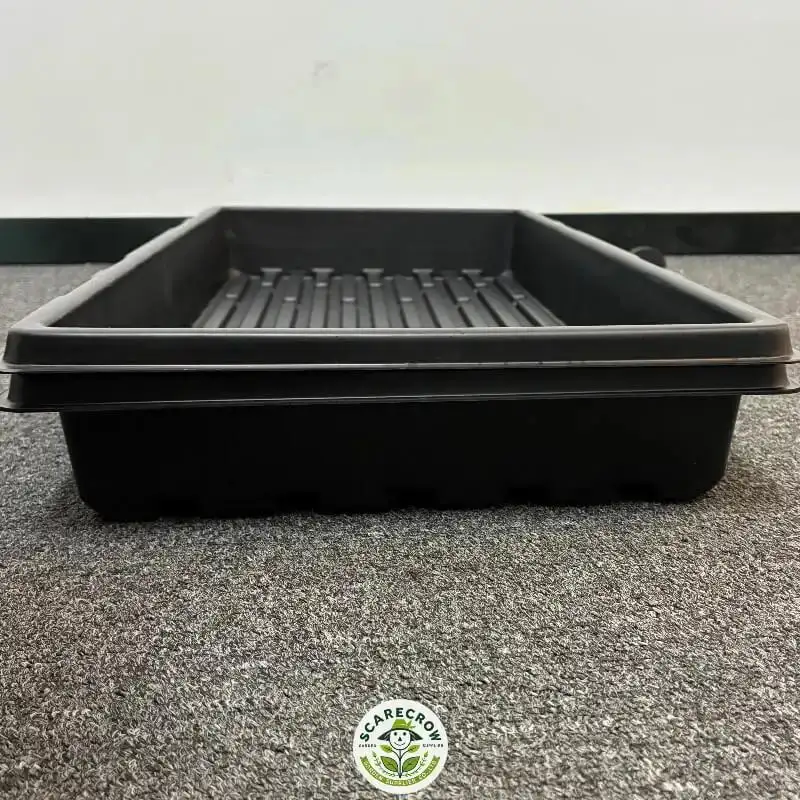
When ordering seed trays wholesale, price per tray is one of many considerations. In addition to price, commercial nurseries, greenhouse growers, and garden distributors consider the size of the tray, configuration of cells, material, unit weight, and the level of structural support. All of these factors play into whether or not a particular trays fits on their propagation benches, allows them to transport wet growing media, and meets their needs for the anticipated handling cycle.
At Scarecrow Garden Supplier, we therefore evaluate Seed Trays Wholesale as a complete specification rather than judging a tray by material or appearance alone.
1. Size: Match the Tray to the Crop and Growing System
Two dimensions matter in wholesale selection: overall tray dimensions and cell dimensions.
A widely used North American 1020 tray is nominally 10 × 20 inches, although actual outside dimensions are often closer to 26.7 × 53.3 cm. Another commonly used format is approximately 54 × 28 cm. These formats are similar, but differences of several millimeters in the rim, corners or overall width can affect compatibility with inserts and humidity domes.
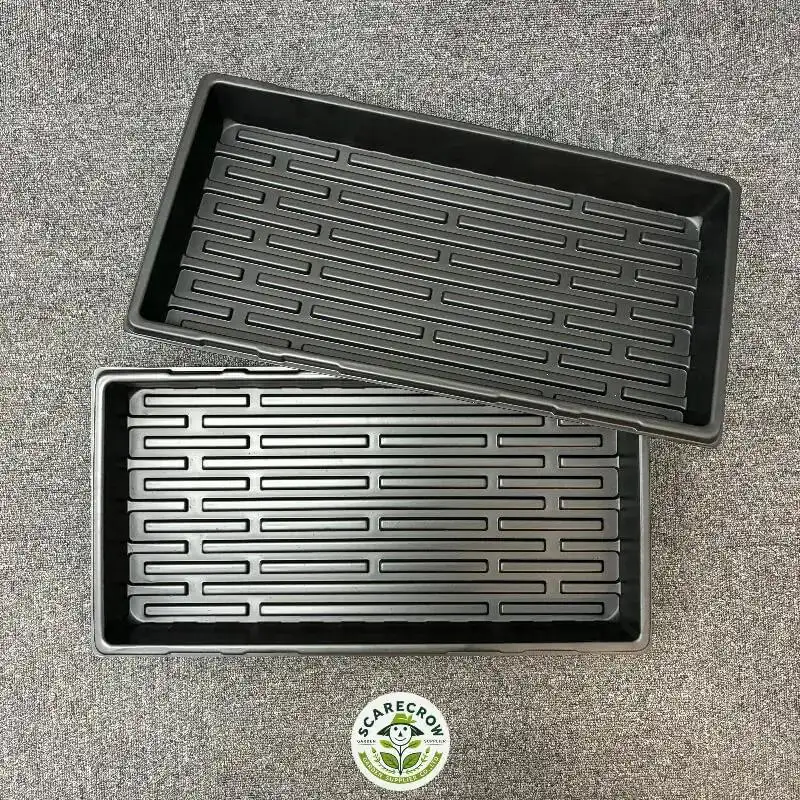
Scarecrow Garden Supplier's heavy-duty PS seedling tray, for example, uses a 54 × 28 × 6 cm format, providing a practical reference for nursery propagation, greenhouse growing and garden retail supply.
Common Cell Counts and Applications
The external footprint may stay similar while cell count changes considerably.
| Cell Count | Approx. Cell Volume | Typical Application |
| 288 | ~12 mL | Lettuce, brassicas, herbs, annual flowers |
| 200 | ~20 mL | Short-cycle vegetables |
| 128 | ~35 mL | Tomatoes, peppers, herbs |
| 72 | ~55 mL | General vegetable propagation |
| 50 | ~85 mL | Melons, squash, larger transplants |
| 32 | 120+ mL | Tree seedlings and large ornamentals |
These figures are useful starting points rather than fixed rules. Higher cell counts improve plant density per tray, while lower cell counts provide more growing-media and root volume per plant. Crop type, propagation period and transplant stage should therefore determine the final configuration.
For Seed Trays Wholesale, buyers should confirm the actual outer dimensions, cell count, cell depth and cell volume instead of ordering by a general name such as "1020" alone.
2. Material: PS, PP and Other Plastics Serve Different Requirements
Designs and functions inevitably rely on the materials chosen.
PS – Polystyrene
Polystyrene (PS) has advantages where a relatively rigid structure is needed and where tray shapes need to be stable. It tends to be cost effective and has applications in propagation inserts and nursery trays.
PP – Polypropylene
Polypropylene (PP) has higher impact resistance and flexibility so constructions made out of PP can potentially be used in washing, storing and reusing trays, used in repeated growing cycles.
Other Plastics (PET, Recycled)
PET and recycled plastics can be considered, depending on the desired outcomes for cost and sustainability. As with recycled materials, more care may have to be taken with color consistency and dimension control.
The key point for Seed Trays Wholesale is that material should never be specified without thickness, weight and intended service cycle. A thin PP tray and a reinforced PP tray can perform very differently, just as two PS trays of the same external dimensions may have different rigidity.
3. Weight: A Useful Indicator, but Not a Quality Grade
Tray weight gives buyers a measurable reference for material usage.
For similar tray footprints, a commercial tray guide from the Scarecrow Garden Supplier includes comparisons for approximately 60 g at around 0.5 mm thickness, 90 g at about 0.7 mm, 155 g at 1.0 mm, about 185 g at 1.2 mm, etc. These are more reference values and should not be treated as specifications. Weight is impacted by the material and the geometry and the size of the tray.
Our current heavy-duty PS seedling tray weighs approximately 155 g at 54 × 28 × 6 cm, giving buyers a concrete reference when comparing similar products.
However:
Heavier does not automatically mean stronger.
Buyers should determine where the material is located:
• Outer rim
• Long sidewalls
• Bottom panel
• Corners
• Cell walls
• Reinforcement ribs
A tray with efficiently positioned ribs may resist bending better than a heavier tray with poorly distributed material.
For wholesale comparison, asking only "How many grams?" is therefore insufficient. A better question is: How does this weight work together with the tray's dimensions and structure?
4. Structure: What Actually Makes a Tray Heavy-Duty?
Structure becomes especially important after a tray is filled and watered. Commercial tray systems may carry several kilograms of wet substrate, water and seedlings, so rigidity under load is more meaningful than rigidity when empty. Scarecrow Garden Supplier's commercial guide notes typical loaded tray weights of approximately 2–5 kg, depending on the system.
Several structural areas deserve attention:
Reinforced Rim
The perimeter is most commonly used for lifting. With a stronger rim, edge flex is reduced and rectangular geometry of the tray is sustained.
Bottom Support
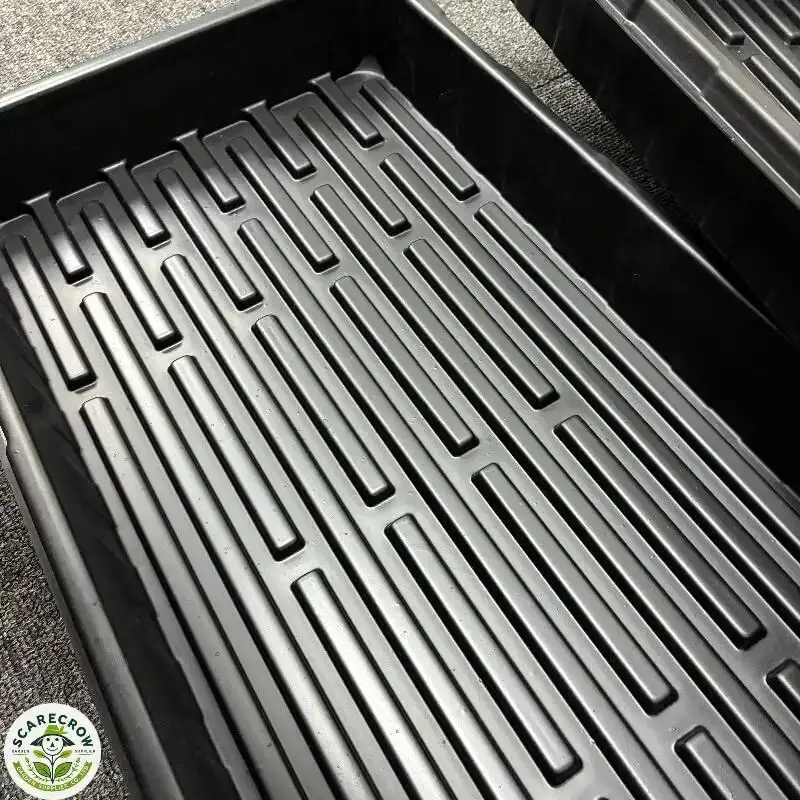
The base carries the substrate load. Reinforced channels, ribs or formed sections help limit centre sagging after irrigation.
Longitudinal and Cross Ribs
Ribs increase stiffness without requiring the entire tray wall to become equally thick. Their position and orientation matter as much as their presence.
Corner Geometry
Corners receive concentrated loads during lifting, stacking and carton transportation. Poorly supported corners can crack or distort before the main body fails.
Cell Structure
In plug trays, cell walls also form part of the tray's structural network. Cell depth, taper and spacing therefore influence both root management and mechanical stability.
5. Compare Four Specifications Together
A professional Seed Trays Wholesale comparison should look like this:
| Factor | What to Confirm | Why It Matters |
| Size | 54 × 28 cm, 1020 or other format | Bench, rack and accessory compatibility |
| Cell Layout | 32–288+ cells depending on crop | Plant density and root volume |
| Material | PS, PP, PET or recycled plastic | Rigidity, flexibility and reuse strategy |
| Weight | Actual grams per tray | Material-use reference |
| Structure | Rim, ribs, bottom and corners | Loaded handling stability |
| Depth | Commonly varies by application | Substrate volume and total load |
The best Seed Trays Wholesale option is therefore not necessarily the largest, heaviest or thickest tray. It is the specification that matches the crop, growing period, handling method and required service life.
6. Specifications Should Also Match the Buying Channel
Different types of customers have different priorities:
• Commercial Nurseries: Rigidity of loaded trays, density of crops, and repetitive motion.
• Greenhouses: Compatibility of benches, ease of tray movement, and efficiency of irrigation.
• Garden Centres: Retail-based formats and assessment of seed-starting options.
• Distributors: SKU and carton assessments, and sourcing multiple products in one procurement.
• E-Commerce Buyers: Protection of packages, forms of identification, and manageable dimensions of packages to be shipped.
Scarecrow Garden Supplier can use a standard specification such as the 54 × 28 × 6 cm, approximately 155 g reinforced PS tray as a starting point, while also checking alternative sizes, materials, colors, configurations and packaging according to the target market.
Choose Seed Trays Wholesale by Specification, Not Appearance
A reliable Seed Trays Wholesale program starts with measurable data: overall dimensions, cell configuration, material, weight, reinforcement and intended application. These parameters provide a stronger basis for comparison than appearance or unit price alone.
If you already have a target tray, drawing, dimensions, cell count or reference sample, Scarecrow Garden Supplier can help review the specification and identify suitable seedling tray options. We can also coordinate packaging and related propagation products where a broader garden supply program is required.
FAQs
Q1. What options are available for Seed Trays Wholesale?
Buyers can select a PS reference product, or discuss other options for materials or similar tray designs based on needed rigidity, flexibility, application and order quantity.
Q2. What material is used for the heavy-duty seedling tray?
The reference tray is made of PS (polystyrene), which gives a good level of structure for handling in nurseries for propagation.
Q3. What is the weight of the seedling tray?
The standard reference tray is approximately 155 g. Weight should be considered with other factors along with the dimension of the tray, such as distribution of materials and reinforcement, and should not be used as a quality indicator.
Q4. What makes this seedling tray heavy-duty?
A reinforced structure was used on the tray to enhance the stability of the shape while filling, watering and handling the tray throughout the nursery and greenhouse.
Q5. Does Scarecrow Garden Supplier offer seed trays of different sizes?
Yes, buyers can provide required dimensions or a reference product and Scarecrow Garden Supplier can check available sizes and formats of similar trays according to the purchasing needs.