






The Ultimate Buyer's Guide to PVC Greenhouse Film: Wholesale Sourcing Insights 2026
Materials, Performance, and Strategic Sourcing Insights for Distributors and Importers
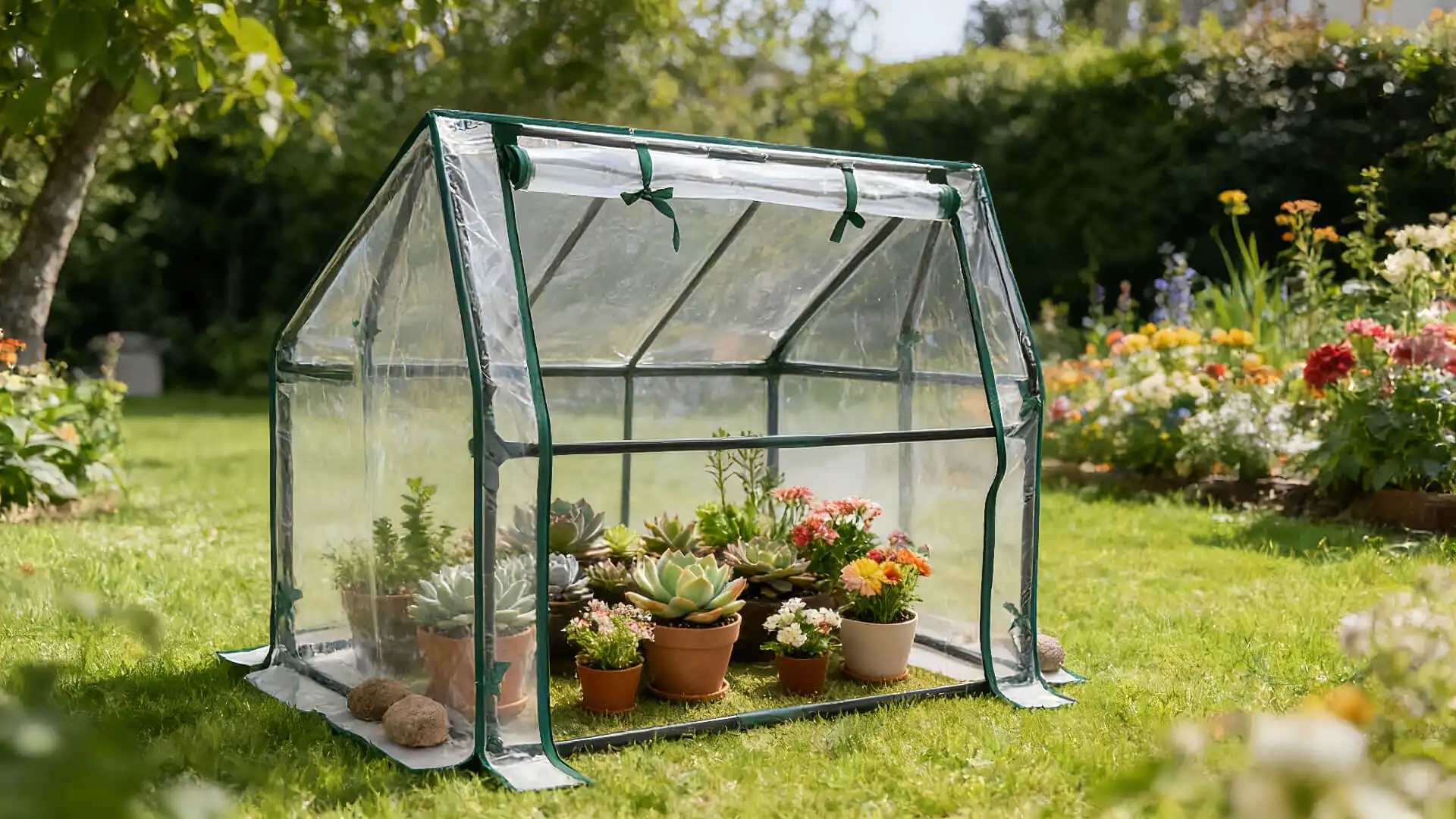
For gardening enthusiasts, a garden greenhouse is more than a shelter for plants—it is a controlled environment where nature and human care work together.
However, one critical component is often underestimated when building or maintaining a greenhouse: the covering material.
Have you ever encountered greenhouse plastic film that yellows within months, turns brittle, or suddenly cracks under sunlight?
Or felt confused by market labels such as “durable film,” “UV-resistant cover,” or “anti-drip greenhouse plastic”?
Behind these issues lies a fundamental truth: PVC greenhouse films vary dramatically in formulation, performance, and lifespan—even when they look similar at first glance.
This in-depth guide explores the world of PVC greenhouse film from a material science and sourcing perspective.
We will analyze:
- Core material differences and performance mechanisms
- Why some films yellow quickly while others remain clear for years
- How film quality affects plant growth, maintenance costs, and end-user satisfaction
- Strategic procurement considerations for distributors, wholesalers, and B2B buyers
Whether you are selecting a reliable film for your own greenhouse line, or sourcing products for thousands of downstream customers, this guide provides a clear decision framework.
1. Core Material Differences: From Short-Term Covers to Long-Life Solutions
Not all PVC greenhouse films are created equal.
Their price, durability, and performance depend largely on raw material formulation and additive systems.
From a sourcing standpoint, greenhouse PVC films can be broadly categorized into five levels:
1. Standard PVC Film (No Functional Additives)
Composition:
Basic PVC resin combined with plasticizers and general stabilizers.
Characteristics:
- Lowest cost
- Acceptable initial transparency
- Extremely poor durability
Without UV protection, plasticizers migrate quickly, PVC chains degrade under sunlight, and the film yellows and embrittles rapidly—often within a single season.
Use case:
Short-term or disposable coverage only. Not recommended for commercial distribution due to high complaint rates.
2. UV-Resistant PVC Greenhouse Film
Composition:
Standard PVC base enhanced with UV absorbers and light stabilizers.
Characteristics:
- The most common “durable” option in the market
- UV additives act like sunscreen, reducing molecular breakdown
- Service life typically ranges from 1–3 years, and up to 5 years with higher-grade formulations
Sourcing note:
This is the mainstream choice for B2B distributors balancing cost, durability, and market acceptance.
3. Anti-Drip (Anti-Fog) PVC Film
Composition:
UV-resistant PVC film with added surface-active agents.
Characteristics:
- Prevents condensation droplets from dripping onto plants
- Moisture forms a uniform water film that flows downward
- Reduces fungal disease risk and improves effective light transmission
Value for end users:
Healthier crops, fewer disease-related losses, and more stable greenhouse humidity.
4. Long-Life / Agricultural-Grade PVC Film
Composition:
High-purity PVC resin with advanced additive systems
(including premium light stabilizers, antioxidants, and IR modifiers)
Characteristics:
- Designed for continuous outdoor exposure
- Service life of 5–10 years under normal conditions
- Superior tensile strength, tear resistance, and thermal insulation
Commercial implication:
Higher upfront cost, but significantly lower warranty claims and replacement cycles.
5. Alternative Materials: PO Film and PE Film
PO Film (Polyolefin Film):
- Multi-layer co-extruded polyethylene-based material
- Naturally resistant to yellowing
- Permanent anti-drip performance (not coating-based)
- High and stable light transmission
Preferred choice for premium greenhouse systems.
PE / EVA Film:
- Lightweight and inexpensive
- Good initial transparency
- Poor weather resistance and mechanical strength
Commonly used in low-cost or temporary greenhouse structures.
2. Why Some Greenhouse Films Yellow Faster Than Others
Yellowing is the most visible sign of film aging—and the most frequent end-user complaint.
Why low-grade PVC films degrade quickly:
- Direct UV attack: Breaks PVC molecular chains, forming yellowing chromophores
- Plasticizer migration: Plasticizers oxidize and evaporate, leaving the film brittle
- Self-accelerating degradation: PVC releases hydrogen chloride under heat and light, accelerating further breakdown
- Lack of stabilizers: Minimal or ineffective protection against sunlight
Why high-quality films remain clear:
- Advanced UV absorption systems: Convert harmful UV into harmless thermal energy
- HALS stabilizers: Neutralize free radicals and interrupt degradation chains
- Higher-purity resin: Better compatibility between resin and additives
- Material advantage (PO film): Polyolefin structures are inherently more UV-stable than PVC
3. How Film Quality Impacts End Users—and Long-Term Cost
For buyers, greenhouse film selection is not just a price decision.
It directly influences plant performance, maintenance workload, and customer satisfaction.
| Performance Factor | Standard PVC | UV PVC | Anti-Drip PVC | Long-Life PVC / PO |
| Light Transmission Stability | Poor | Moderate | Good | Excellent |
| Service Life | Months–1 year | 1–3 years | 2–4 years | 5+ years |
| Thermal Insulation | Low | Moderate | Moderate | High |
| Condensation Control | None | Limited | Effective | Excellent |
| Tear & Weather Resistance | Low | Moderate | Moderate | High |
| Maintenance Effort | High | Moderate | Lower | Minimal |
Key implications:
- Stable light transmission improves photosynthesis and crop uniformity
- Reduced replacement frequency lowers labor and logistics costs
- Anti-drip performance minimizes disease pressure
- Long-life films often deliver lower annualized cost, despite higher unit price
4. Practical Buying Advice for End Users
- Avoid non-certified PVC films with no UV data
- Match film lifespan to greenhouse usage cycle
- Prioritize UV resistance rate (>95%), light transmission (>90%), and additive type
- Prefer internal anti-drip additives over surface coatings
- Use proper installation systems to prevent edge tearing
5. Strategic Procurement Guide for Distributors & Importers
For B2B buyers, greenhouse film is not a standalone item—it is part of a complete greenhouse solution.
5.1 PVC Film: Control the Primary Risk Factor
Require written material specifications and lifespan commitments
Demand measurable performance data:
- Initial light transmission & aging retention
- UV blocking rate
- Anti-drip mechanism (internal vs coating)
Conduct outdoor exposure tests on samples
Include quality liability clauses in contracts
5.2 Greenhouse Frame: Structural Reliability First
- Confirm tube material (hot-dip galvanized steel, aluminum, plastic)
- Verify wall thickness and corrosion treatment
- Evaluate connector strength and assembly tolerance
- Review wind and snow load design details
5.3 Film–Frame System Compatibility
- Film cutting tolerance must match frame curvature
- Fixing systems (spring wire, lock channels) must distribute tension evenly
- Ventilation design directly affects real-world usability
5.4 Supplier Evaluation: Choose Partners, Not Just Prices
- Technical capability and formulation expertise
- Quality control systems and traceability
- OEM/private label support
- MOQ flexibility and peak-season supply stability
- Clear after-sales responsibility framework
5.5 Inventory & Product Line Strategy
- Segment product lines: entry-level, mainstream, professional
- Standardize film sizes for replacement compatibility
- Stock spare parts (clips, connectors, repair tape) as value-added items
Conclusion
For end users, investing in high-quality greenhouse film means a brighter, more stable growing environment and fewer maintenance headaches.
For distributors and importers, the real opportunity lies in offering reliable, system-matched greenhouse solutions that minimize after-sales issues and build long-term brand trust.
A seemingly simple plastic film carries the energy of photosynthesis, the health of plants, and the reputation of your business.
Choose wisely—and let both gardens and partnerships grow sustainably. If you have other questions, feel free to contact us.
Written by
ScarecrowGarden
💡About Scarecrow Garden Supplier Co., Ltd.
Scarecrow Garden Supplier Co., Ltd. is a China-based sourcing and wholesale partner specializing in garden tools, landscaping equipment, and outdoor supplies for international wholesalers, distributors, contractors, and brands.
With hands-on experience rooted in real garden use scenarios, we focus on durable materials, functional design, and stable large-volume supply. Our product range covers pruning tools, watering systems, hand tools, outdoor hardware, and customized garden solutions to support both retail and professional landscaping markets.
Beyond products, we help our partners navigate supplier selection, quality control, compliance requirements, and long-term sourcing strategies in China. Through our blog, we share practical insights on product selection, material comparisons, industry trends, and cost-effective purchasing—helping global buyers build stronger, more competitive supply chains.