










Expert Guide: Avoiding Inaccurate Soil Moisture Meter Readings
Abstract
A soil moisture sensor can allow gardeners to forget about the old ways of guessing when to water their garden and provide it with the finest place to flourish for each of their plants. Many gardeners misuse soil moisture detectors, causing inaccurate readings, incorrect watering, and possible plant harm. Analyzing common soil moisture testers in application reveals that most errors occur due to a lack of avoidable knowledge that helps us use them correctly as an essential aid for healthy growth.
1. Introduction
Water is needed for existence, and many gardeners concern themselves with providing enough water. Finding the correct measures to water properly and sufficiently is key. A soil moisture tester measures precise soil moisture content, delivering objective, measurable data to help gardeners make the decision to water on the basis of evidence. Simple soil moisture detectors are not an exception. Widespread misuse still occurs even with these basic and easy-to-use soil moisture detectors. Probes not inserted properly into soil or different soil types not being noticed lead to bad readings, plant stress, root rot, and slow growth. This article collects these common errors with their respective solutions to maximize the soil moisture tester’s usage.
2. Common Mistakes When Using Soil Moisture Testers
2.1 Inserting the Probe Too Shallow or Too Deep
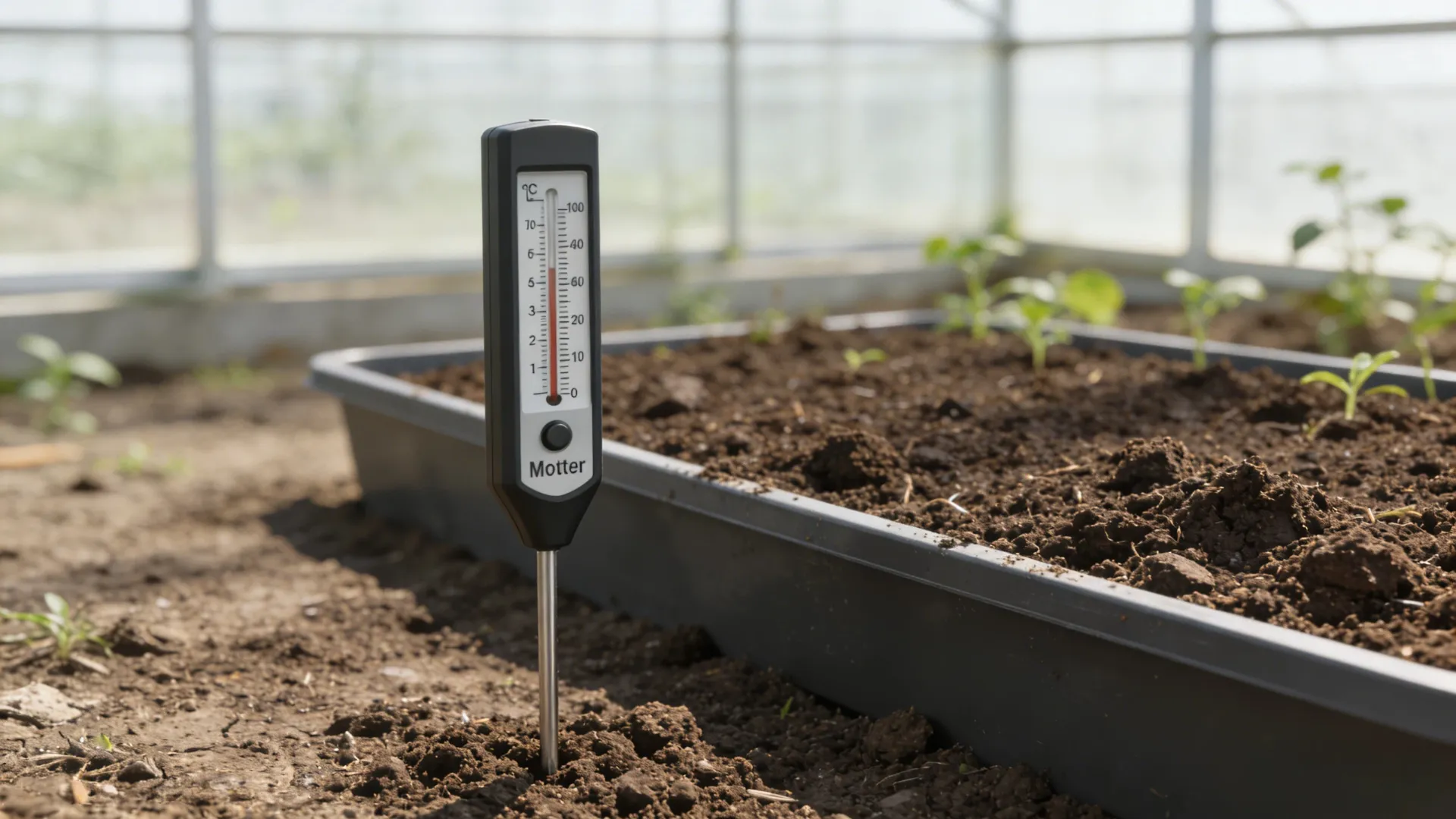
Incorrect probe insertion depth is a common problem for gardeners. A lot of people just stick the soil moisture tester probe in the soil a few centimeters down to measure surface moisture, which is very misleading, as plant roots (especially vegetables, shrubs, and trees) grow much deeper. Surface moisture does not give an actual idea of root zone conditions. Conversely, inserting the probe past the root zone will result in inaccurate data, as more moisture is present in the soil deeper down since there is less evaporation.
Potted herbs generally have a 10-15 centimeter root zone, while garden roses reach 20-30 centimeters. Shallow probe insertion falsely indicates dry soil even when the root zone is moist, causing overwatering. In cases where deep insertion is performed for a shallow-rooted plant, it is likely that this could lead to excessive watering and hence an overabundance of water.
2.2 Not Cleaning the Probe Between Uses
Neglecting to clean the probes after each use is also a common problem. Soil residue that resides mainly on clay-rich or fertilized soils sticks to the probe electrodes and messes with the core measuring principle—electrical conductivity. This causes inconsistent or inaccurate readings. Residues also cause corrosion of the probes and reduce tool life.
Moving from organic-rich soil to another garden bed without cleaning the probe allows leftover organics to contaminate the second reading. This results in the false assumption of high water in the second soil, leading to wrong watering.
2.3 Ignoring Soil Type and Composition
Soil type has a lot to do with moisture retention; some gardeners use soil moisture testers without realizing there are different soil compositions. Sandy soils lose water rapidly and do not retain it, while clay soils hold moisture for longer. Most basic soil moisture testers are set for use with loamy soil—a blend of sand, silt, and clay. If used on sand or clay soil without adjustment, they will not provide accurate information.
A soil moisture detector might read “moist” in clay soil even though the dense structure keeps water away from plant roots, known as “waterlogging.” In sandy soil, the tester could say “dry” quickly after watering because the water drains past the roots, requiring more frequent, smaller amounts of water. Disregarding these differences causes clay soil to be overwatered and sandy soil to be underwatered.
2.4 Testing Soil Immediately After Watering
Using a moisture tester on soil straight after watering will produce a false high moisture reading. Water sits on the top soil layer after watering and has no time to move down into the root zone. Readings at this point indicate long-lasting moisture, but in reality, moisture drains or disappears quickly, so the root zone becomes dry sooner than expected.
Newcomers to the garden frequently make this blunder while checking the watering effect. A 1-2 hour wait after watering—with heavier soil requiring a wait of more than 2 hours—ensures that water is evenly distributed in the soil and accurate readings can be obtained for the root zone.
2.5 Using a Low-Quality or Uncalibrated Soil Moisture Tester
Low-quality or uncalibrated soil moisture detectors produce inaccurate results. Cheap test pens usually have poorly made electrodes with poor electrical conductivity, giving unreliable results. Even very good testers will drift over time, especially after being dropped or getting wet.
Many gardeners fail to recognize the significance of calibration, assuming that the tester is consistently accurate. Calibrate soil moisture testers according to the instructions of the manufacturers; calibration should be done regularly to ensure the reliability of the data. Some testers can be calibrated with dry sand and saturated soil to check extreme reading accuracy.
3. How to Avoid These Mistakes
3.1 Insert the Probe to the Correct Depth
In order to get correct readings for soil moisture, insert the soil moisture tester's probe to the full depth of a plant's root zone. This is a key step because the depth of a plant's root zone varies; most annuals and herbaceous plants reach 10-15 centimeters, while woody, long-lived perennials, shrubs, and trees generally develop to 20-30 centimeters. In case of uncertainty about a particular plant's root zone depth, the standard probe insertion procedure is applied: 10cm for small plants and 20cm for large plants. Probe contact with other objects, such as rocks and large plant roots, will affect the reading. Gardeners should keep the tester's probe away from such objects to prevent interference and ensure the stability of the soil moisture reading.
3.2 Clean the Probe After Each Use
Wipe the probe with a dry cloth or brush to clean the soil on the probe after testing. If there is stubborn residue, rinse the waterproof probe and then dry it before storing. This prevents the buildup of corrosion and maintains the proper function of the electrodes. Store the soil moisture detector in a dry, protected place to avoid damage to the probe's inner parts.
3.3 Adjust for Soil Type
Understand the soil type in order to properly interpret the soil moisture test results. If your soil is "dry," you probably need to water it now; if your soil is "moist," it is likely waterlogged and needs drying. Figure out what kind of soil it is by grabbing a little bit of wet soil in your hands: if the soil easily breaks apart, it’s sandy soil; if it forms a tight ball, it’s clay soil. If the soil remains in a form but is easy to crush, it is a type of loam.
Some of the better testers even have you choose which type of soil it is (sandy, loamy, or clay) to increase the chance of them working. Basic tester users can keep a record of the readings in terms of the health of their plants by soil type.
3.4 Test Soil at the Right Time
Avoid testing the soil immediately after watering, rain, or irrigation. Wait 1–2 hrs for light sandy or loamy soils and 2–4 hrs for heavy clay soils for even water distribution. Morning tests will be the most stable because no evaporation happens during the night. Testing every day at the same time provides a basis to find out changes in the moisture.
4. Call to Action
A soil moisture tester is a handy addition to any gardener’s toolkit to help with the routine of watering and plant wellbeing. By avoiding the common mistakes of improper probe insertion depth, dirty probes, etc., and paying attention to the type of soil, you can ensure that the instrument provides accurate and reliable data. It is an assistant rather than a replacement for plant observation (wilted or yellowing leaves) or knowledge of particular garden conditions.
You can develop your gardening skills by referring to our selection of soil moisture testers and our excellent gardening hand tools to help you attain the right soil moisture conditions and support the lush and healthy growth of your garden.

Written by
ScarecrowGarden
💡About Scarecrow Garden Supplier Co., Ltd.
Scarecrow Garden Supplier Co., Ltd. is a China-based sourcing and wholesale partner specializing in garden tools, landscaping equipment, and outdoor supplies for international wholesalers, distributors, contractors, and brands.
With hands-on experience rooted in real garden use scenarios, we focus on durable materials, functional design, and stable large-volume supply. Our product range covers pruning tools, watering systems, hand tools, outdoor hardware, and customized garden solutions to support both retail and professional landscaping markets.
Beyond products, we help our partners navigate supplier selection, quality control, compliance requirements, and long-term sourcing strategies in China. Through our blog, we share practical insights on product selection, material comparisons, industry trends, and cost-effective purchasing—helping global buyers build stronger, more competitive supply chains.
Related Articles

Lithium-Ion vs Lead-Acid Batteries in Electric Sprayers: Weight, Runtime, Charging and Shipping Trade-Offs
Timer Accuracy and Power-Loss Memory in Automatic Irrigation Controllers: A Buyer Test
