











Updated 5 hours ago
Handheld Manual Pressure Garden Sprayers: Sealing, Pressure Retention, Spray Control and Depressurization Documentation Checks

ScarecrowGarden
💡About Scarecrow Garden Supplier Co., Ltd.
Scarecrow Garden Supplier Co., Ltd. is a China-based sourcing and wholesale partner specializing in garden tools, landscaping equipment, and outdoor supplies for international wholesalers, distributors, contractors, and brands.
With hands-on experience rooted in real garden use scenarios, we focus on durable materials, functional design, and stable large-volume supply. Our product range covers pruning tools, watering systems, hand tools, outdoor hardware, and customized garden solutions to support both retail and professional landscaping markets.
Beyond products, we help our partners navigate supplier selection, quality control, compliance requirements, and long-term sourcing strategies in China. Through our blog, we share practical insights on product selection, material comparisons, industry trends, and cost-effective purchasing—helping global buyers build stronger, more competitive supply chains.
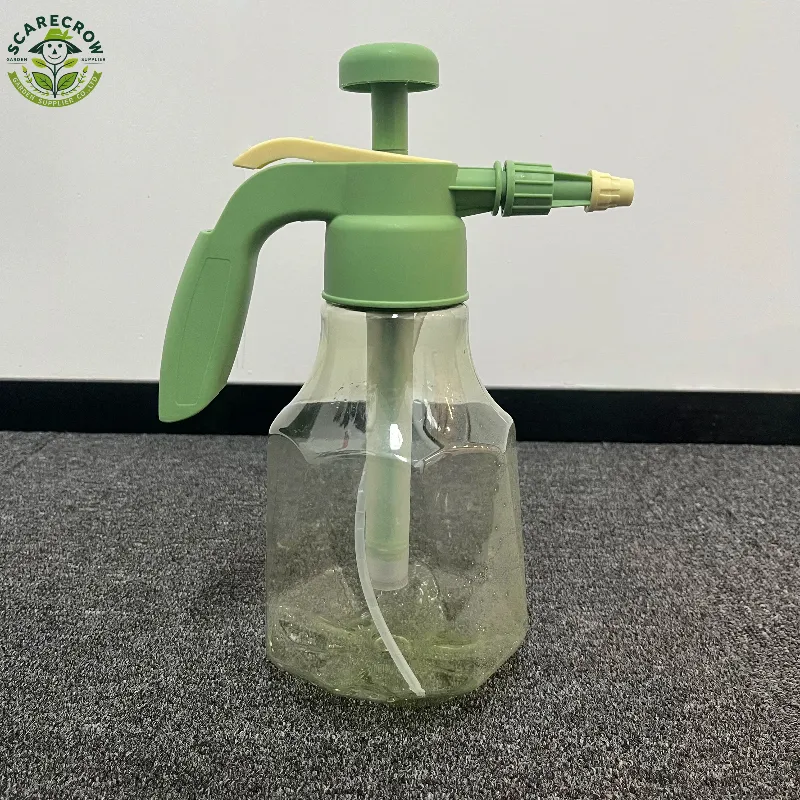
Manual pump garden sprayer with clear bottle, integrated handle and short nozzle
A handheld bottle-type pressure sprayer has a different failure path from a hose-and-wand unit: the critical interfaces are the pump/cap, bottle closure, nozzle or control and the documented pressure-release procedure.
The linked 1.5L manual pressure garden sprayer listing describes a handheld pump bottle with an adjustable nozzle. It does not establish a hose, wand, pressure gauge, relief valve or exact seal material. Use the exact manufacturer instructions before naming or testing any pressure-control feature.
Confirm the Handheld Bottle Architecture Before Testing
You cannot test a pressure system you have not identified.
Which parts actually form the pressure system?
Identify the bottle, pump/plunger, cap/gasket, adjustable nozzle or other confirmed control, and any documented pressure-release feature from the exact model. The listing supports a handheld manual-pump architecture, but it does not provide a pressure rating, relief design or seal material.
What liquid and use are actually documented for this model?
The product listing describes use with water and diluted garden nutrients. Treat that as listing-level intended-use language, not a chemical-compatibility result. If a specific liquid matters, require compatibility evidence for the exact materials and seals used in the supplied model.
Pump and Cap Sealing: Can the Bottle Build Pressure Cleanly?
The pump and cap are the first place a manual sprayer can fail.
Does the manual pump build pressure consistently under the documented method?
If the exact manufacturer pressurization procedure is available, compare samples at the same fill level and follow that procedure. Record visible leakage, abnormal friction or failure to reach the documented functional state. Without that procedure, do not convert a listing-level pump-count description into an operating instruction; record the documentation gap instead.
Where can leakage be observed on the verified structure?
Inspect only the confirmed interfaces: the pump shaft, the cap and gasket, and the spray-control connection. Do not add hose-joint checkpoints the product does not have. Use the actual sample geometry, close-up photos and supplier component identification. An interface that is not part of this product is not part of this check.
Pressure Retention: Separate Decay From Spray Output
A bottle that holds pressure and a bottle that sprays well are two different questions.
How should documented retention observations be recorded?
If the exact model provides a documented way to assess pressure retention, use the same condition and observation period across samples. If a gauge is fitted, record the reading. Without a gauge or specified retention method, record only observable spray/output changes; do not describe them as measured pressure decay.
Can an observed pressure loss be localized safely?
Use non-hazardous visual checks only to separate cap or pump seepage from the confirmed outlet or control area. If the manufacturer provides troubleshooting guidance for this model, follow it. Do not open a pressurized bottle to look for a leak, and do not defeat any relief path.
Spray Control and Shutoff, Using Only the Confirmed Mechanism
What control actually adjusts or stops spray?
The listing describes a rotating adjustable nozzle for mist/direct-stream selection. Confirm the supplied mechanism from the exact sample/manual and do not add a trigger, button or separate valve unless it is documented.
Depressurization Documentation, Refill and Cap Seating
No depressurization step should be published without an exact manufacturer-approved procedure.
What documented sequence is used before opening the container?
Request the manufacturer-approved depressurization and opening sequence for the exact model. Until that document is available, do not publish a step-by-step release method. Keep only the safety boundary: do not open a pressurized container or exceed the product's documented operating conditions.
Does normal refill and reclosure change pump-cap seating?
Inspect the visible gasket and cap seating after ordinary permitted use. Do not turn a short screening sequence into a life-cycle claim. What you are checking is whether normal refilling and reclosing change how the cap seats, on the samples in hand.
Approved Sample and Repeat-Order Record
The final step is a record specific enough to rebuild the same sprayer.
Which fields make the approved handheld sprayer reproducible?
| Field | What to record |
|---|---|
| Capacity | Bottle capacity, only if verified |
| Pump and cap identity | Component identity as supplied |
| Gasket and seal material | Documented material, if available |
| Spray control / nozzle | The confirmed mechanism, named only once verified |
| Color and parts | Supplied color and component list |
| Packaging | Pack format and completeness |
| Comparison conditions | Fill level plus the exact manufacturer pressurization procedure used |
| Retention observation | Gauge reading only if fitted; otherwise documented observable output behavior |
| Shutoff behavior | Only if a closed/off control is documented |
| Depressurization | Manufacturer document reference, or documentation gap |
Which listing claims survive evidence review?
Only exact-model, documented capacity, use, material and operating claims. Do not add a pressure rating, a chemical-compatibility claim, a certification, a durability claim or a relief setting without traceable evidence. Where a claim cannot be supported, it stays out.
For powered-sprayer pressure/flow context, see electric sprayer pressure versus flow rate. Chemical compatibility of seals and hoses in electric sprayers is covered separately in electric sprayer chemical compatibility, and hose-mounted spray-gun design is covered in the garden spray guns sourcing guide. These are background references only; the handheld bottle must follow its own manufacturer instructions.
Before you approve a handheld pressure sprayer, ask for the exact pressurization and depressurization instructions for the model you are buying. Review the current 1.5L manual pressure garden sprayer, then send the intended liquid, capacity, spray-control requirement, destination market and documentation you need. Do not turn a page-level pump-count or cap-opening description into an operating instruction.
Written by
ScarecrowGarden
💡About Scarecrow Garden Supplier Co., Ltd.
Scarecrow Garden Supplier Co., Ltd. is a China-based sourcing and wholesale partner specializing in garden tools, landscaping equipment, and outdoor supplies for international wholesalers, distributors, contractors, and brands.
With hands-on experience rooted in real garden use scenarios, we focus on durable materials, functional design, and stable large-volume supply. Our product range covers pruning tools, watering systems, hand tools, outdoor hardware, and customized garden solutions to support both retail and professional landscaping markets.
Beyond products, we help our partners navigate supplier selection, quality control, compliance requirements, and long-term sourcing strategies in China. Through our blog, we share practical insights on product selection, material comparisons, industry trends, and cost-effective purchasing—helping global buyers build stronger, more competitive supply chains.