






Garden Center Merchandising Ideas: Build a High-Converting Indoor Seed Starting Display | Scarecrow Garden Supplier
Most garden centers arrange their seed-starting section like this: seeds on one shelf, seed trays on another, heat mats somewhere else, and plant labels in a separate area. Everything that should be stocked is there. Everything that should be displayed is there. Yet customers glance at it and walk away.
The problem is not what products you stock. The problem is that you are displaying products instead of solutions.
When customers walk into a seed-starting area, they are thinking: “If I buy these items, can I successfully start seedlings?” When they are faced with a collection of unrelated product categories, they do not get that confidence.
The deeper reason is that the product range itself was fragmented from the procurement stage. Seeds come from one supplier, seed trays from another, and heat mats from a third. Arrival times differ, packaging styles differ, and quality standards vary. The result is naturally a fragmented display.
This article helps garden centers understand why organizing displays according to the planting journey converts better than organizing by product category, what products an indoor seed-starting station should include, how to design the display, and how procurement planning can support a solution-based merchandising strategy.
Why Category-Based Displays Have Low Conversion Rates
Customers Do Not Shop by Category
When customers enter the seed-starting area, they are not thinking in product categories. They are thinking:
“I want to start seeds from scratch. What do I need?”
That is a process, not a category list.
A category-based display requires customers to assemble scattered products into a complete solution themselves. Most customers cannot do that.
As a result, they purchase only the most basic items—a packet of seeds or a seed tray—and leave. Average order value stays low, and cross-selling opportunities are largely lost.
→How New Garden Brands Can Build a Product Range Quickly with Flexible MOQ
Procurement Logic Determines Display Logic
Think about your procurement process.
Seeds come from one supplier.
Seed trays come from another.
Heat mats come from a third.
Each supplier provides its own merchandising materials. Products arrive at different times. Packaging styles are inconsistent. Even label fonts may look completely different.
Inventory is organized by category. Replenishment is managed by category. Naturally, the display becomes category-based as well.
Organizing displays around the planting journey essentially shifts procurement logic from being supplier-driven to customer-journey-driven.
This is not simply a merchandising adjustment. Procurement must evolve as well—from sourcing each category separately to using an integrated sourcing solution that covers the entire growing process.
What Products Are Needed for an Indoor Seed Starting Station
A complete indoor seed-starting station should cover the entire process from sowing to transplanting.
| Stage | Product | Quantity Suggestion (Minimum 50 Units per SKU) | Function | Procurement Notes |
|---|---|---|---|---|
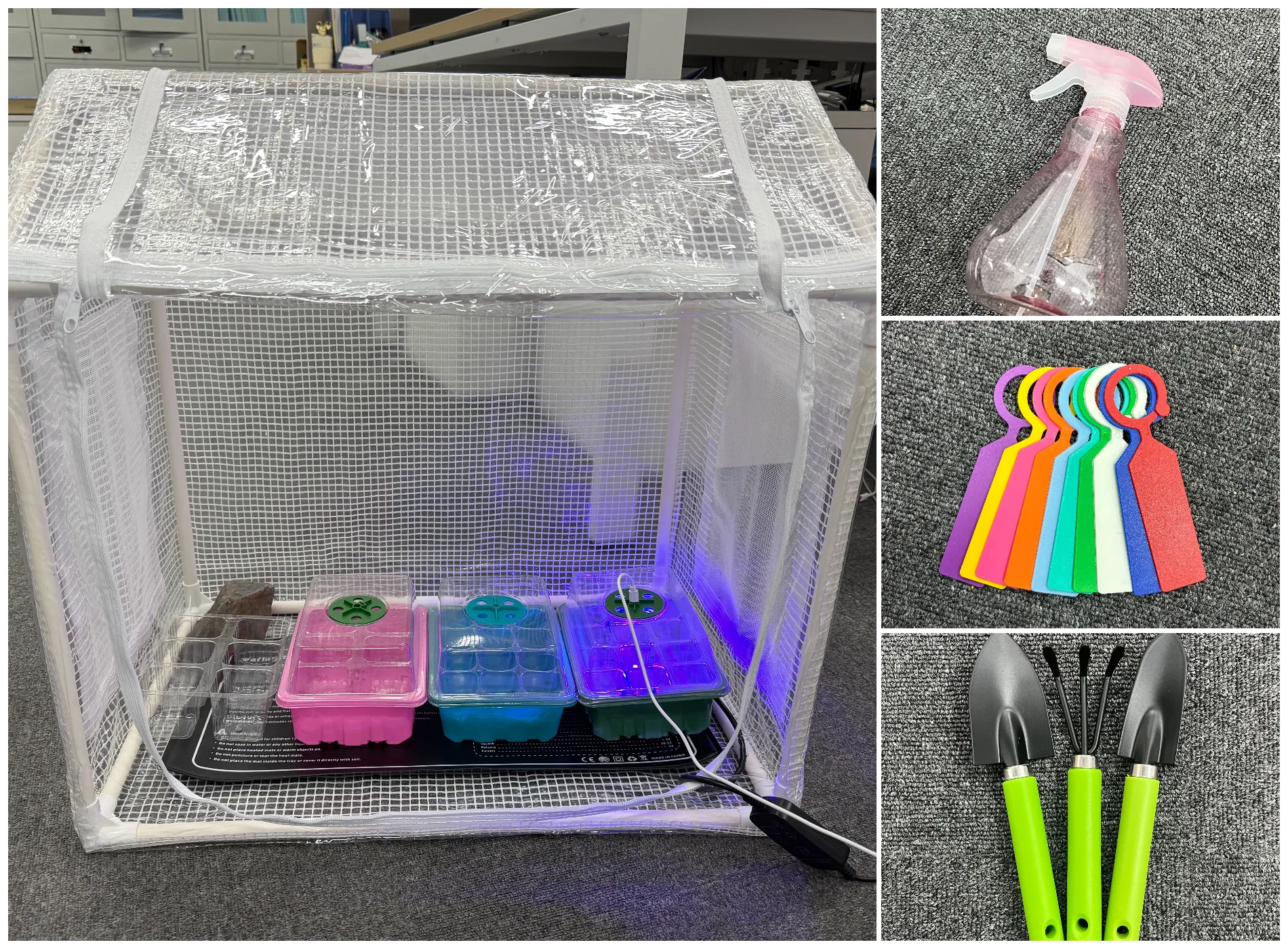
| Environment Preparation | Mini Greenhouse (Flat-Pack, Customer Assembly) | SKU-A: Single-Tier Transparent 50 pcs; SKU-B: Two-Tier Semi-Transparent 50 pcs; SKU-C: Multi-Tier Floor Model 50 pcs | Creates a stable seed-starting environment | Multiple styles give customers choices. Single-tier suits limited desktop space, two-tier suits larger propagation needs, and floor models suit advanced growers. Flat-pack packaging reduces shipping volume. |
| Environment Preparation | Heat Mats | SKU-A: Green Standard Version 50 pcs; SKU-B: Black Temperature-Controlled Version 50 pcs | Maintains soil temperatures required for germination | Color differentiation helps customers quickly identify options. Green standard models suit mild climates, while black temperature-controlled versions suit colder regions. Standard 10" × 20.75" size matches common propagation trays. |
| Environment Preparation | LED Seed Starting Kits (Stackable Packaging) | SKU-A: 48-Cell Full-Spectrum 50 pcs; SKU-B: 72-Cell Three-Color Light 50 pcs | All-in-one lighting solution for indoor propagation | Different cell counts target different users. Larger 48-cell trays are beginner-friendly, while 72-cell versions maximize seedling output per square foot. |
| Sowing | Seed Trays / Plug Trays | SKU-A: 12 Cells 50 pcs; SKU-B: 24 Cells 50 pcs; SKU-C: 72 Cells 50 pcs | Standardized sowing containers | 12-cell trays suit large seeds such as pumpkins and sunflowers. 24-cell trays suit medium-sized seeds such as tomatoes and peppers. 72-cell trays suit small seeds such as basil and thyme. |
| Sowing | Plant Labels | SKU-A: Waterproof White Labels 50 Packs; SKU-B: Chalk Labels 50 Packs | Marks varieties and sowing dates | Combination of waterproof and chalk labels. OEM printing available. |
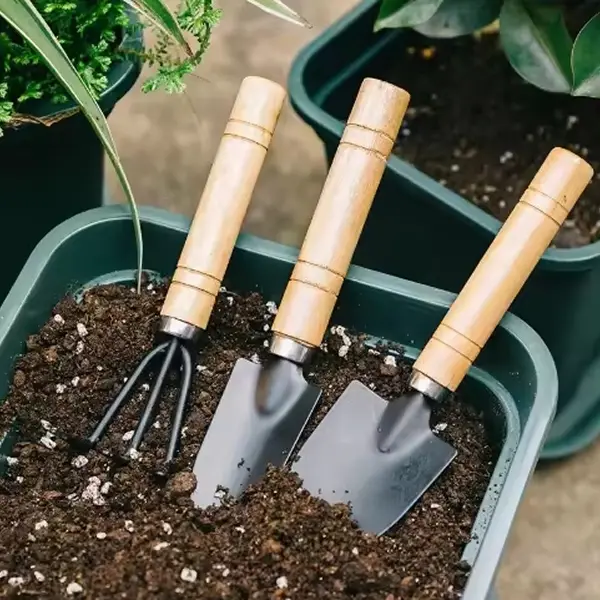
| Sowing | Garden Trowel / Transplanter | SKU2509002: Compact Size (16–18.5 cm) 50 pcs | Sowing and transplanting operations | Ergonomic handle and rust-resistant stainless steel construction. Compact size suits seed-starting work. |
| Daily Care | Indoor Watering Can | SKU2509064: 3–10L 50 pcs | Precise watering of seedlings | Long spout prevents disturbing seeds and young plants. |
| Daily Care | Scissors / Pruners | SKU2509003: Lightweight Model 105g 50 pcs | Thinning and pruning seedlings | Stainless steel blades with safety lock. Lightweight design suitable for extended use. |
| Protection & Organization | Gardening Mat | SKU-A: Green 50 pcs; SKU-B: Brown 50 pcs | Protects indoor tables and floors | Waterproof design with corner snaps that create a contained workspace. Easy to clean. |
| Protection & Organization | Apron | SKU-A: Oxford Fabric 50 pcs; SKU-B: Canvas 50 pcs | Keeps clothing clean during gardening | Multi-pocket design for tool storage. Custom logo available. |
| Protection & Organization | Gloves | SKU2509108: Nitrile-Coated 50 Pairs | Hand protection during gardening tasks | Lightweight and breathable for indoor use. Nitrile coating improves grip. |
How to Organize Displays Around the Planting Journey
Four-Station Display Flow
Divide the seed-starting area into four stations based on the planting process. As customers follow the journey, they naturally purchase the products needed at each stage.
Station 1: Prepare the Environment
- Mini Greenhouses
- Heat Mats
- LED Seed Starting Kits
Station 2: Start Sowing
- Seed Trays
- Seed Starting Mix
- Seeds
- Plant Labels
- Garden Trowels
Station 3: Daily Care
- Indoor Watering Cans
- Scissors
- Gloves
Station 4: Prepare for Transplanting
- Transplanters
- Gardening Mats
- Aprons
Each station should include a simple information card explaining:
- What is needed at this stage
- Why it is needed
This reduces decision anxiety and encourages additional purchases.
We provide a one-stop sourcing service including all products referred to before.
Three Effective Display Formats
1. Lifestyle Display Window
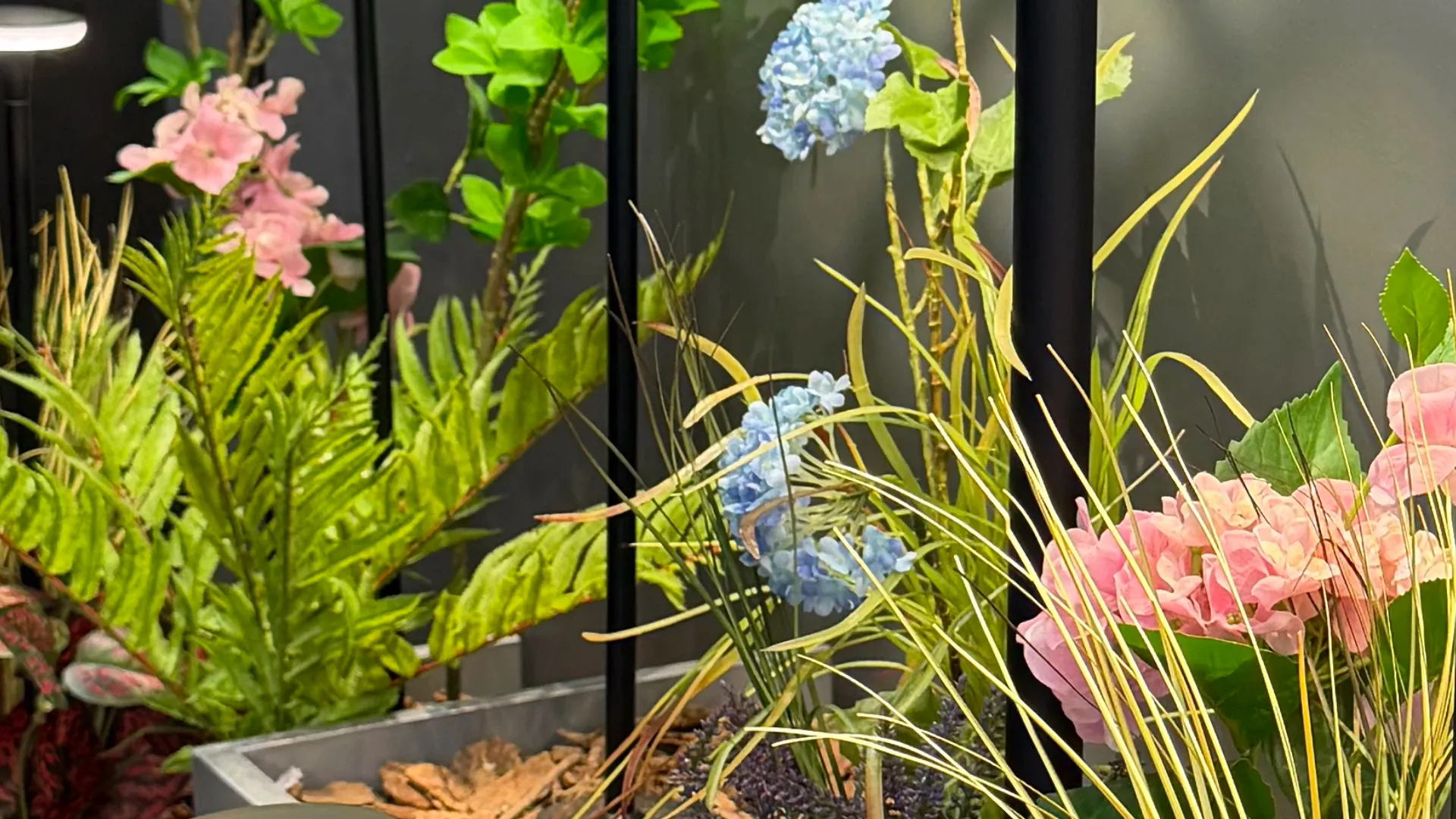
Create a complete seed-starting setup near the entrance of the garden center.
Place seed trays inside a mini greenhouse, install heat mats underneath, add labels, LED grow lights, and a watering can nearby.
Customers see a finished growing solution rather than a collection of individual components.
2. Seed Starting Kit Section
Bundle key products into ready-to-use packages.
Beginner Seed Starting Kit
- Seed Trays (24-cell × 50 pcs + 72-cell × 50 pcs)
- Plant Labels (Waterproof 50 packs + Chalk Labels 50 packs)
- Indoor Watering Cans 50 pcs
- Garden Trowels 50 pcs
Complete Seed Starting Station
- Mini Greenhouses (Single-Tier Transparent 50 pcs + Two-Tier Semi-Transparent 50 pcs)
- Heat Mats (Green Standard 50 pcs + Black Temperature-Controlled 50 pcs)
- LED Seed Starting Kits (48-Cell 50 pcs + 72-Cell 50 pcs)
- Plant Labels 50 packs
- Gloves 50 pairs
Bundle pricing can be set at approximately 75–85% of the combined individual product value.
This also reduces direct price comparisons because the bundled combination is unique to your store.
3. Tiered Information Displays
Place simple planting schedule cards beside products.
Show customers:
- What crops should be started now
- When transplanting should occur
For example:
“Tomatoes should be started 6–8 weeks before the last frost date.”
When customers see this information, they immediately realize:
“I need to buy this now.”
One Often Overlooked Detail
Greenhouse thermometers should be placed at tray level rather than at eye level.
Ground-level temperatures can be 5°C lower than temperatures near the top of the structure.
A thermometer mounted too high provides misleading readings.
Simply placing thermometers correctly demonstrates professionalism and expertise.
Key Details to Confirm Before Procurement
| Procurement Checkpoint | What Buyers Should Confirm | Why It Matters |
| Arrival Time Coordination | Greenhouses may require 35 days, labels 15 days, and LED lights 40 days. | A 20-day arrival gap can prevent the display from being assembled on time. Using a sourcing coordinator ensures synchronized arrivals and immediate merchandising. |
| Product Compatibility | Does the heat mat fit the tray size? Does the greenhouse shelf spacing accommodate the LED kit? | Size mismatches are among the most common sourcing mistakes. |
| Packaging Consistency | Are packaging styles, fonts, and visual identities consistent across suppliers? | Inconsistent packaging weakens the overall impact of a solution-based display. |
| Information Cards & Planting Schedules | Are simple usage instructions included? How warm should the heat mat be? How long should LEDs operate? When should seedlings be transplanted? | Without information cards, the display remains a product pile. With information cards, it becomes a solution center. |
| Sample Verification Process | Double-sample system: one sample sent to the buyer, one retained in the warehouse as the production reference. | Differences between approved samples and bulk orders can damage customer trust and store reputation. |
Common Procurement Risks and How to Reduce Them
| Risk | Why It Happens | How to Reduce It |
| Fragmented Procurement Leads to Fragmented Displays | Products sourced from multiple suppliers arrive at different times with inconsistent packaging. | Use a sourcing coordinator to synchronize arrivals and maintain consistent packaging standards. |
| Products Without Information | Products are stocked, but customers receive no guidance on how to use them. | Add information cards, planting schedules, and simple growing guides. Their cost is minimal, but their impact on conversion is significant. |
| Samples Do Not Match Production Orders | Display samples look great, but delivered goods differ. | Implement a double-sample verification system. |
| Seed Starting Area Only Operates During Spring | Most seed-starting sales occur between February and April. | Rebrand the area as an “Indoor Growing Station.” Use heat mats and LED lighting to attract indoor gardeners year-round and extend the selling season beyond spring. |
Frequently Asked Questions
Q: What is the minimum number of SKUs needed for a complete indoor seed-starting station?
A basic station requires approximately 8–10 SKUs:
- Mini Greenhouses (at least two styles, minimum 50 units each)
- Heat Mats (at least two styles, minimum 50 units each)
- Seed Trays (at least two cell sizes, minimum 50 units each)
- Plant Labels
- Garden Trowels
- Watering Cans
- Scissors
- Gloves
These products cover the core process from sowing to transplanting.
The key is providing multiple options within each category—such as single-tier versus two-tier greenhouses, green versus black heat mats, and 12-cell versus 72-cell trays—rather than offering only one version of each product.
Additional products such as LED lights, gardening mats, and aprons can be added later based on sales performance.
Q: How much display space is required?
A basic seed-starting station with 8–10 SKUs requires approximately 3–4 square meters.
If bundled kits and information displays are included, 5–8 square meters is recommended.
The key is organizing the area around the planting journey rather than allocating space by product category.
Q: How should samples be arranged?
We use a double-sample process.
Two identical samples are prepared:
- One sample is sent to you for approval.
- One sample is labeled and retained in our warehouse as the production reference.
Small samples such as labels, gloves, and scissors are typically shipped via UPS, FedEx, or other international courier services.
Larger samples such as greenhouse components are delivered through door-to-door logistics services.
When multiple products are involved, all samples are consolidated at the warehouse and shipped together.
Q: How are information cards and planting schedules created?
We can provide reference content for product instructions and planting schedules.
You can then adapt the content according to your local climate and target market before printing.
The cost is minimal, but the impact on conversion can be substantial.
We recommend at least one information card per display station.
Q: What are the MOQ requirements for OEM aprons and plant labels?
OEM printing for plant labels generally has relatively low MOQs, often starting at 1,000–2,000 pieces.
Custom logo embroidery on aprons typically requires moderate MOQs, often around 200–500 pieces.
We recommend starting with customized plant labels because they offer low cost and high brand visibility. Additional branding can then be expanded to aprons and packaging.
Q: What if a product category sells particularly well? How long does replenishment take?
Consumable products such as labels and seed trays can usually be replenished within 30–45 days.
Core products such as greenhouses, heat mats, and LED lights should be stocked more carefully because replenishment often requires 45–60 days.
Since the sales window is concentrated, stockouts can result in missed seasonal opportunities.
How We Support Buyers
Scarecrow Garden Supplier helps garden centers and retail buyers organize mixed garden product ranges from China. We focus on practical garden products, seasonal product combinations, packaging coordination, product checking, and consolidated shipment support.
If you are building or upgrading an indoor seed-starting station, we can help you:
Organize a Complete Seed Starting Product Range
Tell us your display area, target customer profile, and price range.
We can organize a product list based on the planting journey approach, providing 2–3 options within each category—such as single-tier and two-tier greenhouses, green and black heat mats, and 12-cell and 72-cell trays.
Mixed orders from 50 units per style allow customers to choose from multiple options instead of seeing only one version.
Arrange Simultaneous Sample Verification
Using our double-sample process, all products are consolidated in our warehouse and shipped together.
After receiving them, you can assemble the entire station according to the four-stage display flow and evaluate product compatibility, color coordination, and merchandising effectiveness as a complete solution rather than reviewing categories separately.
Coordinate Secondary Packaging and Bundle Assembly
Our warehouse can combine multiple products into ready-to-sell kits such as:
- Beginner Seed Starting Kit
- Complete Seed Starting Station
Products arrive at your store ready for merchandising without requiring additional unpacking and reassembly.
Recommend New Products Continuously
We continuously monitor seasonal gardening trends and emerging product categories.
Based on your customer profile, we regularly recommend new products that help keep your seed-starting station competitive and up to date.
Simplify Your Garden Product Sourcing from China
We help you combine multiple product categories into one sourcing flow with supplier matching, sample verification, and consolidated shipping.

Written by
ScarecrowGarden
💡About Scarecrow Garden Supplier Co., Ltd.
Scarecrow Garden Supplier Co., Ltd. is a China-based sourcing and wholesale partner specializing in garden tools, landscaping equipment, and outdoor supplies for international wholesalers, distributors, contractors, and brands.
With hands-on experience rooted in real garden use scenarios, we focus on durable materials, functional design, and stable large-volume supply. Our product range covers pruning tools, watering systems, hand tools, outdoor hardware, and customized garden solutions to support both retail and professional landscaping markets.
Beyond products, we help our partners navigate supplier selection, quality control, compliance requirements, and long-term sourcing strategies in China. Through our blog, we share practical insights on product selection, material comparisons, industry trends, and cost-effective purchasing—helping global buyers build stronger, more competitive supply chains.