







Boost Spring Sales: Why Garden Centers Need Wholesale Seed Starting Kits Now | Scarecrow Garden Supplier
The peak sales season for garden centers typically runs from April to June, but customers begin planning their planting projects as early as February. They need to start seedlings indoors 6–8 weeks before the last frost so they can transplant them outdoors when the weather warms up.
→We have launched the Winter & Early Season Garden Products Range
The problem is that many garden centers have not yet begun actively promoting spring products in February. Customers come in looking for solutions, find very little available, and end up ordering online instead.
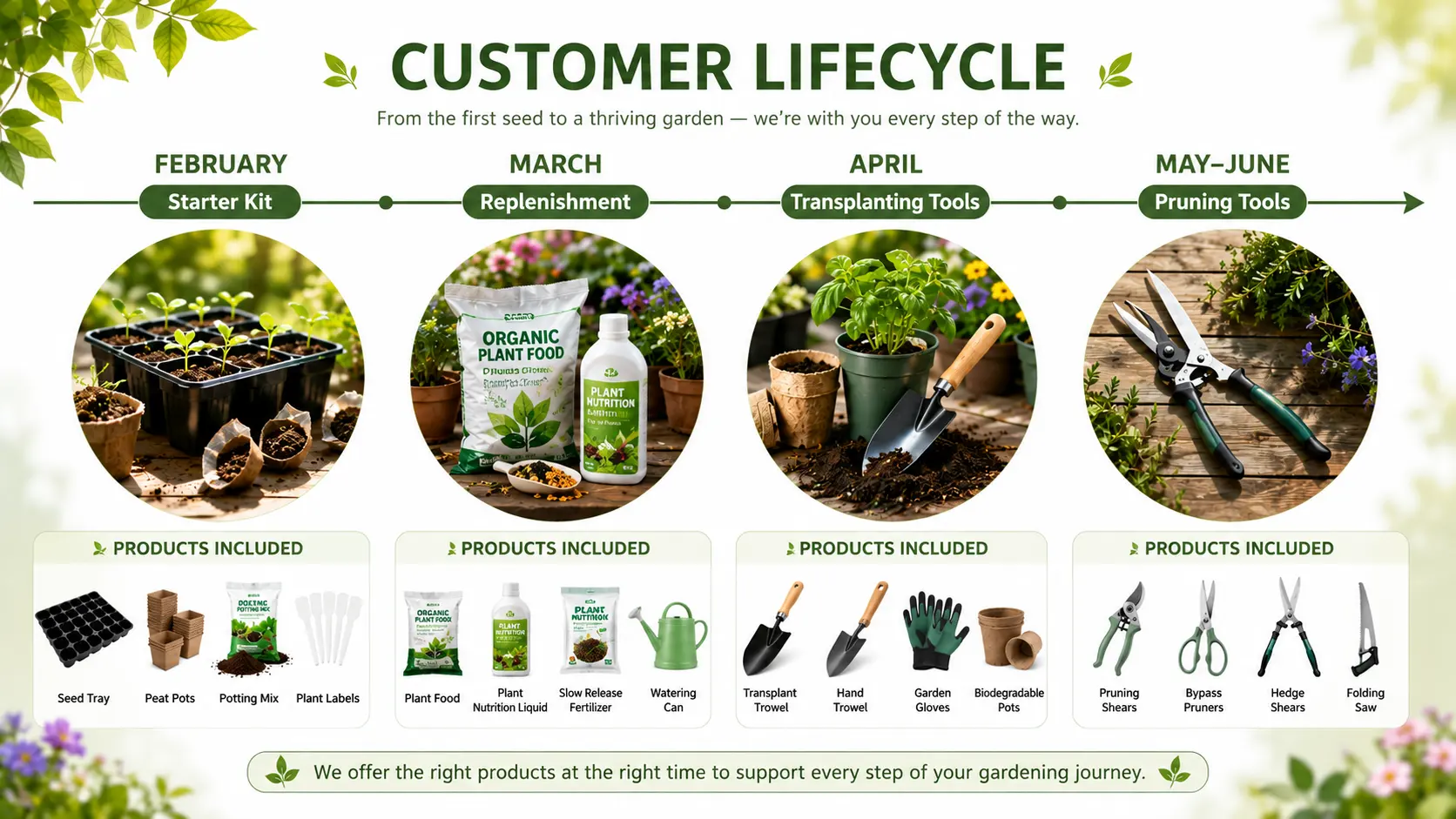
A Seed Starting Kit helps bridge this timing gap. It gives garden centers something meaningful to sell in February—and not just a packet of seeds, but a complete solution covering the journey from sowing to transplanting. A customer who buys a kit in February may return in April for transplanting tools and again in June for pruning tools. A $15 seed starting kit can become the beginning of a year-long customer relationship.
This article explains why seed starting kits should be viewed as customer acquisition tools rather than products, three ways to design seed starting kits, how to use them for customer acquisition, and the key sourcing considerations buyers should pay attention to.
Why Seed Starting Kits Are a Customer Acquisition Tool, Not Just a Product
Traditional "Wait for Customers" Sales Model
| Month | Customer Behavior | Garden Center Status |
|---|---|---|
| January–February | Searching for seed starting supplies and suppliers | Spring products not yet actively promoted |
| March | Some customers begin starting seeds | Spring products gradually arrive |
| April–June | Major purchases of plants and garden tools | Peak sales season |
| After July | Demand declines | Off-season |
The problem is simple: customers are already looking for seed-starting supplies in February, but many garden centers are not ready. Where do those customers go? Online.
Once they find a supplier online, there is no guarantee they will return to your store in April.
The "Lock-In Early" Logic of Seed Starting Kits
| Month | Customer Behavior | Garden Center Action |
| January | Sees your seed starting kit promotion | Promote kits through social media and email |
| February | Visits store and purchases kit | Display kits and upsell heat mats and LED lights |
| March | Returns for labels and seed trays | Repeat purchases of consumables |
| April | Returns for transplanting tools and containers | Cross-selling around transplanting |
| May–June | Returns for pruning tools and aprons | Cross-selling around plant maintenance |
A $15 seed starting kit is not securing a single transaction—it is securing a customer relationship that may last four to six months.
Three Ways to Design Seed Starting Kits
Kit 1: "Windowsill Seed Starting Starter Kit"
Target Customer: First-time growers and apartment residents
Positioning: The lowest-barrier entry point for seed starting
| Product | Quantity | Selection Notes |
| 24-cell seed tray with clear dome | 1 | Clear dome acts as a mini greenhouse |
| Small bag of seed starting mix | 1 | Sterile seed-starting medium |
| Plant labels | 6 | Waterproof labels |
| Mini indoor watering can | 1 | Fine spout, 200–300ml |
Why Doesn't This Kit Include a Heat Mat or LED Light?
The goal of this kit is to keep the price barrier extremely low.
A south-facing windowsill typically provides enough light in February and March, and indoor heating often maintains temperatures suitable for germination.
Heat mats and LED lights are recommended as upgrade options. When customers return to purchase them later, average order value increases.
Kit 2: "Complete Seed Starting Station"
Target Customer: Serious gardeners and households with gardens
Positioning: A complete solution covering the entire seed-starting process
| Product | Quantity | Selection Notes |
| Desktop mini greenhouse | 1 | Flat-packed for self-assembly, includes vents and shelves |
| Heat mat | 1 | Sized to fit greenhouse base |
| LED grow box | 1 | Full-spectrum lighting with timer |
| 48-cell seed trays | 2 | Allows batch sowing and staggered transplanting |
| Seed starting mix | 2 bags | Enough for two trays |
| Plant labels | 20 | Waterproof labels and chalk labels |
| Garden trowel and transplanting tool | 1 each | Ergonomic handles |
| Indoor watering can | 1 | BPA-free material |
| Pruning scissors | 1 | Stainless steel with safety lock |
| Gardening gloves | 1 pair | Lightweight, breathable, touchscreen compatible |
| Gardening mat | 1 | Waterproof, roll-up design, 50×70cm |
Kit Logic
This kit covers the entire process from sowing to transplanting. Customers can begin immediately after opening the box without needing to purchase additional accessories.
Kit 3: "Kids' Seed Starting Experience Kit"
Target Customer: Families with children aged 4–10
Positioning: Safe, fun, and easy to use
| Product | Quantity | Selection Notes |
| 12-cell seed tray with colorful dome | 1 | Bright colors attract children |
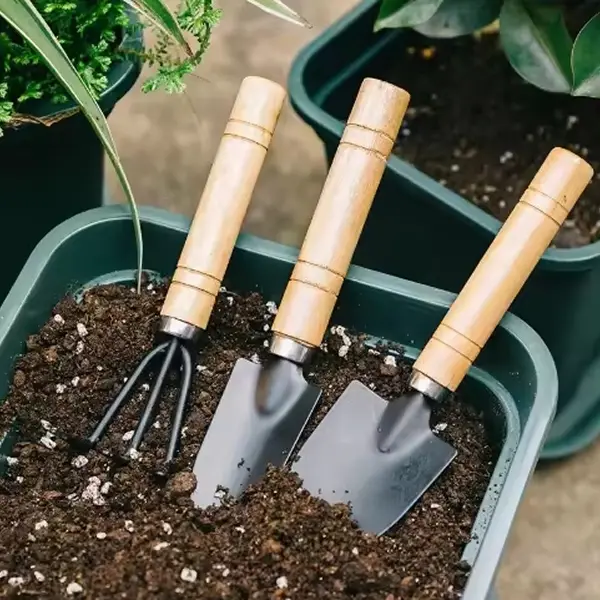
| Mini gardening tool set (3 pieces) | 1 set | Trowel, rake, and transplanting tool with rounded safety edges |
| Mini indoor watering can | 1 | Lightweight for children |
| Colorful plant labels | 6 | Writable and reusable |
| Children's gardening gloves | 1 pair | Sized for ages 4–10 |
| Children's gardening apron | 1 | Optional custom cartoon designs |
Market Opportunity
Growing interest in gardening education and the popularity of family gardening content on social media are driving demand for children's gardening kits.
Aprons and labels can support OEM customization. Adding a garden center logo or custom cartoon graphics turns the product into both a gardening kit and a branding tool.
Using Seed Starting Kits to Drive Social Media Customer Acquisition — Creating a Closed Loop from February Sowing to June Purchasing
Seed starting kits are unique because they involve a long participation cycle.
Customers sow seeds in February and transplant them in April or later. This creates a three- to four-month engagement period that naturally lends itself to social media interaction.
User-generated content (UGC) has been shown to influence purchasing decisions far more strongly than influencer content. Every seedling photo shared by a customer can be more persuasive than an advertisement created by the garden center itself.
Key Insight: Germination Is the Peak Sharing Moment
When customers see their first seedling emerge, they naturally want to take a photo and share it.
The goal is not to force customers to share content, but to provide a framework—hashtags and incentives—that turns spontaneous sharing into brand exposure.
| Stage | Timing | Customer Activity | Marketing Opportunity |
| Sowing | February | Purchases kit and plants seeds | "My First Seed Starting Day" posts |
| Germination | February–March | First sprouts appear | Highest enthusiasm and sharing motivation |
| Growth | March–April | Seedlings continue developing | Ongoing growth diary content |
| Transplanting | April–June | Plants moved outdoors | Success stories that drive seasonal sales |
Six Social Media Campaign Ideas for Garden Centers
Campaign 1: #MySeedlingDay Challenge
- Launch during the February seed-starting season.
- Place signage in the seed-starting display area: "Snap & Share! #MySeedlingDay @[Garden Center Name]"
- Customers post sowing photos on Instagram or Facebook.
- Repost several customer submissions each week.
Why It Works: Sowing feels like a milestone moment. Customers already want to document it. The hashtag creates a sense of community among participants.
Campaign 2: Seedling Growth Diary
- Launch a 30-day growth challenge.
- Customers post updates on Day 1, Day 7, Day 14, Day 21, and Day 30.
- The garden center creates weekly summary posts featuring customer progress.
Why It Works: Thirty days creates multiple brand touchpoints while generating ongoing content without requiring the garden center to create everything itself.
Campaign 3: First Sprout Photo Contest
- Customers upload photos of their first sprout.
- Winners receive gift certificates redeemable during the spring season.
Why It Works: Germination is the most exciting stage. Gift certificates encourage customers to return during the peak selling season.
Campaign 4: Plant Parent Community
- Create a Facebook Group or Instagram community such as "[City Name] Plant Parents."
- Every seed-starting kit purchase includes an invitation to join.
- Share seed-starting advice, transplanting guides, and pest-control tips.
- Staff answer questions and build trust.
Why It Works: Communities are owned audiences that are not dependent on platform algorithms. Trust developed inside the community translates into future purchases.
Campaign 5: Before & After Transplanting Showcase
- Encourage customers to share comparison photos.
- Before: seedlings in trays during February.
- After: mature plants growing in gardens or on balconies.
Display customer photos both in-store and online using the hashtag #GrownByOurCustomers.
Why It Works: Before-and-after content is highly persuasive and inspires other customers to try gardening themselves.
Campaign 6: Kids Grow Club
- Offer a special children's seed-starting kit including child-sized gloves, colorful labels, and seeds.
- Include a "My Plant Diary" activity card.
- Encourage parents to share photos using #KidsGrowClub @[Garden Center Name].
- Select a monthly "Best Young Gardener."
Why It Works: Parents enjoy sharing their children's achievements. Children's participation often brings entire families into the store.
The Complete Timeline: From February Sowing to June Sales
February:
Seed Starting Kit Launch + #MySeedlingDay Campaign + Seed Sowing
↓
March:
First Sprout Contest + Growth Diaries + Seedling Development
↓
April:
Before & After Campaign + Community Engagement + Transplanting Tool Purchases
↓
May–June:
Customer Garden Wall + Community Member Return Visits + Peak Season Sales
The Key Loop
The seed-starting kit is not only the seed for future plants—it is the seed for future customer engagement.
Customers buy a kit in February, share photos in March, return for transplanting tools in April, and purchase pruning tools and additional plants in May and June.
Every social media post becomes a potential source of traffic for your peak-season business.
Connecting Marketing Campaigns with Purchasing Plans
Social media marketing directly affects product sourcing needs.
| Marketing Campaign | Required Products | Scarecrow Support |
| #MySeedlingDay | Seed starting kits and hashtag cards | Custom printed cards included in kits |
| Growth Diary | LED grow boxes | Healthier seedlings create better photos |
| First Sprout Contest | Seed trays and heat mats | Higher germination rates create more content |
| Plant Parent Community | Thermometers and hygrometers | Useful discussion topics within the community |
| Before & After | Transplanting tools and gardening mats | Additional seasonal purchases |
| Kids Grow Club | Children's gloves, labels, and seeds | Child-sized accessories available |
Purchasing Recommendation
If you plan to run social media campaigns, do not source only seed-starting kits.
Also include marketing materials, heat mats, LED lights, thermometers, hygrometers, and other supporting products in your sourcing plan so that your marketing activities are supported by the right products.
Key Details to Confirm Before Purchasing
| Checklist Item | What Buyers Should Confirm | Why It Matters |
| Product compatibility | Tray sizes, label quantities, heat mat dimensions | Mismatched products create a poor customer experience |
| Kit pricing | Lower than the total individual product cost | Customers need a reason to buy the bundle |
| Information card included | Planting instructions and timeline | Helps customers succeed |
| Shared products across kits | Labels and watering cans used in multiple kits | Simplifies sourcing and maintains consistency |
| OEM priorities | Labels and packaging first, aprons and gloves later | Lower MOQ and lower risk |
Common Purchasing Risks and How to Reduce Them
| Risk | Why It Happens | How to Reduce It |
| Product size mismatch | Components sourced separately | Assemble and verify the entire kit before purchasing |
| Weak bundle pricing | Kit costs the same as individual items | Bundle should offer clear savings |
| Missing instruction card | Customers do not know how to use products | Include a simple guide |
| Selling only kits | Some customers want individual items | Offer both bundles and individual products |
| Excessive OEM customization at launch | Increases MOQ and communication complexity | Start with labels and packaging |
Frequently Asked Questions
Q: When is the best time to launch seed starting kits?
Mid-January through early February. Begin social media promotion in January and have products available by February.
Q: What is the replenishment cycle?
Consumables such as labels, trays, and growing media are typically replenished within 30–45 days.
Q: What safety requirements apply to children's kits?
Rounded tool edges, correctly sized gloves, and appropriate apron materials should comply with the safety standards of the target market.
Q: What are the typical OEM MOQs?
Plant labels generally have lower MOQs, packaging boxes have medium MOQs, and embroidered aprons typically require higher MOQs.
Q: How should samples be approved?
We use a dual-sample system. One sample is sent to the customer while another remains in our warehouse for reference. Small items are shipped by international courier such as UPS or FedEx, while larger items are delivered through door-to-door freight services.
Upon receipt, buyers should:
- Assemble the complete kit and verify compatibility.
- Check packaging quality and structural strength.
- Simulate the customer unboxing experience.
Q: What if the kits do not sell well?
Every component can be sold individually. Labels, watering cans, trowels, and gloves remain year-round product categories.
A low-cost approach can start with a simple branded insert card featuring a hashtag. More advanced options include customer photo walls and sprout photo contests.
Focus on the germination stage. Include hashtag cards, organize photo contests, and regularly repost customer content.
How We Support Buyers
Scarecrow Garden Supplier helps garden centers and retail buyers organize seed starting kit product ranges from China. We focus on practical garden products, seasonal product combinations, packaging coordination, product checking, and consolidated shipment support.
If you are planning to use seed starting kits as a customer acquisition tool, we can help with:
- Organizing seed starting kit product solutions — Tell us your kit design (starter, complete, or children's version) and social marketing plan, and we can help coordinate product selection, size matching, OEM packaging, and consolidated shipment.
- Marketing material support — Custom-branded insert cards featuring hashtags can be added to kits at minimal cost. Children's kits can include customized "My Plant Diary" cards.
- Secondary packaging coordination — We can assemble products into gift-box-style kits, including insert cards and planting guides.
- Sample confirmation support — Through our dual-sample system, buyers can verify product compatibility, packaging quality, and the complete customer unboxing experience before placing production orders.
Simplify Your Garden Product Sourcing from China
We help you combine multiple product categories into one sourcing flow with supplier matching, sample verification, and consolidated shipping.
Written by
ScarecrowGarden
💡About Scarecrow Garden Supplier Co., Ltd.
Scarecrow Garden Supplier Co., Ltd. is a China-based sourcing and wholesale partner specializing in garden tools, landscaping equipment, and outdoor supplies for international wholesalers, distributors, contractors, and brands.
With hands-on experience rooted in real garden use scenarios, we focus on durable materials, functional design, and stable large-volume supply. Our product range covers pruning tools, watering systems, hand tools, outdoor hardware, and customized garden solutions to support both retail and professional landscaping markets.
Beyond products, we help our partners navigate supplier selection, quality control, compliance requirements, and long-term sourcing strategies in China. Through our blog, we share practical insights on product selection, material comparisons, industry trends, and cost-effective purchasing—helping global buyers build stronger, more competitive supply chains.