






Updated 2 months ago
Biodegradable Propagation Pots: Why Plant Fiber Is Becoming a Popular Nursery Choice

hqt
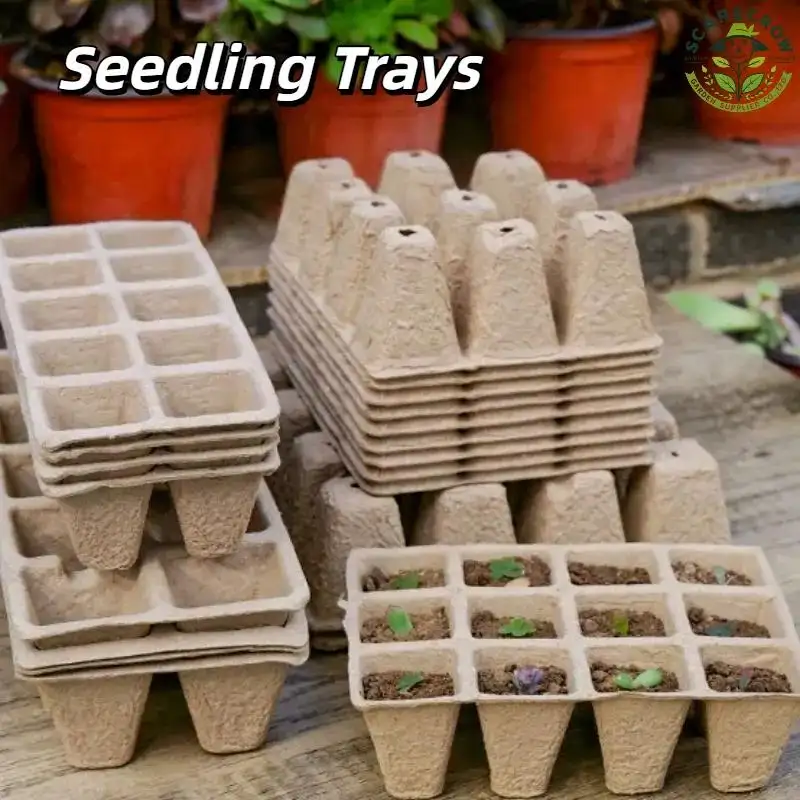
Propagation Pots
Propagation Pots are no longer selected only by diameter and price. For nurseries, greenhouse growers, garden retailers, and seed suppliers, the container has to match the crop cycle, irrigation method, root development, transplant process, and end-use requirements.
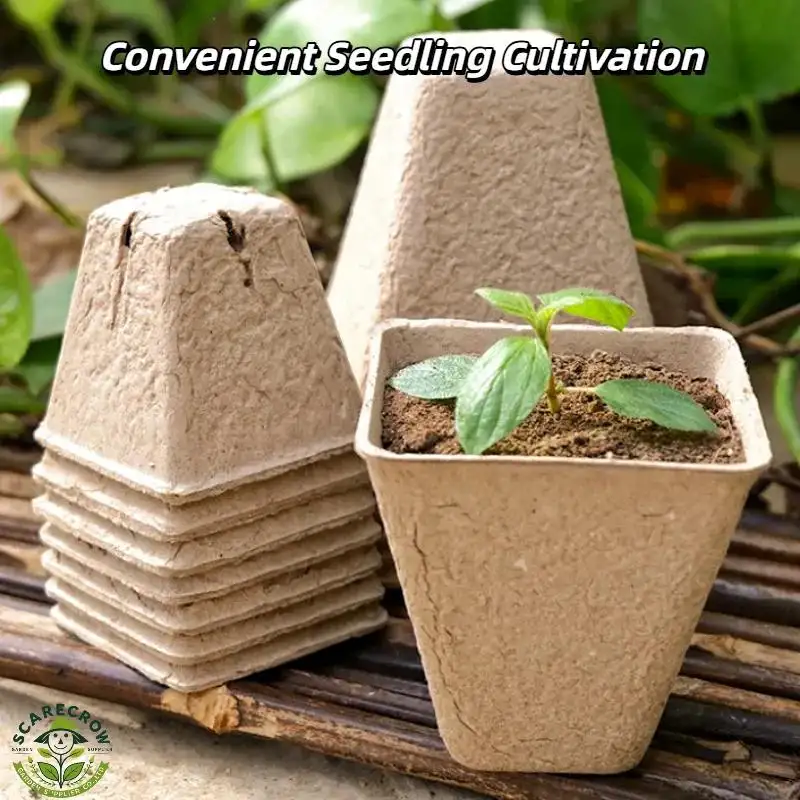
Plant-fiber Propagation Pots are ideal for seed starting and young-plant production. They use a different approach from traditional rigid plastic pots. For growing plants, their design and biodegradable material allow an approach that is more flexible and easier than transplanting from plastic pots.
We develop our Propagation Pots based on how our customers want to use them. Size, wall thickness and fiber density, the pot's moisture retention, and packaging format can all be considered on a case-by-case basis rather than treating every seedling pot as the same product.
What Are Plant-Fiber Propagation Pots?
These pots are made of compressed plant fibers and used for seed starting and nursery propagation. They have a flexible, porous wall that breaks down after transplanting. These pots are the more environmentally friendly alternative to plastic nursery pots.
These pots:
Retain soil: There is no collapse during the germination and development of roots.
•Have airflow in the root zone: The porous walls of these pots allow air and moisture to intermingle, unlike plastic walls.
•Help in transplanting: The porous walls of these pots can break down while transplanting.
•Substitute plastic: The fibers provide a material that can replace plastic for growing containers in the garden centers and nurseries for a short time.
Scarecrow Garden Supplier offers plant fiber Propagation Pots for seed starting of vegetables, flowers, sprouts, succulents, orchids, nursery seedlings, greenhouse propagation, and nursery seed starting.
Why Pot Structure Matters During Propagation
The environmental value of biodegradable material is useful, but successful nursery performance depends more directly on the physical structure of the Propagation Pots.
Fiber Density Controls Structural Stability
Fiber density affects how tightly the plant fibers are compressed. It influences:
•Resistance to deformation during filling;
•Stability during watering;
•Stacking and handling performance;
•How long the pot can maintain its shape before transplanting.
A short-cycle vegetable seedling may not need the same structure as a young ornamental plant kept in a nursery for a longer period.
For this reason, Scarecrow Garden Supplier can evaluate different compression densities and wall structures according to the intended growing cycle.
Wall Thickness Must Match Nursery Duration
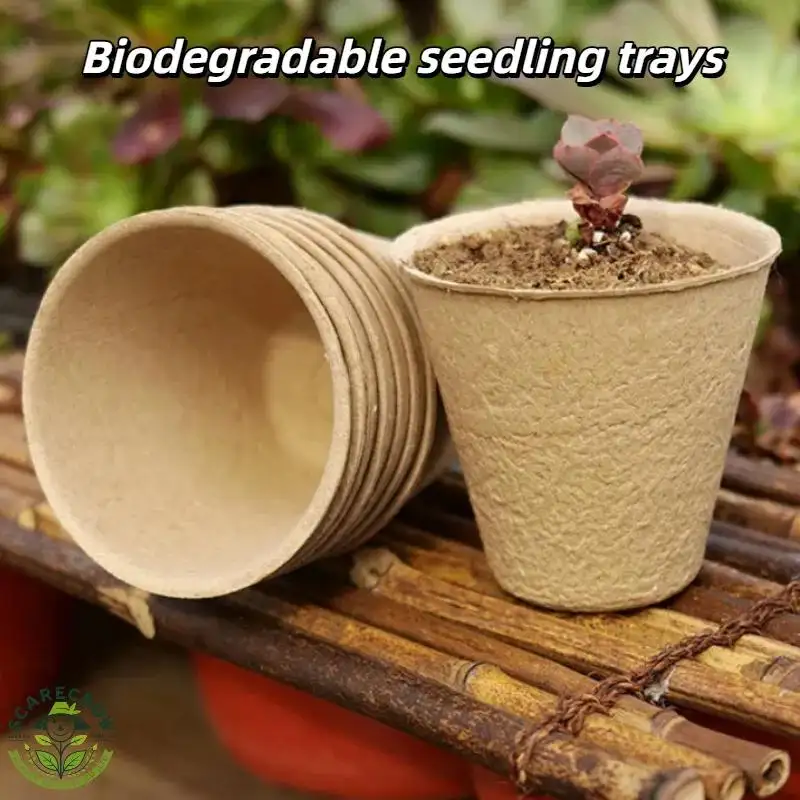
Thicker is not automatically better. The correct wall thickness should balance:
Handling Strength + Moisture Exposure + Growing Duration + Transplant Requirements
A lightweight Propagation Pot can be appropriate for rapid seed-starting programs, while a longer propagation cycle may require increased structural strength.
Water Behavior Should Be Evaluated in Wet Conditions
Plant fiber naturally interacts with water, so a dry-pot inspection alone is not sufficient.
Nurseries should consider:
• Watering frequency;
•Irrigation method;
•Growing-medium moisture retention;
•Drainage;
•Greenhouse humidity;
•Expected time before transplanting.
This is why wet-state stability is an important specification when developing biodegradable Propagation Pots for commercial propagation.
How Propagation Pots Affect Transplant Workflow
Conventional plastic nursery production often follows:
Grow → Remove Pot → Separate Container → Handle Root Ball → Transplant
Plant-fiber Propagation Pots can support a simpler workflow:
Grow → Transfer Seedling With Pot → Plant Into Soil
This can reduce handling of young root systems and eliminate the separate pot-removal step where direct transplanting is appropriate.
The advantage is particularly relevant for:
•Vegetable seedlings;
•Flower plugs;
•Young herbs;
•Greenhouse starts;
•Retail seed-growing programs;
•Delicate young plants requiring careful root-ball handling.
However, transplant timing remains important. The pot should maintain adequate strength during propagation while being suitable for the intended post-transplant environment.
Plant Fiber Propagation Pots vs. Plastic Nursery Pots
Neither container format is universally better. The correct choice depends on the production system.
| Decision Factor | Plant-Fiber Propagation Pots | Plastic Nursery Pots |
| Pot wall | Porous fiber structure | Non-porous plastic structure |
| Direct transplanting | Suitable for compatible programs | Pot normally removed |
| Wet durability | Depends on density and thickness | Generally high |
| Long growing cycles | Requires specification matching | Often suitable |
| Reuse potential | Generally limited | Often reusable |
| Material end-of-use | Designed to break down under suitable conditions | Requires reuse, recycling, or disposal route |
| Retail positioning | Strong fit for plant-fiber gardening ranges | Established conventional format |
For buyers changing from plastic to biodegradable Propagation Pots, the decision should therefore involve more than simply replacing one material with another.
Matching Propagation Pots to Different Plants
Different crops place different demands on a propagation container.
| Application | Main Growing Requirement | Propagation Pot Focus |
| Vegetable seedlings | Fast propagation cycle | Lightweight structure and easy transplanting |
| Flower seedlings | Stable young root ball | Balanced thickness and moisture behavior |
| Succulents | Controlled moisture | Drainage and pot dimensions |
| Orchid seedlings | Root-zone airflow | Breathable structure and suitable depth |
| Greenhouse nursery plants | Frequent handling | Wet strength and dimensional consistency |
| Retail seed kits | Simple consumer use | Compact size and retail-ready packaging |
At Scarecrow Garden Supplier, we can match standard or customized Propagation Pots with the intended crop, root volume, growing duration, and retail format.
What Should Buyers Specify Before Bulk Ordering?
A Propagation Pots specification must contain more than just size.
There are a number of other inputs for buyers to consider before production:
•Diameter and height: Based on the root volume, and the VPD (voltage, pressure, density) of the plants
•Wall thickness: Considers ease of handling and length of time the pot remains in the nursery
•Fiber density: The required rigidity and wet stability of the pots
•Growing cycle: Short, intensive cycles of seed-starting may require a different structure from long programs for the nursery
•Irrigation conditions: How often they are watered will influence the performance of the material
•Packing method: Will depend on whether they are used in a bulk nursery or if the material is to be distributed over a number of retail outlets
•Market presentation: The integration of logos, labels, barcodes, assembly / instruction manuals, and retail packaging will need to be considered
Scarecrow Garden Supplier can assist with size selection, structural changes, proprietary logos, retail labels, private carton identification, package design and assembly and will assess the appearance, consistency of size, packing and samples prior to bulk order.
Propagation Pots as Part of a Complete Seed-Starting System
Commercial propagation rarely depends on the pot alone. Propagation Pots often work together with:
•Seed trays;
•Humidity domes;
•Plant labels;
•Seed-starting mats;
•Growing accessories;
•Garden tools;
•Retail seed-starting kits.
Scarecrow Garden Supplier can combine these related garden products into coordinated sourcing programs, helping distributors and retailers reduce the complexity of managing multiple suppliers and packaging formats.
Choosing the Right Propagation Pots
The most suitable biodegradable Propagation Pots should be selected as part of the growing system:
Crop Type + Growing Cycle + Irrigation + Root Volume + Pot Size + Fiber Density + Wet Strength + Transplant Method
Plant fiber provides a valuable alternative to conventional nursery plastics, but its performance depends on how well the pot specification matches the actual propagation process.
Scarecrow Garden Supplier is able to translate crop needs, growing cycles, final size, and required structure as well as packaging to best design a supply solution for propagation pots used primarily by nurseries and garden retailers. Buyers need to make our team aware of the desired end use and volume of the order so that we can assess the best solution of plant fiber propagation pots.
FAQs
Q1. Which materials are Scarecrow Garden Supplier Propagation Pots made of?
Scarecrow Garden Supplier uses Plant-fiber to make biodegradable Propagation Pots. Propagation Pots built with Plant-fiber are lightweight and highly breathable. These Garden Supplier Pots are great for starting seeds, nursery propagation, and greenhouse growing.
Q2. Can Scarecrow Propagation Pots be customized?
Yes. Standard and customized sizes may vary depending on the crop, estimated root volume, length of stay in the nursery, and planting density.
Q3. Can the wall thickness and density of the fiber be customized?
Yes. The wall thickness may be adjusted, as well as compression density. Different combinations of wall thickness and density may be employed, depending on the length of the intended propagation and handling requirements.
Q4. May these Propagation Pots be planted directly in soil?
Yes. These biodegradable Plant-fiber Pots are meant to be planted with seedlings and can even be used when soil and growing conditions are suitable.
Q5. Are these Propagation Pots meant to be used in a greenhouse?
Yes. They are fully designed to be used in greenhouse seed starting and young-plant propagation. Pot size, density of the fiber, wall thickness, and expected length of growth should be considered when using these Pots.