











Updated 5 hours ago
Plastic Landscape Edging Panels: Connector Fit, Ground Anchorage, Curving and Corner Assembly Checks

ScarecrowGarden
💡About Scarecrow Garden Supplier Co., Ltd.
Scarecrow Garden Supplier Co., Ltd. is a China-based sourcing and wholesale partner specializing in garden tools, landscaping equipment, and outdoor supplies for international wholesalers, distributors, contractors, and brands.
With hands-on experience rooted in real garden use scenarios, we focus on durable materials, functional design, and stable large-volume supply. Our product range covers pruning tools, watering systems, hand tools, outdoor hardware, and customized garden solutions to support both retail and professional landscaping markets.
Beyond products, we help our partners navigate supplier selection, quality control, compliance requirements, and long-term sourcing strategies in China. Through our blog, we share practical insights on product selection, material comparisons, industry trends, and cost-effective purchasing—helping global buyers build stronger, more competitive supply chains.
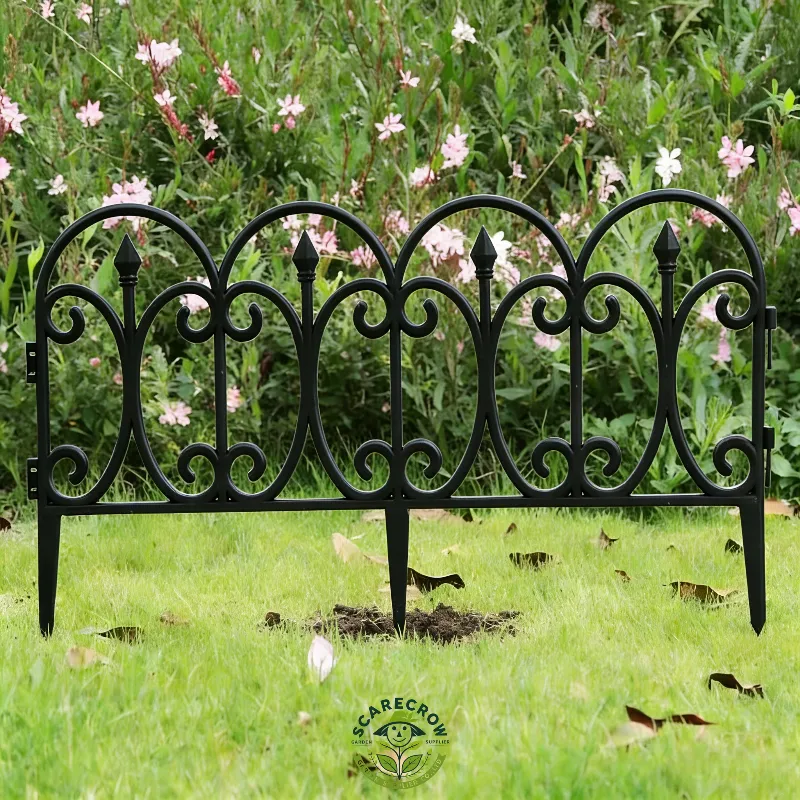
Black decorative plastic landscape edging panel, selected reference variant
Panel appearance alone does not show whether a chosen edging variant joins cleanly, anchors securely in the intended ground, forms curves and corners as documented, or arrives with all required parts.
Start by treating each visible style as a separate configuration. Use the linked plastic landscape edging panels page to identify the product family, then verify the exact variant before transferring any joint, anchor or curve detail.
Map the Edging System Before Measuring It
You cannot evaluate a joint you have not identified. Start by establishing which parts form one installed segment.
Which parts form one installed segment?
Record the panel body, the actual joint or locking surfaces, the actual anchoring parts and any end or corner pieces present on the selected variant. Build the parts list from that variant's sample, drawing or BOM rather than from a different style shown on the same page.
The product family is shown in visibly different styles, including black decorative, brown brick-pattern, white picket and grey woven-pattern versions. Treat them as separate configurations unless the supplier provides a shared BOM. For a black decorative reference sample, do not borrow connector, anchoring or curve details from the brown, white or grey styles.
What installation surface is the buyer actually targeting?
Define the ground condition before testing: prepared soil, a planted bed, a gravel edge, or another surface the manufacturer permits. If the project needs hardscape installation and the product does not support it, that is a different product question, not a test result. Write down the intended surface so the rest of the checks have a context.
Panel-to-Panel Connector Fit
Joint fit deserves a separate check because misalignment may only become visible after several panels are connected.
Do joints seat without forcing, gaps or vertical steps?
Assemble several panels from the same pack, and a few from a different pack, using the documented method. Measure alignment and engagement as you go. Watch for joints that need forcing, that leave a gap, or that produce a vertical step between panels. Do the check on more than one pair, because a single clean joint does not prove the whole run will align.
Can the connection be assembled and disassembled as intended without damage?
Follow the documented assembly and disassembly method, then inspect the actual joint surfaces or locking features for whitening, cracking or permanent deformation if those features are present. Record whether the joint still seats the same way after ordinary assembly; do not turn that observation into a fatigue-life claim.
Ground Anchorage and Installation
If the selected variant uses a stake or spike, can it enter the target ground without panel damage?
Use a defined soil condition and the manufacturer-documented installation method. Record any visible bending or panel damage only for the actual anchor supplied with that variant. If the variant uses another anchoring method, replace this check with that documented method.
Does the installed segment remain stable under the defined comparison condition?
Compare samples under the same stated ground condition and treat the result as relative screening only. Any project load or retention requirement must come from the applicable project/engineering specification, not a universal buyer threshold.
Curves, Corners and Direction Changes
Different edging systems create curves in different ways, so the mechanism needs to be confirmed on the selected variant.
How is a curve actually produced by this system?
Determine whether the panels flex along their length, articulate at the joints, or require dedicated curved parts. Do not infer the method from a marketing photo. The answer has to come from the exact model's assembly evidence. Curving through panel flex, through joint articulation and through dedicated parts each produce different behavior at the joints and at the visible edge.
How are 90-degree or irregular corners handled?
Check whether the system uses a corner accessory or permitted joint geometry, then inspect the gap and height continuity around the corner. If corners are formed only by bending a joint, look at whether the joint closes cleanly or leaves a gap. Record what the manufacturer's instructions actually allow for corners on this variant.
Installed Height, Top Edge and Ground Contact
Once the run is assembled, look at how it sits.
Does installation keep a consistent visible height?
Set up a short straight run in a prepared test area, use a level or a reference line, and photograph the result. Record panel straightness and how evenly the system seats. Keep this as an installation observation; do not translate it into a landscaping-performance claim.
Where can soil, water or debris accumulate around the joint?
Inspect the actual geometry for places where soil, water or debris can collect around a joint, and check cleanability. This is an observation about the geometry in front of you, not a drainage or performance guarantee.
Pack Completeness and Repeat-Order Control
Finish by checking that the retail pack can build the configuration you approved.
Can each retail pack build the advertised length/configuration?
Reconcile the panels and every joint, anchor and accessory actually required by the selected variant against the packing list and a trial assembly. If the pack claims a finished length, confirm it from the supplied parts rather than from a generic family listing.
Which dimensions and material fields must be frozen?
Record the dimensions and fields that must match on reorder:
| Field | What to record |
|---|---|
| Variant | The exact variant, with color and pattern |
| Panel dimensions | Length, height and thickness as measured |
| Joint geometry | The actual connection method on this variant |
| Ground-anchor dimensions | Size/type if this variant uses a separate or integrated anchor |
| Polymer | Only if the supplier documents it |
| Color | Confirmed color reference |
| Pack contents | Panel, joint, anchor and accessory counts |
| Packaging | Pack format and completeness |
Use the approved sample and packing record as the reference for repeat orders; repeat-order quality control covers the broader batch-control process.
Do not turn this inspection into a universal bend radius, wind/load rating, mowing clearance, UV-life or polymer claim. If separate landscape staples are part of the installation, evaluate them as a separate fastener system; see landscape staples for fabric and netting.
Pick one edging variant before you compare joints or anchoring. If the black decorative style is close to your project, use the plastic landscape edging panel range as the visual reference and send the ground condition, straight/curve/corner layout and pack requirement. The exact variant can then be confirmed without mixing details from different styles.
Written by
ScarecrowGarden
💡About Scarecrow Garden Supplier Co., Ltd.
Scarecrow Garden Supplier Co., Ltd. is a China-based sourcing and wholesale partner specializing in garden tools, landscaping equipment, and outdoor supplies for international wholesalers, distributors, contractors, and brands.
With hands-on experience rooted in real garden use scenarios, we focus on durable materials, functional design, and stable large-volume supply. Our product range covers pruning tools, watering systems, hand tools, outdoor hardware, and customized garden solutions to support both retail and professional landscaping markets.
Beyond products, we help our partners navigate supplier selection, quality control, compliance requirements, and long-term sourcing strategies in China. Through our blog, we share practical insights on product selection, material comparisons, industry trends, and cost-effective purchasing—helping global buyers build stronger, more competitive supply chains.