











Updated 2 days ago
Manual Reel Lawn Mowers: Reel-to-Bedknife Adjustment, Wheel Alignment and Cutting-Height Checks

ScarecrowGarden
💡About Scarecrow Garden Supplier Co., Ltd.
Scarecrow Garden Supplier Co., Ltd. is a China-based sourcing and wholesale partner specializing in garden tools, landscaping equipment, and outdoor supplies for international wholesalers, distributors, contractors, and brands.
With hands-on experience rooted in real garden use scenarios, we focus on durable materials, functional design, and stable large-volume supply. Our product range covers pruning tools, watering systems, hand tools, outdoor hardware, and customized garden solutions to support both retail and professional landscaping markets.
Beyond products, we help our partners navigate supplier selection, quality control, compliance requirements, and long-term sourcing strategies in China. Through our blog, we share practical insights on product selection, material comparisons, industry trends, and cost-effective purchasing—helping global buyers build stronger, more competitive supply chains.
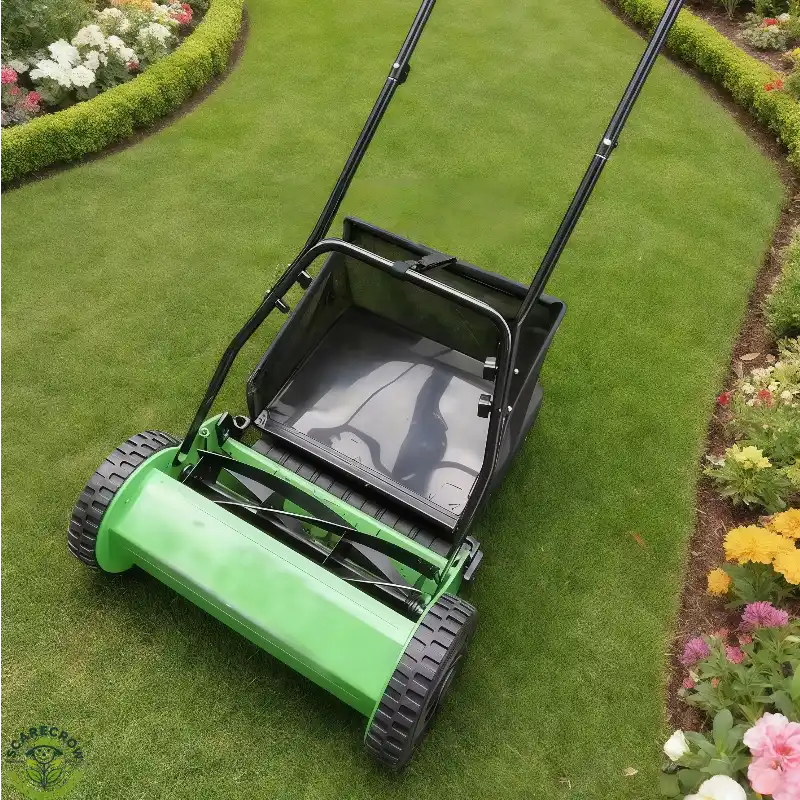
hand push lawn mower
Product image from the linked product page; confirm specifications for the selected model.
A manual reel mower cuts grass by shearing it between a rotating cylindrical blade reel and a stationary bedknife. This is fundamentally different from a rotary mower, which cuts grass by impact with a horizontal spinning blade. The cutting quality of a reel mower depends not on motor power or battery life but on the alignment between the reel and the bedknife, the drive geometry of the wheels, and the accuracy of the height adjustment. These are mechanical relationships that can be checked on a sample before placing a bulk order.
This guide covers what to inspect on a manual reel mower sample: the reel-to-bedknife cutting interface, contact and parallelism, reel runout and wheel alignment, cutting-height adjustment symmetry, grass catcher fit, and a controlled cut test.
How a Reel Mower Cuts Differently
Which Reel and Bedknife Form the Cutting Interface?
A reel mower's cutting system consists of a cylindrical reel with helical blades and a horizontal bedknife that spans the cutting width. The reel rotates as the mower is pushed forward, driven by gears connected to the wheels. Grass is sheared between the reel blades and the bedknife edge.
The reel and bedknife cutting interface requires the exact model's parts drawing and manual to confirm its terminology. Do not import rotary-mower blade assumptions. A reel mower does not have a spinning blade that lifts grass before cutting. It has a scissors-like action that requires precise contact or clearance between two hardened steel surfaces.
Reel-to-Bedknife Contact and Parallelism
Is Contact or Clearance Even Across the Cutting Width?
The reel and bedknife must maintain consistent contact or a consistent clearance across the full cutting width. If one end touches and the other has a gap, grass is cut cleanly on one side and torn on the other.
Check contact along the full width using the paper or feeler method appropriate to the design. Some manuals specify a light contact cut, where the reel lightly touches the bedknife. Others specify a small clearance. Use only the exact manufacturer's approved stationary checking method, with measured positions recorded.
Which Deviations Need Model-Specific Adjustment Guidance?
Identify rubbing, gaps and uneven contact. Do not invent a universal gap specification without manufacturer guidance. The correct reel-to-bedknife relationship depends on the model's design, blade count and intended use.
Document the model-specific contact or clearance requirement and the authorized adjustment procedure. No universal paper thickness, feeler gap or contact rule is supplied by this guide. What you can record is whether the contact or clearance is even across the width, and whether it matches the manufacturer's specification for that model.
Reel Runout, Wheel Alignment and Drive Engagement
Does Reel Runout Differ From Wheel or Drive Drag?
With the mower isolated from drive and following the manufacturer's permitted inspection method, rotate the reel and inspect wobble. A reel that runs true produces a consistent cutting action. A reel with runout, where the blade tips deviate from a perfect circle, creates uneven contact with the bedknife.
Roll the mower straight on a flat surface and check wheel drag and symmetry. If one wheel drags more than the other, the mower pulls to one side during use. Record wobble and straight rolling separately using a secured inspection and the permitted operating observation.
Which Drive Components Are Actually Present?
If gears or chains are used in the drive system, record play and noise only for the actual construction. The parts drawing identifies which drive system the sample uses.
Play or noise observations do not prove an internal cause. A noisy gear may indicate wear, insufficient lubrication or a manufacturing defect. The observation tells you what to investigate, not what to conclude.
Cutting-Height Adjustment Must Be Symmetrical
Do Both Sides Return to the Same Cutting-Height Setting?
Cutting height on a manual reel mower is typically adjusted by raising or lowering the bedknife or the roller. If both sides do not lock at the same setting, the mower cuts at different heights across the width.
Verify that both sides lock at the same setting and that the bedknife remains aligned with the reel after adjustment. Measure actual height range only from the exact sample or technical sheet. Measure the assembled sample at matched settings and recheck the reel-to-bedknife relationship after each adjustment.
Height range is exact-model evidence. A specification of 12 to 45 mm on a product page applies to that model only, and the sample's actual range should be confirmed by measurement.
Grass Catcher Fit and Clipping Discharge
Does the Supplied Catcher Interfere With Rolling or Unloading?
If the SKU includes a grass catcher, check attachment retention, interference with wheels, unloading convenience and whether the catcher changes balance or rolling effort. A catcher that drags on the ground or rubs against a wheel increases rolling resistance and may damage the catcher over time.
Apply this check only when the confirmed SKU includes a catcher. Use attachment photographs and equivalent loaded and unloaded observations. Do not assume a catcher is included if the model documentation does not list one.
Controlled Cut Test
Is Cut Quality Repeatable in the Defined Turf?
Use a defined turf or grass condition and record cut completeness, striping or tearing, rolling effort and clogging. A reel mower that cuts cleanly in ideal conditions may tear grass if the turf is too tall, too wet or uneven.
Keep results sample-specific. No universal “best grass height” claim is appropriate. Document grass type and condition, starting height, travel procedure and cut observations under the manual's safe operation. Do not generalize beyond the tested turf.
A cut test in defined turf tells you whether the sample produces a clean, repeatable cut under specific conditions. It does not tell you how the mower will perform in every lawn condition your customers encounter. But it gives you a baseline for comparing samples and for evaluating whether the reel-to-bedknife alignment and wheel drive are functioning correctly.
If you are sourcing manual reel lawn mowers, compare reel alignment, height adjustment and rolling behavior on samples.
Written by
ScarecrowGarden
💡About Scarecrow Garden Supplier Co., Ltd.
Scarecrow Garden Supplier Co., Ltd. is a China-based sourcing and wholesale partner specializing in garden tools, landscaping equipment, and outdoor supplies for international wholesalers, distributors, contractors, and brands.
With hands-on experience rooted in real garden use scenarios, we focus on durable materials, functional design, and stable large-volume supply. Our product range covers pruning tools, watering systems, hand tools, outdoor hardware, and customized garden solutions to support both retail and professional landscaping markets.
Beyond products, we help our partners navigate supplier selection, quality control, compliance requirements, and long-term sourcing strategies in China. Through our blog, we share practical insights on product selection, material comparisons, industry trends, and cost-effective purchasing—helping global buyers build stronger, more competitive supply chains.