











Updated 3 days ago
Garden Hose Reels: Dynamic Swivel Leakage, Fill-Level Torque and Actual Hose-OD Capacity Checks

ScarecrowGarden
💡About Scarecrow Garden Supplier Co., Ltd.
Scarecrow Garden Supplier Co., Ltd. is a China-based sourcing and wholesale partner specializing in garden tools, landscaping equipment, and outdoor supplies for international wholesalers, distributors, contractors, and brands.
With hands-on experience rooted in real garden use scenarios, we focus on durable materials, functional design, and stable large-volume supply. Our product range covers pruning tools, watering systems, hand tools, outdoor hardware, and customized garden solutions to support both retail and professional landscaping markets.
Beyond products, we help our partners navigate supplier selection, quality control, compliance requirements, and long-term sourcing strategies in China. Through our blog, we share practical insights on product selection, material comparisons, industry trends, and cost-effective purchasing—helping global buyers build stronger, more competitive supply chains.
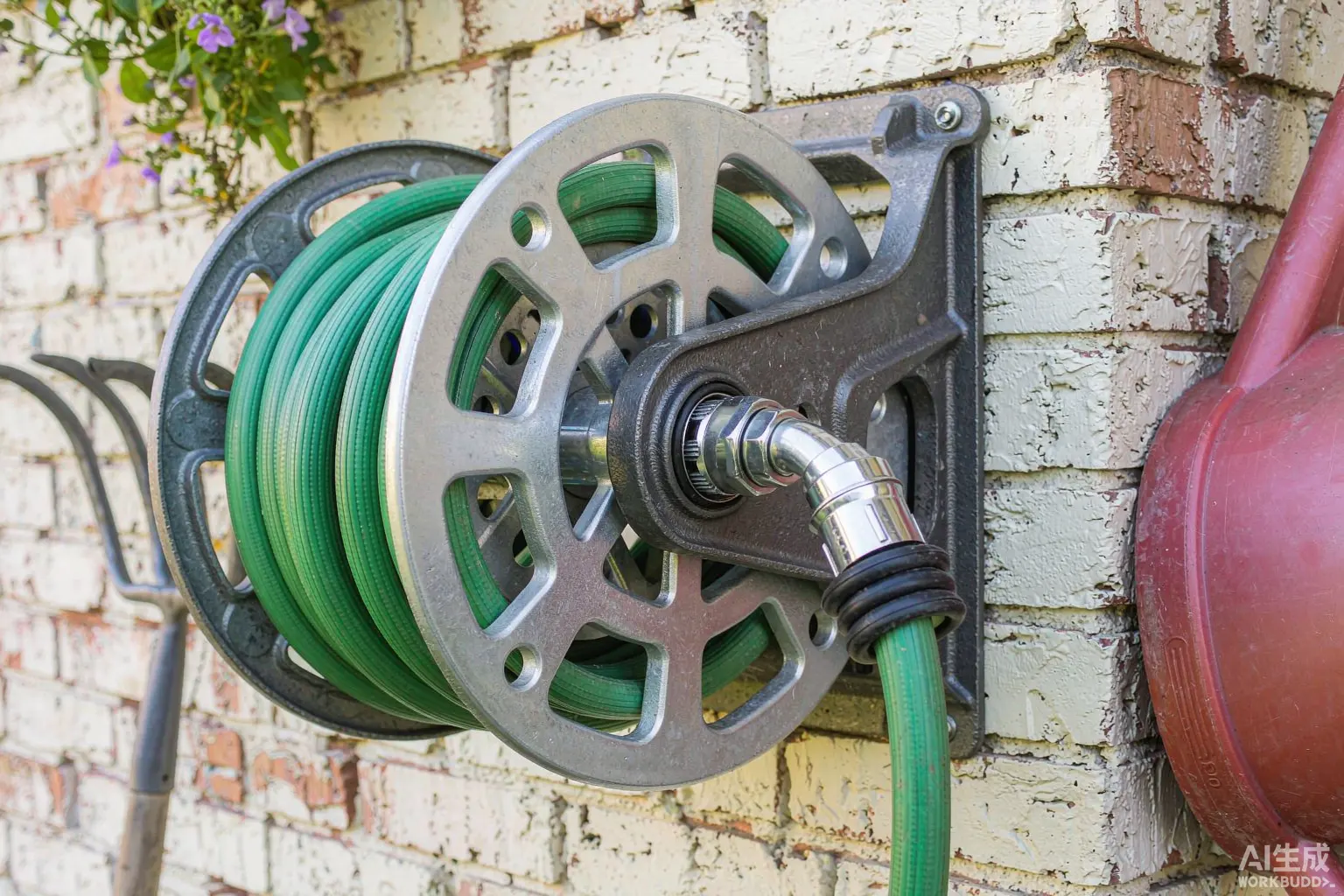
Wall-mounted garden hose reel with neatly wound hose and metal swivel connector
AI-generated editorial illustration; not a product photograph.
A hose reel's product page lists capacity, mounting type and material. What it does not tell you is whether the swivel leaks while the drum rotates, how winding torque changes from empty to full, or whether the rated hose capacity actually fits the hose your customers will use. These are the questions that determine whether the reel performs in real use, and they require dynamic testing, not just a static inspection.
This guide covers what to check on a garden hose reel sample beyond the baseline QC: the reel configuration, swivel leakage during drum rotation, winding torque at different fill levels, actual hose OD versus rated capacity, mounting and pressure prerequisites, and drainage and storage interfaces.
Establish the Reel Configuration and Existing QC Baseline
Is This Manual or Automatic, Wall-Mounted or Freestanding?
Confirm the inlet, swivel, drum, crank or retraction mechanism, frame or base, and outlet from the exact product drawing. Separate manual winding from automatic return, and wall mounting from freestanding construction. A single product may exist in multiple variants, and the sample in front of you may not match every configuration listed in the catalogue.
Match the specimen to its exact model manual and parts map. Unconfirmed mechanisms remain unassigned. If the sample is a manual crank reel, do not assume it has an automatic return spring. If it is wall-mounted, do not apply freestanding stability tests.
Which Model-Specific Checks Must Precede Dynamic Testing
Confirm the actual reel configuration, inlet, swivel, drum, crank or retraction mechanism, frame or base, and outlet from the exact product drawing. Verify the model's actual installation method, rated operating pressure, static leak behavior and spring condition where a return spring is present. Historical numbers from product pages or older articles are not test inputs.
Swivel Leakage While the Drum Rotates
Does Leakage Appear Only While the Drum Moves?
A static leak check tells you whether the swivel leaks when the reel is pressurized but stationary. It does not tell you whether the swivel leaks while the drum rotates during winding or unwinding. Dynamic leakage is a different failure mode.
Treat a documented static leak check as a baseline. Then observe the swivel during permitted winding and unwinding at the manufacturer-approved pressure. Record the rotation direction, rotation position or speed, hose fill level and leakage location, rate or observation interval.
Prepare a synchronized observation record of drum motion, fill state and leakage. The proposed comparison must remain within verified manufacturer limits. Do not exceed the rated operating pressure of the reel or hose.
Can the Leak Be Located Without Assuming Its Cause?
Compare a stationary hold with moving-drum behavior under matched conditions. Do not diagnose seal failure from a wet housing alone. A wet swivel area may indicate a seal problem, a connection leak, or condensation. Inspect seal construction and connection play only when the model manual permits safe, isolated access.
Distinguish stationary and moving observations. Retain photographs of the actual wet location. Inspect internals only by an approved isolated procedure. Material identification of seals or O-rings requires supplier evidence, not visual assumption.
Winding Torque, Drum Alignment and Hose Lay
How Does Torque Change From Empty to Half and Full?
For a manual crank reel, compare start and running torque at recorded empty, half-wound and fully wound states. Use the same hose and crank radius, direction and speed for each measurement. Define states by actual wound length, not by visual estimate. Record whether the hose is water-filled or drained during the test.
Do not treat hand force as torque without a defined measurement geometry. Torque equals force multiplied by the perpendicular moment arm length. If you are using a comparative force method without a calibrated torque wrench, record the method and its limitations.
Compare equivalent wound-length checkpoints and wet or drained states. Record start versus running torque and the method's limits. The goal is to identify whether torque peaks at a specific fill level, which may indicate hose crossings, side piling or drum alignment issues.
Do Torque Peaks Coincide With Crossings or Side Piling?
At each fill state, log flange runout, drum wobble, side piling and torque peaks at crossings. When hose winds unevenly, it piles on one side of the drum. This creates resistance, increases torque and may eventually prevent the reel from closing or reaching full capacity.
Pair the effort trace with hose-lay photographs or video. For an automatic-return design, record its permitted return effort and behavior separately. Do not equate automatic return with manual crank torque. They are different architectures with different force profiles.
Nominal Hose Capacity vs Real Hose OD
What Length Fits With the Actual Hose OD and Lay?
Rated hose capacity on a product page is typically calculated for a specific hose OD and a neat winding pattern. Real hoses vary in OD, stiffness and winding behavior. The actual hose outer diameter may affect usable capacity depending on the drum dimensions, hose stiffness and winding pattern; verify capacity with the actual hose rather than relying on the rated figure.
Verify capacity using the actual hose outer diameter, length, construction, stiffness and winding pattern. Photograph the empty, half and full lay. Identify flange clearance or side piling that limits usable length. Measure hose OD and length. Document drum clearance at defined fill states. Nominal catalogue capacity is a claim to verify, not a fact.
Does a Different Hose Change Usable Capacity?
For an OD comparison, change only the documented hose variable while keeping the reel and winding method fixed as far as practicable. Record unavoidable stiffness and construction differences. Stop before overfilling or forcing the mechanism. Do not infer a universal length capacity across hose constructions.
Compare the capacity claim with the actual hose length and measured outside diameter. Confirm whether a catalogue diameter denotes the inside or outside diameter before using it in a capacity comparison. The buyer needs to know which hose the capacity claim refers to and should verify capacity with the actual hose.
Mounting and Pressure Are Prerequisites, Not a Second QC Guide
Are Mounting and Pressure Limits Confirmed Before Rotation?
Confirm bracket, fastener, rotation-clearance and approved-substrate requirements for wall-mounted reels. Tip and slide checks apply only to an actual freestanding configuration.
Use the exact installation instructions and confirmed rated operating limit before any dynamic test. Unverified owner-page pressure numbers cannot authorize testing. Obtain the model's rated operating pressure from the manufacturer or product documentation before pressurizing the system.
Drainage, Storage and Accessory Interfaces
Could Retained Water or Storage State Distort the Comparison?
Record trapped-water points, connector storage, spray-gun holder and winter or off-season handling only where relevant to the actual SKU and to the test's filled or drained state. Keep accessory and storage notes short.
Use the model's storage and drainage instructions. Document actual trapped water or accessories only when they affect the measured configuration. A reel that traps water in the drum or swivel area may affect corrosion or freeze behavior, but that observation is relevant only if the sample actually exhibits it.
If you are sourcing garden hose reels, confirm the actual reel architecture, hose OD and length, connector system and mounting scenario before a dynamic sample comparison.
Written by
ScarecrowGarden
💡About Scarecrow Garden Supplier Co., Ltd.
Scarecrow Garden Supplier Co., Ltd. is a China-based sourcing and wholesale partner specializing in garden tools, landscaping equipment, and outdoor supplies for international wholesalers, distributors, contractors, and brands.
With hands-on experience rooted in real garden use scenarios, we focus on durable materials, functional design, and stable large-volume supply. Our product range covers pruning tools, watering systems, hand tools, outdoor hardware, and customized garden solutions to support both retail and professional landscaping markets.
Beyond products, we help our partners navigate supplier selection, quality control, compliance requirements, and long-term sourcing strategies in China. Through our blog, we share practical insights on product selection, material comparisons, industry trends, and cost-effective purchasing—helping global buyers build stronger, more competitive supply chains.