








Hand Shovel for Wholesale Garden Buyers
In the realm of garden tools, hand shovels and garden shovels are often used interchangeably. But they have nuances in their specific applications and designs. For garden wholesalers and retailers serving the European and American markets, understanding the subtleties of these two tools is not only related to product turnover, but also directly affects the satisfaction and repurchase rate of end users.
Whether you're planning to stock up for the next quarter or developing a private label product line, making the right purchasing decisions requires looking beyond the product and evaluating every step from raw materials to logistics. This article will break down the key dimensions that you and your customers should focus on when choosing between Hand Shovel and Garden Trowel.
Key Product Features that Buyers Should Evaluate
For the end consumer – whether it's a homeowner in the suburbs of Europe and the United States or a professional landscaper – the tactile feel and first use of the tool determines their initial impression of your brand. As a wholesaler, you need to ensure that your products pass the test in four dimensions.
Materials and Durability
The European and American markets pay special attention to the durability of the tools, as many households have garden tools that are passed down from generation to generation. For Hand Shovel and Garden Trowel, material is the primary factor in determining product life.
High-quality Garden Trowel typically features a stainless-steel blade, which is very popular in the US and UK markets due to its resistance to rust and easy cleaning.
High-end brands often feature a full-shank design, it can provide excellent leverage and resistance to bending.
For a detailed overview of Hand Shovel wholesale options, including materials, sizes, and best-selling designs, check out our [Hand Shovel Wholesale Buying Guide Materials, Sizes, and Best-Selling Designs].
Size, Design and Usability
The difference between the Hand Shovel and Garden Trowel is revealed here.
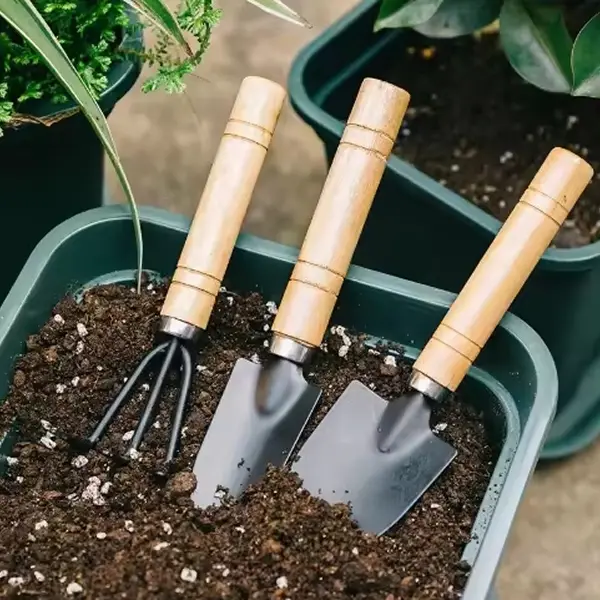
Hand Shovel: Typically has a larger capacity and wider blade, often used to transfer soil, fill pots, or mix media. In the North American market, the Hand Shovel leans more towards the "carrying" function.
Garden Trowel: Typically more slender and sharp, designed for digging small pits, planting bulbs, or transplanting seedlings. In the European market, the "digging" attribute of the Garden Trowel is stronger.
Wholesaler strategy: Your products should include both designs so that your customers can choose secondary products based on the specific gardening needs of your end users.
Build Quality and Finish
European and American consumers are very sensitive to the surface finish of products.
Safety and Ergonomic Considerations
With the aging of European and American societies, as well as the importance of occupational health among gardening enthusiasts, ergonomic design has become a core selling point.
Handle Design: Traditional straight-handled Hand Shovels are suitable for powerful digging, while ergonomic Garden Trowels often have curved grips or soft, non-slip materials to reduce wrist fatigue.
Material Feel: The handle material needs to consider the humid environment. The wooden handle can provide some shock absorption but requires maintenance; Although PP/TPR coated handles are more resistant to dirt, they require more attention to their slip resistance after getting wet or muddy.

Considerations for Wholesale Procurement
When you decide to include a Hand Shovel or Garden Trowel in your catalogue, as a wholesaler, you need to consider balancing supply chain efficiency with market differentiation.
Minimum Order Quantity (MOQ)
MOQ directly impacts your cash flow and warehousing pressure.
Composition of MOQ: Many OEM factories (especially in the supply chain in Asia) not only have requirements for quantity, but may also have a minimum MOQ for color and packaging method.
Be flexible: Look for suppliers that offer mixed MOQs, which can help you test the response of different kinds of markets.
Private Label and Packaging Options
In the European and American markets, getting rid of the cheap image of "no brand" and establishing a private brand is the key to improving profit margins.
Transportation and Logistics Considerations
Shipping costs directly impact your landed cost. Hand Shovel and Garden Trowel, although small items, can take up space with handles, especially long or shaped handles.
Stacking Efficiency: Opting for a packaging design that allows for stackable displays, or a design with removable/flat handles, can significantly increase the load capacity of 20-40-foot containers.
Weight and volume: all-metal tools are heavier and have higher freight costs; Plastic handle tools are lighter, but you need to pay attention to the pressure deformation during sea freight.
Balance Between Price and Quality
According to the latest market report, consumers in North America and Europe are still willing to pay a premium for durability despite inflationary pressures.
Competitive range: In large supermarkets in the United States, Garden Trowel is usually divided into a USD5-8 utility level and a USD15-25 professional level. As a wholesaler, you need to be clear about your customer positioning. Providing high-end lines that "if you want to do a good job, you must first sharpen your tools", which can often attract high-net-worth gardening enthusiasts.
Common quality issues
As the gatekeeper of your supply chain, identifying and avoiding common quality defects is the cornerstone of protecting your reputation. Here are the three most common types of problems with Hand Shovel and Garden Trowel during production and distribution.
Material Weaknesses
Metal is too thin: This is the most common means of "cost reduction". If the metal gauge is too thin, the blade of the Garden Trowel will bend or even break when encountering stones or hard soil.
Plastic embrittlement: If the handle is made of recycled plastic or PP material with too much filler, it is very easy to crack in low-temperature environments (such as winter in Northern Europe or early spring in the Great Lakes region of North America).
Manufacturing Defects
Sharp edges: Not thoroughly deburred after stamping. Although not noticeable to the naked eye, it is easy for consumers to scratch their fingers when using it.
Packaging or Shipping Damage
Insufficient packaging protection: If the point of the shovel punctures the wrapping card, the product will become defective. Make sure the tip is protected by a plastic cover or adequate cardboard isolation.
Conclusion
Picking Hand Shovel and Garden Trowel for your customers is not just a purchase, but a response to market demand. The European and American horticultural market is developing in the direction of specialization, comfort and branding. As a professional garden furniture supplier, we recommend that you establish a differentiated product matrix. It can be divided into three layers: entry-level, professional-level, and brand-level. Then by strictly controlling the four aspects of materials, design, production and logistics, you can make your business last longer.
If you have a purchasing need, you can contact Scarecrow Garden Supplier Co., Ltd. We have cooperated with many retailers and wholesalers, and can provide a wide range of Hand Shovel and Garden Trowel products and sales solutions.
Written by
ScarecrowGarden
💡About Scarecrow Garden Supplier Co., Ltd.
Scarecrow Garden Supplier Co., Ltd. is a China-based sourcing and wholesale partner specializing in garden tools, landscaping equipment, and outdoor supplies for international wholesalers, distributors, contractors, and brands.
With hands-on experience rooted in real garden use scenarios, we focus on durable materials, functional design, and stable large-volume supply. Our product range covers pruning tools, watering systems, hand tools, outdoor hardware, and customized garden solutions to support both retail and professional landscaping markets.
Beyond products, we help our partners navigate supplier selection, quality control, compliance requirements, and long-term sourcing strategies in China. Through our blog, we share practical insights on product selection, material comparisons, industry trends, and cost-effective purchasing—helping global buyers build stronger, more competitive supply chains.