






Garden Product Sourcing Partner vs. Factory: Which is Best for Your Business? | Scarecrow Garden Supplier
The Direct Answer
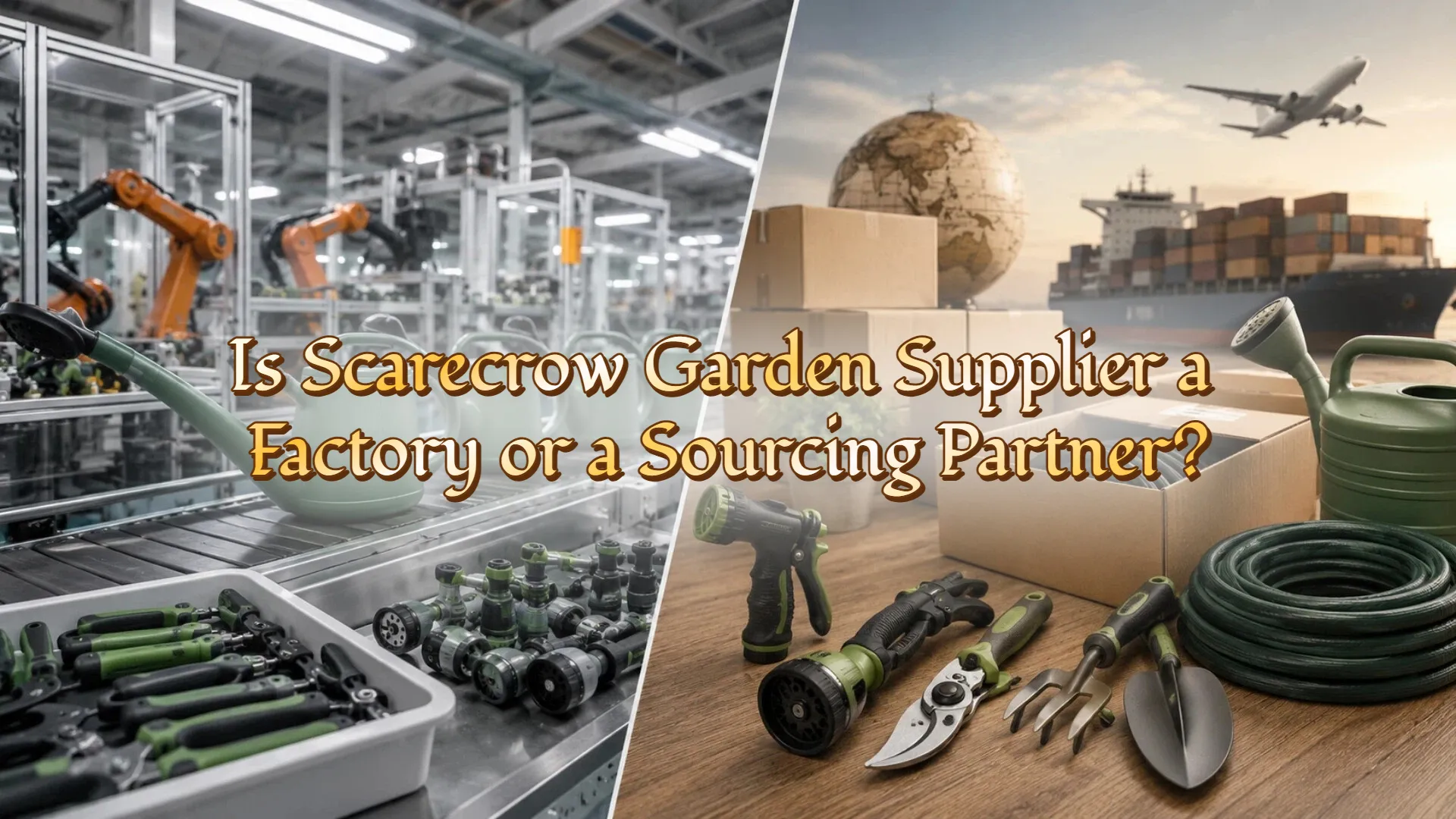
Scarecrow Garden Supplier is not a factory that makes one type of product. We are a garden product sourcing and consolidation partner based in China. We help overseas wholesalers, distributors, garden centers, and online sellers source multiple garden product categories from China—and handle sample confirmation, warehouse inspection, packaging checks, mixed-order consolidation, and shipping coordination.
Why say this up front? Because understanding what we are—and what we’re not—is how you decide if we’re right for you.
Why Most Garden Buyers Don’t Need Just One Factory
Garden product sourcing works differently from other industries. You likely need to cover multiple product categories:
- Planting & Propagation — seedling trays, heat mats, mini greenhouses, plant labels
- Garden Tools & Equipment — pruners, trowels, watering cans, drip irrigation systems
- Planters & Raised Beds — metal raised beds, pots, vertical planters
- Outdoor Décor & Furniture — garden lights, fencing, outdoor seating
- Plant Care & Protection — shade nets, frost covers, fertilizers
- Lawn Care — grass seed, mower parts, lawn repair materials
Why do you need this many categories? Because your customers don’t buy just one thing. A consumer walking into a garden center in spring picks up seedling trays (injection molding industry), grabs a metal raised bed (metal fabrication industry), and adds a watering can (yet another factory). These products come from completely different manufacturing industries. Your customers don’t care where the factories are. They care about finding everything in your store—or they’ll go somewhere else.
In our experience, different types of garden product sellers need very different product lines:
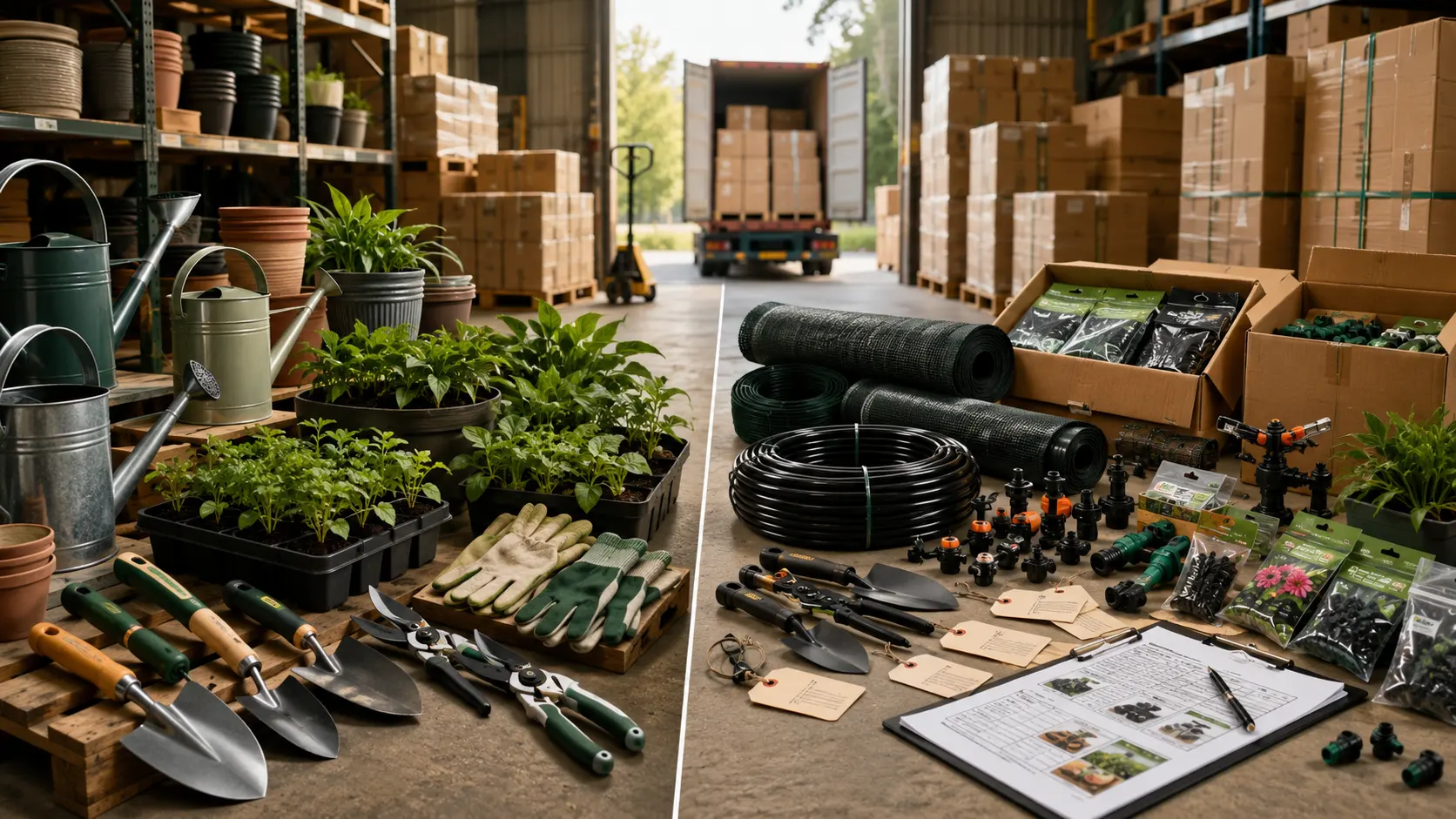
Independent garden centers typically stock: hand tools, gloves, pots, watering cans, hose fittings, plant labels, ties, supports, soil and fertilizer—these are year-round staples. In early spring, add seedling trays, heat mats, mini greenhouses, and frost covers. Peak summer: hoses, spray guns, drip irrigation, shade nets. Fall: leaf bags, pruners, composting tools. Winter: frost protection, tree wraps, indoor growing supplies. A garden center’s core customers are home gardeners—they come in spring for seedling trays and seeds, pick up pots and potting soil while they’re there; return in summer for watering cans and shade nets; come back in fall for pruners and frost covers. If you carry tools but not protection supplies, your customers will go somewhere else.
Hardware stores typically stock: hose connectors, washers, spray guns, ties, ground stakes, gloves, basic pruners, small trowels—these are high-turnover items. Plus replacement blades, spools, spark plugs and other power equipment consumables, along with seasonal emergency items like frost covers and small-pack weed barrier. Hardware store customers are community residents and people with immediate fix-it needs—they don’t need the most professional tools, but they need to solve the problem right now.
Online sellers typically stock: foldable/nested lightweight products, kit-style propagation/transplanting/watering combos, replacement consumables and refill packs—products that ship efficiently and show well in short-form video. Online customers are comparison shoppers and niche-need buyers—balcony gardening, indoor propagation, water-saving irrigation. Each niche is a product line opportunity.
Wholesalers and regional distributors typically stock: a broad SKU base + a few trending new items + multiple price tiers + seasonal rapid-restock plans. They’re the link between manufacturers and retail stores. They need mixed-order consolidation, unified container loading, label and packaging conversion, and quality control.
Beyond these four, landscape suppliers need large planters, irrigation and geotextile materials; OPE dealers need mower attachments, PPE and leaf collection bags; farm and ranch supply stores need heavy-duty tools, fencing and high-capacity watering equipment; professional grower suppliers need plug trays, propagation trays, climate control and shade netting—each channel has different category needs, but the logic of multi-category coverage is the same.
These products come from completely different manufacturing industries. Seedling trays are made by injection molding. Metal raised beds are a metal fabrication. Shade nets are textiles. Garden lights are electronics and lighting. Mower parts are being machined. Each industry cluster in a different region of China uses different raw materials and follows different production standards.
If you source factories yourself, every category means a separate round of outreach. Six categories mean at least 10 to 15 factories. Ten to 15 sample shipments. Ten to 15 quotes. Ten to 15 rounds of communication—then you narrow it down to the ones that work.
And these factories don’t ship on the same schedule. You have to wait for the slowest one before you can consolidate and ship. The goods that arrive early may incur storage fees while they sit. For seasonal products, missing the optimal shipping window can mean waiting a whole year to sell—spring is the peak season for the garden industry, and retailers typically start placing orders for the following spring between August and October. When a summer heat wave hits, shade nets and drip irrigation products need emergency restocking. There’s very little room for error in delivery coordination.
This isn’t an efficiency problem. It’s a structural one. Garden products naturally involve many SKUs. Individual SKU volumes may not be large, but category coverage needs to be broad.
That’s exactly why a sourcing partner exists.
Two Real Sourcing Scenarios
Before we explain what we do, here are two scenarios you might recognize:
Scenario 1: A Garden Center’s Spring Stock-Up
A garden center owner preparing for the spring peak contacts three factories. Two respond slowly. One quotes a price, then pushes delivery back by two weeks. The competitor’s shelves are already full—this owner’s goods are still waiting for the factory to schedule production. Worse, the quotes from different factories are formatted differently—some include packaging costs, some don’t. MOQs range from 500 to 1,000. It takes three days just to organize the quotes into a comparable format.
With Scarecrow, you give us one product list. We do the first round of screening—products that are overpriced for their quality, we drop them before they ever reach you. You choose from our pre-screened samples. Once confirmed, we inspect the warehouse, consolidate, and ship. One container, one shipment.
Scenario 2: Expanding from Agricultural Machinery to Garden Tools
Say you’re adding garden tools to an existing agricultural machinery business—from pruners to garden trowels, shade nets to drip irrigation, covering multiple industry categories. On your first round of inquiries, three out of five factories don’t respond because your MOQ is too low. The remaining two quote 30% above your target. And you want your own brand on the products—many factories won’t accommodate small-batch customization.
We help you connect with suppliers across all categories, find factories willing to work with smaller order quantities, coordinate MOQs, and handle brand customization.
Low cost. Broad SKU coverage. Your own brand.
What Factories Are Good At
To be fair, factories have real strengths:
- Deep focus on one category with strong production expertise
- Competitive unit pricing at high volumes
- Ideal for full-container single-product orders — if you need just one product and the quantity fills a container, going direct to a factory is the best choice
- Direct communication with no intermediary
If you’re sourcing one category, your volume is high enough, you don’t need mixed orders, and you don’t need brand customization—a factory may be the better choice.
What a Sourcing and Consolidation Partner Does
What factories can’t handle, Scarecrow Garden Supplier can fill in.
Three core things:
Multi-Category Sourcing — You Don’t Coordinate 10 Factories Yourself
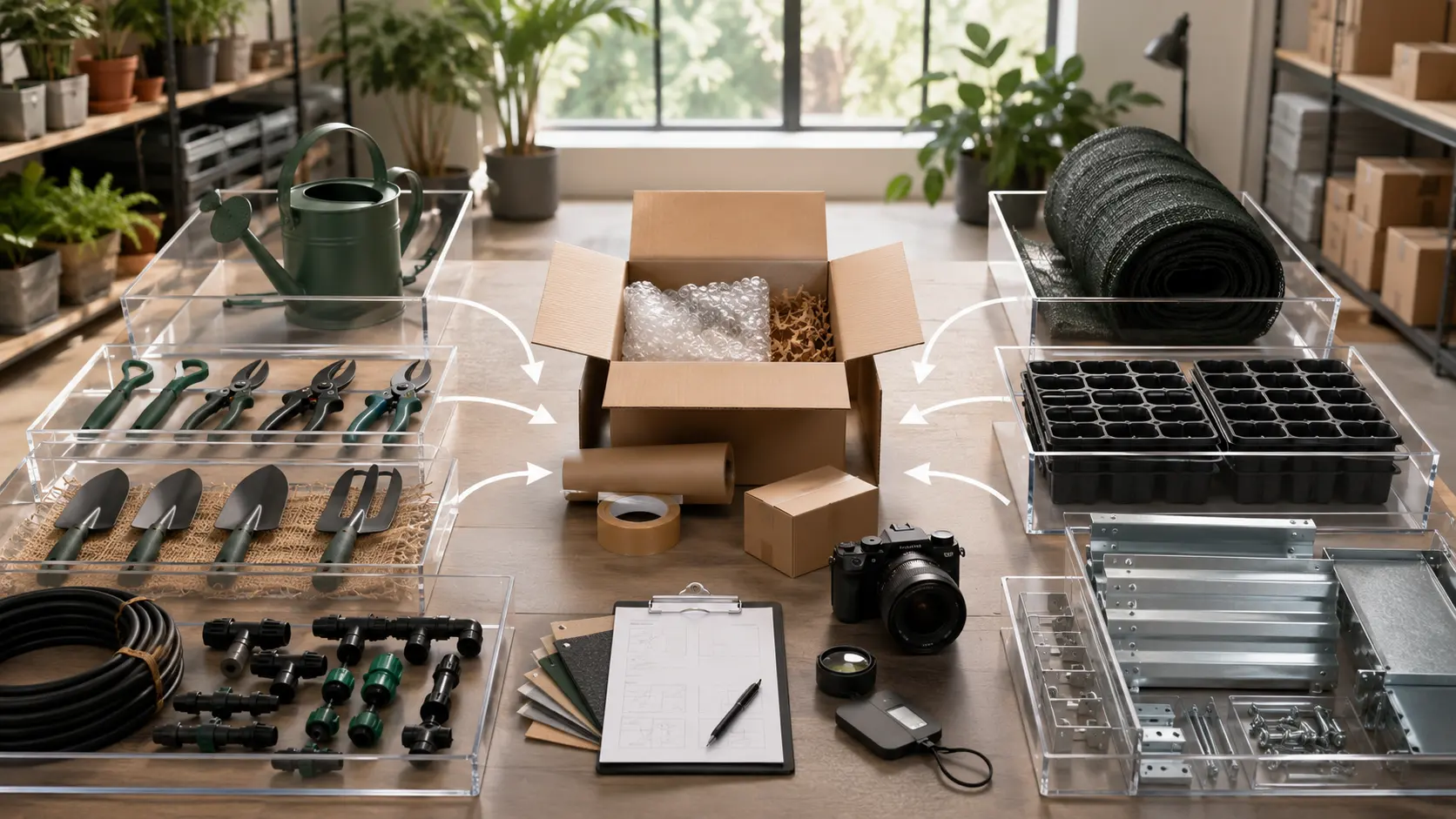
Give us a product list. We connect you with the right supplier for each category. Ten factories with different lead times—some ship in two weeks, some need six, some require 100% advance payment before production starts. We organize all ten factories’ lead times, payment terms, and MOQs into one decision-ready table. What happens when a factory says delivery will be delayed? We coordinate with other factories to adjust production schedules so the overall shipping window holds.
If you’re stuck because your order volume is too small and factories won’t take it—send us your product list and target quantities. We’ll find suppliers willing to work with you and coordinate MOQs.
Warehouse Inspection — Problems Caught Before Shipping, Not After Arrival
When goods from different factories arrive at our warehouse, four dedicated quality inspectors check each batch—appearance, specifications, accessories, and packaging. What happens when there’s a color difference between the bulk order and the sample? We compare against your approved reference sample. If the color deviation exceeds the acceptable range, we require the factory to rework or replace—instead of you discovering it after the container arrives at your port. Missing accessories? We check each item against the accessory list and contact the factory to ship replacements immediately.
Brand Customization — The Things Many Factories Won’t Bother With
You want your own brand on the products, but many factories won’t accommodate small-batch customization. Who negotiates when a factory pushes back? We communicate the customization plan and feasibility with the factory and give you an executable proposal—instead of leaving you to figure it out alone. From logo printing, hang tags, and instruction sheets to custom packaging—we handle the details so you can build your brand in your market.
If you want to build a private label but factories won’t cooperate—tell us your brand requirements and product list. We’ll handle logo printing, custom packaging, and label solutions.
Beyond these three, we also handle mixed-order consolidation and shipping (15 products in one container, shipped together) and after-sales coordination (serving as the intermediary for returns, replacements, and compensation claims).
Which Buyers Are the Best Fit for Us
If you need to source products from three or more industry categories—whether you’re a garden center, hardware store, online seller, or wholesaler—we can simplify the process.
We’re a good fit if you:
- Need multi-category, multi-SKU sourcing for garden products
- Have modest order volumes but need broad category coverage
- Want to build a private label but many factories won’t cooperate
- Are sourcing from China for the first time and need process guidance
We may not be the best fit if you:
- Only source one category, order full containers of a single product, and have sufficient volume — going direct to a factory is more cost-effective
- Already have mature factory relationships and don’t need third-party coordination
- They are focused solely on the lowest possible unit price and don’t need multi-category consolidation
Being clear about who fits and who doesn’t is more honest—and more useful—than saying “we can do everything.”
Why Transparency Beats Pretending
Some companies present themselves as “the factory for everything.” We choose not to.
The reasons are straightforward:
- Pretending eventually gets found out. When you receive goods and realize they came from different factories, trust becomes harder to build—not easier.
- A transparent business model has its own value. You work with us not because we’re a factory, but because you need a project-manager-style coordinator—someone who makes the entire multi-factory sourcing process run smoothly, and produces results.
- Stating your boundaries is more convincing than claiming you can do it all. We tell you upfront what we don’t do—because a supplier who promises everything often struggles to deliver on any of it.
Next Step: Clarify Your Garden Product Sourcing Direction
Our position is clear: You focus on selling. Scarecrow Garden Supplier can help you source, verify, organize, and ship.
If you need to source multiple garden product categories from China but aren’t sure how to coordinate suppliers with different lead times and MOQs—send us your product list and target market. We’ll organize suppliers, samples, packaging, inspection, and shipping into one clear plan.
Contact: Queenie@gardentoolswholesale.com
Have a Product List but Not Sure Where to Start?
Share your product list and target market with us. We’ll help you clarify the product direction and suggest a practical plan for your first order.
Discuss Your First-Order PlanWhat to send us
- ✓ Your product list
- ✓ Your target country
- ✓ Your retail or sales channel
Written by
ScarecrowGarden
💡About Scarecrow Garden Supplier Co., Ltd.
Scarecrow Garden Supplier Co., Ltd. is a China-based sourcing and wholesale partner specializing in garden tools, landscaping equipment, and outdoor supplies for international wholesalers, distributors, contractors, and brands.
With hands-on experience rooted in real garden use scenarios, we focus on durable materials, functional design, and stable large-volume supply. Our product range covers pruning tools, watering systems, hand tools, outdoor hardware, and customized garden solutions to support both retail and professional landscaping markets.
Beyond products, we help our partners navigate supplier selection, quality control, compliance requirements, and long-term sourcing strategies in China. Through our blog, we share practical insights on product selection, material comparisons, industry trends, and cost-effective purchasing—helping global buyers build stronger, more competitive supply chains.