






Updated 4 months ago
One Container, Multiple Categories: A Consolidated Shipping Guide for Garden Product Buyers
ScarecrowGarden
💡About Scarecrow Garden Supplier Co., Ltd.
Scarecrow Garden Supplier Co., Ltd. is a China-based sourcing and wholesale partner specializing in garden tools, landscaping equipment, and outdoor supplies for international wholesalers, distributors, contractors, and brands.
With hands-on experience rooted in real garden use scenarios, we focus on durable materials, functional design, and stable large-volume supply. Our product range covers pruning tools, watering systems, hand tools, outdoor hardware, and customized garden solutions to support both retail and professional landscaping markets.
Beyond products, we help our partners navigate supplier selection, quality control, compliance requirements, and long-term sourcing strategies in China. Through our blog, we share practical insights on product selection, material comparisons, industry trends, and cost-effective purchasing—helping global buyers build stronger, more competitive supply chains.
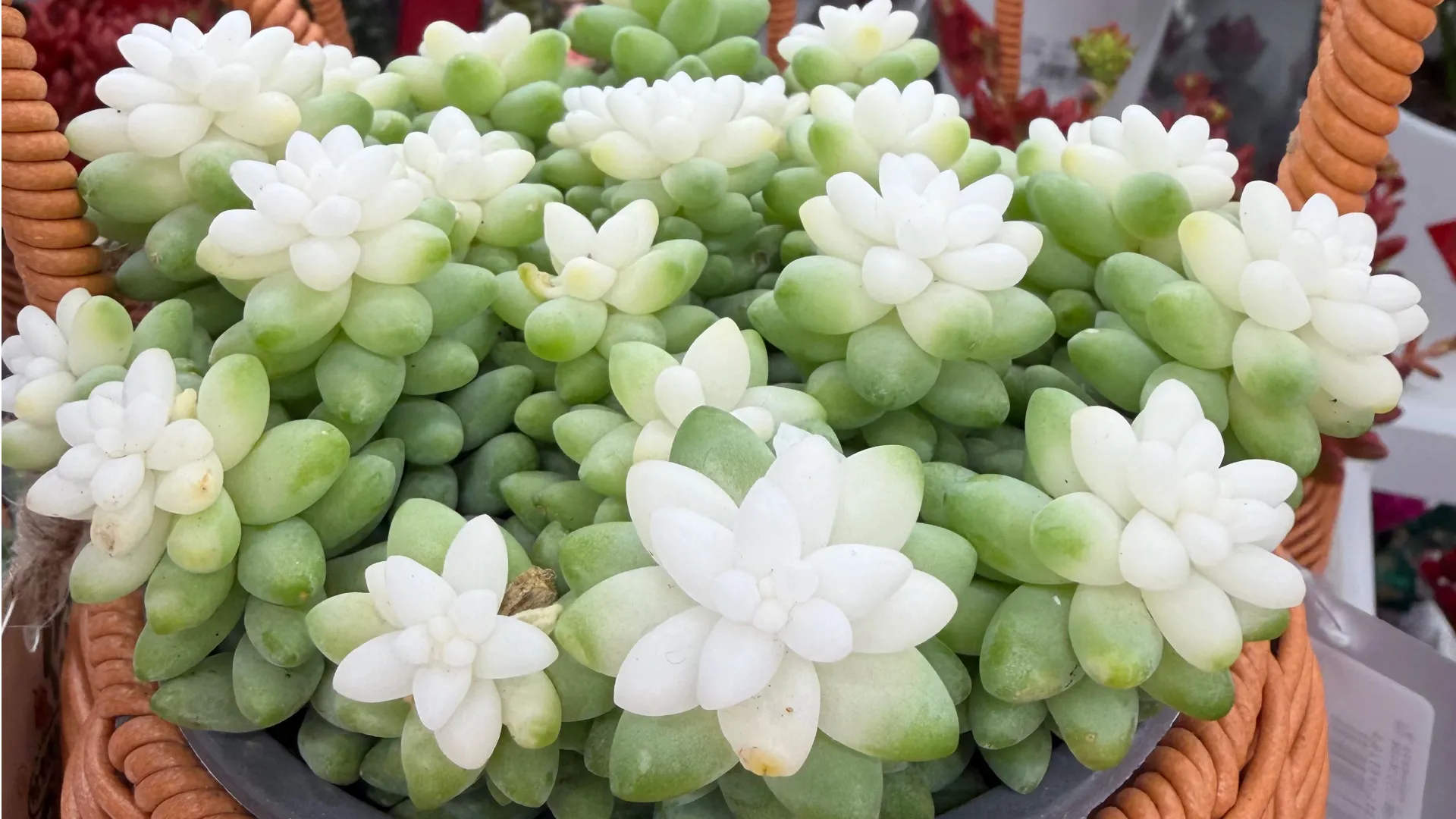
When sourcing garden products from China, the biggest headache is often not the product itself — but the combined MOQ across five different categories, which can easily exceed your actual demand. A greenhouse factory may require 500 units, a heat mat factory may ask for 1,000 units, and a plant label factory may require 5,000 pieces. You may only need 100 units of each item to test the market, but most factories will not accept such small orders.
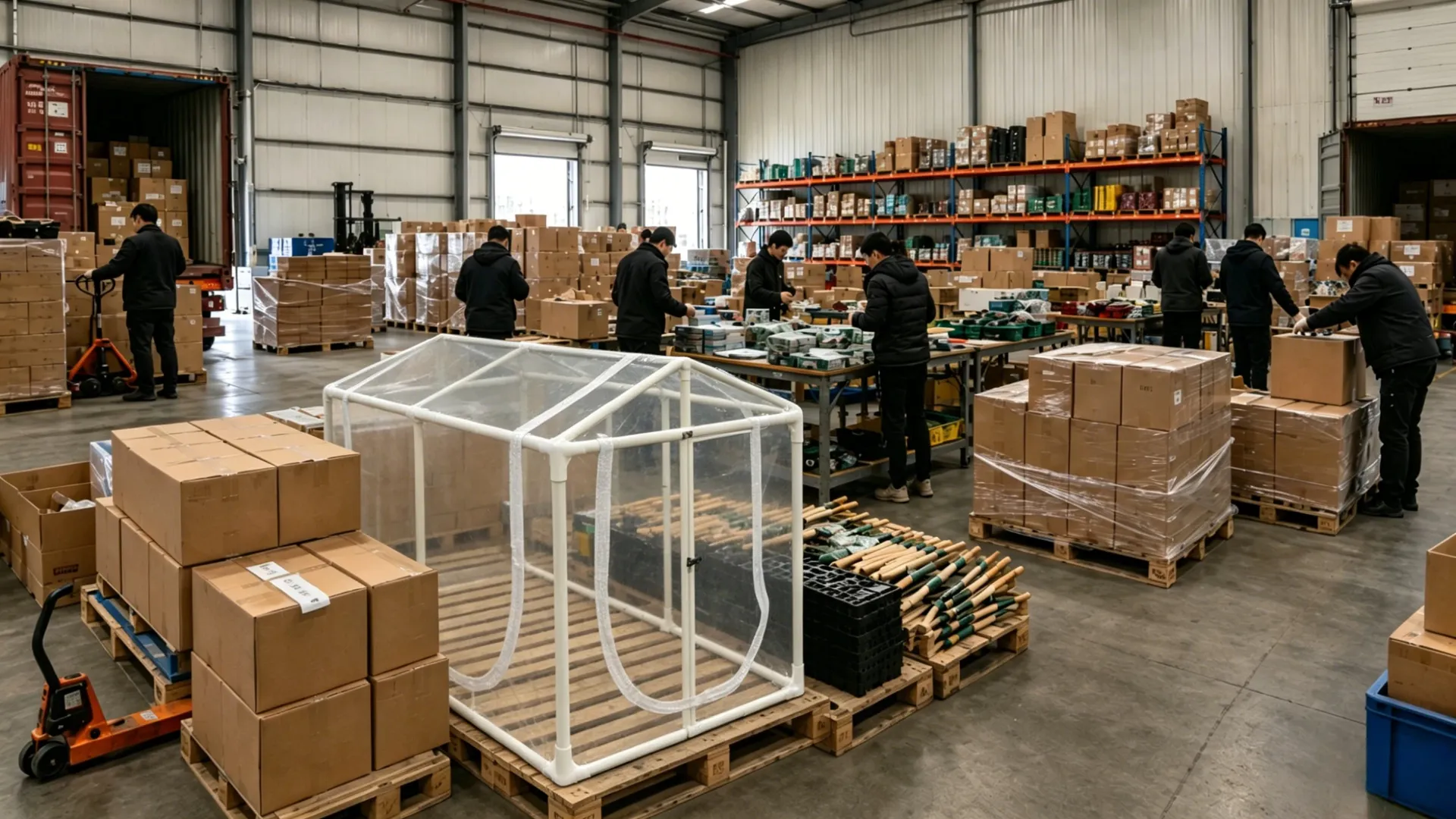
Consolidated shipping does not only solve a logistics problem — it solves a purchasing threshold problem. It refers to gathering multiple product categories into the same warehouse, checking them, and then loading them into the same container for shipment. This article helps garden product wholesalers, distributors, and e-commerce sellers understand the full process of consolidated purchasing, which categories are suitable for consolidation, how to coordinate production schedules from different suppliers, and how many types of products can actually fit into one container.
What Is Consolidated Purchasing, and How Is It Fundamentally Different from “Separate Shipments”?
Consolidated purchasing means gathering multiple product categories into one warehouse, checking them, and then loading them into the same container for shipment.
Many buyers think consolidation simply means “asking a freight forwarder to combine several batches of goods.” But in reality, consolidation without unified warehouse receiving and inspection is only a physical combination. The products have not been checked for quality consistency, packaging standards are not unified, and problems may only be discovered after the goods arrive at your warehouse.
True consolidated purchasing includes three key steps:
- Centralized receiving: Products made by different factories are delivered to the coordinator’s own warehouse instead of being shipped separately from each factory to the port.
- Warehouse inspection: For hot-selling and high-repeat-purchase products, each item is checked when it enters the warehouse to confirm that the products remain consistent with the approved samples.
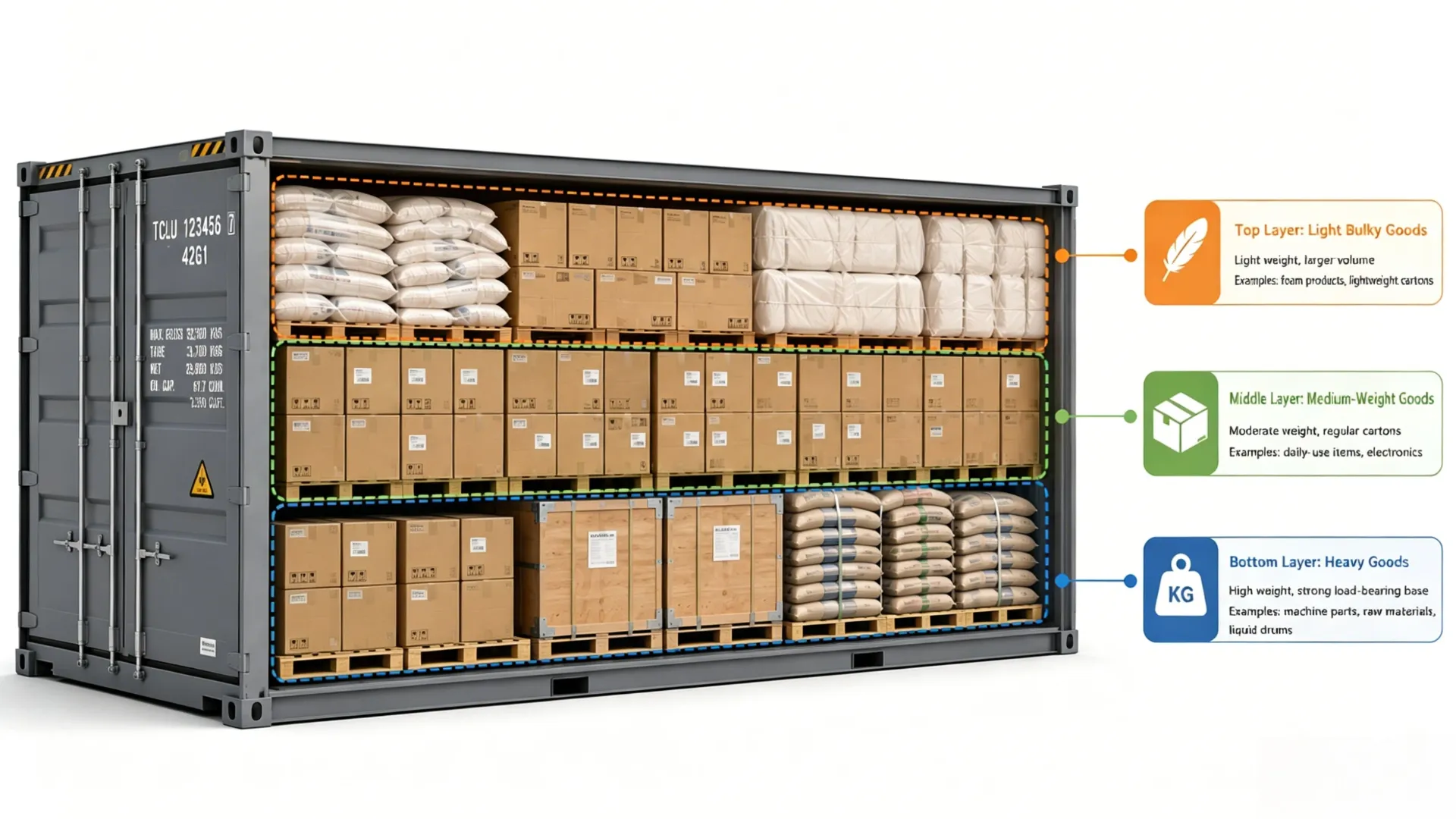
- Consolidated container loading: Products are loaded according to container space optimization. Heavy items such as tools and seedling soil go at the bottom, while lightweight and bulky items such as greenhouses and aprons fill the upper or remaining space, allowing everything to be shipped together.
Which Garden Product Categories Are Suitable for Consolidated Purchasing?
The core logic of consolidated purchasing is to combine small-volume products such as labels and gloves with products that have unused internal space, such as plant pots. Small products can be placed inside the empty space of pots to maximize container space utilization.
| Category | Packaging and Volume Features | Role in Container Loading | Consolidation Value |
|---|---|---|---|
| Mini greenhouse | Disassembled flat-pack packaging, including pre-cut frames, connectors, and PVC cover; users assemble it after receiving the product; shipping volume is much smaller than finished product volume | Middle layer, flat packs can be placed vertically or horizontally | Can further optimize space when consolidated with other categories |
| Plant pots | Stackable, but still leave a large amount of internal empty space | Upper layer, with internal space available for small items | Very low space utilization when shipped alone; small products can be placed inside the pots during consolidation |
| Heat mats | Flat and medium weight | Middle layer | Small volume, but freight cost ratio is high when shipped alone |
| LED seedling grow boxes | Stackable, with high volume efficiency after stacking | Middle layer, compact after stacking | Takes limited space after stacking and is flexible for consolidation |
| Seedling trays | Lightweight and stackable | Bottom layer + middle layer | Large quantity but light individual weight, suitable for filling space |
| Plant labels | Extremely small volume | Can fill any empty space | Very high freight cost ratio when shipped separately |
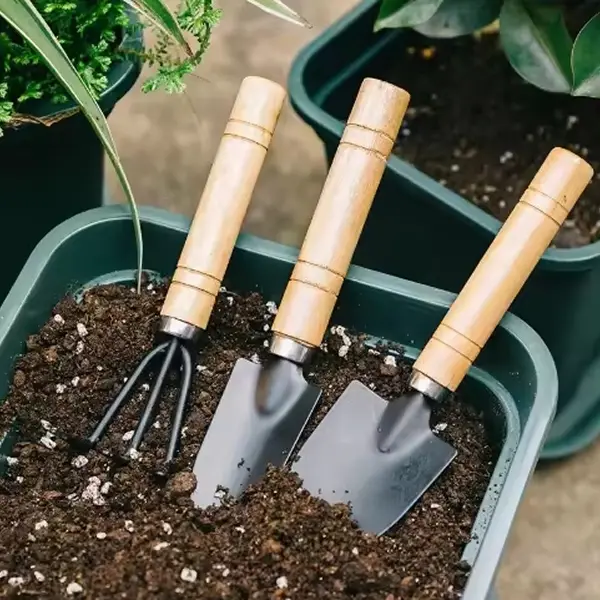
| Garden trowels / pruning shears | Medium weight | Bottom layer, heavy products at the base | Not cost-effective to ship separately |
| Indoor watering cans | Medium volume | Middle layer | Need anti-scratch protection |
| Gloves | Extremely small volume | Can fill any empty space | Very high freight cost ratio when shipped separately |
| Aprons | Lightweight and compressible | Upper-layer filling | Small volume, suitable for filling remaining space |
| Garden kneeling mats | Flat and rollable | Middle layer | Can be combined with aprons to fill space |
A Typical 20ft Container Loading Plan
| Layer | Products | Notes |
| Bottom layer | Garden trowels, pruning shears, seedling soil | Heavy products at the bottom to stabilize the center of gravity |
| Middle layer | Heat mats, LED seedling grow boxes, seedling trays, watering cans, mini greenhouses in flat-pack packaging | Medium-weight products; stacked LED seedling grow boxes save space |
| Upper layer | Plant pots, stacked with internal space filled by small items such as gloves and labels; aprons; garden kneeling mats | The internal empty space of plant pots is the “hidden capacity” in consolidated loading |
| Gap filling | Plant labels, gloves | Extremely small volume, can be placed in any remaining space, including inside plant pots |
Key Details to Confirm Before Purchasing
Consolidated purchasing involves multiple product categories and multiple suppliers, so confirmation before purchasing is more important than in single-product sourcing.
| Purchasing Checkpoint | What Buyers Should Confirm | Why It Matters |
| Production cycle of each category | Mini greenhouses 25–35 days, labels 10–20 days, LED lights 30–40 days, gloves/aprons 20–30 days, OEM styles usually require an additional 10–15 days | Production cycles vary greatly. The coordinator needs to arrange order timing properly, otherwise labels may arrive at the warehouse and wait 20 days before they can be shipped together with greenhouses |
| Warehouse inspection standards | Whether each product is checked against the approved sample; whether the printing quality and structural strength of OEM packaging are checked | Consolidation without warehouse inspection is only a physical combination — problems may only be discovered after arrival at your warehouse |
| Packaging method confirmation | Whether the greenhouse uses disassembled flat-pack packaging, which can reduce shipping volume by more than 60%; the stacked volume of LED seedling grow boxes | Packaging directly affects consolidation efficiency and freight cost |
| Secondary packaging requirements | Whether multiple products need to be combined into a gift box or retail kit; whether inserts or dividers inside the gift box need customization | An owned warehouse can handle secondary packaging — for example, combining a trowel, garden kneeling mat, and gloves into a gift box, which is a capability most sourcing agents do not have |
| Supplier geographical distribution | Whether suppliers are concentrated in the same area or spread across different provinces | If suppliers are located in different regions, consolidating goods into one warehouse before shipment may increase inland freight cost |
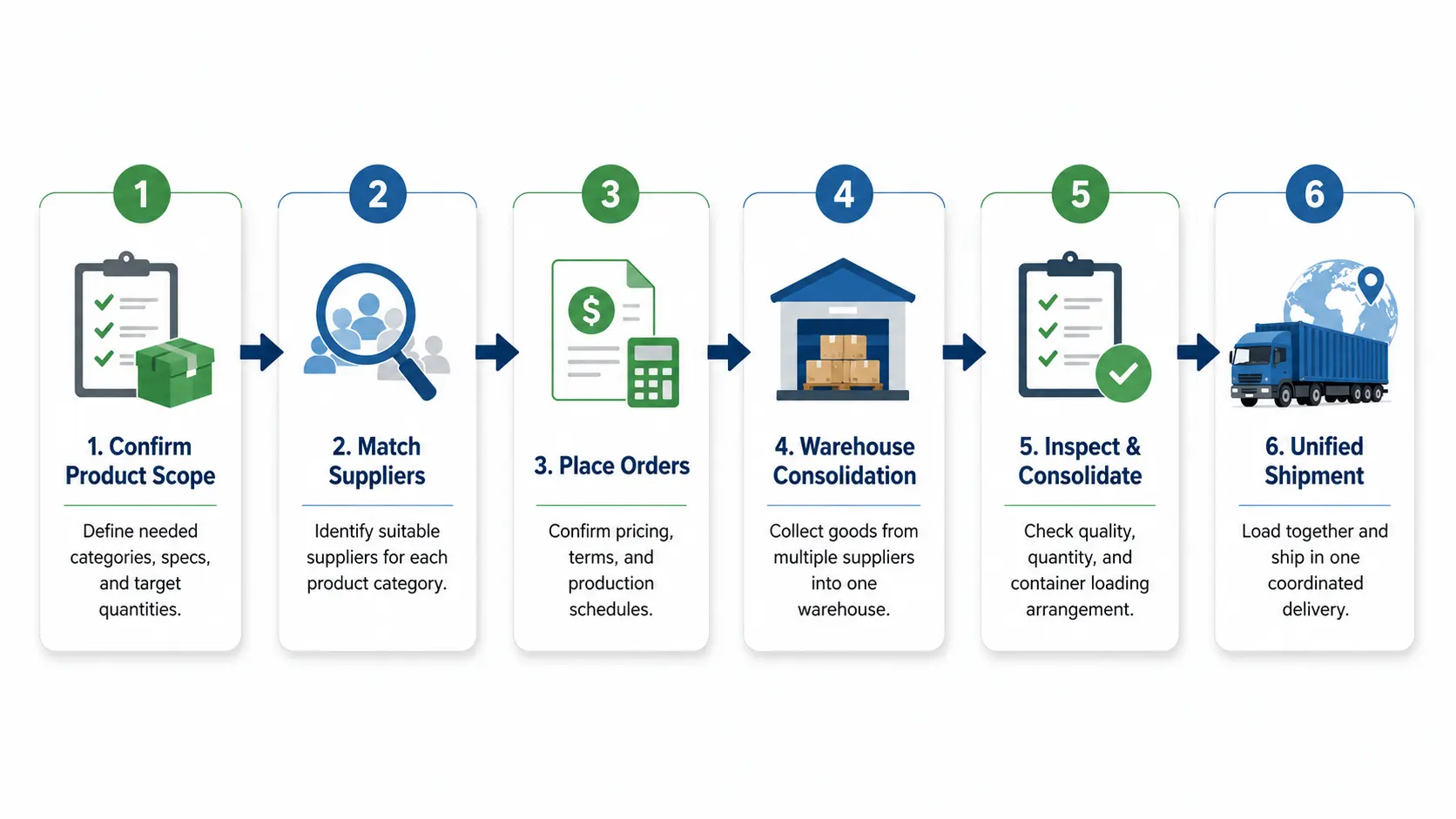
The Complete Process of Consolidated Purchasing
Step 1: Confirm Product Range and Quantity
Based on your target market and customer type, confirm the core product categories and SKU list. For the first consolidated order, it is recommended to control the range within 5–8 categories, with 1–2 core SKUs for each category.
Step 2: Supplier Matching and Sample Confirmation
The coordinator matches suppliers according to your product requirements and arranges samples. Key actions include:
- All samples are gathered at the coordinator’s own warehouse and then packed together for shipment — you receive all samples at once, reducing sample shipping cost from around USD 1,000 to around USD 100.
- A dual-sample mechanism is used: one sample is sent to you for confirmation, and one sample is labeled and kept in the warehouse as the reference standard for bulk order checking.
- During sample confirmation, key points include size matching, such as whether the heat mat fits the seedling tray; packaging protection, such as whether the LED seedling grow box has enough cushioning; and color consistency.
Step 3: Place the Bulk Order and Coordinate Production Cycles
| Category | Typical Production Cycle | Notes |
| Mini greenhouse | 25–35 days | Need to confirm PVC cover material preparation |
| Heat mat | 20–30 days | Thermostat models usually require 5–10 more days than standard models |
| LED seedling grow box | 30–40 days | Need to confirm LED beads and timer supply |
| Seedling tray | 15–25 days | Shorter production cycle |
| Plant labels | 10–20 days | Shortest production cycle |
| Garden tools | 20–30 days | Stainless steel styles require 5–10 more days than regular styles |
| Gloves / aprons | 20–30 days | OEM customized styles require 10–15 more days than standard styles |
The coordinator’s role is to arrange longer-production-cycle categories first and shorter-production-cycle categories later, so that all products arrive at the warehouse at roughly the same time.
Step 4: Warehouse Consolidation, Inspection, and Container Loading
After all products arrive at the warehouse:
- Check each product: Use the retained sample as the reference standard to check whether each category is consistent with the approved sample.
- Check packaging: Confirm the printing quality, structural strength, and insert compatibility of OEM customized packaging.
- Plan container loading: Optimize container space by placing heavy goods at the bottom and using lightweight bulky products to fill space.
- Intercept problems: If a problem is found during warehouse inspection for one category, that category can be intercepted at the warehouse without affecting the shipment of other categories.
- Secondary packaging: If multiple products need to be combined into a gift box or retail kit, the combination packaging can be completed at the warehouse.
Step 5: Unified Shipment
All products are shipped together, arrive at the port together, and go through customs clearance together. All categories arrive at your warehouse at the same time and can be put on shelves or assembled into retail kits directly.
Recommended Product Combination Plan
Spring Seed Starting Full-Category Consolidated Container
Target customers: Garden centers, regional distributors, e-commerce sellers
Container type: 20ft container
| Product | Suggested Quantity | Container Position | Selection Points |
| Desktop mini greenhouse | 100 units | Middle layer, disassembled flat-pack packaging, placed vertically or horizontally | Frame + connectors + PVC cover in disassembled packaging; shipping volume is much smaller than finished product volume |
| Heat mat, standard model | 200 units | Middle layer | Waterproof, standard 10" × 20.75" size |
| LED seedling grow box | 100 units | Middle layer, stacked | Compact after stacking; needs cushioning packaging |
| Seedling trays, 48-cell + 72-cell | 300 units each | Bottom layer + middle layer | Stackable and space-saving |
| Plant labels | 3,000 pieces | Gap filling | Extremely small volume, placed in remaining spaces |
| Garden trowel, SKU2509002 | 300 pieces | Bottom layer | Compact 16–18.5cm size, heavy product at the base |
| Pruning shears, SKU2509003 | 200 pieces | Bottom layer | 105g lightweight model with safety lock |
| Indoor watering can | 200 units | Middle layer | Needs anti-scratch protection |
| Gloves | 500 pairs | Gap filling | Extremely small volume |
| Aprons | 200 pieces | Upper-layer filling | Compressible, used to fill remaining space |
Core value of consolidation: If these 10 product categories were shipped separately from 10 factories, you would need to manage 10 supplier relationships, 10 shipment schedules, and 10 logistics coordination processes. After consolidation, you only need to work with one coordinator and receive all products in one shipment.
Common Purchasing Risks and How to Reduce Them
| Risk | Why It Happens | How to Reduce It |
| Placing all orders at the same time without coordinating production cycles | Greenhouses may need 35 days, while labels may only need 15 days. If ordered on the same day, labels may arrive at the warehouse and wait 20 days | The coordinator should work backward based on production cycles and arrange order timing to ensure all products arrive at the warehouse together |
| Consolidating shipments without warehouse inspection | Products from different factories are gathered and loaded directly after arriving at the warehouse, and problems are only discovered at the destination port | An owned warehouse checks products one by one. If one category has a problem, it can be intercepted at the warehouse without affecting the shipment of other categories |
| Ignoring the impact of packaging volume on freight cost | If greenhouses are packed as finished products, the volume is huge; disassembled flat-pack packaging can reduce shipping volume by more than 60% | Confirm that the greenhouse uses disassembled flat-pack packaging, including pre-cut frames, connectors, and PVC cover, allowing users to assemble it within 15 minutes after receiving it |
| Only focusing on unit price and ignoring the hidden benefits of consolidation | One category may be 5% more expensive than another supplier, but the other supplier may require separate freight cost and scattered sample shipping cost | For small and medium-sized buyers, reducing the number of suppliers to manage and receiving all goods together often brings efficiency gains far greater than a 5% price difference |
| Underestimating the hidden cost of separate shipments | Small-volume products have a very high freight cost ratio when shipped alone; plant pots have low space utilization when shipped alone; multiple batches arriving at different times increase customs clearance and warehousing costs | Calculate total cost of ownership, including product cost, freight, sample cost, coordination time, and warehousing, instead of only looking at unit price |
Frequently Asked Questions
Q: What is the typical delivery cycle for consolidated purchasing?
From order confirmation to product arrival at the port, the typical cycle is 60–75 days. This includes 30–40 days of production, 5–7 days for warehouse consolidation and inspection, and 25–30 days of sea freight. If you plan to start selling in February, the order should be confirmed no later than October.
Q: If one product category has a problem during consolidation, will it affect the shipment of other categories?
No. Warehouse inspection in an owned warehouse can separately intercept the problematic category, while the other categories can still be consolidated and shipped normally. The intercepted products can be handled locally with the supplier, without cross-border back-and-forth communication.
Q: Can consolidated purchasing include OEM customization?
Yes. Aprons, gloves, labels, and packaging boxes can all support OEM customization. However, OEM customized styles usually require 10–15 more days than standard styles, so order timing needs to be planned in advance. For the first customized order, small-batch trial production is recommended. After confirming printing effect and packaging quality, the order can be scaled up.
Q: How many product categories can fit into one 20ft container?
It depends on product volume and packaging method. Generally, 10–15 categories of garden products can be consolidated into one 20ft container. Foldable greenhouse designs, stackable seedling trays, compressible aprons and gloves — the packaging methods of these products directly affect container space utilization.
Q: What is the difference between consolidated purchasing and a sourcing agent?
A sourcing agent can help you find factories, request quotations, and arrange inspection. But most sourcing agents do not have their own warehouse. They can only ask factories to ship separately to the port for consolidation, which means the products have not gone through unified warehouse inspection. An owned warehouse can support centralized receiving, one-by-one checking, problem interception, and secondary packaging, such as combining a trowel and garden kneeling mat into a gift box. This is the most critical part of consolidated purchasing.
Q: If one product category sells well, can it be replenished separately?
Yes. But the logistics cost of single-product replenishment is higher than consolidated shipping, especially for small-volume products where freight cost takes up a large share. It is recommended to also use consolidation for replenishment by combining hot-selling products with consumables such as labels and seedling trays.
How We Support Buyers
Scarecrow Garden Supplier helps garden centers, distributors, and retail buyers consolidate mixed garden product shipments from China. We focus on practical garden products, seasonal product combinations, packaging coordination, product checking, and consolidated shipment support.
If you are planning multi-category consolidated purchasing, we can help you:
- Prepare a consolidation plan — Based on your target market and customer type, we organize product options, size matching, packaging methods, MOQ, and loading suggestions.
- Arrange sample confirmation — Using a dual-sample mechanism, all samples are gathered and packed together before shipment. Small items can be sent by UPS/FedEx international express, while large items can be arranged by door-to-door logistics.
- Coordinate consolidation and secondary packaging — After multiple product categories are gathered in our own warehouse, we check, load, and ship them together. If multiple products need to be combined into a gift box or retail kit, secondary packaging can be completed at the warehouse.
Simplify Your Garden Product Sourcing from China
We help you combine multiple product categories into one sourcing flow with supplier matching, sample verification, and consolidated shipping.
Written by
ScarecrowGarden
💡About Scarecrow Garden Supplier Co., Ltd.
Scarecrow Garden Supplier Co., Ltd. is a China-based sourcing and wholesale partner specializing in garden tools, landscaping equipment, and outdoor supplies for international wholesalers, distributors, contractors, and brands.
With hands-on experience rooted in real garden use scenarios, we focus on durable materials, functional design, and stable large-volume supply. Our product range covers pruning tools, watering systems, hand tools, outdoor hardware, and customized garden solutions to support both retail and professional landscaping markets.
Beyond products, we help our partners navigate supplier selection, quality control, compliance requirements, and long-term sourcing strategies in China. Through our blog, we share practical insights on product selection, material comparisons, industry trends, and cost-effective purchasing—helping global buyers build stronger, more competitive supply chains.