











Updated 2 days ago
Cantilever Patio Umbrellas: Canopy Tension, Rib Joints and Rotation-Lock Checks for Commercial Buyers

ScarecrowGarden
💡About Scarecrow Garden Supplier Co., Ltd.
Scarecrow Garden Supplier Co., Ltd. is a China-based sourcing and wholesale partner specializing in garden tools, landscaping equipment, and outdoor supplies for international wholesalers, distributors, contractors, and brands.
With hands-on experience rooted in real garden use scenarios, we focus on durable materials, functional design, and stable large-volume supply. Our product range covers pruning tools, watering systems, hand tools, outdoor hardware, and customized garden solutions to support both retail and professional landscaping markets.
Beyond products, we help our partners navigate supplier selection, quality control, compliance requirements, and long-term sourcing strategies in China. Through our blog, we share practical insights on product selection, material comparisons, industry trends, and cost-effective purchasing—helping global buyers build stronger, more competitive supply chains.
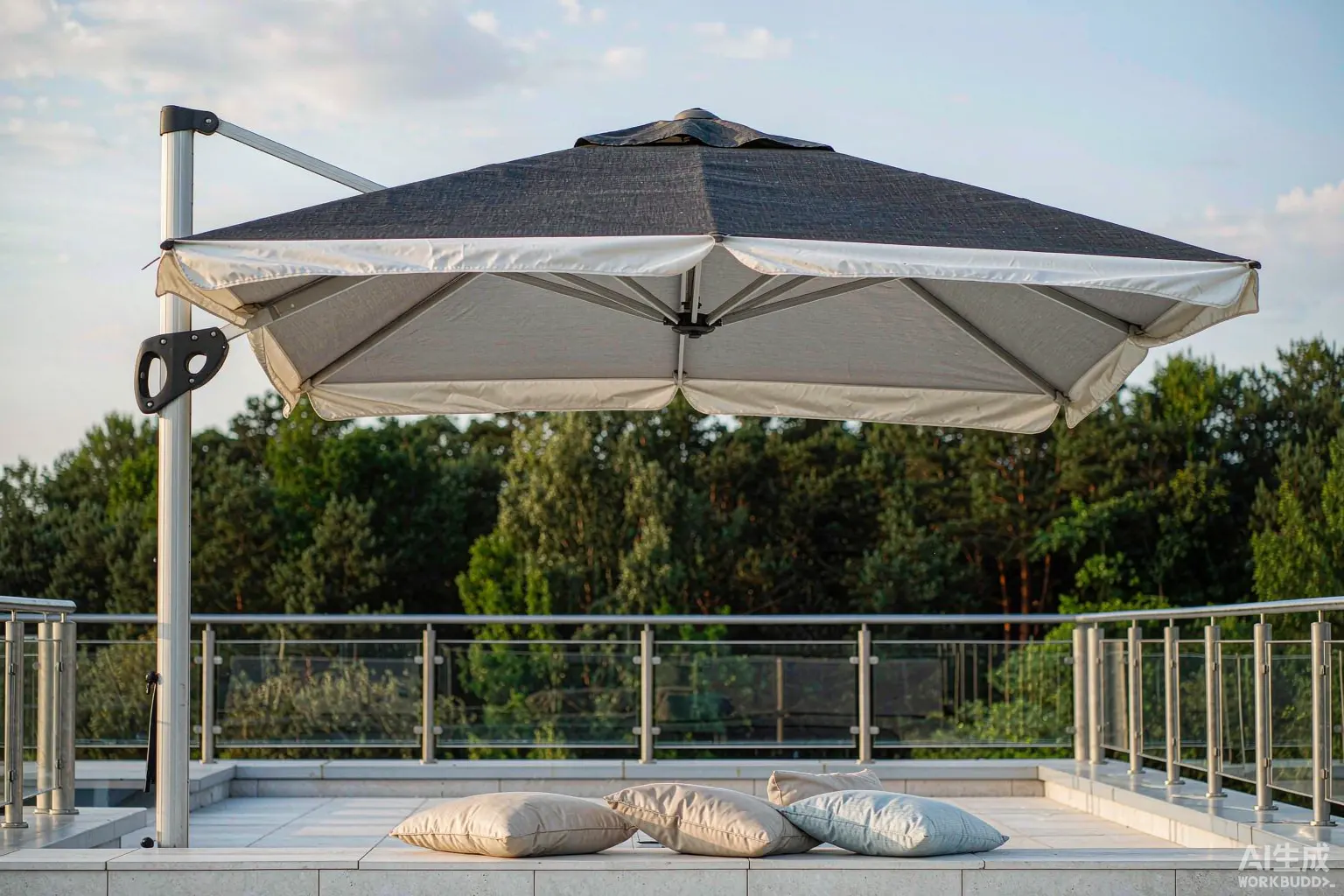
Cantilever patio umbrella with offset pole shading an outdoor lounge set
AI-generated editorial illustration; not a product photograph.
A cantilever patio umbrella has an offset frame. The canopy hangs from a horizontal arm that extends from a vertical mast, not from a center pole. This design creates shade without a pole in the middle of the table, but it also creates a load path that concentrates force at the mast, the cantilever joint and the base. Pole material and canopy size do not reveal whether the offset frame opens smoothly, whether the canopy tensions evenly, whether the rotation or tilt locks hold, or whether the base requirement matches the intended installation.
This guide covers what to inspect on a cantilever umbrella sample: the offset load path, opening and closing mechanism, rib and hub alignment, canopy tension and fabric fit, rotation and tilt locks with base interface, and packaging of long ribs and mechanisms.
Map the Offset Load Path
How Does the Offset Frame Reach Its Confirmed Base?
Identify the mast, cantilever arm, hub, ribs, canopy, rotation or tilt mechanism and base interface from the exact product drawing. The mast is the vertical support. The cantilever arm extends horizontally from the mast. The hub connects the arm to the ribs. The ribs hold the canopy. The rotation mechanism allows the umbrella to pivot around the mast. The base provides stability against the offset load.
Do not infer wind capacity from pole size or rib count. Wind resistance is a structural engineering question that depends on the entire system, including the base, the anchoring and the canopy area. Use the exact mast, arm, hub, rib and base drawing and installation manual. Pole dimensions or rib count alone do not support a wind claim.
Opening and Closing and Slider or Crank Mechanism
Does the Permitted Opening Sequence Finish Without Binding?
Cycle full open and close using the manufacturer's operating method. Record binding, cable or gear noise, incomplete lock and asymmetry. The observation tells you what happens, not the internal cause.
If the crank or gearbox design is not confirmed, describe observable behavior only. Record slider or crank travel and lock state using the manufacturer's operating method. Do not infer a gearbox or cable cause without documentation. Observe and record any binding or catching; the cause requires access to the internal mechanism to diagnose.
Rib, Hub and Joint Alignment
Are Rib and Hub Attachments Symmetrical?
Inspect rivets, pins, fasteners, rib symmetry and fabric contact points. Compare rib positions and canopy contacts at corresponding locations on the confirmed drawing. Record any asymmetry in rib or canopy position and movement; the cause requires model-specific investigation.
Photograph actual rivets, pins, fasteners and canopy contacts at corresponding locations. Compare left and right sides at the same positions relative to the hub.
Does Ordinary Permitted Cycling Change Joint Play?
Check joint play before and after opening and closing cycles. Use matched before and after measurements under the confirmed base setup. This is neither a life test nor an improvised structural proof load. The question is whether the joints, pins or rivets show visible change after a defined number of cycles.
Canopy Tension and Fabric Fit
Does the Fabric Fit the Confirmed Rib Geometry?
Inspect wrinkles, loose panels, edge tension and canopy-to-rib attachment. The canopy should fit the confirmed rib geometry; document any wrinkles, loose panels or edge tension issues. Loose fabric flaps in wind, which accelerates wear at the attachment points.
UV, water and fade claims require exact fabric evidence and suitable tests. Use full-open fit photographs and actual attachment details. Separate wrinkles and tension observations from UV, water and fading claims that need textile evidence. A canopy that looks good when new tells you nothing about how the fabric will perform after UV exposure or rain.
Rotation and Tilt Lock and Base Interface
Do Documented Rotation or Tilt Locks Reach Their Intended Positions?
Observe documented lock positions and unintended movement only under a manufacturer-permitted, appropriately qualified procedure with the correct base or ballast. No improvised lateral-load or wind test is authorized. The rotation lock should hold the canopy at the set position without drift. The tilt lock should hold the canopy angle without slipping.
Observe only the model's permitted settings with the confirmed installation and qualified, safe procedure. Do not invent lateral proof loads. A lock that holds during normal operation is not evidence of wind resistance.
Is the Base or Ballast Requirement Supported by Exact Instructions?
Confirm whether the base or ballast is included or customer-supplied. Some cantilever umbrellas ship with a base that must be filled with sand or water. Others require a separately purchased base or a permanent ground anchor.
Any ballast requirement must come from the exact system or engineering guidance. Identify included versus separately supplied parts and the approved fill or ballast guidance. Do not infer wind or unattended-use safety from a smooth lock. A cantilever umbrella with an inadequate base is a safety hazard in any wind, regardless of how well the rotation lock holds.
Packaging Long Ribs and Mechanisms
Did Packing Protect the Long Frame and Moving Parts?
Check protection for mast and arm ends, rib ends, crank components and coated surfaces. Cantilever umbrellas have long, slender components that are vulnerable to bending during transit. Inspect alignment after transport simulation where justified.
Photograph aligned parts before and after a justified handling comparison tied to the actual packaging. The question is whether the packaging protects the specific components that affect the umbrella's function: the mast, the cantilever arm, the ribs and the crank mechanism.
If you are sourcing cantilever patio umbrellas, compare opening, lock and canopy-fit behavior on a sample and confirm the intended base and installation.
Written by
ScarecrowGarden
💡About Scarecrow Garden Supplier Co., Ltd.
Scarecrow Garden Supplier Co., Ltd. is a China-based sourcing and wholesale partner specializing in garden tools, landscaping equipment, and outdoor supplies for international wholesalers, distributors, contractors, and brands.
With hands-on experience rooted in real garden use scenarios, we focus on durable materials, functional design, and stable large-volume supply. Our product range covers pruning tools, watering systems, hand tools, outdoor hardware, and customized garden solutions to support both retail and professional landscaping markets.
Beyond products, we help our partners navigate supplier selection, quality control, compliance requirements, and long-term sourcing strategies in China. Through our blog, we share practical insights on product selection, material comparisons, industry trends, and cost-effective purchasing—helping global buyers build stronger, more competitive supply chains.